


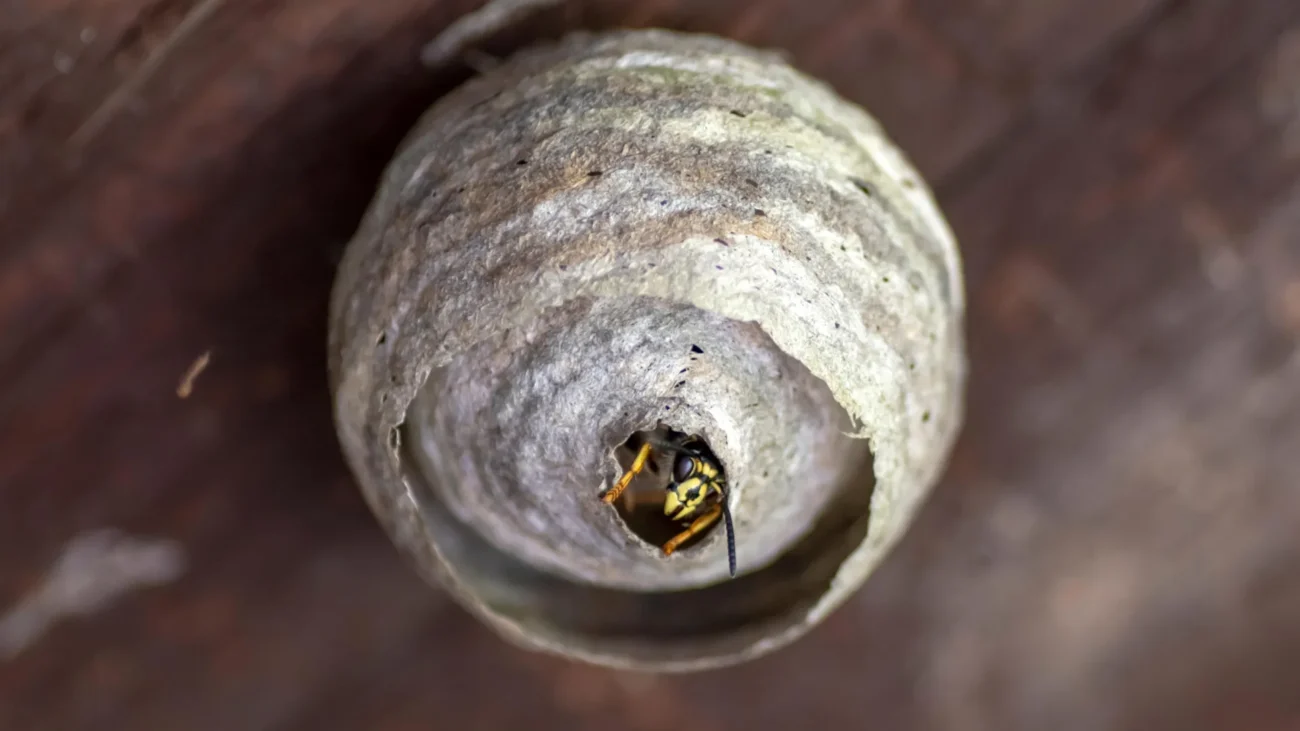
The familiar, buzzing nuisance that traditionally defines the peak of the warm season has become strikingly scarce, leaving entomologists, pest control professionals, and researchers searching for answers amid an unusual ecological phenomenon. While summer months are typically characterized by the ubiquitous presence of common social wasps—frequently crashing garden picnics, scavenging around outdoor dining areas, and establishing sprawling colonies in residential lofts—the landscape in 2026 tells a drastically different story. Across vast regions, these resilient insects have all but vanished from public view, prompting urgent investigations into the health of urban and rural ecosystems alike.
This unexpected decline has created immediate practical challenges for scientific research institutions. Field biologists and university laboratories that rely on wild populations for behavioral studies and ecological experiments have reported significant difficulties in securing specimens. Pest control operators, who usually experience a surge in callouts for nest removal during the warmest months of the year, note a parallel downturn, describing the current season as exceptionally quiet. Media headlines, which routinely feature dramatic warnings about seasonal spikes in stinging insect activity, have remained largely silent on the matter. Although formal, nationwide monitoring initiatives such as the Big Wasp Survey continue to aggregate comprehensive datasets, preliminary observations indicate that something fundamental has shifted in the natural lifecycle of the Vespidae family.
To understand the scale of the current anomaly, researchers are looking closely at the chronological sequence of weather patterns that set the stage for the 2026 season. The cycle began with an uncharacteristically warm and dry spring, a meteorological phase that historically favors the survival of new wasp queens. Emerging from hibernation, solitary foundress queens face a precarious period during which they must single-handedly construct initial nest structures, forage for raw materials, lay eggs, and feed early broods without the assistance of worker castes. Mild spring conditions typically optimize this delicate window by ensuring an abundant supply of early floral nectar and healthy prey populations, allowing queens to successfully rear their first generation of workers and establish the foundations for expansive summer colonies.
However, the trajectory of the season deviated sharply following this initial phase. The early warmth gave way to unprecedented temperature spikes that were abruptly punctuated by unseasonably cold, damp days and unusually chilly nights. This severe meteorological volatility introduced severe stress into the ecosystem. Climatologists and entomologists suggest that these sudden thermal oscillations may have forced queens to abandon vulnerable nests or resulted in direct mortality, drastically reducing the baseline population of colonies before they could reach maturity.
As summer progressed, the situation was compounded by recurring, intense heatwaves. While certain insect populations—most notably butterflies, as highlighted by conservation groups anticipating bumper breeding numbers—can thrive under sustained dry and warm conditions that facilitate continuous foraging and mating, social wasps faced a distinct physiological threshold known as the critical thermal maximum, or CTmax. When ambient temperatures exceed this biological limit, insects experience severe physiological distress, including desiccation, uncoordinated muscle spasms, and eventual torpor or death.
While honeybees and bumblebees have documented thermal limits—with honeybee critical thresholds resting near 49°C and bumblebee cognitive function declining noticeably during prolonged periods above 32°C—wasps possess a different physiological profile. Social wasps are generally regarded as robust invaders equipped with sophisticated thermoregulatory behaviors, such as coordinated wing-fanning to cool developing larvae, and insulated nest architectures designed to buffer external temperature fluctuations. Furthermore, their cuticular hydrocarbons—waxy surface molecules that coat their exoskeletons—undergo structural adaptations in response to heat to prevent moisture loss.

Despite these evolutionary defenses, empirical data suggests that the critical thermal maximum for many common social wasp species hovers around 45°C. During the intense heatwaves of 2026, direct ground and surface temperatures frequently surpassed 50°C in various affected regions. This excessive heat load appears to have overwhelmed the thermoregulatory capacity of local wasp populations, leading to localized die-offs and significantly suppressed activity levels.
Compounding the crisis of population density is a noticeable reduction in the physical size of the surviving adult wasps. Entomology studies indicate that the ultimate body size of holometabolous insects is permanently fixed during the larval developmental stage and is directly proportional to the nutritional quality and quantity provided by the colony. While early spring workers are naturally diminutive due to the solitary queen’s limited foraging bandwidth, colonies typically experience an exponential surge in productivity by early August, yielding substantially larger, robust adult workers.
The persistence of undersized, spring-equivalent wasps deep into the summer months points to severe nutritional bottlenecks. Restricted access to diverse prey items, driven by broader ecological disruptions in insect and arthropod communities, has severely limited the protein provisioning required for healthy larval growth. Additionally, laboratory research on insect development demonstrates that larvae reared under excessively high ambient temperatures accelerate their metabolic rates, resulting in premature pupation and structurally smaller adult bodies. This real-time miniaturization mirrors broader historical trends documented over the past century, wherein rising global temperatures have been correlated with a steady reduction in the average physical size of social wasp specimens worldwide.
The disappearance or diminished capacity of social wasps carries profound implications for ecological stability. Far from being merely a seasonal annoyance, Vespidae play critical, multifaceted roles within local food webs. As apex predators of the invertebrate world, they act as natural pest controllers by hunting vast quantities of caterpillars, aphids, and other garden pests that would otherwise damage agricultural yields and native flora. Furthermore, as they visit flowers in search of nectar for personal sustenance, they function as secondary pollinators. Finally, by scavenging organic matter and recycling nutrients, they contribute to essential decomposition processes.
The decline of such a key functional group threatens to unbalance predator-prey dynamics across various habitats. Pest populations that are normally kept in check by foraging wasp colonies may experience unchecked growth, potentially increasing agricultural pressures and altering competitive interactions among other insect species. Conservation biologists emphasize that monitoring these shifts is essential for predicting broader ecosystem responses to ongoing climatic instability.
As researchers continue to aggregate empirical data and assess the full extent of the 2026 population collapse, scientists are urging the public to adopt a proactive and observant approach toward the few wasps that do appear. Rather than instinctively reacting with hostility or employing defensive measures during outdoor meals, individuals are encouraged to recognize that an approaching wasp is frequently desperate for protein sources—such as picnic meats—to feed starving broods, or simple sugars to sustain its own depleted energy reserves.
Academic institutions and ecological research groups have launched targeted public engagement initiatives, such as specialized survey programs, inviting citizens to document and submit photographic observations of wasps interacting with human environments. These crowdsourced data streams provide invaluable metrics for tracking the geographic distribution, feeding behaviors, and morphological characteristics of surviving populations. Through collaborative monitoring and continued scientific inquiry, researchers hope to decode the long-term viability of social wasps in a rapidly warming world, ensuring that these ecologically indispensable insects are better understood before future climate extremes permanently alter our natural landscapes.

