


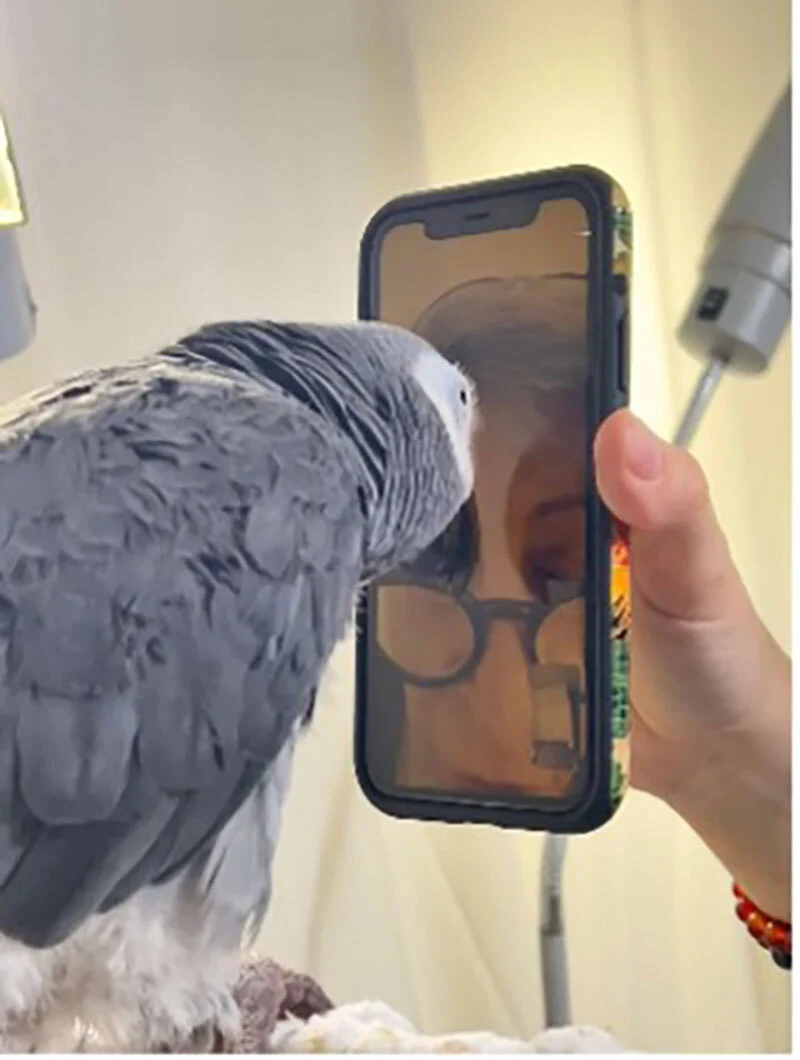
In a testament to the evolving understanding of animal cognition and interspecies bonding, renowned avian cognitive scientist Dr. Irene Pepperberg has successfully implemented video calls as a consistent method to connect with her African Grey parrot, Griffin, during her professional travels. This innovative approach, initially conceived years ago, has proven remarkably effective in mitigating the behavioral impact of her absence, notably reducing the "cold wing" treatment Griffin previously exhibited upon her return. This development underscores the potential of technology to foster and maintain complex relationships between humans and highly intelligent animals, offering valuable insights into animal welfare and cognitive science.
Background: Dr. Irene Pepperberg and the Legacy of African Greys
Dr. Irene Pepperberg is a pioneering figure in the study of animal intelligence, particularly known for her groundbreaking work with African Grey parrots. Her research, which began in the 1970s, fundamentally shifted scientific understanding of avian cognitive abilities. Before Pepperberg’s work, it was widely believed that parrots merely mimicked human speech without comprehension. However, through rigorous scientific methodology, she demonstrated that African Greys, most famously Alex, could not only use human language meaningfully but also understood concepts such as same/different, color, shape, number, and even absence. Alex’s remarkable abilities, including his reported vocabulary of over 100 words and his capacity for simple arithmetic, challenged anthropocentric views of intelligence and paved the way for recognizing complex cognitive functions in non-human species.
African Grey parrots (Psittacus erithacus) are celebrated for their exceptional intelligence, problem-solving skills, and remarkable vocal mimicry. Native to the equatorial forests of Africa, these highly social birds form strong bonds within their flocks and with their human companions in captivity. Their long lifespans, often exceeding 50 years, mean that they require consistent social interaction and mental stimulation. Separation from primary caregivers can lead to significant stress, anxiety, and behavioral issues, including feather plucking, aggression, and withdrawal. Understanding and addressing these social and emotional needs is paramount for their welfare, especially in a research setting where human interaction is integral to their daily lives and the scientific process itself. Griffin, following in Alex’s illustrious footsteps, is a key subject in Dr. Pepperberg’s ongoing research at the Alex Foundation, continuing to explore the depths of avian cognition.
The Genesis of a Digital Connection: Addressing Separation Anxiety
The concept of connecting with her parrots via video calls first emerged a few years prior to the current observations, as Dr. Pepperberg detailed in an earlier blog post. The initial motivation stemmed from her extensive travel schedule, a common reality for academics and researchers involved in international conferences, lectures, and collaborative projects. This demanding itinerary meant frequent, albeit temporary, separations from Griffin and other research birds. Despite the dedicated care provided by a team of research associates, ensuring Griffin understood he was not being abandoned by his primary caregiver remained a high priority for Dr. Pepperberg. The emotional toll of her absence on Griffin, often manifesting as the "cold wing" treatment—a period of indifference or subtle rejection upon her return—prompted the exploration of technological solutions to bridge the physical distance.
The formal implementation of video calls, primarily using platforms like FaceTime, became a regular practice. This initiative was further influenced by a personal decision made when Dr. Pepperberg turned 75, leading her to consciously reduce her travel frequency from an average of three trips per month to approximately one. While this adjustment lessened the overall time away, her continued professional commitments still necessitated periodic absences from the lab. The consistency of these video interactions became a crucial element in maintaining Griffin’s emotional well-being and the unique bond they share, reinforcing the idea that continuity of interaction, even digitally, can be vital for highly intelligent and socially complex animals.
Navigating Geographic Divides: Logistical Challenges and Creative Solutions
The logistical feasibility of initiating these video calls varies significantly depending on Dr. Pepperberg’s location. Within the United States, time zone differences are generally manageable, typically involving a maximum of a three-hour differential. This allows for relatively straightforward scheduling, ensuring calls can be made before Griffin’s usual 8 PM bedtime without significant disruption to Dr. Pepperberg’s conference schedules or evening commitments.
However, international travel presents a considerably more complex set of challenges. When Dr. Pepperberg travels to regions with substantial time differences, such as Dubai (an 8-hour difference) or Japan (a 13-hour difference, compounded by the International Date Line), the window for a suitable call shrinks dramatically. These scenarios often necessitate creative and sometimes impromptu solutions. Dr. Pepperberg recounts instances of connecting via an internet "hot spot" from a colleague’s car, highlighting the dedication required to maintain the routine. These efforts are not only for Griffin’s benefit but also serve as a source of amusement and intrigue for her human colleagues, who often express enjoyment in witnessing Griffin’s interactions. This anecdotal evidence suggests a broader human fascination with interspecies communication and the innovative ways technology can facilitate it. The meticulous planning required for these calls underscores Dr. Pepperberg’s commitment to Griffin’s welfare, prioritizing his need for connection even amidst demanding professional engagements across the globe.
Avian Perception: What Griffin Sees and Hears Through the Screen
A critical aspect of this technological interaction is understanding how Griffin, an African Grey parrot, perceives the video call. Parrots possess a visual system that differs significantly from humans, notably their ability to see in the ultraviolet (UV) spectrum. Human vision is trichromatic, sensitive to red, green, and blue light, while many birds, including parrots, are tetrachromatic, with an additional cone type sensitive to UV light. This means that birds perceive a world rich in colors and patterns invisible to the human eye, particularly on feathers, fruits, and flowers. Cell phone cameras, however, are designed and optimized for human vision, capturing light within the visible spectrum that humans perceive. Consequently, the UV components that might be present in Dr. Pepperberg’s skin or clothing are likely not rendered on the screen. While Griffin probably sees a recognizable replica of Dr. Pepperberg, the visual nuances, particularly those related to UV light that might be crucial in avian social signaling, are absent.
Similarly, the fidelity of sound transmission through a cell phone speaker and its interpretation by a parrot’s auditory system raise questions. While parrots have excellent hearing, the specific frequencies, timbre, and subtle inflections of a human voice might be altered or diminished by digital compression and speaker limitations. Dr. Pepperberg acknowledges that it is uncertain how well Griffin can truly hear and recognize her voice through the device. However, she hypothesizes that Griffin has likely associated the sounds emanating from the phone with her, given that she is consistently the only individual engaging in these video calls with him. This behavioral conditioning, where a specific stimulus (the phone’s sounds and images) becomes linked to a particular individual (Dr. Pepperberg), provides a plausible explanation for Griffin’s consistent positive reactions.
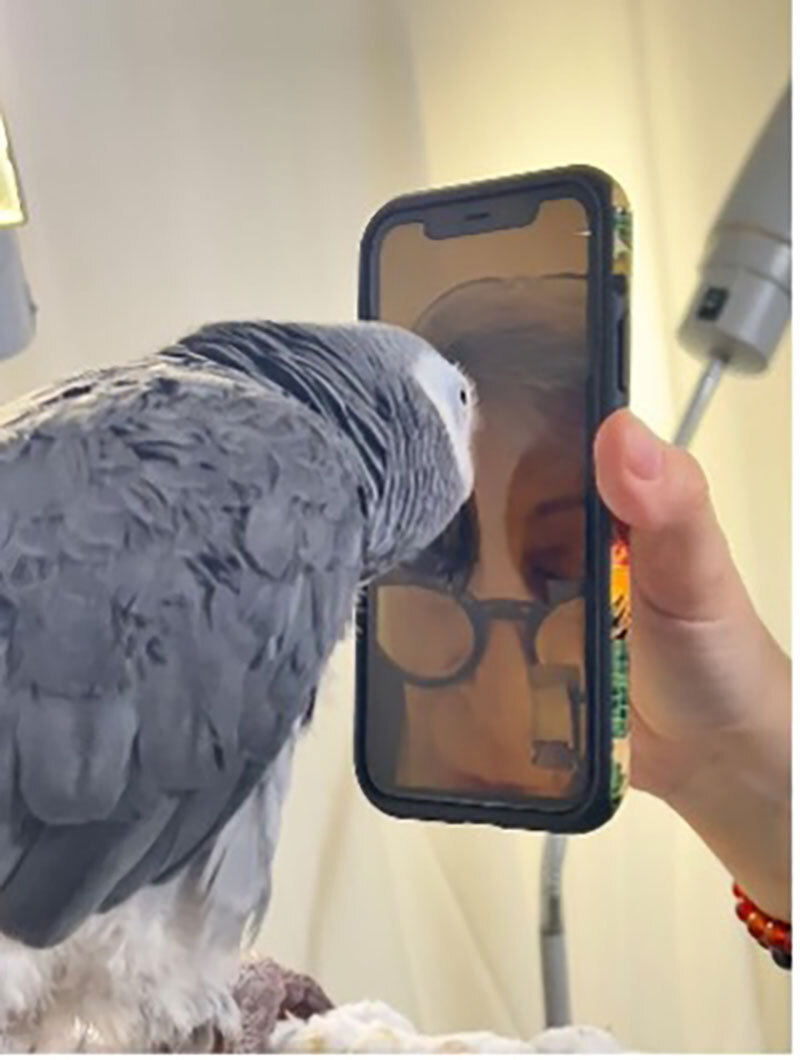
Despite these perceptual uncertainties, Griffin’s responses are consistently positive and demonstrably not aversive. He frequently bends down to touch the screen, a behavior interpreted as giving "kisses," a clear indication of affectionate engagement. This physical interaction with the screen suggests that Griffin recognizes and positively responds to the image presented. Furthermore, Dr. Pepperberg notes a significant cognitive understanding demonstrated by Griffin: he has learned not to request "tickle" from the phone. This distinction is crucial, as it indicates Griffin comprehends that Dr. Pepperberg is not physically present and therefore cannot fulfill a physical request. This nuanced understanding, differentiating between a virtual presence and a physical one, highlights the advanced cognitive abilities of African Greys and adds another layer of complexity to their interactions with technology.
The Impact on Interspecies Bonding: Mitigating the "Cold Wing" Treatment
The primary objective of these video calls was to maintain Dr. Pepperberg’s bond with Griffin and mitigate the behavioral consequences of her absence. Before the regular implementation of video calls, Dr. Pepperberg would often experience the "cold wing" treatment upon her return from trips. This behavior, characterized by Griffin ignoring her or showing indifference, is a common manifestation of a parrot’s displeasure or perceived abandonment after a period of separation from a primary caregiver. It’s a subtle yet clear signal of emotional distress or reproach from a highly social and sensitive animal.
Since initiating consistent video calls, Dr. Pepperberg has observed a marked reduction in the frequency and duration of this "cold wing" treatment. When she returns from a trip during which video calls have been maintained, Griffin is significantly less likely to ignore her. If he does exhibit initial aloofness, the period of such behavior is considerably shorter. This empirical observation strongly suggests that the video calls serve as an effective psychological bridge, reassuring Griffin of Dr. Pepperberg’s continued presence and connection, even when physically absent. The calls appear to temper the feelings of abandonment or disruption that previously led to the "cold wing" response, reinforcing the idea that even a mediated interaction can fulfill crucial social and emotional needs for these intelligent birds. This behavioral shift provides compelling evidence for the positive impact of digital communication on interspecies bonding and animal welfare.
Beyond the Screen: Limitations and Unique Benefits of Digital Connection
While video calls have proven invaluable, Dr. Pepperberg is quick to emphasize that they are not a complete substitute for in-person interaction. Her typical routine with Griffin when she is in town involves substantial quality time: at least an hour daily spent with Griffin on her hand, engaging in tickles and preening. Additional time is dedicated to structured training sessions and companionship during meal times, where Griffin enjoys his afternoon birdy snacks while Dr. Pepperberg eats her "human snacks" (like carrots, which Griffin reportedly "absolutely hates," thus preventing sharing). These multi-faceted, tactile, and sensory-rich interactions are foundational to their bond and cannot be fully replicated by a 10-minute video call.
However, the crucial question remains: is a video call better than nothing? Dr. Pepperberg unequivocally states, "For sure." The calls provide a vital sense of continuity and reassurance, both for Griffin and for Dr. Pepperberg, allowing her to visually assess his well-being in her absence. This digital lifeline significantly reduces the negative behavioral fallout associated with her travels. The effort involved in scheduling these calls, often requiring meticulous planning around demanding international itineraries and challenging time zones, reflects their perceived value. Dr. Pepperberg consciously structures her day to accommodate a "phone home" window, even when logistics are truly difficult.
She draws a parallel to the human experience during the COVID-19 pandemic, recalling the mixed feelings associated with Zoom calls with friends and family. While digital platforms could never replace the comfort of a real hug or direct physical presence, the ability to share news and see the faces of loved ones undeniably alleviated some of the misery and isolation of lockdowns. This human experience resonates deeply with the observed benefits for Griffin, suggesting that the fundamental psychological need for connection transcends species boundaries, and that technology, while imperfect, can play a significant role in meeting that need.
Broader Implications for Pet Welfare, Animal Cognition, and Technology
Dr. Pepperberg’s innovative use of video calls with Griffin carries significant broader implications across several fields. For pet welfare, especially for highly social and intelligent animals like parrots, dogs, and cats, this research opens new avenues for mitigating separation anxiety and maintaining psychological well-being during owner absences. As pet ownership continues to rise globally, and lifestyles increasingly involve travel, the development of technologies that facilitate meaningful human-animal connection becomes ever more pertinent. This pioneering work could inspire the design of pet-specific communication tools, enhancing the lives of countless companion animals.
In the realm of animal cognition, Griffin’s ability to differentiate between virtual and physical presence, and his positive engagement with the screen, further enriches our understanding of how non-human animals process information and form abstract concepts. It provides empirical data on their capacity for object permanence in a digital context and their ability to generalize social cues across different modalities. This contributes to the growing body of evidence that challenges traditional views of animal intelligence and emotional depth.
From a technological standpoint, this application highlights the potential for consumer technology to be adapted for novel interspecies interactions. It encourages further exploration into how visual and auditory technologies can be optimized for non-human sensory systems, potentially leading to advancements in display technologies that cater to UV vision or audio systems that better replicate the nuances of human speech for avian ears.
Ethically, this practice raises questions about the responsible integration of technology into animal care. While beneficial in this context, it prompts discussions on potential over-reliance on digital interaction, the importance of maintaining primary physical interaction, and the boundaries of what constitutes meaningful connection. Dr. Pepperberg’s work, however, frames this as an enhancement to existing care, not a replacement, emphasizing the irreplaceable value of direct, in-person bonding.
Ultimately, Dr. Irene Pepperberg’s ongoing experiment with Griffin exemplifies a forward-thinking approach to animal companionship and scientific inquiry. It underscores the profound and complex nature of interspecies relationships and the surprising efficacy of modern technology in nurturing these bonds across geographical divides. As our understanding of animal minds continues to expand, such innovative practices will undoubtedly play a crucial role in shaping future standards of animal care and enriching the lives of both humans and their intelligent animal companions.

