


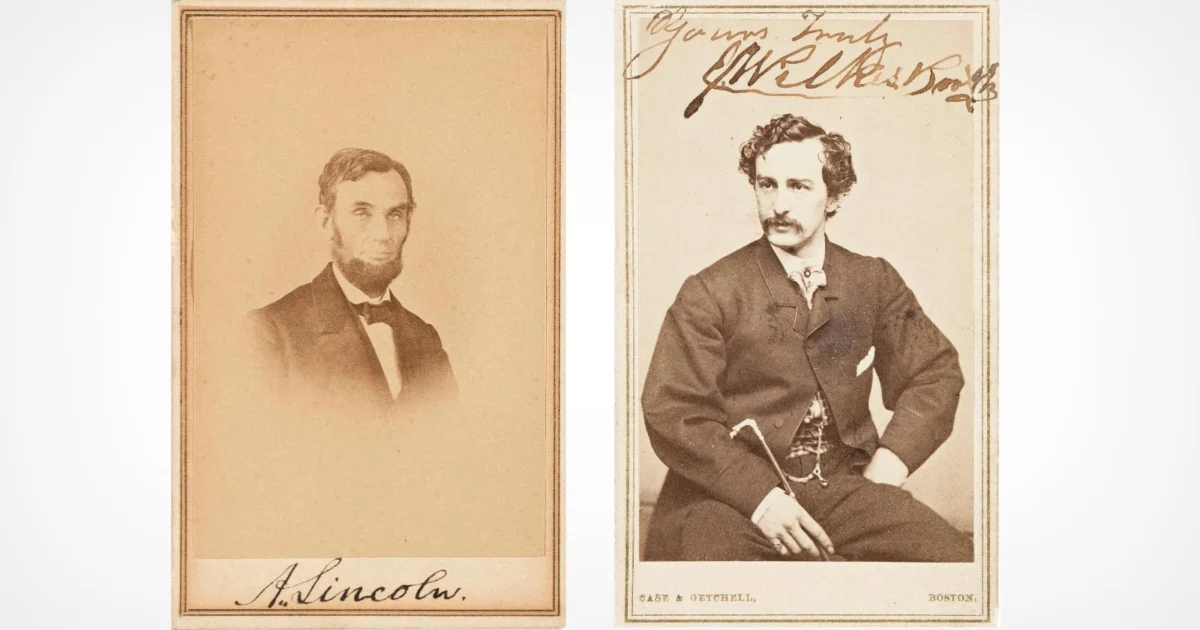
The high-stakes world of historical memorabilia witnessed a landmark event on May 7, as Swann Galleries concluded its highly anticipated sale of "Important Signed Photographs from a California Family Collection." The auction, which featured an array of rare portraits ranging from Civil War-era presidents to 20th-century scientific geniuses, was headlined by the extraordinary sale of two Abraham Lincoln photographs and a hauntingly rare portrait of his assassin, John Wilkes Booth. Each of these items crossed the $100,000 threshold, underscoring the enduring fascination with the American Civil War and the premium placed on authenticated signatures from the dawn of the photographic age.
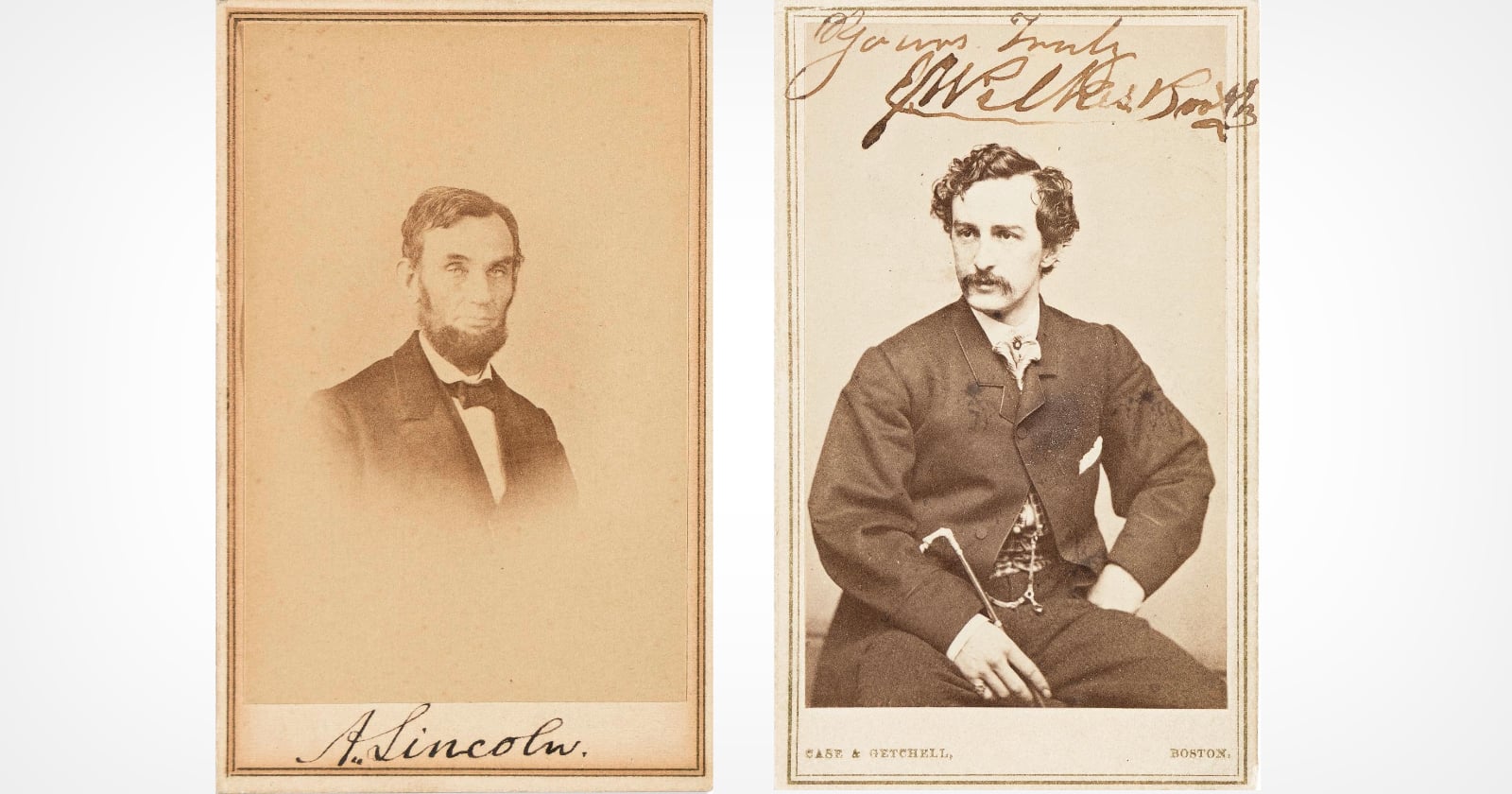
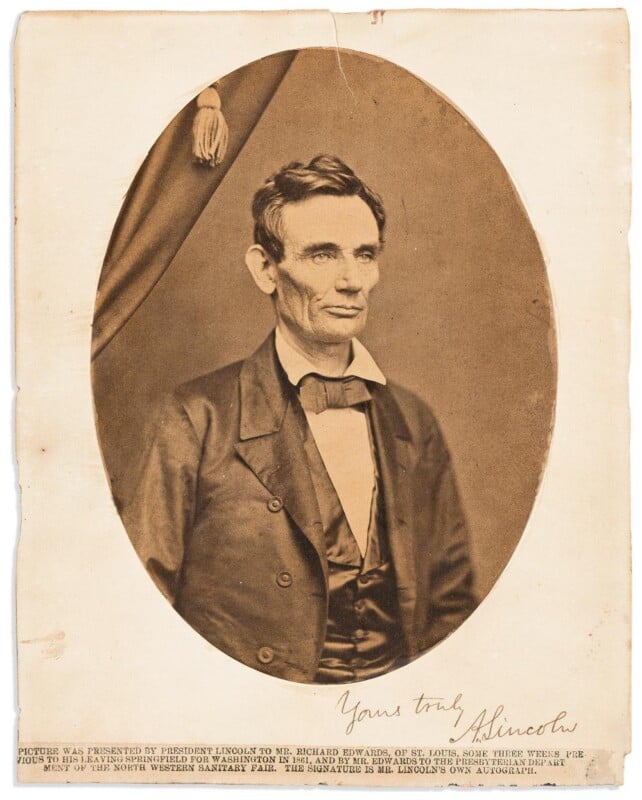
The centerpiece of the auction was an 1863 signed photograph of President Abraham Lincoln, which fetched a staggering $139,200. Not far behind was a second portrait of the 16th president, dated 1861 and inscribed with the signature "Yours truly A. Lincoln," which sold for $101,600. However, the most chilling and perhaps most uncommon item in the catalog was a signed 1862 photograph of John Wilkes Booth. The portrait of the man who would later change the course of American history by assassinating Lincoln at Ford’s Theatre sold for $107,950. The proximity of these sales—the victim and his killer appearing in the same auction—provided a poignant and rare opportunity for collectors to own opposing sides of a defining American tragedy.
A Legacy Preserved: The California Family Collection
The provenance of these items added a layer of prestige and reliability that is often sought but rarely found in such volume. The collection was primarily compiled by a California-based investment counselor and entrepreneur who passed away in 2017. A man driven by a profound passion for the political and business evolution of the United States, he spent decades hunting for "fresh-to-market" items that represented the pinnacle of their respective categories. Following his passing, his son continued to augment the collection, ensuring that the items remained in pristine condition before finally consigning them to Swann Galleries for public sale.
Marco Tomaschett, the Autographs Specialist at Swann Galleries, noted that the collection was distinguished not just by the fame of the subjects, but by the discerning eye of the collector. "What is striking about this collection is the evidence of the effort to obtain the best or the most uncommon," Tomaschett remarked. He highlighted that even when the subject was someone whose signature is relatively available, such as the suffragist Susan B. Anthony, this specific collection featured examples with "uncommonly arresting" imagery or unique inscriptions that set them apart from standard archival pieces.
The Lincoln-Booth Paradox: Photography at the Dawn of Conflict
The high prices for the Lincoln and Booth photographs can be attributed to the specific era in which they were produced. Photography was still a burgeoning medium in the 1860s, having only become commercially viable a few decades prior. For Abraham Lincoln, photography was a political tool; his portraits by Matthew Brady are often credited with helping him win the presidency by making his face recognizable to the masses. However, because his life was cut short in April 1865, the window for him to sign photographic prints was extremely narrow.
John Wilkes Booth, by contrast, was a famous stage actor long before he became a fugitive. While portraits of him were distributed as part of his celebrity status, signed versions are exceedingly rare due to the subsequent purge of his likeness by a grieving and angry public following the assassination. The 1862 photograph sold at Swann Galleries captures Booth in his prime, three years before the events at Ford’s Theatre, offering a glimpse into the persona of a man who was once one of the most celebrated performers in the country.
Chronology of Key Sales and Historical Context
The auction spanned several eras of American history, providing a chronological journey through the nation’s development:
- 1861–1863 (The Civil War Era): The Lincoln and Booth photographs represent the height of the "Carte-de-Visite" (CDV) craze. These small, traded photographs were the first mass-produced social media, and having a signed version was a mark of extreme status.
- 1868 (Victorian Literature): A signed photograph of the British novelist Charles Dickens sold for $8,890. Dickens was a global celebrity of his time, and this portrait was captured during his later years, reflecting the international reach of the California collector’s interests.
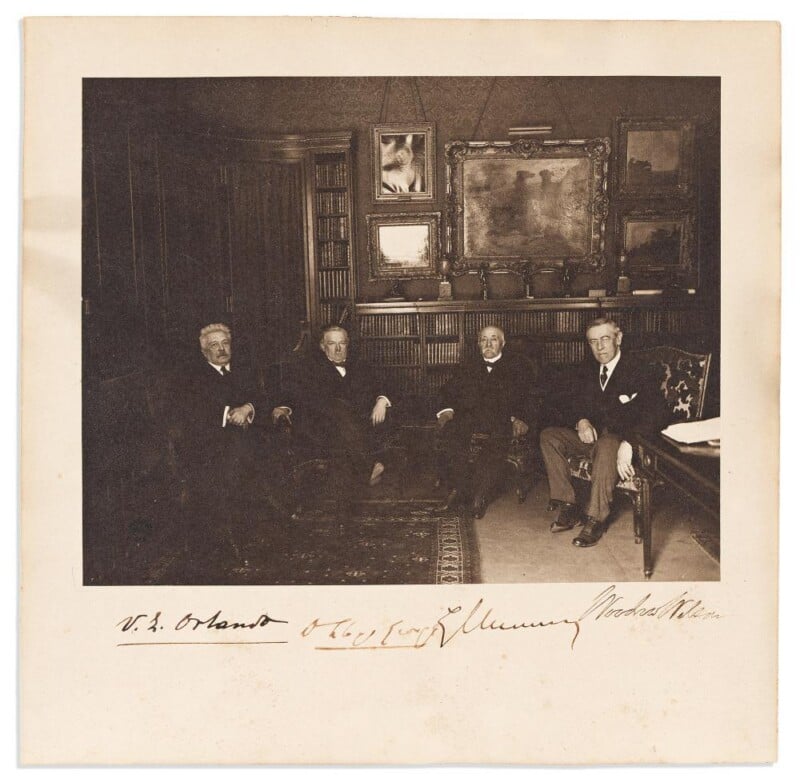
- 1905–1907 (The Progressive Era): A 1905 photograph of Mark Twain, the quintessential American satirist, sold for $11,430. Shortly after, a 1907 photograph of President Theodore Roosevelt and his entire cabinet fetched $15,240. This item is particularly notable for containing ten high-profile signatures on a single mount, representing the executive power of the United States at the turn of the century.
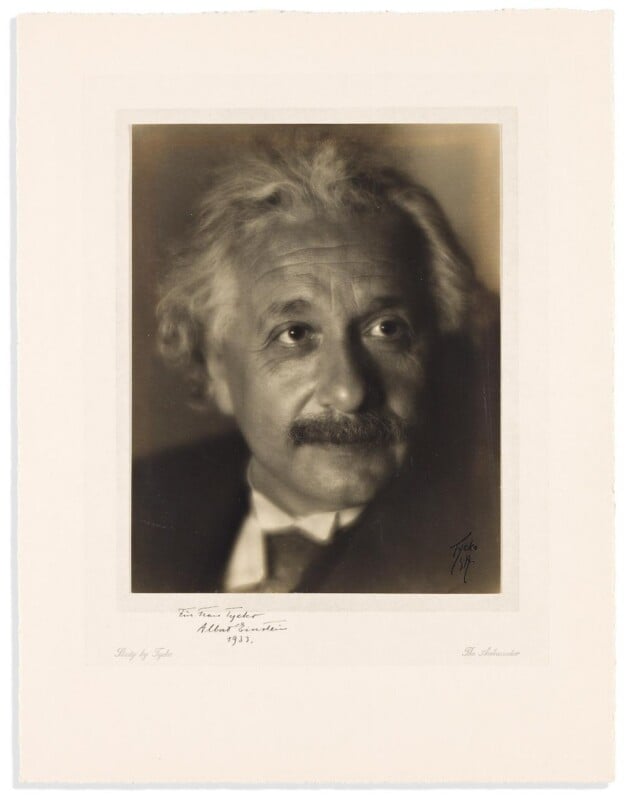
- The Golden Age of Invention and Science: Signed portraits of Thomas Edison ($15,240) and Albert Einstein ($18,820) showcased the collection’s breadth into the intellectual history of the 20th century.
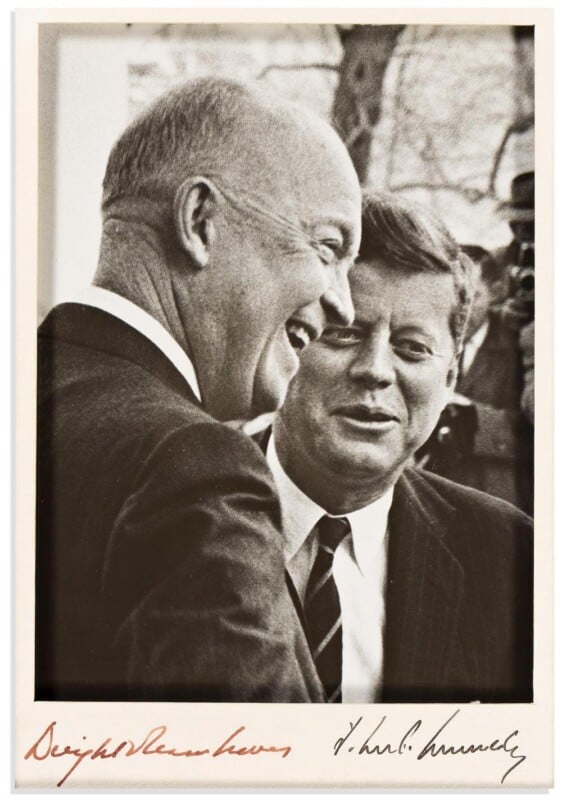
- 1961 (The Cold War Transition): A unique photograph capturing a conversation between outgoing President Dwight D. Eisenhower and President-elect John F. Kennedy sold for $20,320.
The Significance of the Kennedy-Eisenhower Portrait
Among the many treasures, Marco Tomaschett singled out the Eisenhower-Kennedy photograph as one of the most historically significant. The image depicts the two leaders at the White House during the transition of power in 1961. The signatures of both men on a single photograph are extremely rare, as they represent the literal handoff between two different American epochs.
Eisenhower, the Five-Star General who led the Allied Forces in World War II, represented the old guard and the victory over fascism. Kennedy, the youngest man ever elected to the office at that time, represented the "New Frontier" and the burgeoning challenges of the Cold War and the Space Age. "Both presidents added their signature to this item, making it one of the few autographs to have been signed by both these presidents who served during the transition between two epochs that continue to resonate through U.S. history," Tomaschett explained.
Market Analysis: The Rising Value of Tangible History
The results of the Swann Galleries auction reflect a broader trend in the collectibles market: the "flight to quality." As digital assets and ephemeral media dominate modern life, the value of physical, "hand-touched" history has skyrocketed. For high-net-worth individuals and institutional collectors, a signed photograph is more than an image; it is a tangible link to a specific moment in time.
The $139,200 price tag for the 1863 Lincoln photo is indicative of the "Lincoln Premium." Artifacts related to the 16th president consistently outperform almost all other American historical figures. Analysts suggest that because Lincoln’s presidency defined the survival of the United States, his relics carry a quasi-religious significance for many collectors.
Furthermore, the auction demonstrated that "villainy" also has a market. The high price for the John Wilkes Booth photograph confirms that items associated with infamy can be just as valuable as those associated with heroism, provided they are sufficiently rare. The Booth signature is particularly prized by historians and criminologists who study the mechanics of the first presidential assassination in U.S. history.
Broader Implications and Institutional Impact
While many of these items disappeared into private collections, the auction has broader implications for historical scholarship. The publication of high-resolution scans and the documentation of these signatures provide a valuable database for authenticators and historians. The "California Family Collection" serves as a case study in how private stewardship can preserve delicate paper artifacts that might otherwise have succumbed to the elements or been lost to time.
The success of this sale is expected to encourage other long-held family collections to come to market. As the centennial and bicentennial anniversaries of various American milestones approach, the demand for authentic, signed iconography remains at an all-time high. For the world of philography—the study and collection of autographs—the Swann Galleries event was a reminder that history is not just found in textbooks, but in the ink and silver-halide prints of those who lived it.
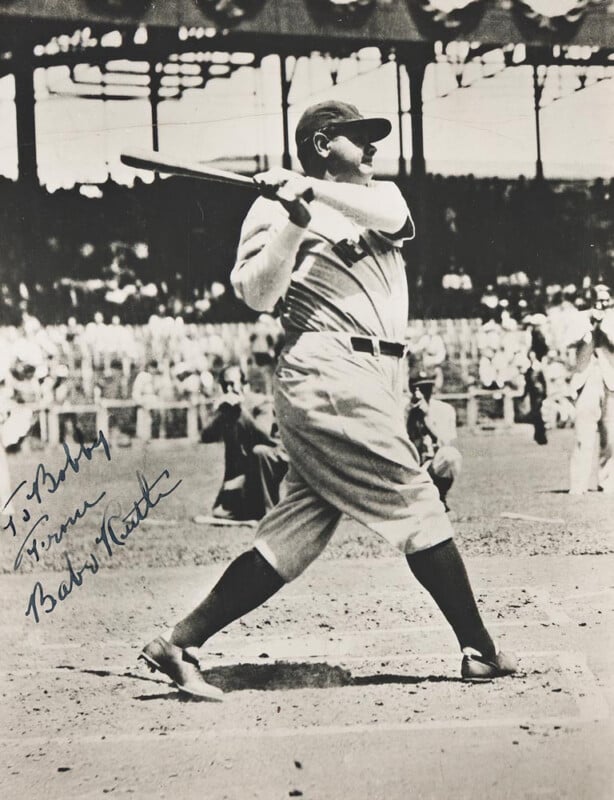
As the hammer fell on the final lot, the auction house confirmed that the total sales exceeded expectations, reinforcing the notion that even in a volatile economy, the giants of history—Lincoln, Einstein, Twain, and Ruth—remain the safest and most sought-after investments. The collection now moves into new hands, but its legacy as one of the most comprehensive private assemblages of American greatness remains secure.

