


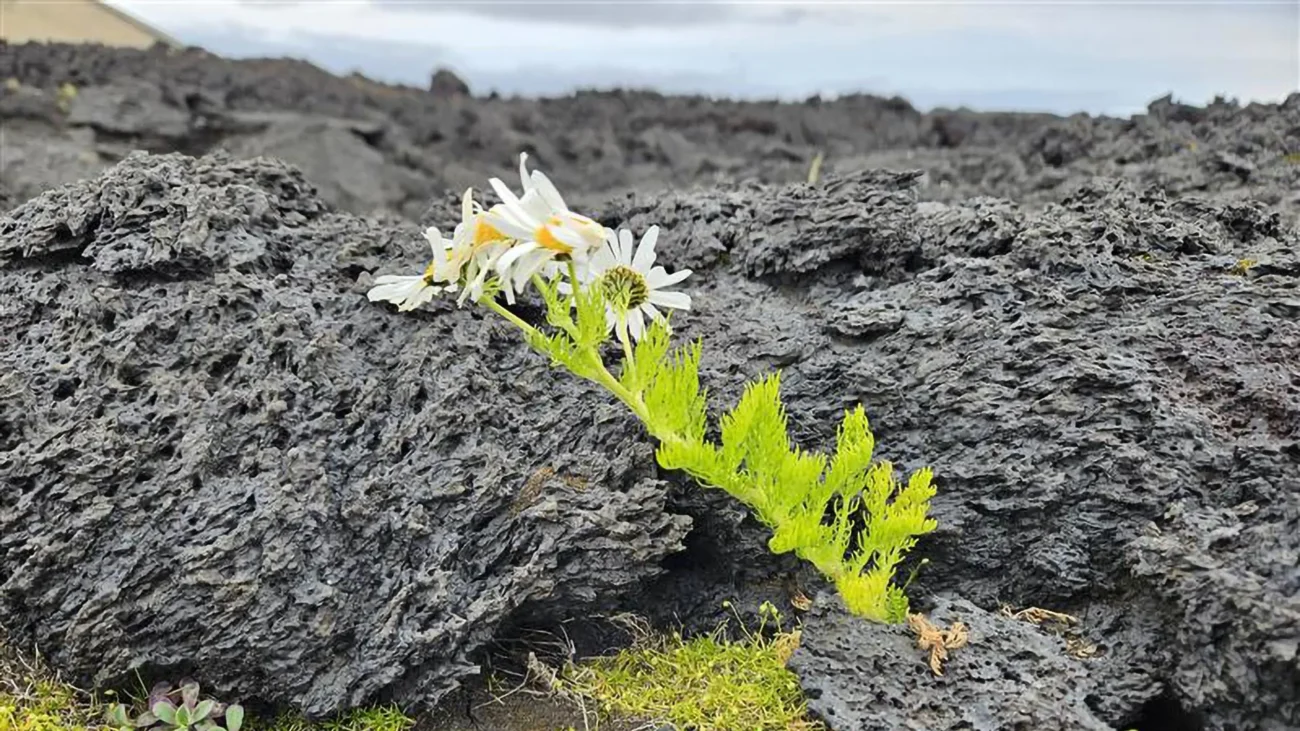
The dramatic emergence of the volcanic island of Surtsey from the unforgiving waters of the North Atlantic in 1963 presented the scientific community with an unparalleled opportunity: a pristine, virgin land upon which to meticulously observe the very genesis of life. For decades, ecological theory largely posited that the colonization of remote islands by plant species was primarily facilitated by specialized evolutionary adaptations. These adaptations, it was believed, conferred a distinct advantage in overcoming vast oceanic distances. Key among these were traits such as brightly colored fruits designed to attract avian frugivores, whose subsequent movements would lead to the dispersal of viable seeds through their droppings, or seeds with specialized structures for wind or water transport. The prevailing assumption was that species possessing such sophisticated dispersal mechanisms held the undisputed upper hand in successfully establishing themselves in novel and isolated environments.
Upsetting Long-Held Ecological Dogmas
However, a groundbreaking recent study published in the esteemed journal Ecology Letters has significantly challenged and, in many respects, overturned this deeply entrenched theoretical framework. A multidisciplinary team of researchers hailing from Iceland, Hungary, and Spain has meticulously analyzed the botanical inventory of Surtsey, revealing a surprising reality that diverges sharply from established scientific dogma. Their extensive investigation, focusing on the vascular plant species documented on the island since 1965, uncovered that a substantial majority of the 78 identified species lack the typical evolutionary hallmarks associated with long-distance seed dispersal.
Instead of relying on windborne seeds or fruits designed for bird consumption and subsequent long-range transportation, the study points to a different, yet equally potent, vector: the avian inhabitants themselves. The researchers have concluded that the primary agents responsible for the astonishing diversity of plant life that has taken root on Surtsey are in fact the island’s visiting and resident bird populations, including various species of gulls, geese, and shorebirds. These birds, through their extensive foraging and migratory behaviors, inadvertently became the crucial conduits for plant colonization. Seeds were transported and subsequently deposited onto the nascent island either incidentally through their digestive systems or, more directly, via their droppings. This avian-driven dispersal mechanism has been instrumental in establishing the foundational layer of Surtsey’s young and dynamically evolving ecosystem.
Birds Emerge as Unforeseen Architects of Island Flora
The implications of these findings are profound, fundamentally altering our understanding of how life re-establishes itself in the wake of cataclysmic geological events. "Birds turned out to be the true pioneers of Surtsey — carrying seeds of plants that, according to conventional theories, shouldn’t be able to get there," explained Dr. Pawel Wasowicz of the Natural Science Institute of Iceland, a key author in the study. His statement underscores the revolutionary nature of their discovery, emphasizing the extent to which the research deviates from established ecological paradigms. "These results overturn traditional assumptions about plant colonisation and show that to understand how life spreads and responds to environmental change, we must look at the interactions between plants and animals. Life does not move in isolation — it follows life."
This paradigm shift is not merely an academic curiosity; it carries significant weight for the broader fields of ecology and conservation. Dr. Andy Green of the Estación Biológica de Doñana (CSIC, Spain), who co-led the research, elaborated on the far-reaching consequences of their findings. "Animals — especially birds — are key drivers of plant dispersal and colonization. As migration routes shift under a warming climate, birds will play a vital role in helping plants move and adapt to new environments." This assertion highlights the critical role that avian populations may play in future ecological resilience, particularly in an era marked by accelerating climate change and habitat fragmentation. As terrestrial environments become increasingly inhospitable due to rising temperatures and altered precipitation patterns, the ability of plant species to migrate and establish themselves in more suitable locales becomes paramount for their survival. Birds, acting as mobile dispersal units, could prove indispensable in facilitating these necessary movements.
Surtsey: A Unique Natural Laboratory for Evolutionary and Ecological Processes
The island of Surtsey itself continues to stand as an extraordinary testament to the power of natural processes and an invaluable living laboratory for scientific inquiry. Its existence provides a rare and unparalleled opportunity for scientists to directly observe and document the earliest stages of ecosystem development, adaptation, and evolution in real-time. The island’s ongoing narrative offers crucial insights into the fundamental mechanisms by which life establishes itself on barren landscapes, how species evolve in response to novel environmental pressures, and how entire ecosystems react and adapt to a perpetually changing world.
The researchers advocate for a recalibration of future ecological models, suggesting a greater emphasis on the intricate and often overlooked biological interactions that govern species dispersal and establishment. They propose that current models, which often prioritize the physical characteristics of seeds or the taxonomic classifications of plant species, may be insufficient. Instead, a more holistic approach that explicitly incorporates the dynamic relationships between plants and animals, particularly the complex behaviors of dispersal vectors like birds, is necessary for a more accurate and predictive understanding of ecological processes.
The long-term commitment to studying Surtsey, a commitment spanning over half a century, underscores its immense value to the scientific community. "Long-term research like that carried out on Surtsey is invaluable for biology," Dr. Wasowicz emphasized. "It allows us to witness ecological processes that would otherwise remain invisible — how life colonizes, evolves, and adapts. Such work is essential for understanding the future of ecosystems in a rapidly changing world." This sentiment resonates deeply within the scientific community, highlighting the irreplaceable contribution of such sustained, natural experiments to our fundamental knowledge of life on Earth.
Chronology of Surtsey’s Volcanic Birth and Ecological Colonization
The story of Surtsey is intrinsically linked to a dramatic geological event.
- November 14, 1963: Submarine volcanic eruptions begin approximately 32 kilometers southwest of the coast of Iceland.
- November 15, 1963: The eruption breaks the surface of the ocean, marking the birth of a new volcanic island. Initial eruptions are explosive, fueled by the interaction of magma and seawater.
- 1963-1967: The island rapidly grows through continuous volcanic activity, reaching its maximum size. Scientists begin to document its formation and the initial environmental conditions. The island is named Surtsey, after Surtr, a figure from Norse mythology associated with fire.
- 1965: The first scientific expeditions begin to systematically study the island’s geology, flora, and fauna. This marks the beginning of the long-term ecological monitoring that forms the basis of the recent study.
- 1965-Present: A diverse array of scientific research is conducted on Surtsey, focusing on primary succession, the establishment of life on a sterile environment. Researchers meticulously document the arrival and proliferation of plant and animal species.
- Early Colonizers (Pre-1980s): Initial plant life is thought to have arrived via wind and sea, with species like sea rocket (Cakile maritima) being among the first to establish. Bird droppings and seeds carried by birds also begin to play a role.
- Mid-to-Late 20th Century: The role of birds as significant dispersal agents becomes increasingly evident. Species like various grasses, sedges, and wildflowers begin to take hold, often found in areas frequented by birds.
- 21st Century: The Surtsey island ecosystem continues to develop and diversify. The recent study in Ecology Letters provides a comprehensive analysis of the dispersal mechanisms responsible for this botanical establishment, highlighting the unexpected dominance of avian dispersal.
Supporting Data and Scientific Insights
The recent study’s findings are supported by rigorous data collection and analysis. The researchers systematically surveyed the plant species present on Surtsey, comparing their observed traits with their known dispersal mechanisms. The key findings include:
- Prevalence of Non-Specialized Seeds: A significant proportion of the vascular plant species found on Surtsey possess seeds that are not morphologically adapted for long-distance dispersal by wind or specialized fruit structures for bird ingestion. This directly contradicts the prior assumptions.
- Avian Gut Passage and Fecal Dispersal: Evidence suggests that many seeds have successfully germinated after passing through the digestive tracts of birds or have been dispersed via bird droppings. This implies a higher tolerance of seeds to gastric conditions and a greater reliance on avian defecation for successful germination.
- Bird Abundance and Visitation: The presence and observed behavior of bird species on and around Surtsey are critical data points. Gulls, in particular, are known to forage widely and then rest on the island, inadvertently depositing seeds from their diet. Geese, with their grazing habits, can also transport seeds ingested with vegetation.
- Ecological Trajectory: The study allows for a nuanced understanding of primary ecological succession on Surtsey. It reveals that while initial colonization might have involved some wind and sea dispersal, the sustained establishment and diversification of plant communities are heavily influenced by the consistent arrival of propagules via bird vectors.
Broader Impact and Implications for Conservation and Ecological Modeling
The implications of the Surtsey research extend far beyond the shores of this isolated island. The findings have profound significance for several critical areas:
- Rethinking Dispersal Ecology: The study necessitates a re-evaluation of established theories regarding plant dispersal, particularly on islands and in post-disturbance environments. It underscores the importance of considering the ecological interactions between plants and animals, rather than focusing solely on the intrinsic properties of plant propagules.
- Conservation Strategies in a Changing Climate: As highlighted by Dr. Green, understanding the role of birds in plant dispersal is crucial for conservation efforts in the face of climate change. As habitats shift and become fragmented, birds may act as vital connectors, facilitating the movement of plant species to more suitable environments. Conservation strategies may need to incorporate measures to protect bird migration routes and key stopover sites to ensure the continued efficacy of this natural dispersal mechanism.
- Improving Ecological Models: The research provides a compelling case for refining ecological models used to predict species distribution, colonization patterns, and ecosystem responses to environmental change. Incorporating realistic estimates of animal-mediated dispersal, particularly avian dispersal, could lead to more accurate and predictive models. This is especially relevant for predicting the spread of invasive species or the recolonization of degraded landscapes.
- Understanding Island Biogeography: The study contributes valuable data to the field of island biogeography, a discipline that seeks to understand the factors that determine the species richness and composition of island ecosystems. The Surtsey case study offers a unique opportunity to observe these processes unfold from their very inception.
- Valuing Long-Term Ecological Research: The enduring success of the Surtsey research program is a powerful endorsement of the importance of long-term ecological monitoring. Such sustained efforts are often crucial for uncovering trends and processes that are not apparent in short-term studies, providing invaluable insights into the dynamics of natural systems over extended periods.
The continued study of Surtsey, facilitated by the commitment of international scientific collaboration, promises to yield further revelations about the intricate dance of life on Earth, reminding us that the most profound ecological narratives are often written not in isolation, but in the complex and interconnected web of life itself.

