


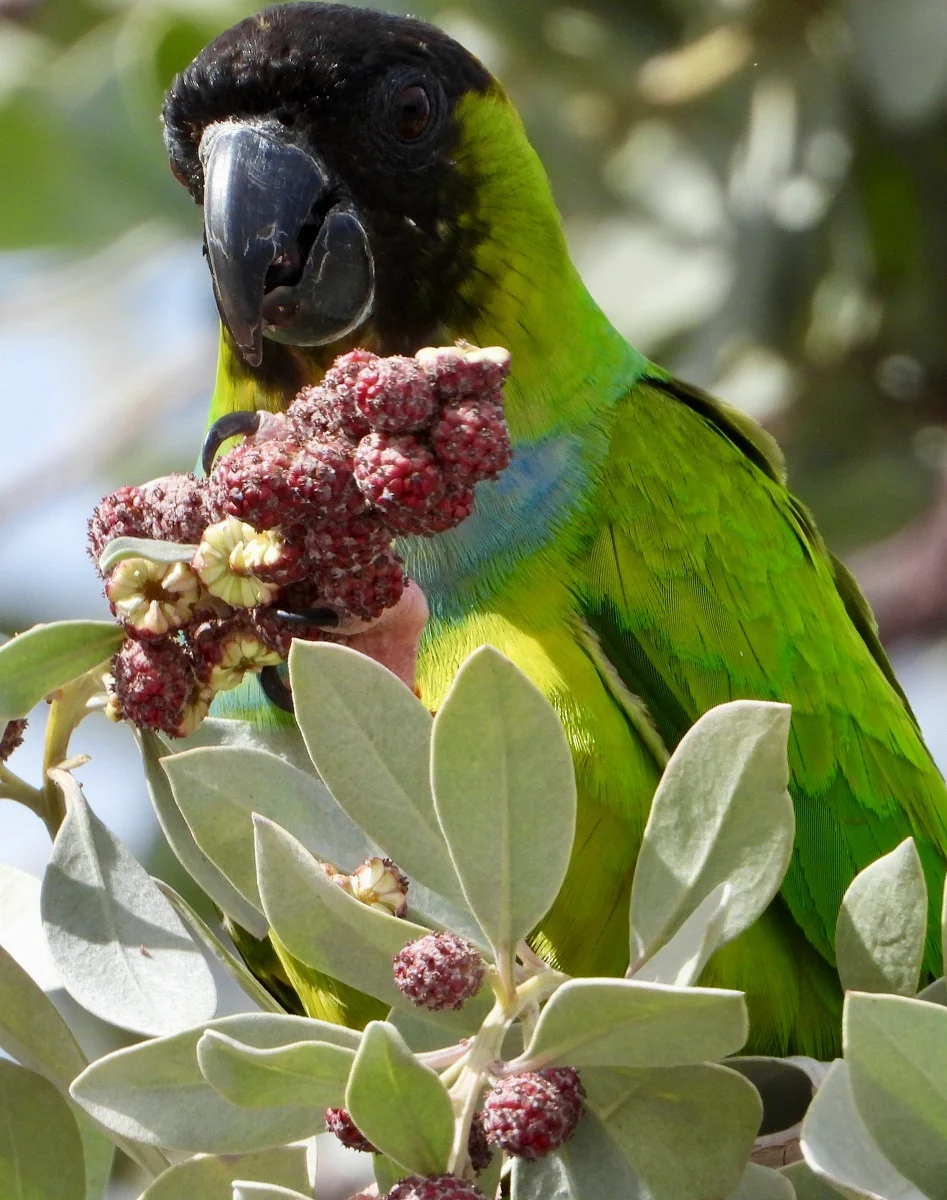
The nanday conure (Aratinga nenday), historically classified under the monotypic genus Nandayus before molecular phylogenetic revisions in 2004 placed it firmly within the Aratinga genus alongside closely related species such as the sun and jenday conures, represents a fascinating intersection of avian biology, environmental adaptation, and exotic pet ownership. Also widely recognized by the moniker black-hooded conure due to its distinct facial plumage, this South American native has captured the attention of ornithologists, conservationists, and pet enthusiasts alike. However, prospective owners must carefully weigh the species’ striking visual appeal and high social intelligence against significant behavioral challenges, most notably an extraordinary vocal capacity that can reach decibel levels capable of causing auditory strain.
Natural Habitat and Geographic Distribution
Endemic to central South America, the wild range of the nanday conure forms a narrow ecological corridor traversing the heart of Paraguay, stretching northward into southern Brazil, westward into eastern Bolivia, and southward into northern Argentina. Within these regions, the species exhibits a strong preference for open lowlands, frequently occupying elevations up to 2,600 feet (800 meters). These habitats characteristically feature a mix of swampy terrain and arid savannahs interspersed with palm groves, which serve a critical ecological function by providing nesting cavities.
Historically, the landscape of central South America has undergone significant anthropogenic alteration, primarily driven by the conversion of native forests into expansive cattle pastures. Paradoxically, this environmental disruption has proven favorable for Aratinga nenday. According to assessments by the International Union for Conservation of Nature (IUCN) Red List, the species is currently categorized as of Least Concern, with wild population trends indicating stability or even localized growth. This resilience is largely attributed to the conure’s adaptability to modified landscapes, where an abundance of edge habitats and secondary growth provides ample foraging opportunities.
Beyond its native neotropical range, the nanday conure has established a notable presence as an invasive species in several foreign jurisdictions. Escaped or intentionally released pets have demonstrated remarkable survival and reproductive capabilities, leading to the formation of thriving feral flocks in diverse climates. Significant wild populations are now documented in parts of Europe, notably Spain, as well as across various regions of the United States, including Florida and California, where studies consistently rank the nanday among the top three most successful naturalized parrot species. These feral populations present complex ecological challenges, as localized flocks can compete with native wildlife for nesting sites and agricultural resources, prompting ongoing monitoring by wildlife management agencies.
Anatomical Profile and Physical Characteristics
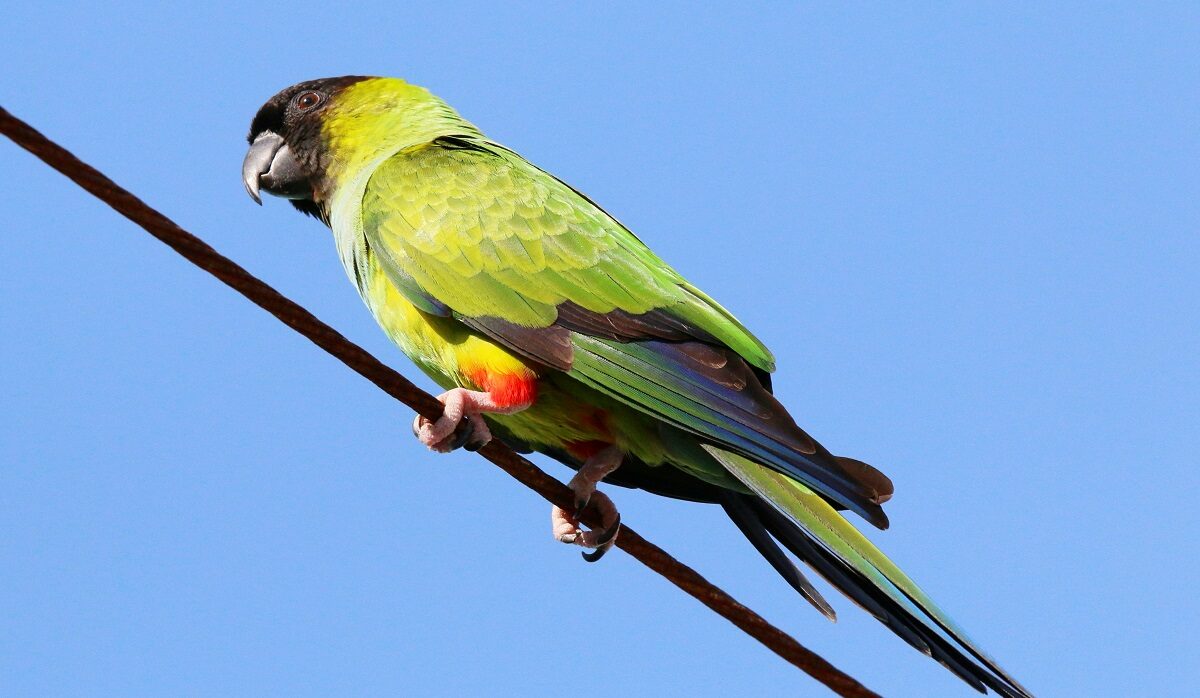
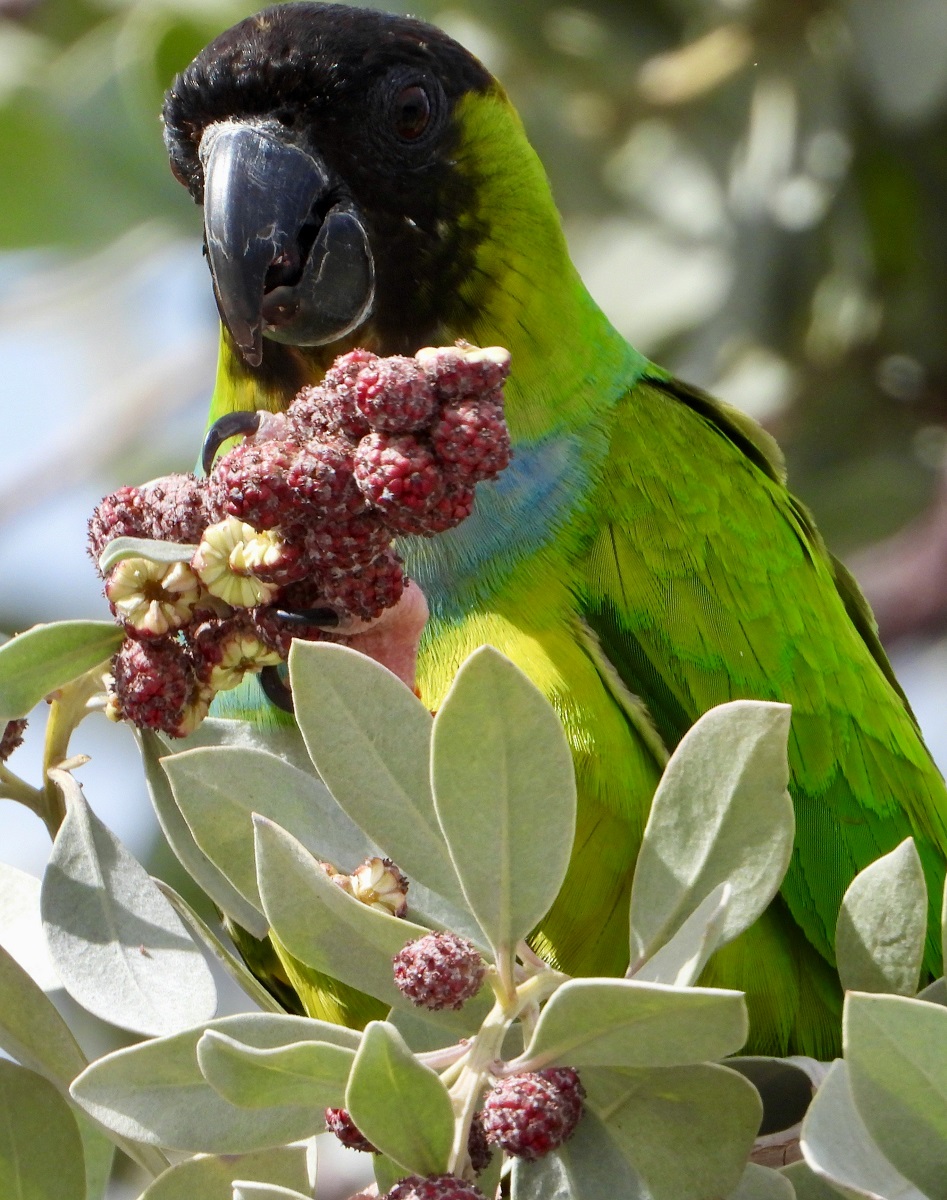
Morphologically, the nanday conure is classified as a small-to-medium-sized parrot. Adult specimens typically attain a length of up to 12 inches (30 centimeters) and a body weight averaging around 140 grams. The species’ most defining visual characteristic is its stark, jet-black hood encompassing the face and forecrown, subtly framed by a narrow collar of brownish feathers. This dark mask contrasts sharply with the vibrant, almost uniform bright green plumage of the rest of the body.
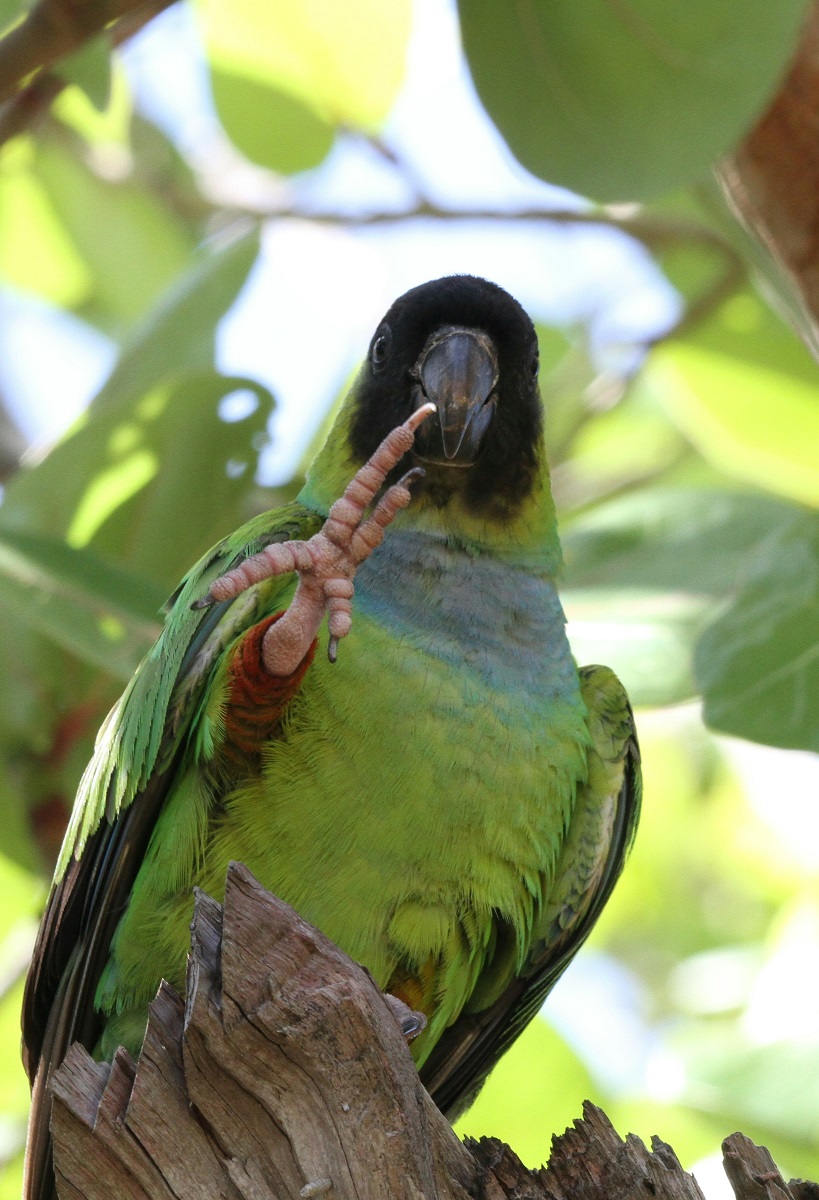
Further detailed examination of the species reveals distinct anatomical accents: a robust black beak designed for cracking hard seeds and nuts, prominent white periophthalmic eye rings, striking blue-green chest and mantle feathers, and a splash of brilliant red plumage located conspicuously on the thighs. Under proper captive management regimes characterized by high standards of nutrition, veterinary care, and environmental enrichment, nanday conures exhibit an impressive longevity, frequently achieving a lifespan of up to 30 years.
Ecological Role and Dietary Habits
In the wild, the foraging ecology of the nanday conure is both diverse and ecologically significant. The species relies heavily on a diet comprising wild fruits, particularly those produced by Copernicia palm species, alongside an array of seeds, berries, floral components, and developing flower buds.
Scientific field studies have highlighted the species’ role as a mutualistic pollinator. Research published in the Brazilian Journal of Biology in 2002 documented that Aratinga nenday actively exploits the nectar of the flowering Erythrina dominguezii tree in western Brazilian dry forests. By inserting their heads into the blossoms to consume nectar, the conures inadvertently transfer pollen between trees, thereby facilitating plant reproduction.
Additionally, like numerous other neotropical parrot species, wild nanday conures frequently visit mineral-rich clay licks exposed along riverbanks. Ornithologists theorize that the ingestion of this specialized soil serves two primary physiological functions: supplementing necessary dietary micronutrients such as sodium and calcium, and neutralizing secondary plant toxins ingested through their varied consumption of wild seeds and fruits.
Captive Care, Diet, and Nutritional Requirements
Translating the complex dietary needs of a wild forager into a domestic environment requires careful adherence to modern avian veterinary science. Historically, captive parrots were maintained primarily on seed-based mixtures. However, contemporary avian veterinary consensus—supported by clinical observations from specialists in the field—indicates that exclusive seed diets predispose nanday conures to severe nutritional deficiencies, hepatic lipidosis (fatty liver disease), and obesity.
Modern captive protocols dictate that a high-quality, commercially formulated pellet diet must serve as the nutritional baseline. This foundational feed should be aggressively supplemented with a wide variety of fresh, parrot-safe produce. Beneficial dietary additions include leafy green vegetables, broccoli, bell peppers, apples, and grapes. Furthermore, small amounts of sprouted seeds, cooked whole grains such as brown rice and pasta, and occasional protein sources like hard-boiled egg whites can be incorporated to provide dietary enrichment.
Housing and Environmental Safety
Replicating the expansive territory of a wild bird in a home environment necessitates careful spatial planning. For owners who cannot permit free-roaming privileges throughout the house, a full-sized outdoor or indoor aviary spanning approximately 10 feet (3 meters) in length is considered optimal. For indoor housing, a spacious enclosure measuring a minimum of 30 by 24 by 24 inches (75 by 60 by 60 centimeters) is required, prioritizing horizontal length over vertical height to allow the bird adequate room to stretch and flutter its wings.
The enclosure must be outfitted with natural wood perches of varying diameters to promote foot health, alongside a rotating selection of durable chew toys to mitigate boredom. Beyond the physical cage, avian safety requires rigorous environmental controls. Birds possess highly sensitive respiratory systems characterized by continuous air-flow respiratory cycles, rendering them exceptionally vulnerable to airborne toxins. Responsible owners must strictly prohibit smoking, the use of aerosolized sprays, scented candles, and the utilization of polytetrafluoroethylene (PTFE)-coated non-stick cookware within the vicinity of the bird.
Behavioral Enrichment and Social Dynamics
Nanday conures are intensely social, gregarious animals that require substantial mental stimulation and social interaction to maintain psychological well-being. In the wild, these birds exist within complex flock structures, spending their days foraging, communicating, and forming lifelong pair bonds.
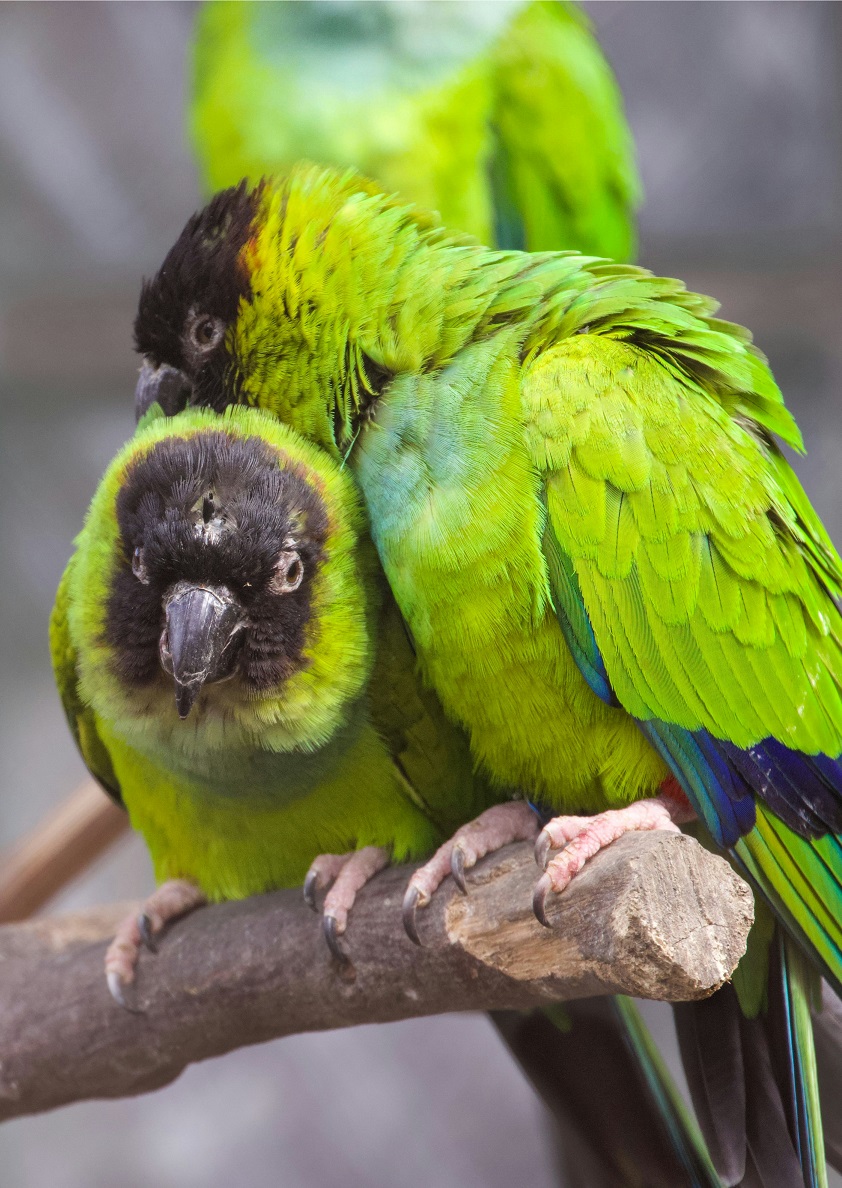
In a domestic setting, a lack of adequate social engagement can precipitate severe psychological distress, manifesting in stereotypic behaviors such as excessive screaming, aggression, and destructive feather-plucking or self-mutilation. Avian behaviorists strongly recommend housing nanday conures in pairs or ensuring that human caregivers can dedicate significant portions of the day to direct interaction. This consideration is particularly vital for households with traditional full-time employment schedules, as leaving a nanday conure isolated for extended periods runs counter to the species’ psychological requirements.
Temperament and Interpersonal Interactions
Among conures of the genus Aratinga, the nanday is frequently cited by owners and breeders for its relatively outgoing and generally amiable disposition toward humans. Unlike certain species within the genus Pyrrhura (such as the green-cheeked conure), which may have a higher propensity for defensive nipping, a well-socialized nanday typically demonstrates a high degree of tolerance for multiple family members and acceptance of novel human visitors.
Nevertheless, this high sociability carries potential drawbacks. Nanday conures can quickly develop intense attachments to their primary caregivers, occasionally displaying jealousy toward other household members or pets. A typical daily routine for a well-adjusted captive nanday involves exploratory play with puzzle toys, vocalization and vocabulary training sessions, physical affection such as head scratching, and extended periods of passive companionship.
Vocalizations and Auditory Considerations
The single most critical factor for prospective nanday conure owners to evaluate is the species’ phenomenal vocal output. Aratinga conures are widely recognized as some of the loudest companion parrots available, and the nanday is no exception.
Ornithological literature and avian behavioral compendiums emphasize the sheer acoustic power of the species. In her 2009 work Good Parrotkeeping, author Robin Deutsch notes that while larger psittacines such as macaws and cockatoos produce screams reaching between 105 and 135 decibels, the diminutive nanday conure has been recorded producing vocalizations scaling as high as 155 decibels—a sound pressure level capable of causing physical pain and permanent damage to human eardrums.
Because of this piercing flock call, which is naturally utilized in the wild to maintain contact across vast open savannahs, nanday conures are generally unsuited for multi-family dwellings, apartment complexes, or environments with noise restrictions. Ethologists recommend that potential buyers audit audio recordings of the species via specialized bioacoustic archives such as xeno-canto or visit established breeders in person to experience the volume firsthand before committing to adoption. In addition to their high-amplitude alarms, nandays are capable of producing a repertoire of whistles, clicks, and rudimentary vocal mimicking, occasionally mastering short phrases or household sounds during playful bouts of vocal babbling.
Conservation Status and Summary of Ownership Requirements
From a conservation standpoint, the wild status of the nanday conure remains secure, protected by its adaptability to agricultural landscapes within its native South American range. However, the responsibilities incumbent upon human caretakers are demanding. Spanning a potential lifespan of up to three decades, requiring specialized low-fat and high-nutrient diets, demanding continuous environmental enrichment, and necessitating a high tolerance for extreme auditory output, the nanday conure is a specialized pet. For dedicated owners possessing the requisite living arrangements and time investment, the black-hooded conure offers an intelligent, affectionate, and deeply engaging avian companionship that spans generations.

