


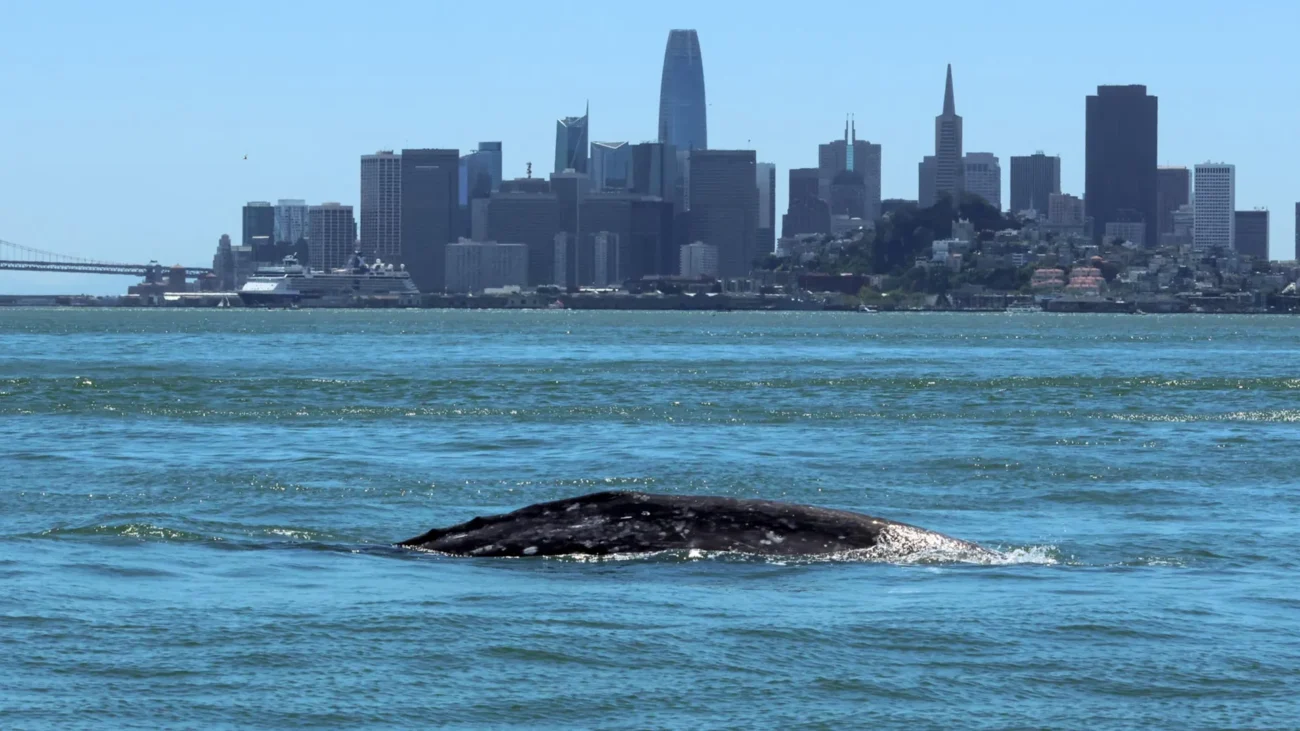
The iconic journey of the gray whale, a millennia-old pilgrimage between the nutrient-rich Arctic feeding grounds and the balmy breeding lagoons of Baja California, is being dramatically reshaped by the accelerating impacts of climate change. Increasingly, these magnificent marine mammals are venturing into unfamiliar waters, with San Francisco Bay emerging as a perilous, albeit sometimes necessary, temporary haven. A concerning trend of gray whale deaths, with a significant proportion linked to collisions with vessels, has prompted urgent scientific inquiry into this evolving behavior. New research highlights the stark reality that nearly 20% of gray whales entering the Bay do not survive, a grim testament to the dangers posed by this urbanized waterway.
A Shifting Ecosystem and Unexpected Visitors
Gray whales have long been celebrated for their extensive migrations, often covering thousands of miles. Their typical migratory pattern involves a period of fasting during their journey to and from the warmer waters of Mexico, where they give birth and nurse their young. Their survival hinges on the substantial fat reserves accumulated from their voracious feeding in the Arctic and sub-Arctic regions. However, the warming of these critical feeding areas, driven by anthropogenic climate change, is disrupting the delicate food web upon which these whales depend. Phytoplankton blooms, the base of the Arctic food chain, are diminishing, and the availability of key prey species like krill and amphipods is becoming increasingly unpredictable. This ecological upheaval is forcing gray whales to seek alternative food sources, leading them to explore habitats they historically avoided.
San Francisco Bay, a bustling estuary characterized by dense maritime traffic and complex currents, was not traditionally a part of the gray whale’s migratory route or feeding grounds. This changed notably in 2018, marking a turning point in observed whale behavior. Since then, an elevated number of gray whale sightings within the Bay has coincided with a disturbing rise in local mortality. This anomaly prompted scientists to initiate a comprehensive study, aiming to decipher the motivations behind these “Bay Grays” and to ascertain whether their presence was a fleeting occurrence or indicative of a more enduring behavioral shift.
Unraveling the Mysteries of the "Bay Grays"
The research, published in the esteemed journal Frontiers in Marine Science, meticulously documented the presence and fate of gray whales within San Francisco Bay between 2018 and 2025. Researchers employed a multi-pronged approach, combining opportunistic sightings reported by the public and dedicated surveys with photographic identification of individual whales. The unique scarring patterns on each whale’s skin served as a natural fingerprint, allowing for individual recognition. This citizen science component was crucial, supplementing more structured surveys conducted over the latter half of the study period. Furthermore, the collected identification data was cross-referenced with necropsy reports from stranded whales, providing vital insights into the causes of death. It is important to note that the fading of these natural markings post-mortem presented a challenge, potentially leading to missed identifications.
Over the course of the study, a total of 114 individual gray whales were documented within the Bay. A striking finding was the low rate of return: only four of these individuals were observed in more than one year. This suggests that for the vast majority, their sojourn in the Bay was a singular event, rather than a recurring habit. Scientists hypothesize that the Bay may be serving as an "emergency feeding stop" for whales that are already in a weakened state, possibly due to poor nutritional intake in their traditional feeding grounds. The observation of unusually thin individuals foraging in these non-traditional habitats lends credence to this theory.
The Perils of a Navigational Bottleneck
The very characteristics that make San Francisco Bay a vital economic and transportation hub also render it exceptionally dangerous for marine life. Josephine Slaathaug of Sonoma State University, the lead author of the study, emphasized the inherent visibility challenges. "Gray whales have a low profile to the water when they surface, and this makes them difficult to see in conditions like fog which are common to San Francisco Bay," she explained. This reduced visibility is compounded by the sheer volume of maritime traffic. The Golden Gate Strait, the narrow entrance to the Bay, acts as a critical bottleneck, channeling all vessel and whale movements into a confined space. This confluence of factors creates a high-risk environment for whales attempting to navigate these busy waters.
The consequences of this perilous environment are starkly evident in the mortality data. Between 2018 and 2025, a staggering 70 gray whales were found deceased in the region surrounding San Francisco Bay. Of these, a confirmed 30 were victims of vessel strikes – direct collisions with ships, ferries, and smaller craft. For the remaining whales where a cause of death could be determined, malnutrition emerged as a significant contributing factor. This suggests a dual threat: whales in poor condition are drawn to the Bay for sustenance, but the very act of feeding in this hazardous environment often leads to their demise, either through direct impact or by exacerbating their weakened state.
Bekah Lane of the Center for Coastal Studies, a co-author of the study, highlighted the alarming statistics: "At least 18% of the individuals identified in San Francisco Bay later died in the area." She further elaborated on the broader regional impact, stating, "Our broader analysis of local strandings both inside and outside San Francisco Bay found that over 40% of these whales died of trauma from vessels." This indicates that vessel strikes are a pervasive threat to gray whales along the California coast, with San Francisco Bay representing a particularly acute hotspot.
A Population Under Unprecedented Pressure
The implications of these findings extend beyond the immediate tragedy of individual whale deaths. The overall gray whale population has been experiencing a significant decline. According to the National Oceanic and Atmospheric Administration (NOAA), the population has shrunk by more than half since 2016, and sightings of vulnerable calves have become increasingly rare. This demographic trend underscores the vulnerability of the species to environmental stressors. The shift in migratory and feeding behavior observed in recent years is not an isolated incident but rather a symptom of a larger, population-level crisis driven by climate change.
The research team stressed the urgent need for further investigation to gain a more nuanced understanding of why and how whales are utilizing San Francisco Bay. The increasing frequency of whale entries into the Bay, with groups sometimes numbering over ten individuals in 2025 alone, signals an escalating situation. Enhanced tracking capabilities and more extensive necropsy data are critical to accurately determine whether the low rate of returning whales is a direct result of high mortality, and to disentangle the relative contributions of starvation and vessel strikes. There is a plausible scenario where weakened whales, already struggling with malnutrition, are less able to detect and evade oncoming vessels, creating a vicious cycle of decline.
Charting a Course for Protection
The study’s findings strongly advocate for the implementation of targeted protective measures to mitigate the risks faced by gray whales in San Francisco Bay. Scientists suggest a multi-faceted approach, including enhanced public awareness campaigns aimed at commercial vessel operators, potential adjustments to ferry routes to avoid known whale aggregation areas, and the imposition of speed restrictions in high-risk zones.
"In San Francisco Bay, the biggest threat to these whales is vessel traffic," stated Lane. "Continued monitoring will help illuminate their distribution patterns and behaviors while within the Bay, which can impact risk. Route changes and speed restrictions have been found to significantly reduce vessel strike mortality to large whales, and an assessment of risk can help identify the most effective strategies to protect these animals." The effectiveness of such measures has been demonstrated in other regions where similar interventions have led to a substantial reduction in large whale mortalities.
While the current research provides a critical snapshot of the challenges facing gray whales in San Francisco Bay, researchers acknowledge that gaps remain in our understanding of their day-to-day movements and behaviors. Slaathaug emphasized the ongoing nature of scientific inquiry: "This study is our best analysis of the data we collected, but it’s important to consider that we do not have the full picture of each whale’s movements on a daily timescale. These results are an important piece of the larger puzzle of what is going on in the overall population as they attempt to adapt to climate change in real time."
The plight of the gray whale in San Francisco Bay serves as a poignant microcosm of the broader ecological crisis unfolding globally. As climate change continues to alter oceanographic conditions, species are forced to adapt in ways that can have unforeseen and often tragic consequences. The scientific community’s dedication to understanding these shifts, coupled with decisive action from policymakers and the maritime industry, is paramount to ensuring the survival of these ancient mariners in a rapidly changing world. The future of the gray whale migration, a natural spectacle that has captivated humanity for generations, now hinges on our collective ability to respond to the urgent environmental challenges of our time.

