



The intricate tapestry of avian coloration has long fascinated naturalists, and the specific combination of brown plumage with an orange chest presents a unique challenge for bird enthusiasts. This exploration delves into the biological reasons behind feather coloration, the scientific mechanisms that produce these vibrant hues, and embarks on a global journey to identify avian species that fit this distinctive description. While initial thoughts might focus on familiar North American species, a comprehensive search reveals a broader, international spectrum of birds exhibiting this striking combination, often linked to their ecological roles and reproductive strategies.
The Biological Imperative of Feather Coloration
Birds utilize colored feathers for a variety of critical survival and reproductive functions. The most prominent of these is camouflage. This is particularly crucial for females, whose often muted plumage allows them to blend seamlessly into their environment, thereby protecting their nests and vulnerable chicks from potential predators. In stark contrast, males of many species display more vibrant and varied coloration. This elaborate plumage serves as a powerful tool for sexual selection, signaling their genetic fitness and health to potential mates. A male bird’s striking colors can indicate his ability to acquire resources, evade disease, and ultimately, his suitability as a partner, contributing to the propagation of strong genes within the species.
The Chemistry of Avian Color: Pigments and Light Scattering
The stunning array of colors seen in bird feathers is primarily the result of two main types of pigments: melanin and carotenoids.
Melanin is a pigment naturally produced within a bird’s body. It is responsible for the production of black, brown, and grey feathers, as well as many shades of orange. Melanin pigments are synthesized by specialized cells called melanocytes and are incorporated into the feather’s structure during its growth.
Carotenoids, on the other hand, are not synthesized by birds themselves. Instead, these vibrant pigments must be acquired through their diet. Carotenoids are responsible for producing a wide range of bright colors, including reds, yellows, and oranges, though they do not contribute to blue or green hues. The availability and concentration of carotenoids in a bird’s diet can directly influence the intensity and brilliance of its colored plumage, further linking color to an individual’s foraging success and overall health.
It is important to note that blue coloration in feathers is an optical illusion. There are no true blue pigments. Instead, blue appears due to the physical structure of the feathers interacting with light. Microscopic structures within the feather barbules scatter light waves, reflecting shorter, bluer wavelengths back to the observer. This phenomenon, known as structural coloration, is distinct from pigment-based coloration.
Given the purpose of camouflage and the prevalence of muted tones in species seeking to avoid detection, the focus of this investigation on brown birds with orange chests naturally leads to an examination of plumage often associated with females or species that rely on subtler forms of display.

A Global Compendium of Brown Birds with Orange Chests
Embarking on this ornithological quest, we traverse continents and diverse habitats to identify species that embody the specific brown-and-orange characteristic. While initially, only a handful of species might come to mind, a deeper dive reveals a surprisingly rich variety.
1. American Robin ( Turdus migratorius )
The American Robin is a familiar sight across North America, a harbinger of spring for many. While its scientific classification places it within the thrush family, its common name often leads to comparisons with European robins.
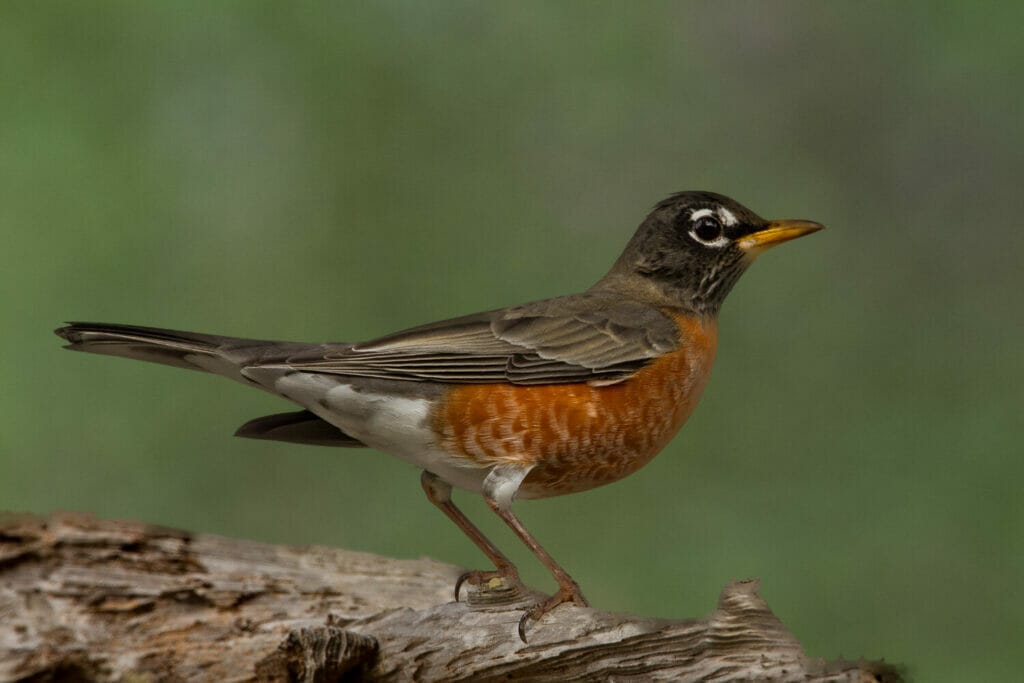
- Identification and Size: This medium-sized songbird, measuring approximately 7.9 to 11.0 inches in length with a wingspan of 12.2 to 15.8 inches and weighing between 2.7 and 3.0 ounces, is characterized by its gray-brown back and a distinctive dark, orangey-red belly. Females typically exhibit a more subdued coloration compared to males.
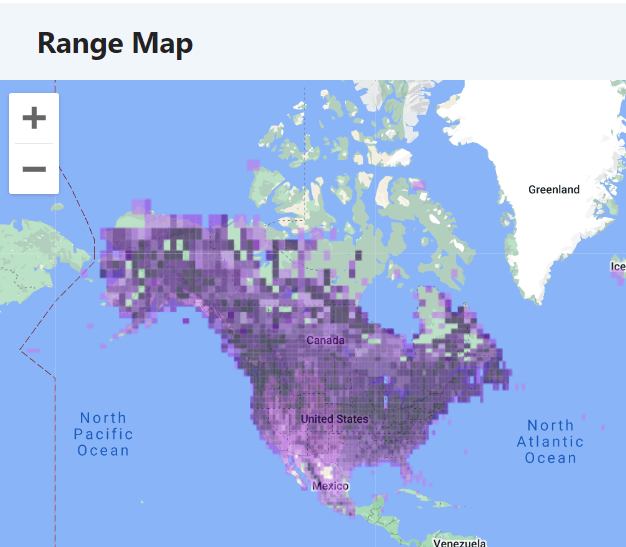
- Distribution: The American Robin enjoys a vast distribution, spanning across continental North America, from the northern reaches of Canada and Alaska down through Mexico. They are frequently observed in open areas such as lawns, parks, and gardens, making them readily visible to observers.
- Diet: Primarily an insectivore, the American Robin forages for earthworms and insects in grassy areas. While often associated with urban and suburban environments, they are equally at home in wilder, natural landscapes.
- Interesting Fact: Although often considered a symbol of spring’s arrival, American Robins do not migrate exceptionally long distances during winter. Their ability to subsist on winter berries, found away from typical garden feeding sites, allows them to remain in less-populated areas during colder months, which contributes to their perceived earlier return in the spring.
2. Zebra Waxbill ( Amandava subflava )
This diminutive bird, also known as the Orange-breasted Waxbill, showcases a vibrant orange breast against a more subdued brown and olive backdrop.
- Identification and Size: A striking feature of this waxbill is its vivid orange breast, which contrasts with its olive-brown back and bright red rump. Measuring only about 3.5 inches in length and weighing a mere 0.18 to 0.38 ounces, it is a small but visually captivating species.
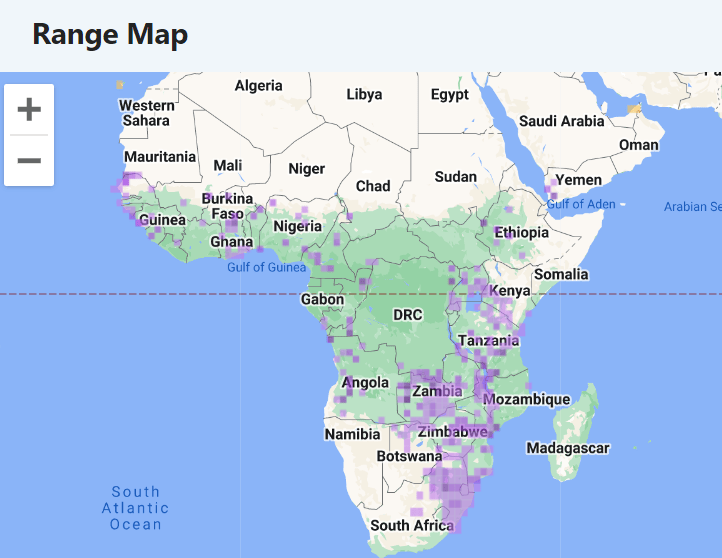
- Distribution: The Zebra Waxbill is found in the southwestern and northeastern regions of Africa, inhabiting grasslands and scrublands.
- Diet: Predominantly a seed-eater, this waxbill supplements its diet with insects, particularly during its breeding season.
- Interesting Fact: Courtship rituals among Zebra Waxbills are quite elaborate, involving a series of bows and mutual preening, underscoring the importance of pair bonding in this species.
3. European Robin ( Erithacus rubecula )
The European Robin is an iconic bird across its namesake continent, renowned for its friendly demeanor and its characteristic red-orange breast.
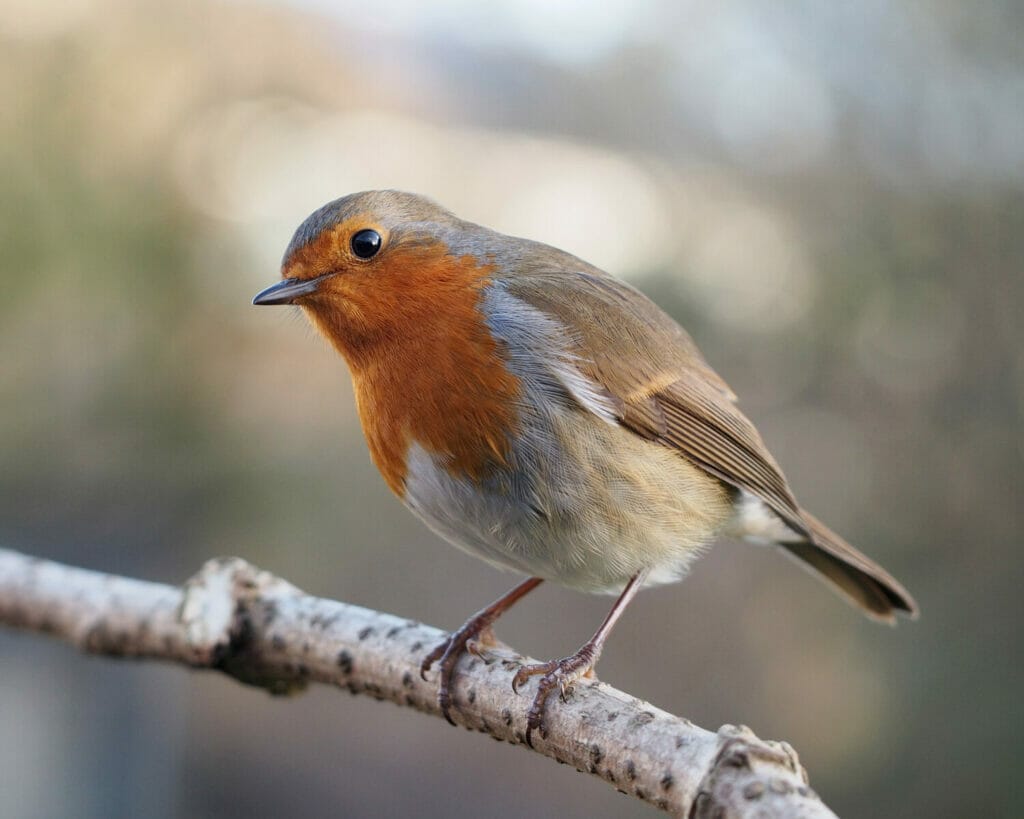
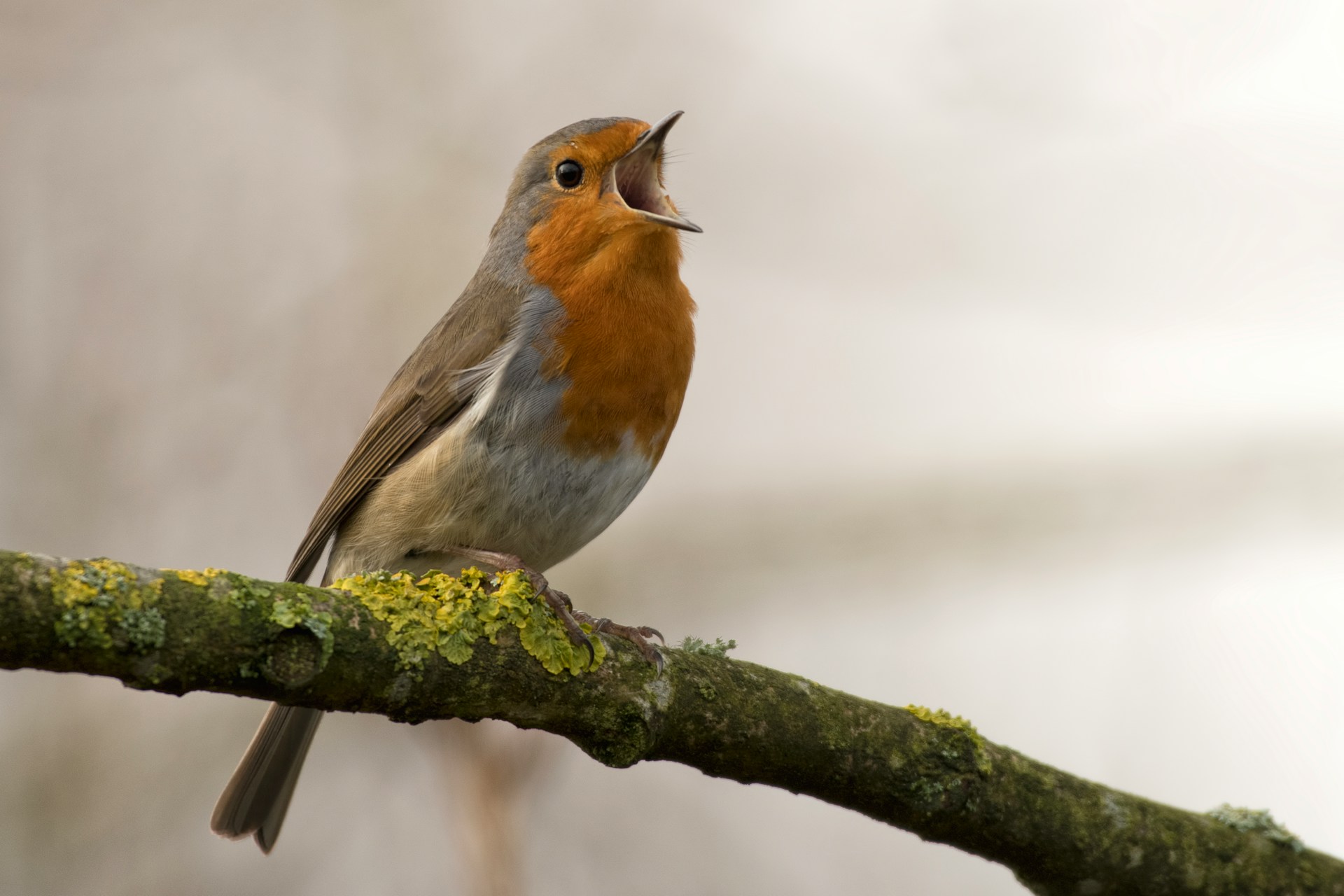
- Identification and Size: This small, plump bird, approximately 5.5 inches in length and weighing between 0.49 and 0.88 ounces, is easily recognized by its brown upperparts and the iconic orange-red breast and face, which extends down to paler gray underparts. The intensity of the orange can vary, but it is a defining characteristic.
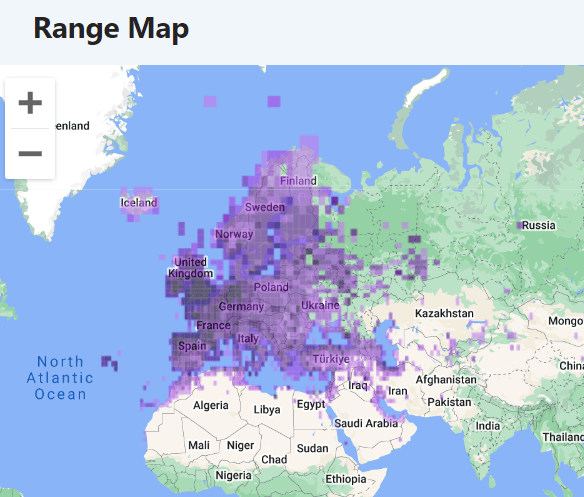
- Distribution: The European Robin is a common resident throughout Europe, extending its range into northern Africa and the Middle East. They are often found in woodlands, hedgerows, and gardens.
- Diet: The European Robin exhibits a varied diet, consuming small vertebrates, invertebrates, fruits, and seeds, demonstrating adaptability to different food sources throughout the year.
- Interesting Fact: The European Robin possesses a diverse repertoire of vocalizations, including warbling, ticking, and peeping sounds, and is also known for its ability to mimic other birds, with their songs often changing throughout the year.
4. Sharp-shinned Hawk ( Accipiter striatus )
While raptors are not typically the first birds that come to mind for this color combination, the Sharp-shinned Hawk presents a fascinating inclusion.
- Identification and Size: This relatively small hawk, measuring 9.4 to 13.4 inches in length with a wingspan of 16.9 to 22.1 inches and weighing 3.1 to 7.7 ounces, is an agile hunter of forests. Its breast can be streaky orange or a more solid wash, transitioning to a pale belly. The back ranges from brown in juveniles to darker shades in adults.
- Distribution: The Sharp-shinned Hawk is found across the United States and into Canada and Alaska. Its range extends south into Central America and parts of northwestern and mid-eastern South America.
- Diet: This swift raptor primarily preys on other small birds, often hunting within dense forests but occasionally taking prey from backyard feeders.
- Interesting Fact: The Sharp-shinned Hawk derives its name from its legs, which are entirely featherless down to the toes, a characteristic common among many birds of prey.
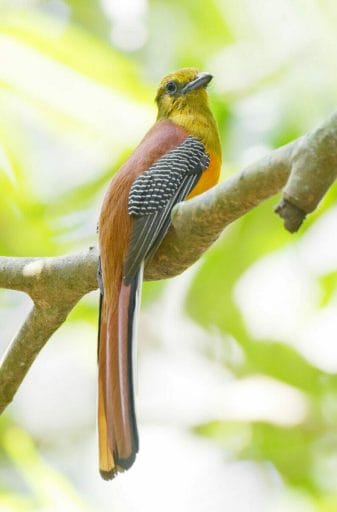
5. Orange-breasted Trogon ( Harpactes oreskios )
This striking trogon from Southeast Asia offers a beautiful example of the desired plumage.
- Identification and Size: Both sexes of the Orange-breasted Trogon are similar, featuring a bright orange breast bordered by a paler yellow. Their backs are cinnamon brown with black and white wing bars, and their necks and heads are a muted olive-yellow. They measure between 9.8 and 12.2 inches in length and weigh 1.7 to 2.0 ounces.
- Distribution: This trogon inhabits low-level forests across Southeast Asia.
- Diet: The Orange-breasted Trogon has a diverse diet of insects and plant material, foraging from the ground to the mid-canopy.
- Interesting Fact: Employing a unique hunting technique known as "sally-stall," this trogon pursues insects by moving from leaf to branch, then momentarily stalling in front of its prey to startle it before pouncing.
6. Russet-bellied Spinetail ( Synallaxis zimmeri )
An endangered and rare species, the Russet-bellied Spinetail is a testament to the unique biodiversity of the Andean region.
- Identification: Endemic to Peru, this spinetail is characterized by its russet-orange breast that extends down to its belly and tail. Its upperparts and wings are gray-brown. It measures between 6.5 and 6.7 inches in length and weighs 0.42 to 0.49 ounces.
- Distribution: This species is found in western Peru, specifically within the Andes mountain range.
- Diet: The Russet-bellied Spinetail is omnivorous, with a diet primarily consisting of flying insects and spiders.
- Interesting Fact: The endangerment of this spinetail is primarily due to habitat loss and the lack of natural corridors that would allow it to expand its range to more suitable locations.
7. Orange-breasted Thornbird ( Phacellodomus ferrugineigula )
This South American thornbird boasts a subtle yet beautiful blend of brown and orange.

- Identification: While largely brown, this thornbird features warm tones that fade into a muted orange on its breast. It measures between 7.0 and 7.2 inches in length and weighs 0.84 to 0.88 ounces.
- Distribution: This species inhabits wetland and marsh habitats on the eastern side of South America.
- Diet: Little research has been conducted on this elusive bird, but it is believed to feed mainly on arthropods.
- Interesting Fact: Information on the behavior of this thornbird is scarce, highlighting its elusive nature. Further research is needed to fully understand its ecological role and life history.
8. European Stonechat ( Saxicola rubicola )
The European Stonechat, particularly the female, fits the description with its brown plumage and orangey-buff chest.
- Identification and Size: The female European Stonechat is predominantly brown with a pale buff belly that transitions into an orange-tinted chest. It measures approximately 5 inches in length and weighs between 0.5 and 0.6 ounces.
- Distribution: This stonechat is a common bird found throughout Europe, extending into North Africa and the Middle East. They prefer open country with scattered bushes and heathland.
- Diet: Their diet consists mainly of insects and their larvae, though they will occasionally consume seeds or fruit.
- Interesting Fact: The stonechat earns its name from its distinctive call, which sounds like two stones being clicked together, a unique auditory identifier for this species.
9. Brambling ( Fringilla montifringilla )
This attractive finch, particularly outside of its breeding plumage, exhibits the sought-after coloration.

- Identification and Size: During the non-breeding season, bramblings display orange breasts, a white rump, and intricate brown, black, and white patterns on their wings. They measure between 5.3 and 6.2 inches in length and weigh 0.6 to 1.0 ounce.
- Distribution: The Brambling is widespread across Western Europe and Asia, with its range extending as far as Japan. They are migratory, often forming large flocks.
- Diet: The Brambling primarily feeds on fruits and seeds, but will opportunistically consume insects.
- Interesting Fact: This finch is a migratory species, and during certain times of the year, massive flocks numbering in the millions can be observed across Europe, creating a spectacular natural phenomenon.
Conclusion: A Near Miss and a Deeper Appreciation
While the initial goal was to identify ten distinct brown bird species with orange chests, this exploration has uncovered nine such examples. The quest highlights the fascinating diversity within avian coloration and the geographical distribution of these species. The Orange-breasted Thornbird, with its subtle yet striking blend of brown and orange, stands out as a particularly captivating example, especially considering its predominantly brown base plumage. This journey has underscored that while certain color combinations might seem common, the specific interplay of brown and orange is found across a diverse range of families and continents, often tied to the intricate dance of camouflage, mate attraction, and survival. The rich biodiversity of our planet continues to offer endless opportunities for discovery and appreciation.
Frequently Asked Questions (FAQs)
Q1: What common bird in the United States has an orange belly?
In the United States, the American Robin is the most commonly encountered bird with a distinctly orange or reddish-orange belly. Its widespread distribution and presence in urban and suburban areas make it a familiar sight for many.
Q2: Is the Barn Swallow a bird with an orange chest?
The Barn Swallow does indeed have a reddish-brown or rusty-orange chest, which can appear quite prominent. However, it was not included in the primary list because its overall plumage is not predominantly brown; it typically features blue-black upperparts.
Q3: Which birds are black with orange bellies?
Numerous species of orioles, found across the Americas, are characterized by black backs and striking orange or yellow bellies. These birds are known for their vibrant coloration and often melodious songs.

Q4: What kind of bird is described as reddish-brown with an orange chest?
The Brown Thrasher is a bird that fits the description of being reddish-brown overall. While it has a buff-colored breast, the intensity of its reddish-brown plumage and its overall coloration make it a notable species, though its chest coloration doesn’t precisely match the orange requirement for the main list.

