


A long tail can transform an ordinary bird into an unforgettable spectacle. These trailing plumes are far more than mere adornments; they are sophisticated steering systems, effective brakes, vibrant signal flags, and sometimes, elaborate masterpieces designed to impress. Across diverse ecosystems, numerous avian species have evolved tail feathers that extend far beyond what might seem practically necessary. Some utilize these extraordinary appendages for enhanced agility in flight, while others rely on their sheer extravagance for success in courtship rituals. In every instance, these trailing adornments offer a compelling narrative of survival, habitat adaptation, and evolutionary prowess. This article delves into some of the most breathtaking examples of birds that have mastered the art of the long tail.
The Evolutionary Arms Race of the Long-tailed Widowbird
Nowhere is the principle of sexual selection more dramatically illustrated than in the Long-tailed Widowbird of Africa. During the intense breeding season, the males of this species undergo a remarkable transformation, growing tail feathers that can reach an astonishing length of approximately 20 inches. In flight, these elongated feathers stream behind the bird like flowing black ribbons, creating a visually arresting display.
While these impressive tails are not particularly conducive to everyday flight, and can even present challenges in maneuverability, their evolutionary trajectory is undeniably linked to female preference. Year after generation, females have favored males with longer tails, driving the persistent and dramatic amplification of this feature. This phenomenon serves as a quintessential example of sexual selection, where traits that might otherwise be disadvantageous for survival are favored because they increase mating success. In stark contrast, the females of the species remain modestly colored with practical, shorter tails, perfectly suited for their life within the dense grasses of their habitat, where camouflage and agility are paramount for avoiding predators and raising young. The annual cycle of tail growth and shedding in males also represents a significant energetic investment, underscoring the evolutionary pressure to display these impressive, albeit costly, ornaments.
The Resplendent Quetzal: A Symbol of Ancient Majesty and Agile Flight
Deep within the misty cloud forests of Central America resides a bird that seems almost ethereal: the Resplendent Quetzal. The males of this species possess exceptionally long upper tail coverts that can extend to over two feet behind their bodies, shimmering with an iridescent green hue that catches the filtered sunlight of their arboreal home.
Unlike the widowbirds, which inhabit open grasslands, quetzals navigate the complex, three-dimensional environment of trees. This necessitates a delicate balance between aesthetic grandeur and functional control. Their elongated tail feathers, therefore, must still allow for precise maneuvering as they flit between branches, hunt for fruit and insects, and engage in aerial courtship displays. The result is a breathtaking fusion of beauty and aerial mastery, where the extravagant tail contributes to the bird’s allure without compromising its ability to thrive in its forest habitat.
Historically, the resplendent quetzal has held profound cultural significance. For ancient civilizations such as the Maya and the Aztecs, the quetzal and its magnificent feathers symbolized freedom, wealth, and divinity. The bird was considered sacred, and its feathers were reserved for royalty and priests. Even today, the quetzal remains an enduring icon of the Mesoamerican forests, its presence a testament to the rich biodiversity and cultural heritage of the region. The ongoing conservation efforts to protect its cloud forest habitat are crucial for ensuring the survival of this magnificent species and the continuation of its ecological and cultural legacy.

The Ribbon-tailed Astrapia: A Masterclass in Avian Aerodynamics and Display
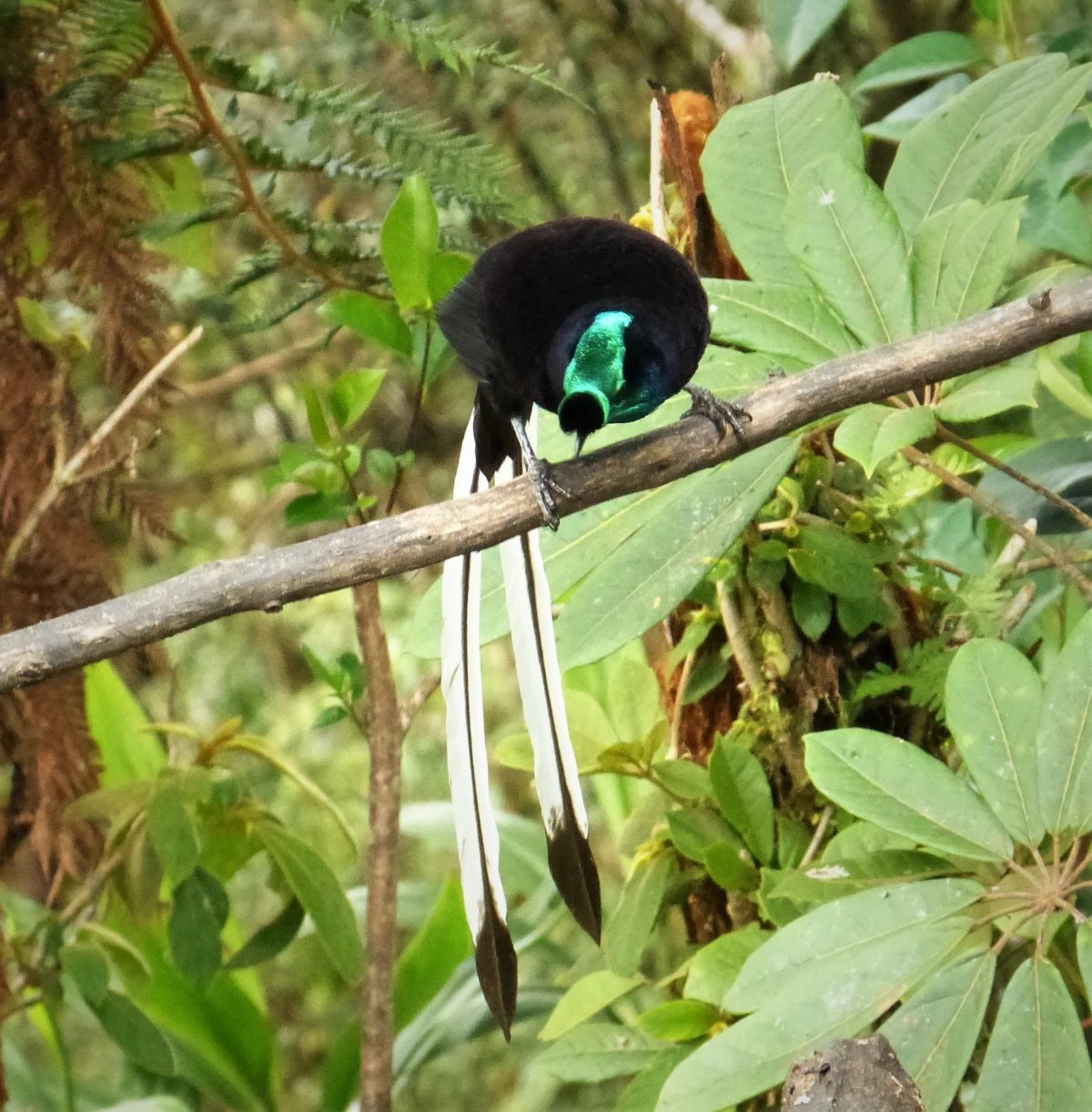
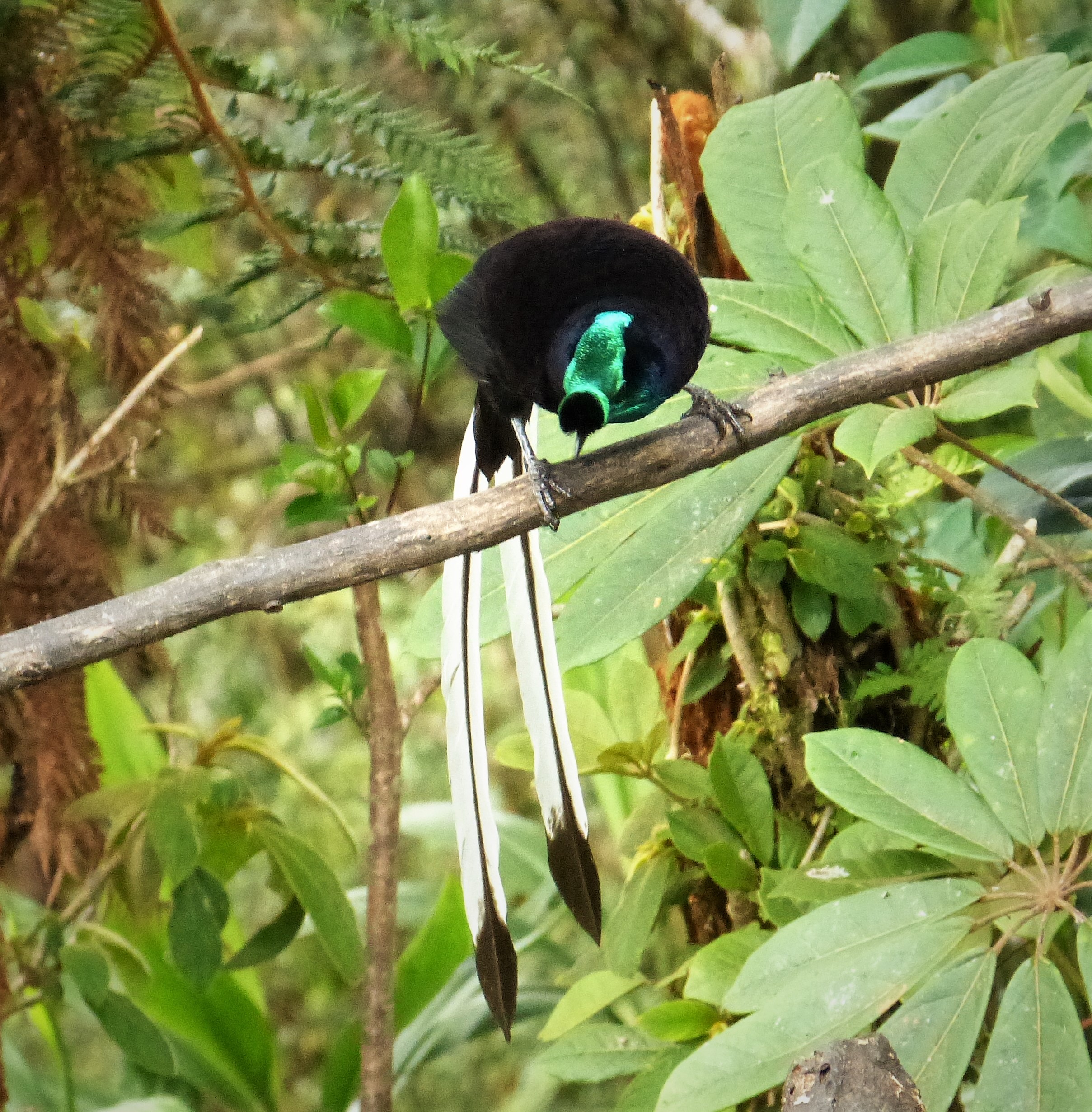
High in the rugged mountains of New Guinea, a bird with a tail that appears to defy the very principles of physics makes its home. The Ribbon-tailed Astrapia, a member of the bird-of-paradise family, boasts two astonishing white tail feathers that can astonishingly exceed a meter (over three feet) in length.
As the male navigates the mossy branches of its mountainous habitat, these ribbon-like feathers float and sway behind it, catching the light and drawing immediate attention. These extraordinary plumes are central to the elaborate courtship displays of the astrapia. The males combine intricate postures, dynamic movements, and the mesmerizing undulation of these incredible feathers to captivate potential mates.
The evolutionary advantage of carrying such conspicuous and potentially cumbersome ornaments is undeniable. However, the reproductive success and the species’ continued existence hinge on the balance between the risk associated with these tails and the significant reward of securing a mate. The energy expenditure required to grow and maintain such extensive feathering, coupled with the increased vulnerability to predators, highlights the extreme selective pressures that have shaped this species. Research into the biomechanics of the astrapia’s flight suggests that while the tails may increase drag, their specific shape and arrangement might also play a role in stabilizing flight during complex aerial maneuvers, a fascinating interplay between form and function.

The Scissor-tailed Flycatcher: A Dynamic Tool for Aerial Acrobatics
North America presents its own remarkable avian showstopper: the Scissor-tailed Flycatcher. The deeply forked tail of this bird can open and close with remarkable dexterity, resembling a pair of shears in motion. In some individuals, these tail feathers can be longer than the bird’s entire body, creating a dramatic visual effect as it navigates the open skies.
Unlike the purely decorative tails of some species, the scissor-tailed flycatcher’s tail is a highly functional tool. As agile insectivores, these birds engage in rapid, darting flights to capture prey on the wing. The extended and forked tail feathers provide exceptional control, allowing for abrupt changes in direction and precise aerial maneuvers. This adaptation is crucial for their hunting strategy, enabling them to snatch flying insects with precision.
Against the vast expanse of prairie skies, the striking salmon-pink sides of the flycatcher, combined with its streaming, scissor-like tail, make it an unmistakable and captivating sight. The species’ breeding grounds, primarily in the southern Great Plains of the United States, witness spectacular aggregations of these birds during migration, turning vast landscapes into stages for their aerial ballets. The health of these open prairie ecosystems is intrinsically linked to the survival of the scissor-tailed flycatcher, making their conservation a barometer for the wider environmental well-being of these regions.

The Lyrebird: A Symphony of Sound and Spectacle
Australia’s Superb Lyrebird offers a tail designed for the grandest of theatrical performances. The males possess a unique tail structure, with specialized feathers that they can raise and curve over their heads to form the shape of a classical lyre. This visual spectacle is not merely for show; it accompanies an extraordinary vocal performance. Lyrebirds are renowned for their incredible vocal mimicry, replicating the songs of other birds, the calls of various animals, and even sounds from their environment, including chainsaws and camera shutters.
In the lyrebird’s courtship ritual, the tail and voice work in perfect synergy. The visual display of the unfurled tail draws the attention of females, while the complex and diverse acoustic performance aims to impress and entice. This integrated strategy highlights a sophisticated evolutionary pathway where multiple sensory modalities are employed to maximize reproductive success. Researchers have documented the development of complex vocal repertoires in young lyrebirds, suggesting a significant learning component in their mimicry abilities, further emphasizing the bird’s intelligence and adaptability. The specific shape and texture of the lyre-shaped tail feathers also contribute to acoustic amplification and resonance, enhancing the bird’s vocalizations.
The Indian Paradise Flycatcher: Elegance in Motion

The Indian Paradise Flycatcher is immediately recognizable by the male’s stunning, ribbon-like tail feathers. These exquisite appendages can grow up to an impressive 30 centimeters (approximately 12 inches) long, creating a graceful, streaming effect as the bird flies. As males mature, they undergo a striking plumage change, transitioning from a rufous coloration to a brilliant, snowy white. Females, in contrast, retain a consistent reddish-brown coat and a shorter tail, ensuring their camouflage within their preferred habitats.
These active insectivores are commonly found in well-wooded regions across the Indian subcontinent. They are masters of aerial acrobatics, performing agile maneuvers to snatch flies, beetles, and other flying insects mid-air. The long tail feathers, while visually striking, also play a role in their hunting prowess, potentially aiding in stabilization and maneuverability during their rapid pursuits. The presence of the Indian Paradise Flycatcher is often indicative of healthy, mature forest ecosystems, making them an important indicator species for avian conservation in the region. Studies have noted regional variations in tail length and plumage color within the species, suggesting localized adaptations and evolutionary divergence.
The Multifaceted Role of Long Avian Tails: A Balancing Act of Survival and Reproduction
The evolution of elongated avian tails represents a profound biological balancing act. The undeniable visual benefits these appendages offer, particularly in mate attraction, must be weighed against their inherent physical costs. For a significant number of species, an extended or elaborately shaped tail serves as a primary mechanism for mate choice. It acts as a reliable signal of genetic quality, health, and vigor, making the male more attractive to potential partners.

Beyond the realm of courtship, these tails are often critical instruments for flight control. Forked or extended feathers can significantly enhance maneuverability, allowing birds to execute sudden turns, maintain stability during high-speed pursuits, and navigate complex environments with greater precision. This is particularly evident in aerial insectivores and raptors.
Furthermore, these tails function as vital devices for communication and species recognition. They can signal social status to rivals, helping to establish dominance hierarchies, or aid in identifying correct mates within a given species, especially in dense or visually challenging habitats. However, these remarkable "ornaments" are not without their drawbacks. They can increase drag, potentially slowing a bird’s escape from predators, and demand a higher metabolic expenditure for growth and maintenance of the extra plumage. Consequently, evolutionary pressures only favor these dramatic features when the reproductive and survival advantages—the "benefits"—consistently outweigh the energetic and predatory "costs." The intricate interplay between these factors dictates the remarkable diversity of tail forms observed across the avian world.
Conclusion: Unforgettable Expressions of Nature’s Ingenuity
Birds with exceptionally long tails push the boundaries of our understanding of avian capabilities. From the sun-drenched grasslands of Africa and the open prairies of North America to the mist-shrouded mountains of New Guinea and the ancient forests of Australia, these birds carry banners of silk, wire, and flame through the air. Each trailing plume is a testament to countless generations of evolutionary choices, a narrative woven by the birds themselves. When one of these magnificent creatures passes by, trailing light and color in its wake, it commands our attention, compelling us to pause and marvel.

Observing these birds can profoundly alter our perspective on efficiency in the natural world. Survival is not always about minimalism or practicality; sometimes, success is achieved through sheer memorability. A long tail can serve as a bold advertisement, a captivating performance, or an irrefutable badge of quality. It possesses the remarkable power to transform a simple act of flight into a work of art, reminding us that in the grand tapestry of evolution, being unforgettable is often the most effective strategy for survival and propagation.

