


For companion birds, from the smallest finch to the largest macaw, the humble perch transcends its apparent simplicity to become a critical component of their overall health, well-being, and longevity. Far more than a mere resting spot, a bird’s perching environment significantly impacts its physical comfort, joint health, foot strength, and even mental stimulation. Neglecting the nuanced requirements of appropriate perching can lead to a cascade of preventable health issues, underscoring why avian experts and experienced bird owners meticulously curate their birds’ perching landscapes. This comprehensive guide delves into the scientific rationale, practical considerations, and expert recommendations for creating an optimal perching environment that mirrors the natural world, fostering robust health and enriched lives for our feathered companions.
The Physiological Imperative: Why Perches Are Paramount
A bird’s foot anatomy is exquisitely adapted for gripping, climbing, and maneuvering within complex arboreal environments. In the wild, birds encounter an infinite variety of branch diameters, textures, and angles, which naturally exercises their foot muscles, maintains nail and beak health, and prevents undue pressure on any single point. In captivity, however, a static, unvaried perching setup can quickly compromise this delicate balance.
The consequences of inappropriate perching are well-documented in avian veterinary medicine. One of the most common and debilitating conditions is pododermatitis, colloquially known as "bumblefoot." This inflammatory condition, ranging from mild redness to severe ulceration and infection, is often triggered by constant pressure on the plantar surface of the foot, typically from perches that are too uniform, too hard, or too small/large for the bird’s foot size. Unvaried perches can also lead to muscle atrophy in some foot muscles and hypertrophy in others, disrupting the natural biomechanics of the foot. Over time, this imbalance can contribute to arthritis, joint deformities, and chronic pain, significantly diminishing a bird’s quality of life. Furthermore, a lack of varied textures means nails and beaks may not wear down naturally, necessitating more frequent and potentially stressful trims.
Beyond physical health, perches play a vital role in a bird’s psychological well-being. A stimulating perching arrangement encourages natural behaviors such as climbing, exploring, and chewing. It offers varied vantage points within the cage, providing a sense of security and mental engagement that can mitigate boredom, stress, and behavioral issues like feather plucking or excessive screaming.
A Historical Perspective: Evolving Understanding of Avian Perch Needs
For many decades, the standard cage setup for pet birds often included only one or two smooth, wooden dowel perches. This approach, while convenient for manufacturing, reflected a limited understanding of avian biology and welfare needs. The 1970s and 80s saw a growing awareness among avian veterinarians and dedicated enthusiasts about the unique physiological and psychological requirements of companion birds. Research into wild parrot behavior, coupled with clinical observations of captive birds, began to highlight the detrimental effects of uniform perches.
By the 1990s and 2000s, the concept of "environmental enrichment" gained significant traction in avian care, leading to a paradigm shift in perch recommendations. The emphasis moved from mere resting spots to dynamic, multi-faceted perching systems designed to mimic natural habitats. Today, leading avian organizations and veterinary bodies advocate for a diverse range of perches, acknowledging their indispensable role in preventive healthcare and holistic avian welfare. This evolution underscores a broader commitment within the pet industry to evidence-based practices that prioritize the animal’s natural biology and psychological needs.

The Science of Safe Materials: Selecting Perches That Protect
The material composition of a perch is a fundamental safety consideration. Not all materials are created equal, and some can pose significant health risks.
-
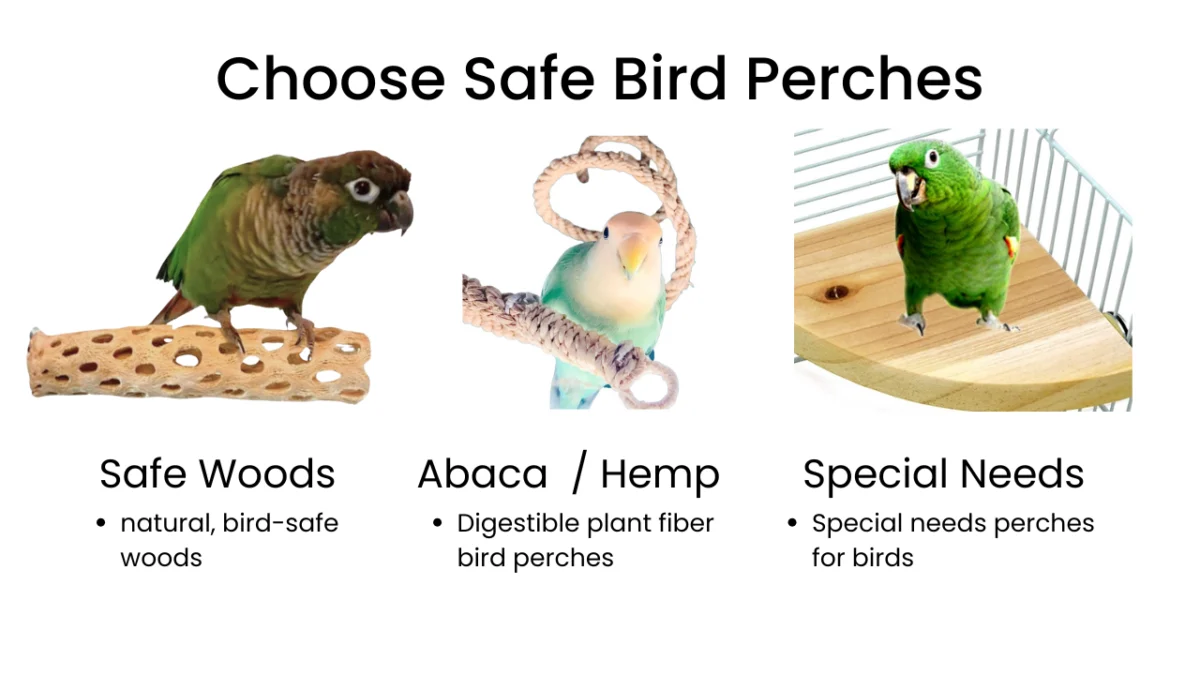
Safe Natural Woods: The gold standard for perches are natural, untreated branches from bird-safe trees. These offer irregular shapes, varying diameters, and textures that are crucial for foot health. Popular and safe choices include:
- Manzanita: Extremely durable, naturally curvy, and resistant to chewing, making it an excellent long-term option.
- Java Wood: Harvested from spent coffee trees, it’s dense, long-lasting, and often comes with interesting natural shapes.
- Dragonwood: Known for its unique, gnarled appearance and hardness, offering both durability and aesthetic appeal.
- Grapevine: Provides highly irregular surfaces and is good for chewing, though less durable than manzanita or java.
- Fruit Tree Woods (e.g., Apple, Pear, Citrus): Must be untreated and free from pesticides. Ensure inner bark is removed for some species.
- Willow, Poplar, Birch, Dogwood: Generally safe, offering softer chewing options.
It is paramount that any natural wood perch be sourced from areas free of pesticides, herbicides, and other chemical treatments. Branches collected from outdoors should be thoroughly scrubbed with a bird-safe disinfectant solution, rinsed, and oven-baked at a low temperature (e.g., 250°F for an hour) to kill potential parasites, bacteria, or fungi.
-
Materials to Strictly Avoid:
- Treated, Painted, or Resin-Coated Woods: Chemicals used in these treatments (e.g., preservatives, paints containing lead or zinc, varnishes) are highly toxic if ingested by birds, leading to heavy metal poisoning or other severe health issues.
- Concrete or Cement Perches: While sometimes marketed for nail trimming, these are excessively hard, unyielding, and cold. They provide no give or flexibility, concentrating pressure on specific points of the foot and significantly increasing the risk of bumblefoot. Avian veterinarians universally advise against their use.
- Abrasive Perches (e.g., sand-covered): Similar to concrete, these can cause micro-abrasions and irritation to the delicate skin on a bird’s feet, predisposing them to infection and discomfort. Natural wear from varied wood textures is far safer and more effective for nail maintenance.
- Poorly Sourced Branches: Untested branches from unknown sources can harbor fungi, bacteria, parasites, or residual environmental toxins.
- Certain Wood Species: Avoid woods known to be toxic to birds, such as cherry (contains cyanide-producing glycosides in bark and leaves), oak (tannins can be toxic), redwood, and cedar (aromatic oils can cause respiratory irritation). Always verify species safety before introduction.
-
Rope Perches (with caveats):
- Cotton Rope: While soft and appealing, cotton rope is notorious for fraying. Loose strands can entangle a bird’s toes or neck, leading to injury or strangulation. More dangerously, ingested cotton fibers can accumulate in the crop or proventriculus, forming an indigestible mass (impaction) that often requires surgical removal and can be life-threatening due to infection or obstruction.
- Safer Alternatives: Abaca (Manila hemp) or natural hemp ropes are generally considered safer due to their stronger, less-fraying fibers. Even with these, regular inspection for fraying and immediate replacement of worn sections is crucial. Rope perches should never be the sole perching option and are best used for climbing and enrichment rather than primary resting spots.
Optimizing Perch Configuration: Size, Shape, and Strategic Placement
The strategic arrangement of perches within the cage is as important as the materials themselves. A well-designed perching environment encourages movement, exercises different muscle groups, and provides mental stimulation.
-
Varying Diameters: This is perhaps the most critical aspect. A bird’s foot should be able to comfortably grip the perch, with the toes wrapping around approximately two-thirds to three-quarters of the perch’s circumference, and the toe joints showing a slight bend. If the toes are flat or fully overlap, the perch is too large or too small, respectively. The ideal setup includes multiple perches of varying diameters, ensuring different foot muscles are engaged and pressure points are shifted. For example, a small parrot might benefit from perches ranging from 0.5 to 1.5 inches in diameter, while a large macaw might need 1.5 to 3 inches or more.

-
Irregular Shapes and Textures: Uniform dowel perches, even if correctly sized, are detrimental due to their monotony. Natural branches, with their inherent irregularities, force a bird’s foot to constantly adapt its grip, mimicking the natural environment. Incorporate perches with different textures – smooth, slightly rough, gnarled – to provide sensory variation and aid in natural nail wear.
-
Strategic Placement:
- High Resting Perch: Place a comfortable, appropriately sized natural branch at the highest point of the cage, as birds instinctively prefer to perch high for a sense of security. This should be the primary sleeping perch.
- Feeding and Water Perches: Position perches near food and water dishes, ensuring the bird can comfortably access them without straining or contorting. Avoid placing perches directly over food or water to prevent contamination from droppings.
- Play and Activity Perches: Install perches at various heights and angles throughout the cage to encourage climbing, jumping, and exploration. These can include rope perches (safe types), ladder perches, or specialized activity perches.
- Vantage Points: Ensure perches offer different views of the cage interior and the surrounding room, catering to a bird’s natural curiosity and desire for environmental observation.
- Avoid Obstruction: Ensure adequate space between perches and cage walls or other cage furniture to prevent wing or tail feather damage during movement.
- Rotation: Periodically rotate perch types, positions, and even remove and reintroduce perches to keep the environment novel and stimulating.
Safety and Cleaning Tips: Maintaining a Hygienic Perch Environment
Even the best-chosen perches require diligent maintenance to remain safe and sanitary.
- Regular Cleaning: Perches are prime locations for bacterial and fungal growth due to constant contact with droppings, food debris, and beak secretions. Perches should be spot-cleaned daily for visible droppings and thoroughly scrubbed weekly with a bird-safe disinfectant (e.g., diluted bleach solution followed by thorough rinsing, or veterinary-grade disinfectants). Natural wood perches may require more frequent deep cleaning or replacement if heavily soiled and unable to be fully disinfected.
- Inspection for Wear and Tear: Regularly inspect all perches for signs of damage, splintering, fraying (especially rope perches), or instability. Worn perches should be replaced immediately. Loose hardware or insecure attachments can lead to falls and injury.
- Securing Perches: All perches must be firmly anchored to the cage bars. Wobbly or unstable perches can cause anxiety, discourage use, and lead to falls, which can result in severe physical injury. Utilize strong, bird-safe hardware (stainless steel is ideal, avoiding zinc or lead-containing metals).
- DIY vs. Commercial Perches: While DIY branches from safe, outdoor sources can be excellent, they require meticulous cleaning and inspection. Commercial perches from reputable avian supply stores offer convenience and often consistent quality and safety standards. Both options are viable, provided safety guidelines are strictly followed.
Broader Impact and Implications: A Foundation for Avian Wellness
The emphasis on optimal perch selection and placement is a cornerstone of modern avian husbandry, reflecting a deeper understanding of animal welfare. By providing a diverse, safe, and stimulating perching environment, bird owners contribute significantly to:
- Prevention of Common Ailments: Drastically reduces the incidence of bumblefoot, arthritis, and other foot-related issues.
- Enhanced Physical Health: Promotes strong foot muscles, healthy joints, and natural nail and beak wear.
- Mental Enrichment: Prevents boredom, reduces stress, and encourages natural behaviors, leading to a happier, more well-adjusted bird.
- Improved Behavior: A comfortable and stimulating environment can reduce the likelihood of undesirable behaviors often stemming from boredom or discomfort.
- Increased Longevity and Quality of Life: A healthy, active, and mentally engaged bird is more likely to live a longer, more fulfilling life.
Avian veterinary professionals frequently emphasize that a bird’s environment is a powerful determinant of its health. As Dr. Susan O’Malley, a prominent avian veterinarian, often states, "A perch is not just a stick; it is a critical piece of medical equipment." This sentiment underscores the scientific and practical importance of thoughtful perch selection. Modern research, continually advancing our understanding of avian biomechanics and ethology, reaffirms that birds actively adjust their grip on different surfaces, making varied perches essential for natural foot mechanics and cognitive engagement.
In conclusion, investing time and effort into curating an ideal perching environment is one of the most impactful ways a bird owner can demonstrate their commitment to their companion’s welfare. By embracing variety in materials, diameters, and placement, and adhering to strict safety and hygiene protocols, we can transform a simple cage into a dynamic, enriching habitat where our feathered friends can thrive, demonstrating that true avian wellness begins from the ground—or rather, the perch—up.

