


For more than a decade, John Barnard has operated at the highest levels of the commercial photography industry, producing high-end campaigns for global giants including Nike, Apple, Restoration Hardware, and Pottery Barn. Throughout his 15-year tenure as a professional photographer and retoucher, Barnard relied on the standard industry tools that define the modern digital workflow. However, the impetus for his latest venture—a comprehensive software suite called Tether Studio—was not born from a desire to enter the tech sector, but from a catastrophic technical failure on a professional set.
The turning point occurred during a routine shoot when Barnard’s primary workhorse, a Canon 5D Mark IV, failed to establish a tethered connection with his existing software. Despite the camera being a staple of his workflow for years, it refused to communicate with any application except Adobe Lightroom Classic, a program often criticized by high-end commercial photographers for being slower in tethered environments compared to dedicated capture utilities. This moment of technical paralysis served as the final catalyst for a project that had been simmering for years: the creation of a tethering tool built by a photographer, for photographers, without the constraints of corporate subscription models.
The Genesis of Tether Studio: A Response to Technical and Economic Frustration
Barnard’s transition from photographer to software developer was fueled by two distinct but related frustrations: technical unreliability and the "rented" nature of modern professional tools. In his own assessment of his 15-year career, Barnard calculated that he had spent approximately $3,500 on software "rent" to access the tools necessary for his livelihood. Despite this significant investment, he owned none of the software he used daily.
This realization reflects a broader sentiment within the creative community regarding the shift toward Software as a Service (SaaS). While the subscription model provides developers with a steady stream of recurring revenue, many professionals feel it creates a precarious dependency. If a subscription lapses or a company changes its licensing terms, the photographer’s ability to access their own work or operate on a set can be instantly compromised.
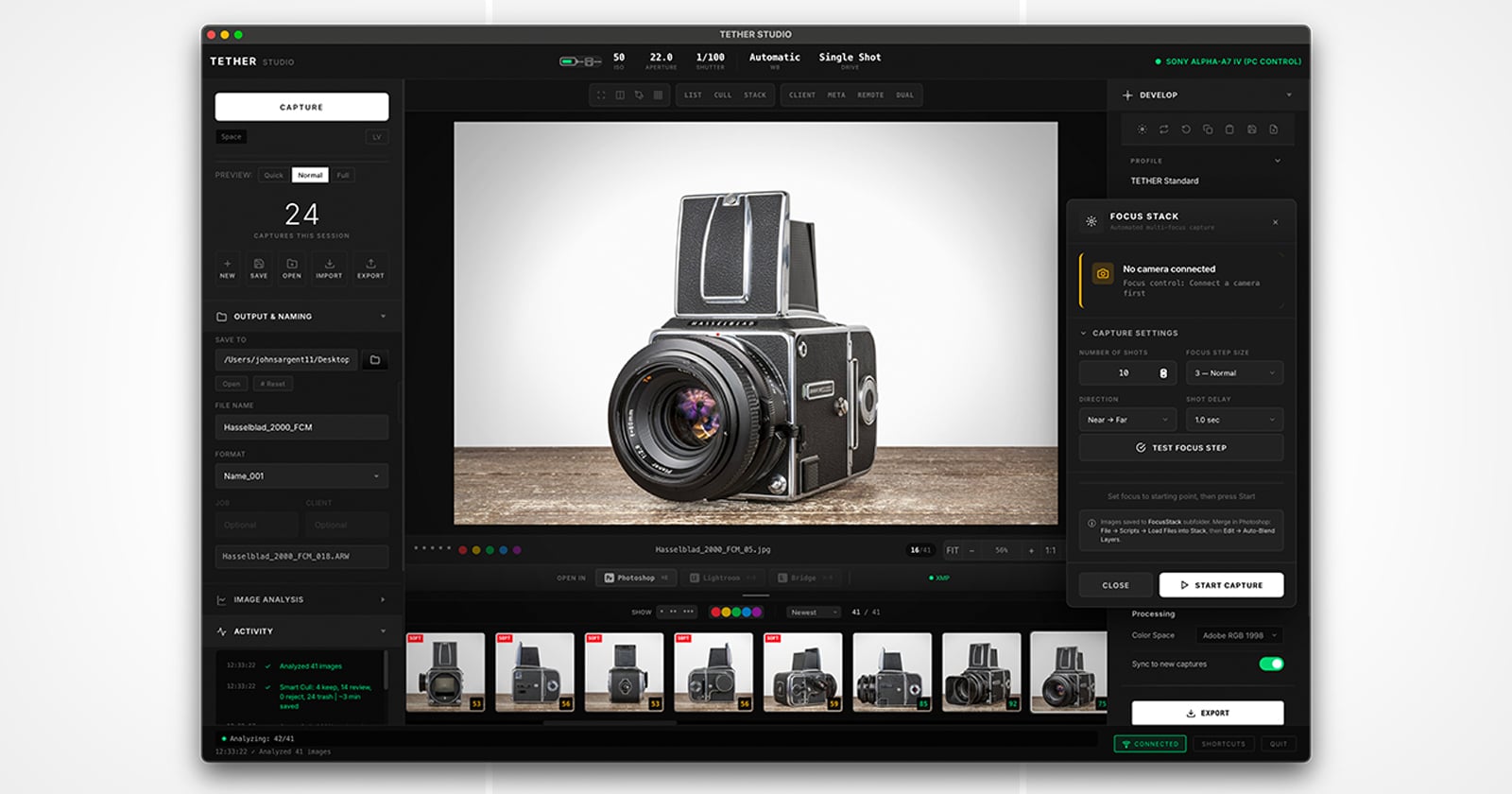
Barnard’s Tether Studio is positioned as a direct challenge to this status quo. Developed on a MacBook by a single individual with on-set experience, the application is designed to be a lean, high-performance alternative to the increasingly bloated and expensive ecosystems offered by industry incumbents.
Technical Specifications and Core Features
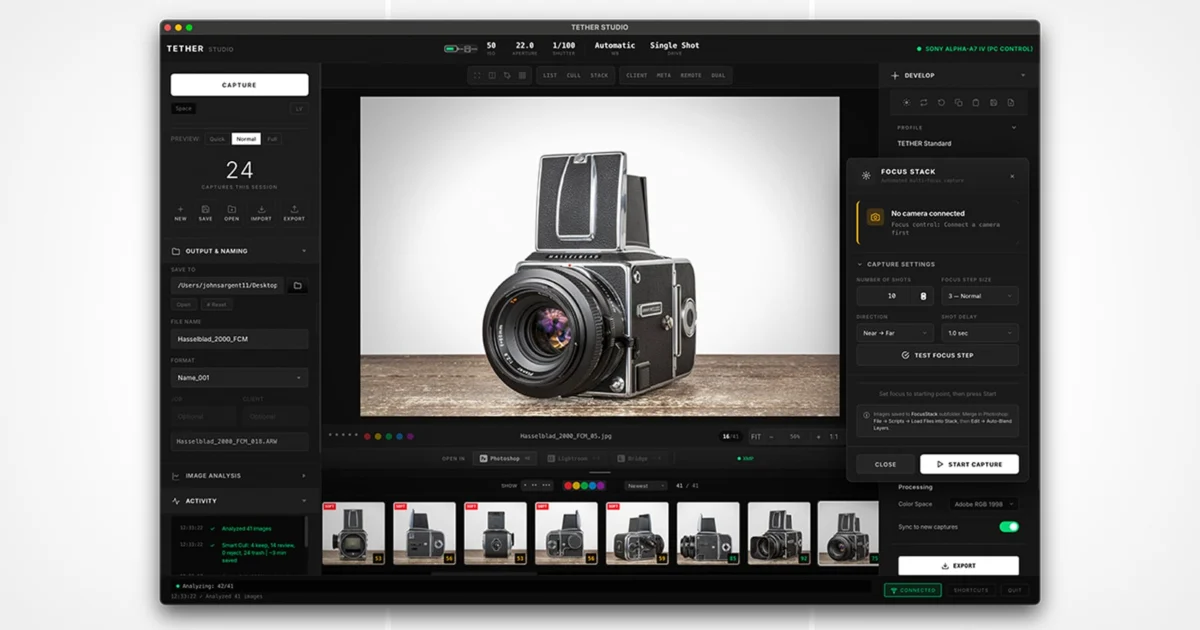
Tether Studio is a macOS-exclusive application that integrates tethered capture, AI-assisted culling, and on-set review tools into a single, unified interface. One of its most significant technical achievements is its broad compatibility; the software supports more than 2,900 camera models from major manufacturers, including Canon, Sony, Nikon, Fujifilm, Panasonic, Leica, Hasselblad, and Phase One.
The software’s feature set is tailored specifically to the high-pressure environment of a commercial photo shoot:
- High-Speed Tethering: The app focuses on a "plug-and-play" philosophy. Barnard designed the interface to be minimalist, allowing photographers to initiate a capture session with a single keystroke.
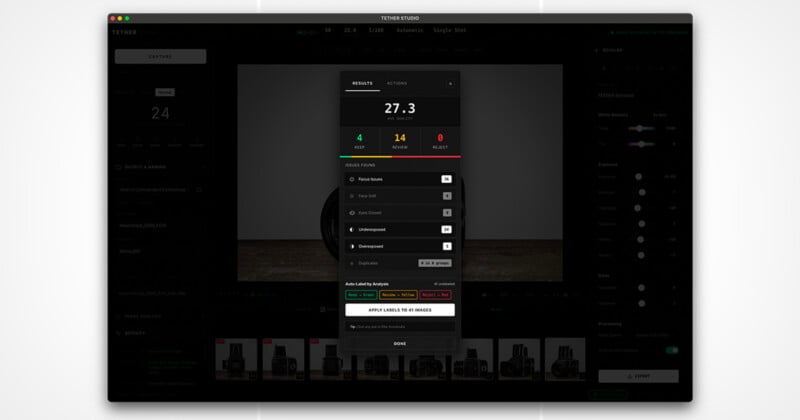
- Smart Cull AI: In a departure from many modern AI tools that require an active internet connection, Tether Studio’s AI-based culling system runs entirely locally. This ensures data privacy and allows the software to function in remote locations or high-security studios without internet access. The AI analyzes images for focus accuracy, exposure levels, and duplicate frames, providing photographers with a rapid way to sort through thousands of captures.
- Art Director Mode: This feature allows for live annotations and markups directly on the captured images. During a commercial shoot, an art director or client can provide immediate feedback that is saved with the file, streamlining the communication between the set and the retouching desk.
- Client Review System: Tether Studio includes a real-time viewing system designed for client approvals. This removes the need for third-party gallery apps or clumsy screen-sharing setups, allowing stakeholders to see high-resolution previews as they are captured.
- Offline Autonomy: Once the software is activated, it requires no account logins or cloud dependencies. This is a critical feature for professionals working in environments where connectivity is unreliable or prohibited for security reasons.
The Broader Industry Context: The Subscription Fatigue Crisis
The launch of Tether Studio arrives at a time of significant upheaval in the photography software market. For years, Capture One was regarded as the gold standard for tethered capture, particularly for medium format and high-end commercial work. However, the company’s shift toward a subscription-dominant pricing model following its acquisition by private equity firms sparked a backlash among its core user base.
Critics of the SaaS model point to a predictable pattern in the industry: companies first introduce subscriptions alongside perpetual licenses, then gradually de-emphasize perpetual options, and finally increase subscription prices once the user base is "locked in." Barnard describes this as a "trap" for professionals whose entire archival history and current workflow are tied to a specific piece of software.
The economic argument for Tether Studio is straightforward. While competitors charge monthly fees that can exceed $200 per year, Tether Studio is offered as a one-time purchase of $99. For a professional photographer, the long-term savings are substantial. Over a five-year period, a photographer could save upwards of $1,000 by moving away from a subscription-based capture tool.
A Chronology of the Modern Digital Workflow
To understand the significance of Tether Studio, it is necessary to look at the timeline of digital tethering software:
- The Early 2000s: Tethering was largely proprietary. Canon and Nikon provided basic utilities, while Phase One developed Capture One specifically for high-end digital backs.
- 2013: Adobe transitioned its Creative Suite to the Creative Cloud, popularizing the subscription model for photographers. This forced a shift in how professionals budgeted for software.
- 2020–2023: Capture One underwent several management and ownership changes, leading to a controversial restructuring of their perpetual license upgrades and a heavier push toward subscriptions.
- 2024: The rise of AI-assisted culling tools (such as Narrative Select and FilterPixel) introduced new efficiencies but often added yet another monthly subscription to the photographer’s overhead.
- 2025: John Barnard releases Tether Studio, aiming to consolidate these disparate tools—tethering, AI culling, and client review—into a single, perpetual-license application.
Impact Analysis: The Return to Localized Control
The implications of Tether Studio extend beyond mere cost savings. By prioritizing local AI processing and offline functionality, the software addresses growing concerns regarding data sovereignty and cybersecurity in the commercial sector. High-profile clients, particularly in the tech and fashion industries, often have strict non-disclosure agreements (NDAs) that prohibit the uploading of raw assets to cloud servers for processing.
Furthermore, the "one person, one tool" origin story of Tether Studio resonates with a growing movement of independent developers who are creating "indie" alternatives to corporate software. Similar trends have been seen in the video editing world with DaVinci Resolve and in the design world with the Affinity Suite. These tools often gain traction by listening more closely to user feedback than a large corporation governed by shareholder interests.
Market Reception and Future Outlook
While Tether Studio is currently a macOS-exclusive tool, its entry into the market provides a much-needed alternative for photographers who feel alienated by current industry leaders. The inclusion of a 7-day free trial allows professionals to "stress-test" the software in a live environment before committing to the purchase—a necessary step for any tool that claims to replace a foundational part of the professional workflow.
The success of Tether Studio will likely depend on its ability to maintain stability across frequent macOS updates and its capacity to quickly add support for new camera hardware as it is released. For now, Barnard’s creation stands as a testament to the idea that a professional’s tools should be an asset, not a recurring liability.
As the photography industry continues to grapple with the balance between innovative AI features and the desire for stable, owned software, Tether Studio offers a compelling blueprint for the future. It is a tool designed not for a software roadmap, but for the reality of the professional set—where the only thing that matters is that when the shutter clicks, the image appears, and the photographer remains in control.
Tether Studio is available for purchase now for $99. The license includes all current features and operates under a "pay once, own forever" model, reflecting Barnard’s conviction that the tools used to make a living should belong to the person using them.

