


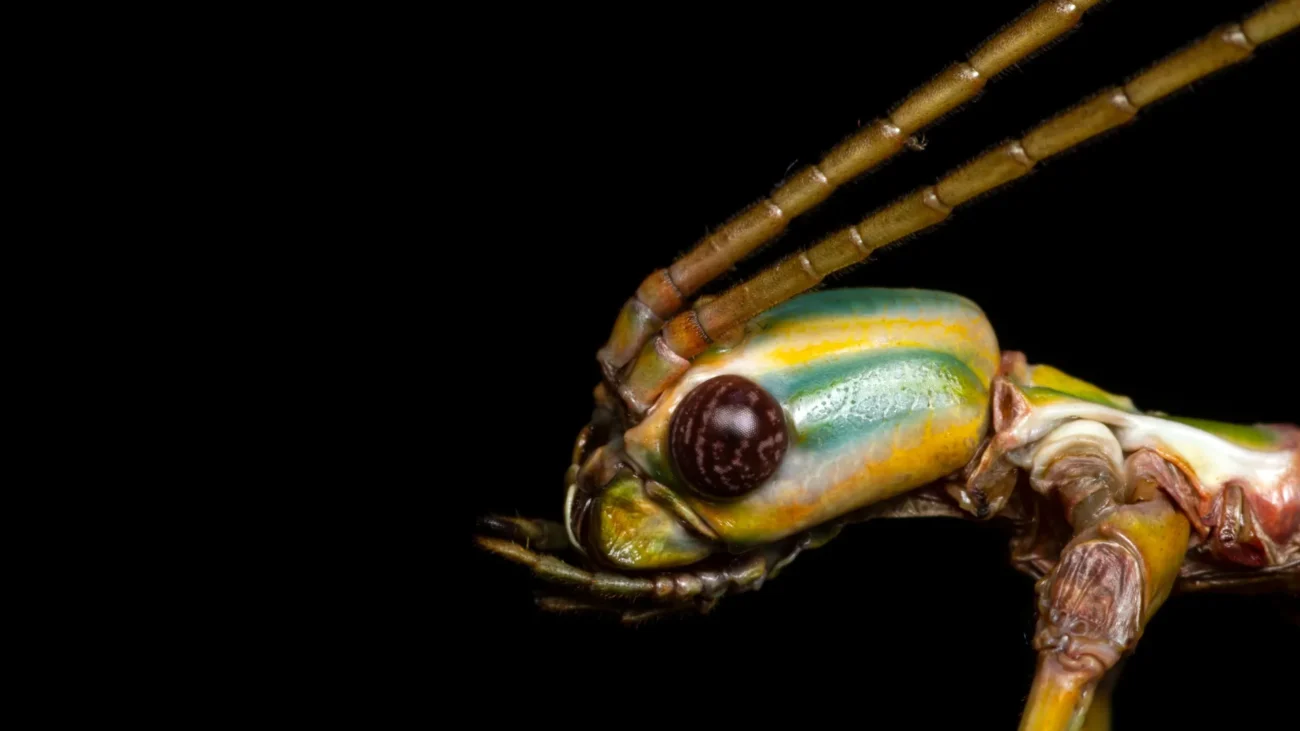
A team of entomologists at the University of Sydney has upended conventional understanding of Australia’s invertebrate fauna by identifying two previously unrecognized species of large stick insects. The discovery, published in the peer-reviewed journal Austral Entomology, demonstrates that even among some of the continent’s most thoroughly documented and frequently photographed ecosystems, significant biodiversity remains scientifically undocumented.
The research team, anchored within the Aola Richards Sydney Insect Hub and the Molecular Ecology, Evolution and Phylogenomics Laboratory, focused their investigation on the Australian members of the stick insect genus Anchiale. Through a rigorous combination of modern molecular techniques, historical museum specimen analysis, extensive field surveys, and captive breeding observations, the researchers determined that insects previously categorized under just two species actually encompass five distinct, separate species.
These creatures inhabit a broad geographic swath of the Australian landscape, ranging from northern New South Wales, across the coastal expanses of Queensland, and deep into the tropical regions of northern Australia. Among the key revelations of the study is the formal description of Anchiale mabiensis, a novel species discovered within Queensland’s critically endangered Mabi rainforest on the Atherton Tablelands, alongside the restoration of a third species that had spent decades misclassified under a broader taxonomic umbrella.
The findings carry profound implications not only for taxonomy and evolutionary biology, but also for practical land management, forestry, and agricultural practices, offering a stark reminder of the urgent need for continued ecological preservation across the Australian continent.
Taxonomic Detective Work and the Integration of Modern Science
For decades, Australian stick insects of the genus Anchiale were assumed to be well-understood. Their large stature and distinctive morphology made them favorites among both professional entomologists and amateur insect enthusiasts. This familiarity paradoxically hindered deeper scientific scrutiny, as researchers long relied on generalized external traits rather than granular genetic and anatomical evaluations to define species boundaries.
To untangle this taxonomic knot, lead author Dr. Braxton Jones and his colleagues adopted a multifaceted investigative approach. Taxonomy, Dr. Jones notes, frequently mirrors forensic detective work. The research team cross-referenced historical archives housing century-old museum vouchers with contemporary field collections gathered across eastern and northern Australia. Furthermore, they leveraged the power of modern citizen science, incorporating more than one thousand crowd-sourced observations submitted through global platforms such as iNaturalist and the Atlas of Living Australia.
This vast influx of geolocated photographic data provided researchers with unprecedented real-time mapping of stick insect distributions and seasonal appearances. However, photographs alone were insufficient to solve the taxonomic puzzle. The research team integrated high-resolution microscopic imaging—particularly of the insects’ eggs, which often feature species-specific structural micro-architectures—with DNA barcoding and phylogenetic analysis.
By sequencing genetic material from contemporary specimens and comparing it against older museum samples, the scientists successfully isolated genetic divergence that correlated with subtle morphological differences. This synthesis of field ecology, molecular genetics, and citizen science proved decisive, revealing that what was once thought to be a widespread, uniform species complex was actually a mosaic of closely related, yet distinct, evolutionary lineages.
Unraveling the Mystery of Anchiale robusta
One of the most consequential breakthroughs of the study involved a large stick insect that had been familiar to generations of scientists, breeders, and bushwalkers. Despite its ubiquitous presence in collections and classrooms, this insect had been systematically misidentified for decades due to outward similarities with other members of the genus.
Through the integration of DNA analysis and morphological comparisons, the research team demonstrated that this familiar insect did not belong to any currently recognized valid taxon in its incorrectly assigned grouping. Consequently, the researchers formally resurrected and revised the classification, establishing it as a distinct species now recognized in scientific literature as Anchiale robusta.
The validation of Anchiale robusta highlights a broader challenge within invertebrate taxonomy: cryptic species complexes. These are groups of morphologically similar populations that are actually genetically distinct and reproductively isolated. Because historical taxonomists often relied solely on dried, pinned specimens—which can lose color, posture, and subtle soft-tissue features over time—many cryptic species remained hidden under single names for over a century. The use of genomic sequencing has provided modern entomologists with a powerful tool to pierce through these historical oversights, resetting baseline biodiversity counts across numerous insect orders.
The Mabi Rainforest Discovery and Its Unique Evolutionary Trait
The discovery of Anchiale mabiensis further underscores the value of targeted field research in threatened ecosystems. Discovered within the Mabi rainforest on the Atherton Tablelands of Queensland, this new species evolved in one of Australia’s most fragile and fragmented habitats. The Mabi rainforest, a type of complex semi-evergreen vine thicket, has been reduced to a fraction of its pre-clearing extent due to historical agricultural expansion, leaving it classified as critically endangered.
What distinguishes Anchiale mabiensis from its taxonomic relatives extends beyond its genetic profile to its reproductive biology. Female stick insects typically deposit eggs directly onto the forest floor or flick them away from the canopy, relying on specialized structures called capitula to attract ants that inadvertently disperse the eggs. However, the eggs of Anchiale mabiensis possess a highly unusual structural lid-like feature—an operculum-like modification—that has never before been documented in any known stick insect species or its closest phylogenetic relatives.
While the exact functional purpose of this unique egg structure remains under investigation, evolutionary biologists hypothesize that it may offer enhanced protection against moisture loss, fungal pathogens, or specialized parasitoids unique to the microclimate of the Mabi rainforest leaf litter. The discovery of a morphologically distinct reproductive adaptation in such a localized and threatened habitat highlights the irreplaceable value of localized evolutionary trajectories that could have vanished before ever being documented.
Implications for Forestry, Agriculture, and Pest Management
Beyond the academic realms of taxonomy and evolutionary biology, the revision of the genus Anchiale holds tangible economic and environmental significance. Among the stick insects previously lumped into broad, generalized classifications was a species known for periodically experiencing massive population eruptions, or plagues. During these events, the insects can strip vast quantities of foliage from native trees and commercial forestry plantations, leading to ecological stress and economic loss for timber producers.
By separating this problematic insect into multiple distinct species, the research provides forestry managers and agricultural authorities with critical diagnostic clarity. Different species within the same genus often possess divergent life histories, host plant preferences, environmental tolerances, and natural predator networks.
Understanding that a perceived single pest species is actually an assemblage of distinct taxa allows land managers to deploy targeted pest management strategies. Rather than applying broad, generalized interventions across an entire region, conservationists and agricultural extension officers can now tailor monitoring and control measures to the specific behavioral and ecological traits of the exact species causing local defoliation. This precision minimizes unnecessary environmental chemical applications and supports healthier, more resilient forest ecosystems.
Furthermore, the study’s findings point toward potential future discoveries. During their fieldwork in Cape York, the research team identified specimens belonging to what they strongly suspect is yet another undescribed stick insect species. However, adhering to rigorous scientific standards, the researchers have refrained from formally naming the entity until additional specimens and genetic material can be collected to confirm its taxonomic distinctness.
Institutional Support and the Race Against Extinction
The successful completion of this comprehensive taxonomic study was made possible through targeted public and institutional funding. Financial support was provided by the Australian Biological Resources Study via the National Taxonomy Research Grant, administered through the Commonwealth Department of Climate Change, Energy, the Environment and Water. Additional support was delivered through a CSIRO postgraduate scholarship, reflecting a national commitment to cataloging and preserving Australia’s unique mega-diverse insect fauna.
As human-driven pressures—including habitat fragmentation, invasive species, and accelerated climate change—continue to place unprecedented strain on Australian ecosystems, the timing of such taxonomic revisions is critical. Australia is home to some of the highest rates of endemism on the planet, with a vast proportion of its invertebrate fauna found nowhere else in the world.
Dr. Jones emphasized that the discovery of new species among groups as large and visually prominent as stick insects serves as a stark reminder of how much of the continent’s biodiversity remains entirely unknown to science.
"These findings demonstrate the profound importance of protecting threatened ecosystems and documenting Australia’s extraordinary biodiversity," Dr. Jones stated. "Without robust taxonomic frameworks and active field surveys, we risk losing species to extinction before we even realize they exist."
The publication of this study in Austral Entomology marks a significant milestone in Australian entomology, bridging historical museum science with cutting-edge genomics and public engagement. As researchers continue to comb through museum drawers and explore remote rainforest canopies, it is increasingly clear that the natural world still holds extraordinary secrets waiting to be uncovered.

