


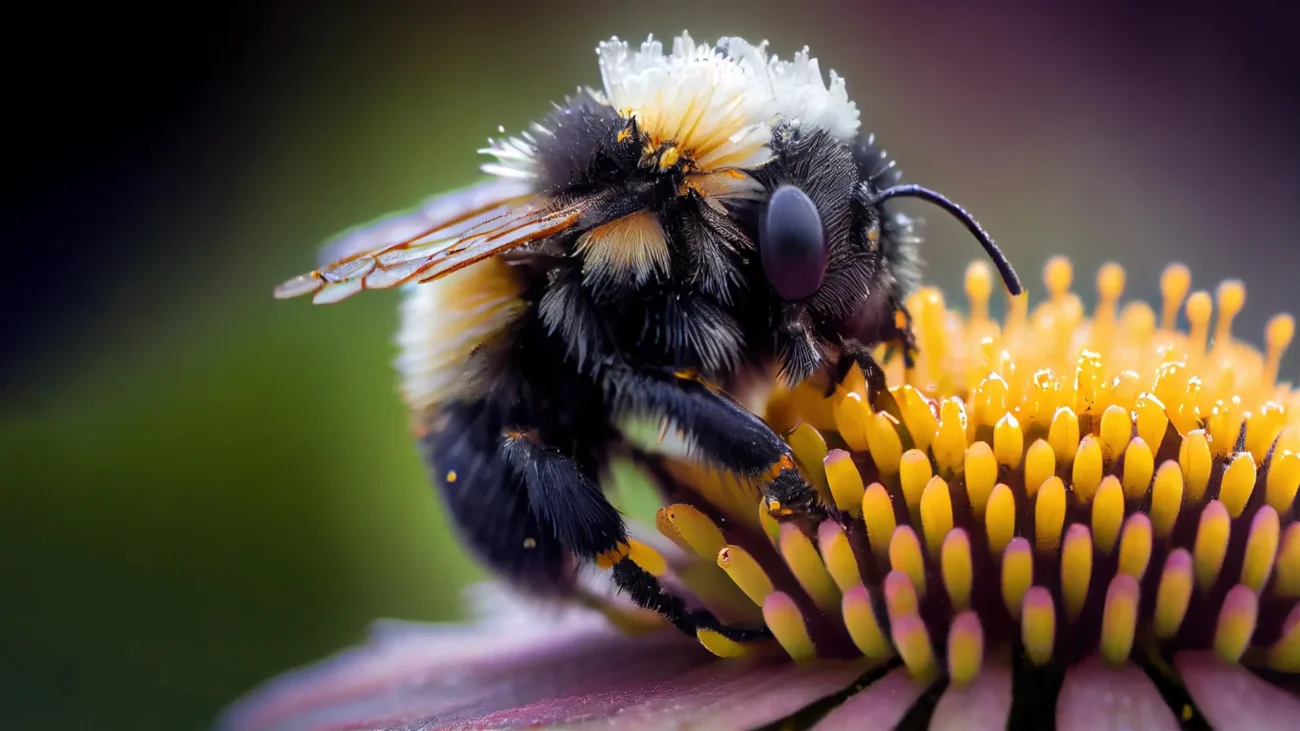
Environmental scientists at the University of Cambridge have released findings revealing that bumblebees accumulate up to seven times more heavy metal toxins in their pollen than honeybees, even when both species share the exact same foraging habitats. Published in the journal Ecological Entomology, the study sheds new light on the hidden dangers of environmental contamination and underscores a profound disparity in how different pollinator species absorb industrial and agricultural pollutants. While previous biomonitoring efforts have predominantly relied on honeybees as environmental barometers, this new research indicates that bumblebees face an acutely elevated risk, raising pressing concerns for their health, reproduction, and long-term ecological survival.
Background and Context of the Study
Heavy metal contamination is a pervasive issue across industrial zones, urban centers, and mining regions. However, anthropogenic pollutants are not restricted to these heavily impacted landscapes. Contaminants regularly infiltrate rural and semi-rural environments through atmospheric deposition, agricultural sewage sludge, phosphate fertilizers, and various other chemical soil amendments.
As bees forage for nectar and pollen, they inevitably interact with these toxic elements, which persist in contaminated soils, settle as dust on foliage, and are absorbed by flowering plants. Once ingested or carried back to the hive, elements such as arsenic, cadmium, chromium, cobalt, lead, and tin can wreak physiological havoc. Prior ecotoxicological studies have consistently linked heavy metal exposure in bees to impaired neurological functions, notably deficiencies in learning and memory. These cognitive deficits directly undermine a forager’s spatial navigation, rendering them less capable of locating food sources, returning to the colony, and successfully communicating floral locations to nestmates. Furthermore, metal toxicity has been correlated with depressed reproductive success, diminished brood development, and reduced worker longevity.
Historically, conservationists and environmental agencies have utilized honeybees as standard bioindicators to measure localized heavy metal pollution. Because managed honeybee colonies are ubiquitous and easy to sample, they have long served as a proxy for ecosystem health. Yet, this new research demonstrates that generalizing honeybee data across all pollinators is fundamentally flawed. Bumblebees, possessing entirely different physiological traits and foraging ecologies, absorb and retain significantly higher concentrations of these dangerous elements.
Chronology and Research Methodology
The investigation was spearheaded by researchers within the Department of Zoology at the University of Cambridge, with fieldwork conducted in Cambridgeshire, England—a region characterized by relatively low baseline soil contamination.
The chronology of the study began with the strategic side-by-side placement of managed honeybee hives and wild bumblebee colonies within identical rural landscapes. By ensuring both species foraged across the exact same flora and geographical area, the researchers effectively controlled for environmental variables, isolating species-specific biology and behavior as the primary variables of interest.
Utilizing specialized pollen traps, the research team systematically collected pollen loads returned to the colonies. In addition to analyzing the pollen provisions, the scientists measured the concentrations of six key heavy metals—arsenic, cadmium, chromium, cobalt, lead, and tin—accumulated within the bodies of adult bees from both groups.
The analytical results, processed in Cambridge laboratories and subsequently peer-reviewed, revealed a stark divide. Pollen gathered by bumblebees contained between two and seven times higher concentrations of heavy metals across nearly all tested elements compared to the pollen harvested by their honeybee counterparts. Moreover, when analyzing the bodily tissues of the insects themselves, researchers found that bumblebees retained roughly three times higher concentrations of heavy metals overall.
Anatomy of Vulnerability: Why Bumblebees Face Higher Exposure
The dramatic discrepancy in heavy metal accumulation is not a coincidence of geography, but rather the result of distinct biological and behavioral differences between the two species.
First, the social structures and nesting habits of honeybees and bumblebees diverge sharply. Honeybee colonies are massive, perennial superorganisms typically housing between 30,000 and 60,000 individuals, usually sheltered above ground in hollow trees or managed wooden hives. In contrast, bumblebees establish annual colonies that are comparatively diminutive, typically supporting only 50 to 550 workers. Furthermore, bumblebees construct their nests underground or within surface leaf litter, placing them in direct, prolonged contact with potentially contaminated soil particles.
Second, foraging behaviors heavily dictate pollutant exposure. Honeybees are generalist foragers with a vast dietary breadth, collecting nectar and pollen from a wide array of plant species. This behavioral trait effectively dilutes their exposure to any single localized contaminant source. Bumblebees, however, often exhibit narrower floral preferences based on their distinct nutritional requirements, body size, tongue length, and energetic needs. If a bumblebee’s preferred floral species happens to hyperaccumulate heavy metals, the colony’s overall intake of toxins spikes dramatically.
Geographic range is another critical factor. A healthy honeybee forager can travel remarkable distances—sometimes ranging up to 10 kilometers from the central hive—allowing the colony to distribute its foraging pressure across a vast territory and actively bypass localized pollution hotspots. Conversely, bumblebees are central-place foragers with a much more restricted range, typically remaining within 1.5 kilometers of their underground nests. This restricted radius gives bumblebees far fewer opportunities to avoid localized patches of soil or airborne contamination.
Finally, physical morphology plays an undeniable role. Bumblebees are notably hairier and possess a much denser coat of branched setae than honeybees. These specialized hairs act as a microscopic velcro trap, readily capturing ambient dust and airborne particulate matter laden with heavy metals. Consequently, as a bumblebee navigates its environment, it physically transports a larger load of surface-level environmental pollutants back to the nest alongside its pollen.
Expert Analysis and Official Statements
Dr. Sarah Scott, who directed the laboratory and field research while at the University of Cambridge before transitioning to Newcastle University, emphasized the insidious nature of low-level contamination.
"Most metal levels we found were not high enough to kill bees outright," Dr. Scott explained. "However, even low-level exposure can still harm bee health and colony success in subtle but important ways, such as affecting their ability to forage, navigate, and reproduce."
Professor Lynn Dicks of the University of Cambridge’s Department of Zoology, who served as the study’s senior author and a Fellow at Selwyn College, highlighted the heightened vulnerability of smaller colonies.
"Even in areas that we usually consider safe or lower risk for heavy metals—typically rural areas, away from industrial or mining sites—bees can pick up toxic metals," Professor Dicks noted. "Bumblebee colonies tend to have fewer workers available to perform tasks, so the loss of individual foragers can have a disproportionately large impact on overall colony function and survival."
Despite the alarming nature of the findings, the research team was quick to contextualize the results and offer constructive guidance to conservationists, gardeners, and policymakers. Funded primarily by a grant from the Royal Society, the study does not suggest that public conservation efforts should be curtailed. On the contrary, the researchers strongly advocate for the continued cultivation of pollinator-friendly plants, even in areas where soil contamination might be present.
"Bees play a critical role in both biodiversity and global food security," Dr. Scott added. "So we’d still encourage people to plant flowers to help them, even if you live in an area more likely to be contaminated. At the end of the day, bees still need food. Even if it carries traces of heavy metals, having some food is fundamentally better than having no food at all."
Broader Implications for Conservation and Policy
The publication of this study in Ecological Entomology forces a reevaluation of how environmental scientists monitor heavy metal pollution and assess ecological risk. Standard monitoring programs that rely solely on honeybee data may drastically underreport the toxic burden borne by wild pollinators, leaving vulnerable species like bumblebees exposed to unregulated environmental stressors.
From a regulatory standpoint, these findings demand a closer look at agricultural practices and rural zoning laws. Because heavy metals infiltrate rural landscapes through routine agricultural inputs such as phosphate fertilizers and sewage sludge amendments, policymakers must consider the downstream ecotoxicological impacts on native insect populations.
Furthermore, conservation strategies must account for species-specific vulnerabilities. Protecting wild pollinators requires more than simply preserving green spaces; it necessitates mitigating the hidden chemical loads within those spaces. As industrial emissions, vehicular traffic, and agricultural runoff continue to deposit heavy metals across seemingly pristine landscapes, understanding the physiological limits of wild species like the bumblebee will be essential in preventing further declines in global biodiversity and maintaining the stability of agricultural ecosystems.

