


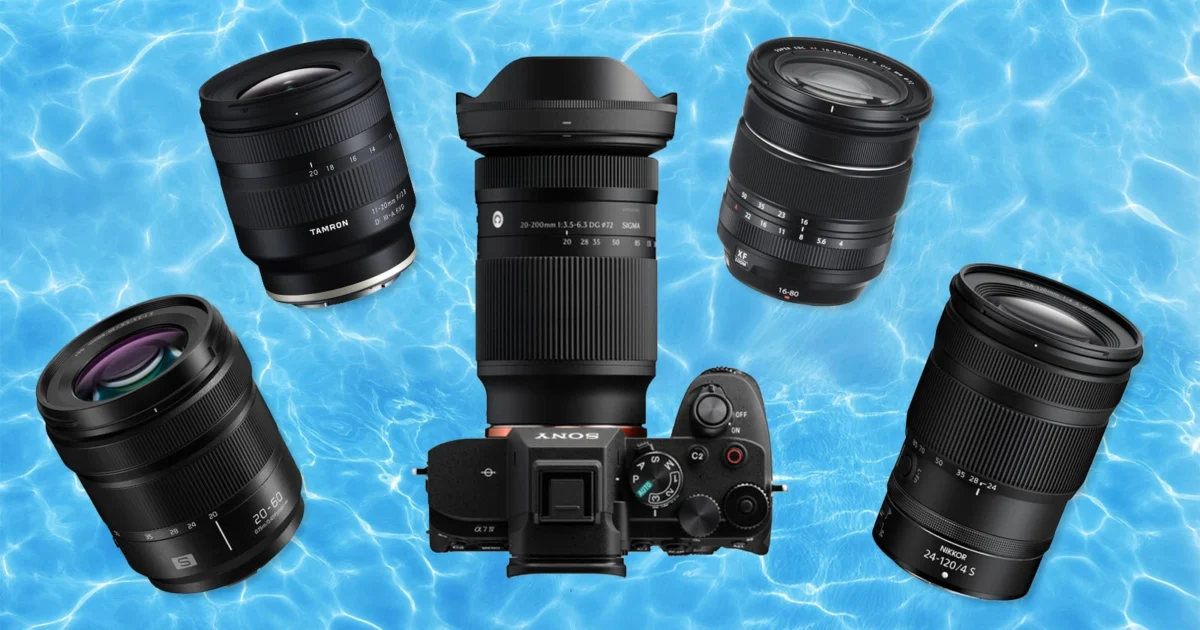
The Evolution of the Versatile Zoom in the Mirrorless Era
The current promotional cycle, which sees significant price reductions across Sony E, Canon RF, Nikon Z, L-Mount, and Fujifilm X systems, highlights a broader industry trend: the rise of the "all-in-one" professional-grade optic. Historically, photographers were forced to choose between the convenience of a "superzoom" with mediocre image quality or a "holy trinity" of heavy, expensive f/2.8 primes. However, recent advancements in optical engineering—specifically the use of aspherical elements and high-refractive index glass—have allowed brands like Tamron, Sigma, and the primary camera manufacturers to produce lenses that bridge this gap.
Industry analysts suggest that these mid-summer discounts, many of which are scheduled to conclude on July 19, are strategically timed to coincide with the northern hemisphere’s vacation season. By lowering the barrier to entry for lenses like the Tamron 28-75mm f/2.8 or the Canon RF 24-105mm f/4 L, manufacturers are securing brand loyalty among hobbyists who are increasingly looking for a single-lens solution for their travels.
Sony E-Mount: Third-Party Innovation Driving Market Value
The Sony E-mount ecosystem continues to benefit from the most robust third-party support in the industry. Tamron, in particular, has utilized this platform to redefine what a standard zoom can be. The Tamron 28-75mm f/2.8 Di III VXD G2, currently discounted by $200 to a price point of $699, serves as a prime example of the market’s move toward high-speed, constant-aperture zooms that remain affordable for enthusiasts. The "G2" designation signifies a second-generation overhaul of the autofocus system, utilizing the Voice-coil eXtreme-torque Drive (VXD) for near-silent operation, which is essential for the growing "hybrid" market of shooters who split their time between stills and video.
Furthermore, the Tamron 35-150mm f/2-2.8 Di III VXD has emerged as a disruptive force in the wedding and event industry. By offering an f/2 aperture at the wide end—faster than the industry-standard f/2.8—it allows photographers to leave their prime lenses at home. The current $100 discount on this specific model reflects its status as a premium, high-demand item that rarely sees significant price drops. For those prioritizing reach, the 28-200mm f/2.8-5.6 and the 28-300mm f/4-7.1 offer $100 and $50 savings respectively, catering to the "one-lens" philosophy that has become a hallmark of the E-mount travel community.
Sigma has also entered the fray with its 28-200mm f/3.5-6.3 DG Contemporary, currently $100 off. Sigma’s "Contemporary" line is designed to balance optical performance with physical portability, a critical factor for hikers and street photographers who find Sony’s native G-Master glass too cumbersome for daily use.
Canon RF Mount: High-End Performance and Hybrid Functionality
Canon’s RF mount strategy has traditionally focused on high-margin, professional L-series optics. However, the current sales indicate a push to make their more versatile glass accessible to a wider demographic. The Canon RF 24-105mm f/4 L IS USM, a staple of the EOS R system, is seeing a $100 reduction. This lens is often cited as the "gold standard" for general-purpose photography due to its constant aperture and robust weather sealing.
More notable is the $200 discount on the Canon RF 24-105mm f/2.8 L IS USM Z. This lens represents a new category of "hybrid" optics, featuring a dedicated iris ring and compatibility with power zoom adapters. Priced at $2,800 during this promotion, it is aimed squarely at professional cinematographers and high-end event photographers who require the flexibility of a zoom with the light-gathering capabilities of a fast prime.
For the enthusiast market, the RF 28-70mm f/2.8 IS STM is available for $1,000, a $100 saving. This lens is a strategic response to third-party competitors, offering a compact, lightweight f/2.8 option for users who do not require the extreme build quality of the L-series but refuse to compromise on aperture speed.
Nikon Z-Mount: The Pursuit of Optical Perfection
Nikon’s Z-mount has been praised for its large diameter, which allows for lens designs that were physically impossible on the older F-mount. The Nikkor Z 24-70mm f/2.8 S, currently $150 off, remains one of the sharpest standard zooms ever produced. Nikon’s "S-Line" designation ensures that these lenses meet rigorous standards for edge-to-edge sharpness and minimal chromatic aberration.
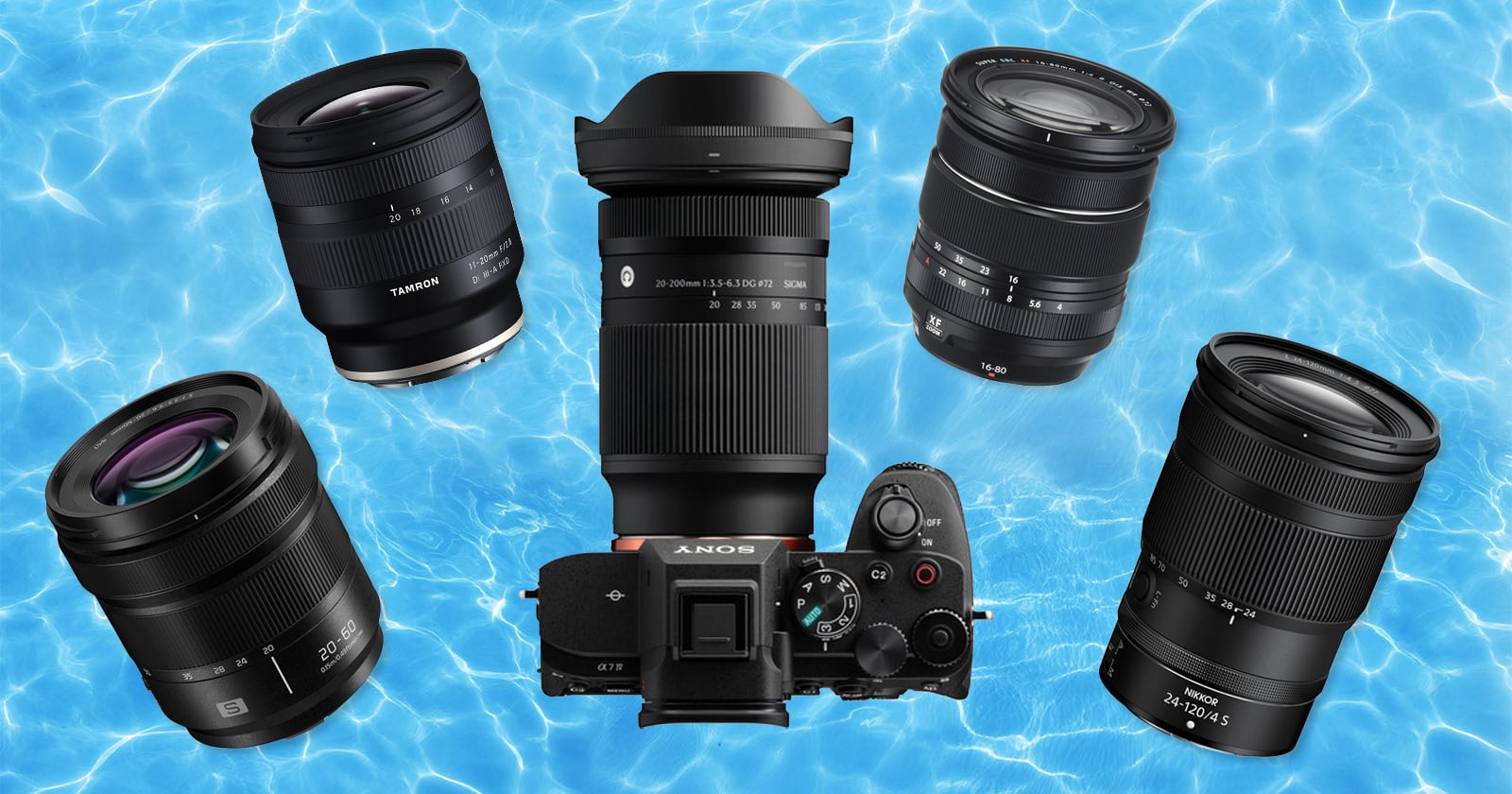
In the "superzoom" category, the Nikkor Z 28-400mm f/4-8 VR is seeing a $150 discount. This lens is a technical marvel, providing a massive zoom range that covers everything from wide-angle street scenes to distant wildlife. While the f/8 aperture at the long end requires ample lighting, the built-in Vibration Reduction (VR) makes it a viable handheld option for outdoor enthusiasts. Additionally, Nikon’s 24-120mm f/4 S, a favorite for landscape photographers who need extra reach over the standard 24-70mm, is available with a modest $50 discount.
L-Mount and Fujifilm X: Niche Markets and Specialized Zooms
The L-Mount Alliance—comprising Panasonic, Sigma, and Leica—continues to cater to a sophisticated user base that values video performance and industrial design. Panasonic’s Lumix S 24-105mm f/4 Macro OIS is currently $200 off. This lens is unique for its 0.5x macro magnification, making it an ideal choice for product photographers and nature enthusiasts who need a single lens that can handle both sweeping vistas and close-up details.
Panasonic has also discounted its flagship Lumix S Pro 24-70mm f/2.8 by $200. This lens, which carries the "Certified by Leica" seal, is built for the rigors of professional commercial work. For those on the more compact side of the spectrum, the Lumix S 18-40mm and the 20-60mm lenses are seeing $100 discounts, providing wide-angle versatility for vloggers and travelers.
In the APS-C world, Fujifilm’s X-mount remains the dominant player for photographers who prefer a retro aesthetic and a smaller footprint. The Tamron 17-70mm f/2.8 for Fujifilm, discounted by $100, provides a 25.5-105mm equivalent range, making it perhaps the most versatile lens for X-series users. Fujifilm’s native XF 16-80mm f/4 R OIS WR is also $100 off, offering a weather-resistant build that complements the rugged nature of the X-T5 and X-H2 cameras.
Market Analysis: Why These Deals Matter
The photography industry is currently navigating a complex economic environment. While the demand for high-end imaging remains strong, inflation has increased the cost of specialized glass. These promotions, largely centered around B&H Photo and other major retailers, serve as a pressure valve, allowing the "prosumer" segment to upgrade their kits without the full financial burden of MSRP pricing.
Furthermore, the rise of computational photography in smartphones has forced camera manufacturers to emphasize the "optical advantage." A versatile zoom lens with a large sensor provides a depth of field, low-light performance, and compression that a smartphone cannot yet replicate through software alone. By discounting these specific "bridge" lenses—the ones that take a user from a kit lens to a professional-tier optic—manufacturers are defending their territory against the mobile market.
Chronology of the Summer Sales Event
The current wave of discounts began in early July, following the conclusion of major trade shows where several new camera bodies were announced. Traditionally, when new camera bodies are released, manufacturers offer "bundle" or "instant" savings on lenses to encourage system adoption.
- Early July: Initial "Summer Savings" programs launched by Sony and Panasonic.
- Mid-July: Canon and Nikon joined with targeted discounts on their most popular "walk-around" lenses.
- July 17-19: The "Peak Window" where the deepest discounts are active.
- July 19 (11:59 PM ET): The scheduled expiration for many of the most aggressive Tamron and Sigma promotions.
Broader Implications for the Industry
Looking ahead, the success of these mid-summer sales will likely influence the pricing strategies for the upcoming Q4 holiday season. If sales volumes for versatile zooms like the 24-105mm or 28-75mm exceed expectations, it may signal a shift in consumer preference toward "all-in-one" solutions over specialized primes.
Additionally, the heavy involvement of third-party manufacturers like Tamron and Sigma in these sales cycles puts pressure on native brands (Canon, Nikon, Sony) to keep their pricing competitive. For the consumer, this competition is a net positive, resulting in higher-quality glass at more accessible price points. As mirrorless technology continues to mature, the focus of the industry has moved from the "body wars" to the "lens wars," where the versatility and affordability of optics will determine which camera system ultimately wins the largest share of the market.

