


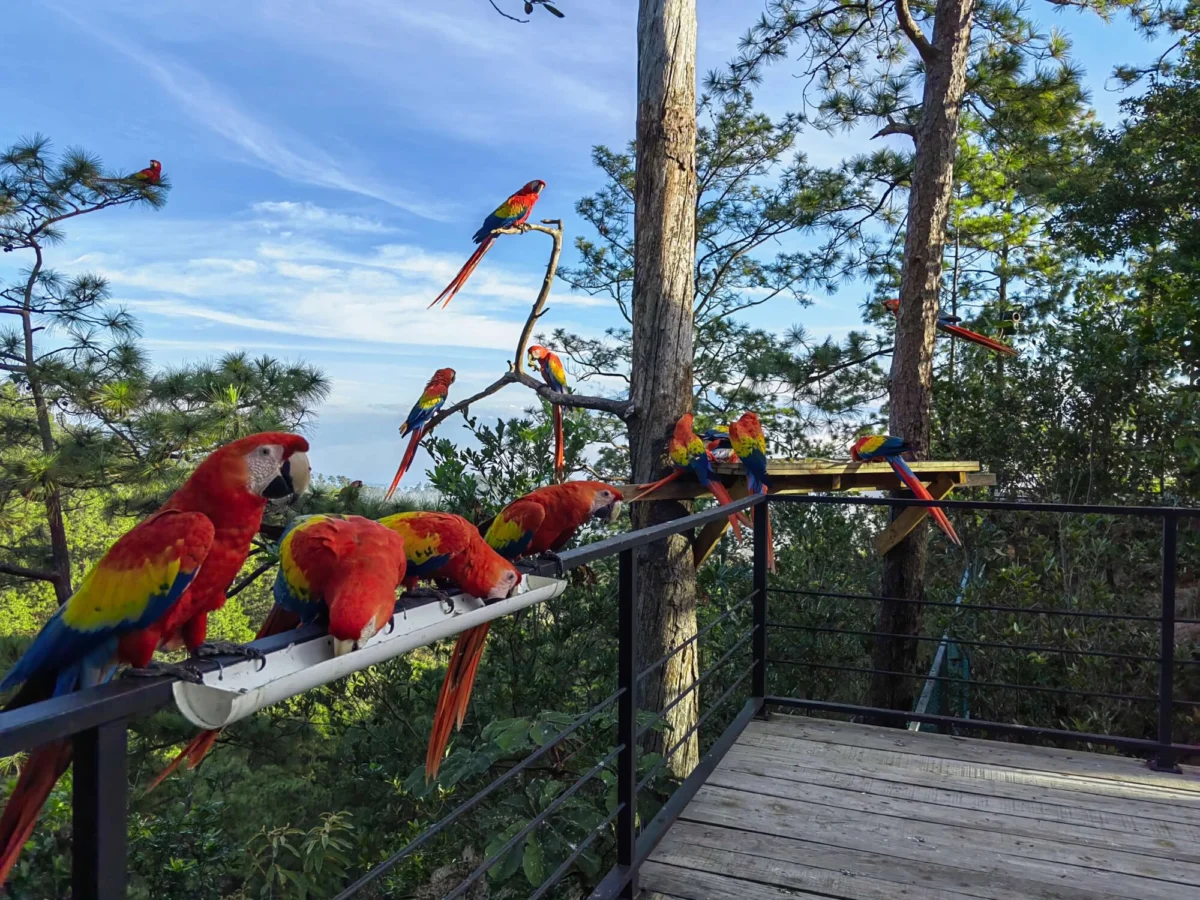
The vibrant spectacle of a scarlet macaw ( Ara macao) soaring across the Central American sky is a testament to nature’s enduring beauty, yet for these magnificent birds, political borders often delineate the line between sanctuary and peril. In 2018, a striking flash of scarlet, yellow, and blue captivated residents of Esquipulas, a Guatemalan town nestled near the Honduran frontier. This solitary scarlet macaw, a likely voyager from the critically acclaimed reintroduction initiatives in Copán Ruinas, Honduras, evoked a moment of profound awe for one family. However, for many in the local community, its appearance was a novelty, sparking immediate attempts to capture the wild bird for domestication. Fortunately, the macaw evaded its would-be captors, disappearing back into the wild and leaving behind a crucial realization: while conservation knows no human boundaries, the survival of species critically depends on unified, cross-border protection. Today, a fervent, volunteer-driven movement is taking root in Guatemala, striving to ensure that when these iconic birds traverse the border, they are greeted not by snares and slingshots, but by informed and protective communities.
The Precarious Comeback: Scarlet Macaws in Central America
The scarlet macaw, a species renowned for its intelligence, vivid plumage, and distinctive calls, once thrived across vast swathes of Central and South America. Historically, these birds held immense cultural significance, particularly for indigenous civilizations such as the Maya, who revered them as symbols of the sun, fertility, and the divine. However, over the past century, their populations have suffered catastrophic declines, primarily due to relentless habitat destruction—deforestation for agriculture, logging, and urban expansion—and rampant illegal poaching for the pet trade. The International Union for Conservation of Nature (IUCN) lists the scarlet macaw as a species of "Least Concern" globally, yet many regional populations, including those in Central America, have been severely depleted or extirpated. Guatemala, for instance, saw its native scarlet macaw populations vanish from many areas, becoming largely confined to remote regions, primarily in the northern Petén department. This dire situation underscored the urgent need for robust conservation interventions.
Honduras’s Beacon of Hope: The Macaw Mountain Success Story
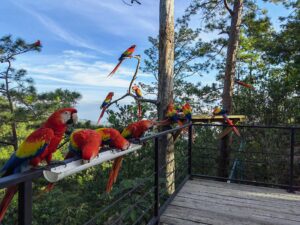
Just a short distance—approximately 15 minutes—from the Guatemalan border lies Copán Ruinas, Honduras, home to a groundbreaking conservation success story centered around Macaw Mountain Bird Park and Nature Reserve. Established as a sanctuary for rescued and rehabilitated native birds, Macaw Mountain, in partnership with the non-governmental organization PRO ALAS (an organization dedicated to bird protection), embarked on an ambitious program focused on the reproduction, rehabilitation, and reintroduction of scarlet macaws. Over two decades, this pioneering initiative has successfully reintroduced more than 150 wild macaws back into the Honduran skies, transforming the region into a vibrant testament to effective conservation. The program involves meticulous breeding protocols, extensive veterinary care, and a gradual acclimation process that prepares the birds for independent life in the wild. This success has not only restored a vital component of the local ecosystem but has also become a major ecotourism draw, bolstering the local economy and fostering a sense of pride among Hondurans. The skies above Copán are now regularly graced by large flocks of scarlet macaws, their calls echoing through the ancient Mayan ruins, a symbolic resurgence of a species intertwined with the region’s cultural heritage.
The Border Paradox: A Threat to Honduran Success
As the Honduran macaw population flourishes, a natural consequence of their increased numbers and expansive foraging ranges is their tendency to cross geographical boundaries. These highly mobile birds, oblivious to human-drawn political lines, frequently venture into neighboring Guatemala. This cross-border movement, while a positive indicator of population health, introduces a perilous paradox: the success achieved in Honduras is immediately jeopardized upon entry into Guatemalan territory. On the Guatemalan side of the border, where awareness of conservation and the value of these birds is significantly lower, macaws face immediate and grave dangers. Reports are distressingly common: children, unaware of the birds’ protected status and ecological importance, may throw rocks, while adults, driven by economic hardship or cultural practices, often attempt to capture them for the lucrative illegal pet trade. An adult scarlet macaw can fetch hundreds, sometimes thousands, of dollars on the black market, making them irresistible targets for poachers. This stark reality underscores a critical gap: the environmental education programs that have been instrumental to Macaw Mountain’s success in Honduras desperately need to be replicated and adapted for the Guatemalan border communities.
A Grassroots Initiative Takes Flight in Guatemala
Recognizing this urgent need, Christian Chinchilla, a dedicated young Guatemalan biologist, took the initiative. Empowered by specialized training from One Earth Conservation’s (OEC) Parrot Conservation Corps and a modest initial seed grant, Chinchilla, alongside his girlfriend, launched a grassroots conservation campaign. Operating entirely on volunteer hours, their mission was clear: to transform mindsets in Caparjá, a border village in Guatemala, from indifference or exploitation to active protection.
The initiative began with a crucial first step, prioritizing deep community respect and engagement. Before approaching a single child, Chinchilla’s team strategically partnered with key local and regional stakeholders: Plan Trifinio, the tri-national government development agency responsible for sustainable development in the border region of Guatemala, El Salvador, and Honduras; and the Municipality of Camotán, the local administrative authority. This collaboration was pivotal in organizing a transformative field trip. Village leaders and primary school teachers from Caparjá were transported across the border to Macaw Mountain in Honduras. This direct exposure allowed them to witness firsthand the breathtaking beauty of the macaws in their naturalized habitat, understand their ecological significance, and appreciate the economic benefits of ecotourism. This foundational engagement secured the community’s blessing, paving the way for direct intervention in classrooms.
Once the community leadership was on board, the project moved into the schools, where the team employed a blend of engaging, age-appropriate educational tools:
- Interactive Presentations: Vivid slideshows and videos showcased the macaws, their life cycles, and their role in the ecosystem.
- Educational Materials: Specially designed coloring books and activity sheets, featuring macaws, were distributed, providing a tangible learning experience.
- Community Dialogue: Open discussions encouraged children to share their observations and ask questions, fostering a sense of ownership.
- Symbolic Gestures: The distribution of apples and other small treats served as positive reinforcement, associating learning about macaws with pleasant experiences.
The response from the children was immediate and electrifying. They weren’t merely absorbing abstract biological concepts; they were learning about the very birds that flew over their homes, connecting classroom lessons to their tangible surroundings. This hands-on, localized approach was instrumental in transforming potential threats into future guardians of the macaws, instilling a sense of wonder and responsibility.
Reclaiming a Mayan Legacy: Cultural Roots of Conservation
The significance of this conservation work extends far beyond ecological preservation; it is deeply intertwined with the rich cultural identity of the region. The border area is historically home to the indigenous Chorti Maya population, whose ancestral lands span both sides of the modern geographical divide. Just across the border, at the renowned Copán Ruins archaeological site—magnificent structures built by the ancestors of the Chorti—ancient stone glyphs, statues, and intricate sculptures are adorned with images of macaws. For millennia, these birds were not merely wildlife; they were revered symbols, embodying the sun god, representing the sky, and acting as spiritual messengers. Their vibrant plumage was used in ceremonial attire, and their calls were believed to connect the earthly realm with the divine.
By educating Chorti children in Guatemala about the macaws, this project is doing more than just teaching scientific facts. It is facilitating a profound reconnection between a community and a living, breathing piece of their own ancient history and spiritual heritage. This cultural resonance adds a powerful dimension to the conservation efforts, shifting the perception of macaws from potential commodities to cherished ancestral symbols worthy of protection. The revival of macaw populations in these areas can rekindle a sense of cultural pride and provide a unique opportunity for intergenerational learning, where elders can share traditional stories and knowledge about the birds, reinforced by modern conservation principles.
Running on Fumes, Yet Hope Illuminates the Horizon
Despite the initial triumphs of the school visits and community engagement, the project encountered a familiar and disheartening obstacle: the initial course funding quickly dissipated. Currently, the entire campaign is sustained solely by the unwavering dedication and volunteer hours of Christian Chinchilla and his girlfriend, who tirelessly work to maintain community momentum and build on their foundational efforts. Their passion, however, has not gone unnoticed.
Their hard work and the critical nature of their mission have attracted the attention of the highest echelons of government. Through the persistent advocacy of Plan Trifinio, Guatemala’s Vice President, Dr. Karin Herrera, undertook a personal visit to Macaw Mountain. Deeply impressed by the project’s cross-border vision and its potential for fostering regional cooperation and biodiversity preservation, Vice President Herrera publicly pledged government support. While the materialization of this promised aid is eagerly anticipated in the coming months, her visit marked a significant turning point, signaling official recognition and a potential lifeline for the struggling initiative. This high-level endorsement could unlock substantial institutional resources, transforming a volunteer-led effort into a nationally supported conservation program.
Broader Implications and the Path Forward
The efforts in the Guatemalan border region represent a microcosm of broader challenges and opportunities in transboundary conservation. Ecological systems rarely align with political boundaries, making cross-border collaboration essential for the survival of migratory species and interconnected ecosystems. The success of this initiative could serve as a vital model for other regions grappling with similar challenges, demonstrating how local engagement, cultural sensitivity, and intergovernmental cooperation can yield powerful conservation outcomes.
The immediate priority remains securing "bridge funding" to restart and complete the primary education campaign across the remaining border villages. While long-term government aid promises to address systemic issues, the macaws continue to cross the border today, requiring immediate protective measures. Once sustained governmental funding is secured, the team envisions expanding their efforts to include comprehensive habitat protection, systematic nesting monitoring to safeguard young macaws, and community-led reforestation initiatives. These future plans underscore a holistic approach to conservation, moving beyond mere awareness to active habitat restoration and long-term population management.
This project is a powerful reminder that the fate of a species often hinges on human empathy, education, and collective action. When a scarlet macaw soars from the relative safety of Honduras into Guatemala, it should find a prepared community, ready to protect its journey and its future. The support from organizations like One Earth Conservation has been instrumental in initiating this vital work, empowering local leaders like Christian Chinchilla. While the path ahead presents its share of challenges, the burgeoning hope fueled by dedicated volunteers, engaged communities, and newfound governmental attention suggests that the skies above Guatemala may soon become a true safe haven for these iconic avian ambassadors, reflecting a renewed commitment to their ancient legacy.

