


The 48th installment of the Leitz Photographica Auction, held recently at the Leitz Park in Wetzlar, Germany, has once again demonstrated the extraordinary financial and cultural value placed on rare photographic equipment. Collectors and institutions from around the globe participated in a bidding war that saw several historical pieces exceed their initial estimates by significant margins. The auction, which specializes in vintage cameras, lenses, and historical photography memorabilia, remains the premier event for the Leica community, often setting the benchmark for the global market of high-end analog optics.
The Star of the Show: The Leica MP-33 Black Paint
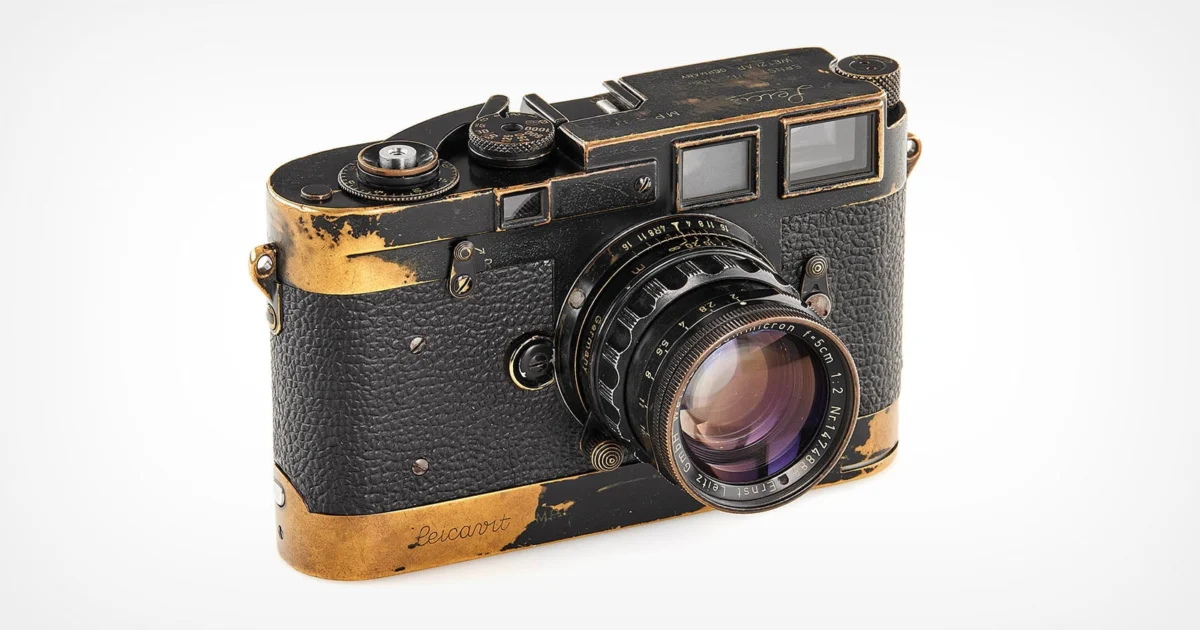
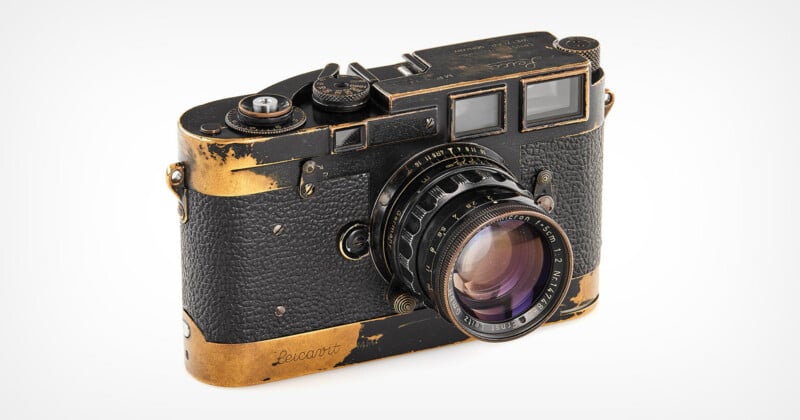
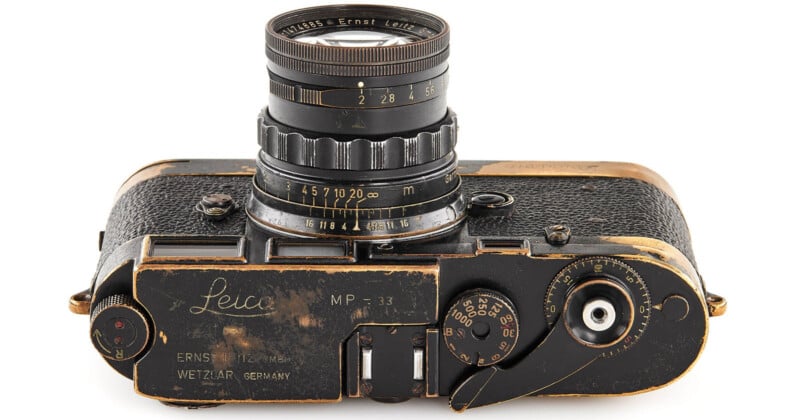
The most anticipated lot of the event was the Leica MP black paint, bearing the serial number MP-33. When the hammer finally fell, the unit achieved a price of €600,000 (approximately $695,000 at current exchange rates). This particular camera is a cornerstone of Leica’s mid-century professional offerings. Originally launched at the Photokina trade fair in 1956, the "MP" designation stood for "M Professional." It was specifically designed for photojournalists who required the ruggedness and speed of the M-system but preferred the bottom-loading "Leicavit" rapid winder mechanism.
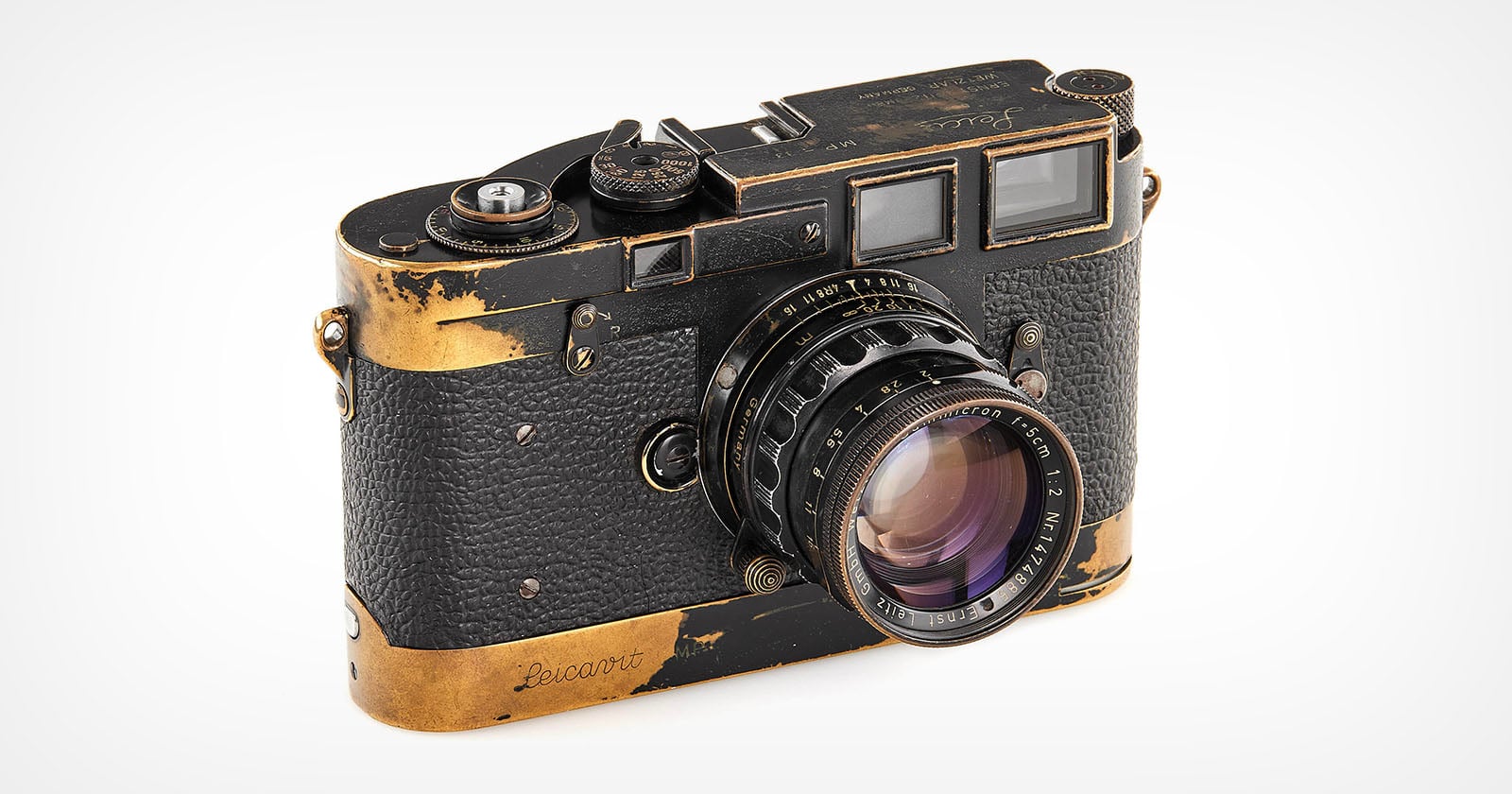
The rarity of the MP series cannot be overstated. Throughout its short production run, only 402 units were ever manufactured. Of that total, the vast majority were finished in standard silver chrome. Only 141 units were produced in the now-iconic black paint finish. Unlike modern digital cameras, where black is the standard, black paint was a specialized request in the 1950s, primarily used by photographers who wanted to remain inconspicuous in the field or avoid reflections during sensitive assignments.
A further distinguishing feature of the MP series is its unique serial numbering system. While standard Leica cameras of the era followed a general serial sequence, the MP models were given their own consecutive numbers starting from MP-1. The sale of MP-33 represents one of the earliest examples of this legendary production line, adding a layer of "first-batch" prestige that collectors prize above almost all else.
Engineering Evolution: The Leica Ig Humpback Prototype
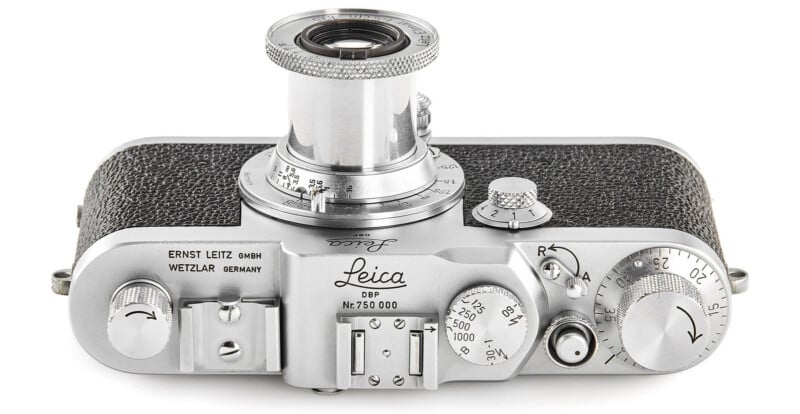
Another significant milestone in the auction was the sale of the Leica Ig prototype, serial number 750000. This piece of photographic history fetched €540,000 (roughly $624,000). Produced circa 1953, this prototype represents a transitional period in Leica’s engineering as the company moved from the screw-mount (LTM) era toward the integrated systems of the later 1950s.
The prototype is famously referred to by historians as the "humpback" Leica due to a highly unusual raised platform integrated into the top plate. This modification was designed to accommodate a flash shoe, a feature that was becoming increasingly necessary as electronic flash technology matured. Beyond its physical anomalies, the camera bears a "round" serial number (750000), a designation Leica traditionally reserved for milestone units or internal prototypes. The exceptional condition of this 1955-manufactured unit suggests it was likely kept in a controlled environment or private collection for the majority of its existence, far removed from the rigors of professional use.
The Swedish Army Surprise: A Lesson in Condition and Provenance
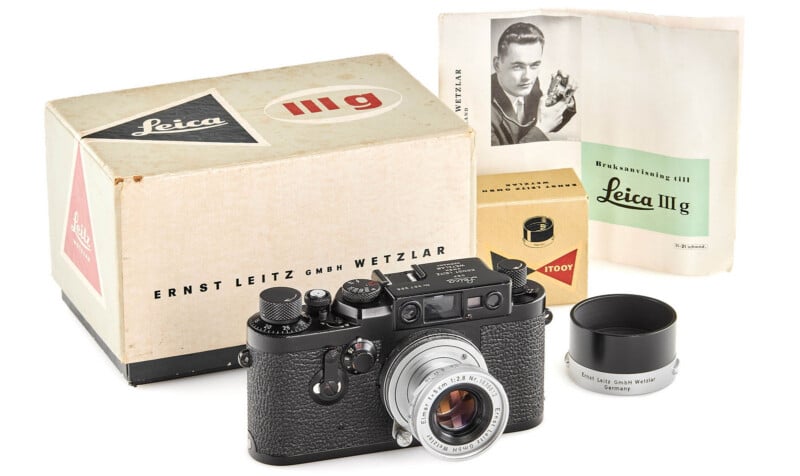
While the MP-33 and the Ig Prototype were expected to perform well, the most surprising result of the 48th Leitz Photographica Auction came from a Leica IIIg black paint "Swedish Army" set. Initially estimated to sell for approximately €140,000, the lot sparked a fierce bidding contest, eventually closing at €456,000 ($526,000).
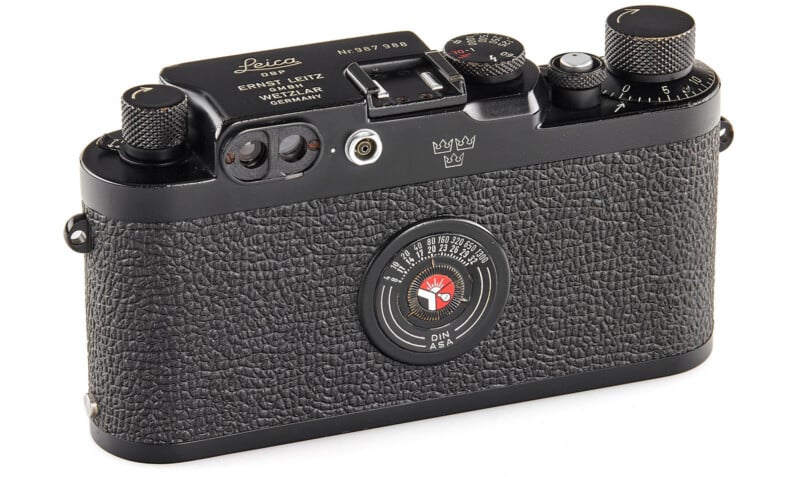
This camera is a specialized military variant of the IIIg, the last of the legendary screw-mount Leicas. In 1960, the Swedish Armed Forces commissioned a small batch of these cameras finished in a durable, matte "satin" black paint. These units are instantly recognizable by the "Three Crowns" (Tre Kronor) engraving on the back of the top plate, the official heraldic symbol of Sweden. Only 125 such units were ever produced, making it one of the rarest regular-production Leica cameras of the post-war period.
What drove the price to nearly four times its estimate was its "New Old Stock" (NOS) condition. Military equipment is typically subjected to harsh environments, and surviving examples are usually heavily brassed, dented, or repaired. Finding a Swedish Army IIIg in near-mint condition, complete with its original box and Swedish-language instruction manual, is a statistical anomaly. The auction results confirm that for the modern collector, "condition is king," and the premium for a pristine military-issue kit can outweigh even the rarest civilian models.
The Market for Black Paint and "Brassing"
The auction results also highlighted the continued obsession with "black paint" finishes across the Leica spectrum. Several other lots achieved high prices based on this aesthetic alone:
- Leica IIIb Black Paint: Sold for €312,000.
- Leica M3 Black Paint "First Batch" (Ken Narula Kit): Sold for €144,000.
- Leica IIIf Black Paint Swedish Army: Sold for €96,000.
In the world of vintage Leica collecting, black paint cameras are valued differently than their chrome counterparts. While chrome is durable, black paint eventually wears away at the edges and corners, revealing the yellow brass underneath. This "brassing" is viewed by many collectors as a badge of honor, representing the camera’s history and use by a professional. Paradoxically, the market currently rewards both the heavily "brassed" look of the MP-33 and the "untouched" look of the Swedish IIIg, showing that the market is bifurcating between those who value "patina" and those who value "perfection."
Diversification: The Linhof Technorama "Edition Fire"
While Leica dominated the catalog, the auction also featured rare items from other prestige manufacturers. One of the most visually striking items was the Linhof Technorama 612 PC II "Edition Fire." This medium-format panoramic camera, finished in a brilliant, custom red die-cast paint, sold for €28,800 ($33,370).
The Technorama 612 is a professional tool capable of producing 6x12cm negatives on 120 film, offering a sweeping cinematic perspective. The "Edition Fire" was a built-to-order variant, and the total number of red units produced remains a mystery. Leitz Auction officials noted that this was only the second red Technorama they had encountered in the history of the house. The kit included a Super-Angulon 5.6/58mm XL-110° lens and an Apo-Symmar 5.6/135mm lens, representing a complete set for high-end landscape or architectural photography.
Analyzing the "No-Sales": When Provenance Meets Price Floors
Despite the high-profile successes, not every lot found a buyer. Two items previously highlighted by market analysts failed to meet their reserve prices: a Leica Astro Rifle outfit and a rare Leica MP formerly owned by a famous Italian paparazzo.
The failure of these items to sell provides a sobering look at the nuances of the auction market. The "Astro Rifle," a specialized shoulder-stock mount for long-distance lenses used by the Luftwaffe and sports photographers, is a niche item that requires a specific type of historical collector. Similarly, while provenance (ownership history) usually adds value, the high starting estimates for the paparazzi-owned MP may have exceeded what the market was willing to pay for "celebrity" association in the absence of a "New Old Stock" condition. These items are expected to return to the auction block in future sessions, likely with adjusted estimates.
Chronology and Context of the Leitz Photographica Auction
The Leitz Photographica Auction was established in 2002, originally operating under the name "WestLicht" in Vienna. Over the last two decades, it has evolved into the world’s leading auction house for vintage cameras. In 2017, Leica Camera AG took a majority stake in the auction house, solidifying the relationship between the manufacturer and the secondary market.
The auction is held twice a year—once in the spring and once in the autumn. The 48th auction marks a period of significant growth for the "alternative asset" market. As traditional financial markets experience volatility, wealthy investors have increasingly turned to "passion assets" like rare cars, watches, and cameras. The Leica brand, with its century-long history of German engineering and its association with the greatest photographers of the 20th century (such as Henri Cartier-Bresson and Robert Capa), has become the "Rolex" or "Patek Philippe" of the camera world.
Broader Implications for the Photography Industry
The results of Auction No. 48 signal that the appetite for analog history is not merely a passing trend but a sustained economic shift. The high prices for 1950s-era technology reflect a desire for tactile, mechanical permanence in an increasingly digital and ephemeral age.
Furthermore, these auctions serve as a vital source of data for Leica Camera AG itself. The company has recently leaned into its heritage by releasing "re-issue" lenses and cameras, such as the Leica M6 (2022) and the Summilux-M 35mm f/1.4 "Steel Rim" Classic. By observing which vintage models command the highest prices at auction, Leica can better understand which aspects of its design DNA are most valued by its most loyal customers.
As the 48th auction concludes, the focus now shifts to the 49th session, scheduled for later this year. With the vintage market showing no signs of cooling, historians and collectors alike will be watching to see if the next "round" serial number or "black paint" rarity can break the million-dollar barrier once again. For now, the MP-33 stands as a testament to a golden age of mechanical precision, proving that for some, a 70-year-old camera is worth more than the most advanced digital sensors of today.

