


Virginia, a state celebrated for its picturesque landscapes and rich cultural tapestry, offers a haven for bird enthusiasts, particularly those captivated by the drumming and artistry of woodpeckers. The Old Dominion is home to a remarkable array of these arboreal acrobats, each with distinct appearances, behaviors, and ecological roles. This comprehensive guide delves into the eight most common woodpecker species found in Virginia, providing detailed insights into their identification, habitats, diets, and conservation status, offering a deeper appreciation for their presence in the Commonwealth’s diverse ecosystems.
The Vibrant Avifauna of Virginia: A Woodpecker’s Domain
Virginia’s varied topography, from the Appalachian Mountains to the Atlantic coastal plain, supports a wealth of biodiversity, making it a prime location for birdwatching. Among its most fascinating avian residents are woodpeckers, a family of birds uniquely adapted to a life spent in and around trees. Their specialized features, including zygodactyl feet for gripping, strong beaks for excavation, and a remarkably adapted hyoid bone to protect against the jarring impacts of drumming, underscore their evolutionary niche. This article aims to illuminate the lives of eight prevalent woodpecker species within Virginia, offering a guide for identification and understanding their ecological significance.
1. The Red-Cockaded Woodpecker: A Symbol of Conservation Efforts
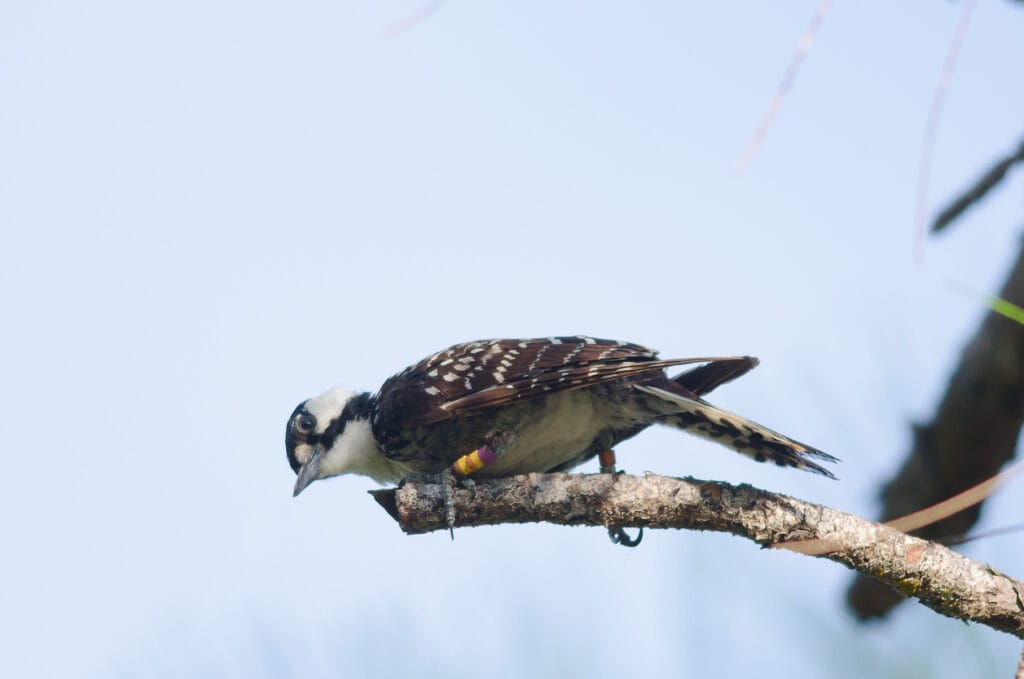
The Red-Cockaded Woodpecker ( Picoides borealis ) is perhaps one of the most critically important species in Virginia, not only for its unique characteristics but also for its precarious conservation status. Despite its name, the "red" is subtle, appearing as a small, often difficult-to-see red patch on the side of the male’s black cape. Distinguishing features include its black cap, white cheeks, and striking black and white patterns on its back. Juvenile birds exhibit this red patch more centrally on their heads, while females lack it entirely.
Identification and Habitat: Adult Red-Cockaded Woodpeckers measure approximately 7.9 to 9.1 inches in length, with a wingspan of 13 to 16 inches. Historically, these birds thrived in mature pine forests with open understories, environments prone to natural fires that maintained the open conditions necessary for their survival. Today, sightings are most likely within protected national forests and wildlife refuges, where habitat management efforts are concentrated.
Ecological Significance and Conservation: The Red-Cockaded Woodpecker is an indicator species for the health of longleaf pine ecosystems. Its decline, from an estimated 1.5 million individuals to as few as 10,000, is a stark testament to habitat loss driven by logging and aggressive fire suppression policies. These practices have reduced the availability of suitable nesting sites, as the birds excavate living longleaf pines, creating cavity nests within the infected or damaged heartwood. Consequently, the Red-Cockaded Woodpecker is listed as an endangered species.
Diet and Behavior: Their diet consists primarily of insects and arthropods, including ants, beetles, and wood roaches, supplemented by occasional fruits and seeds. Significant conservation initiatives, including prescribed burning to restore habitat conditions and the installation of artificial nest cavities, have been implemented in recent years to aid the recovery of this imperiled species.
2. The Red-Headed Woodpecker: A Striking Candidate for Observation
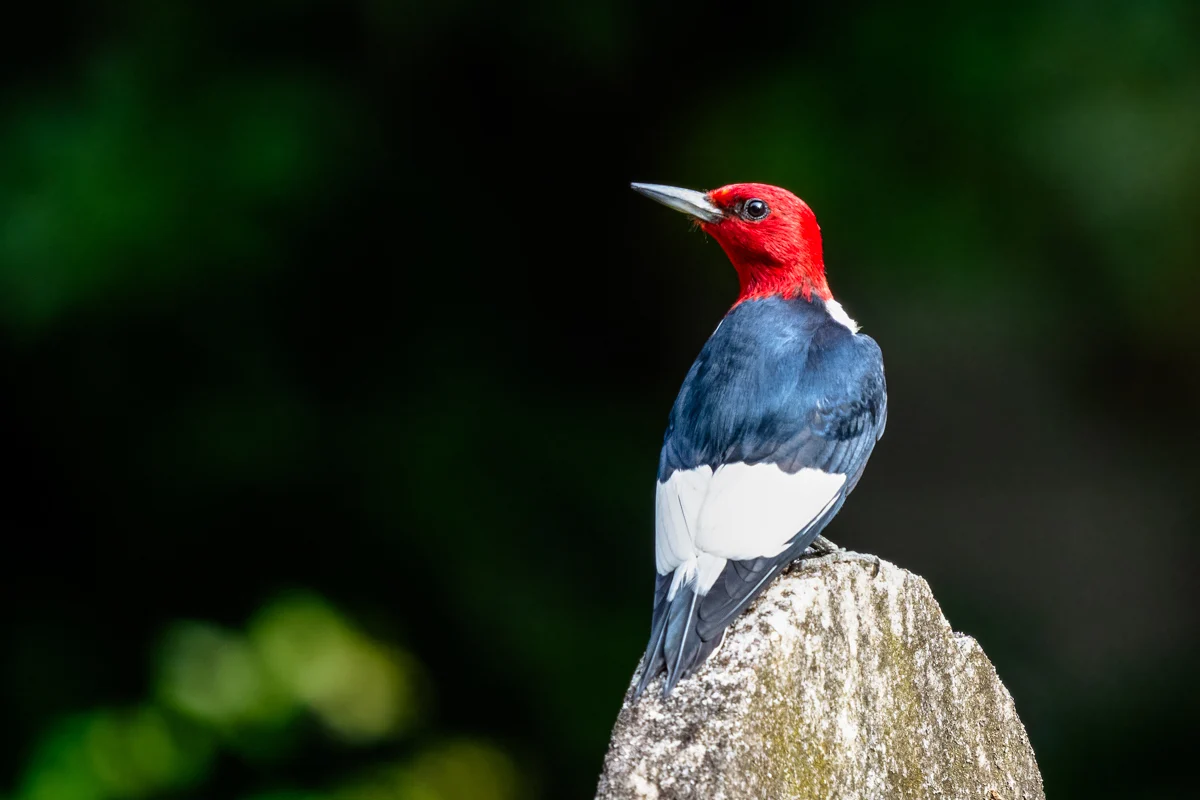
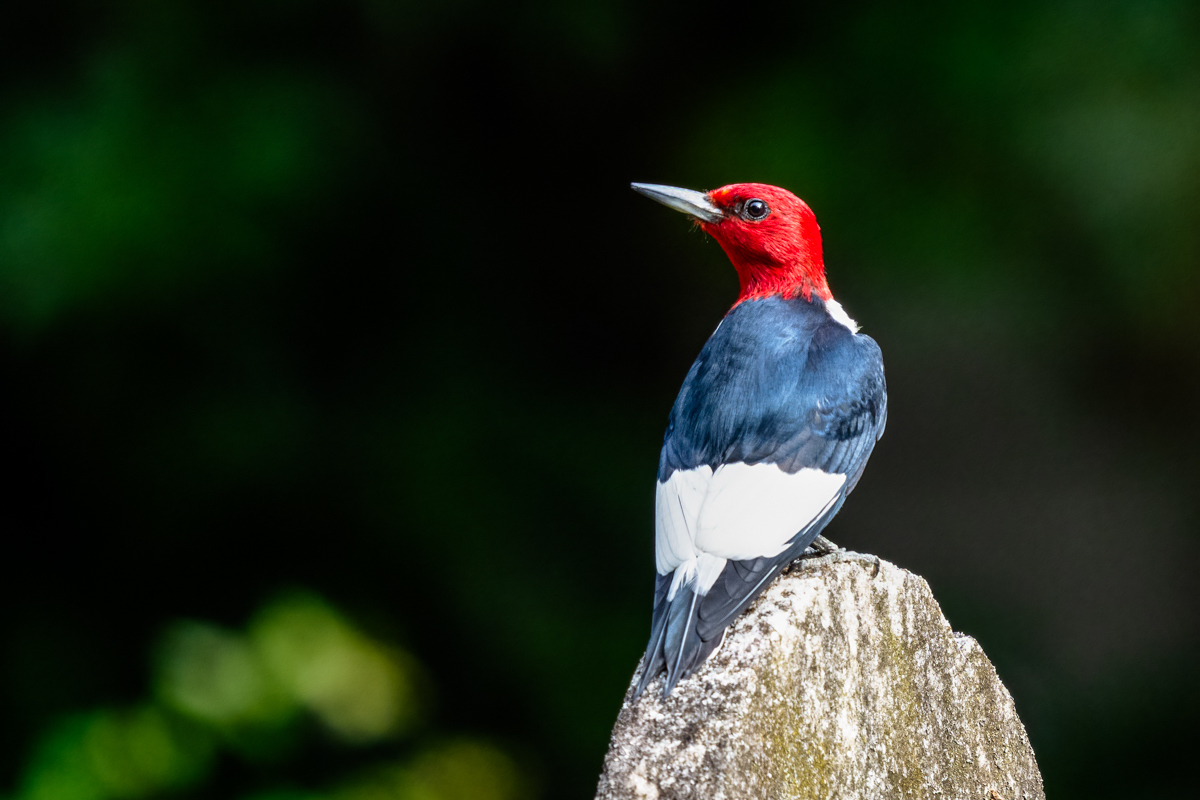
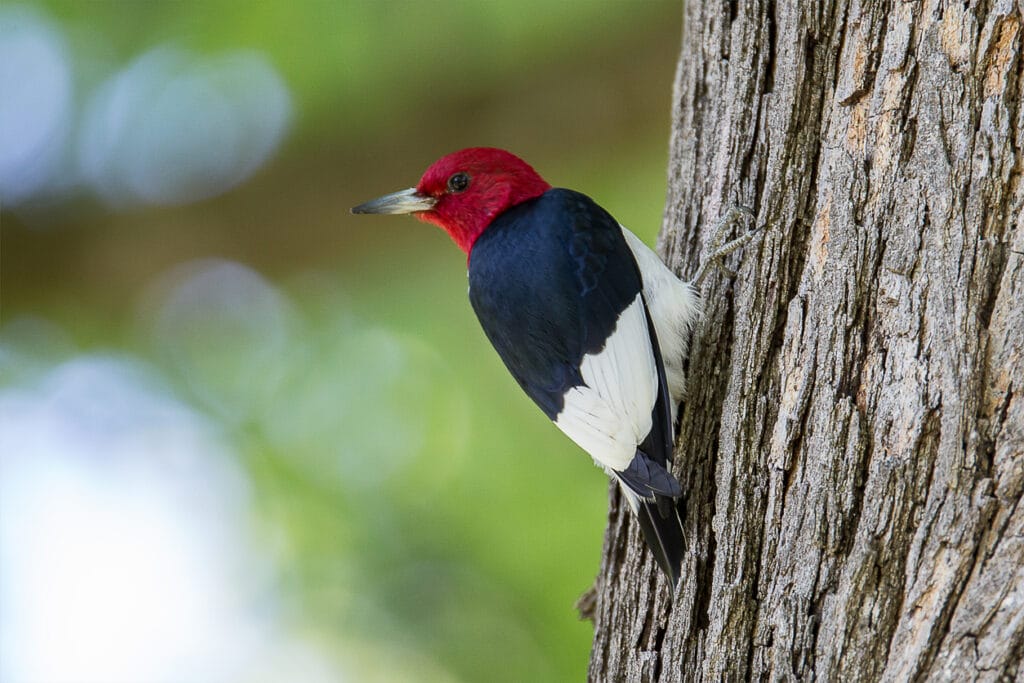
The Red-Headed Woodpecker ( Melanerpes erythrocephalus ) is instantly recognizable by its brilliant, all-red head, contrasting sharply with its black wings adorned with white patches and its clean white belly. Juveniles initially sport brown heads, which gradually transform into the characteristic red as they mature.
Identification and Habitat: This species typically ranges from 7.5 to 9.8 inches in length, with a wingspan of about 16.5 to 16.7 inches. Red-headed Woodpeckers prefer open woodlands, forest edges, and orchards, with a critical requirement for dead trees, which they utilize for nesting.
Behavioral Nuances: Sexes are outwardly identical, making identification challenging without observing nesting behaviors. While both male and female participate in nest building, the male is often more involved in the excavation process. Both parents share incubation duties, with the male typically taking the night shift.
Conservation Challenges: The decline in available dead trees, often removed by landowners for aesthetic reasons, has significantly impacted the Red-headed Woodpecker’s population. This scarcity of nesting sites leads to increased competition with other species and contributes to a reduced breeding success rate.
Diet: Their diet is varied, including insects such as beetles and grasshoppers, as well as fruits, seeds, and nuts.
3. The Red-Bellied Woodpecker: An Adaptable and Growing Population
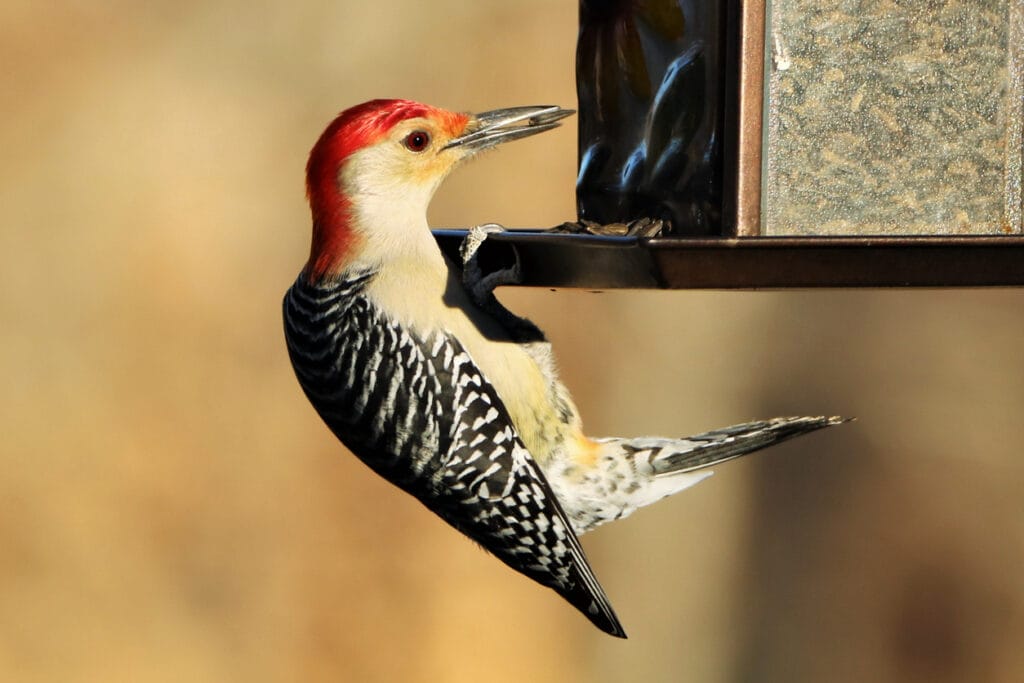
The Red-Bellied Woodpecker ( Melanerpes carolinus ) is frequently confused with its red-headed counterpart, but a closer look reveals key differences. While it possesses a red nape and crown (hence its name), its head is not entirely red. Its plumage features striking black and white barring on its back and wings, and a faint crimson wash on its underbelly, though this is not always conspicuous.
Identification and Habitat: These woodpeckers are typically 9 to 10.5 inches long, with a wingspan of 13 to 16.5 inches. They are highly adaptable and can be found in a variety of wooded habitats, including hardwood forests, mixed pine-hardwood forests, and pine flatwoods.
Population Trends and Conservation: Unlike some of its more specialized relatives, the Red-Bellied Woodpecker’s flexible habitat requirements and adaptable nature have contributed to its population expansion and increasing numbers across its range. Its Continental Concern Score of 7/20 indicates a relatively low conservation concern.
Diet: Their diet comprises a mix of invertebrates, such as flies, ants, and caterpillars, alongside fruits, nuts, and seeds.
4. The Northern Flicker: A Ground-Foraging Specialist
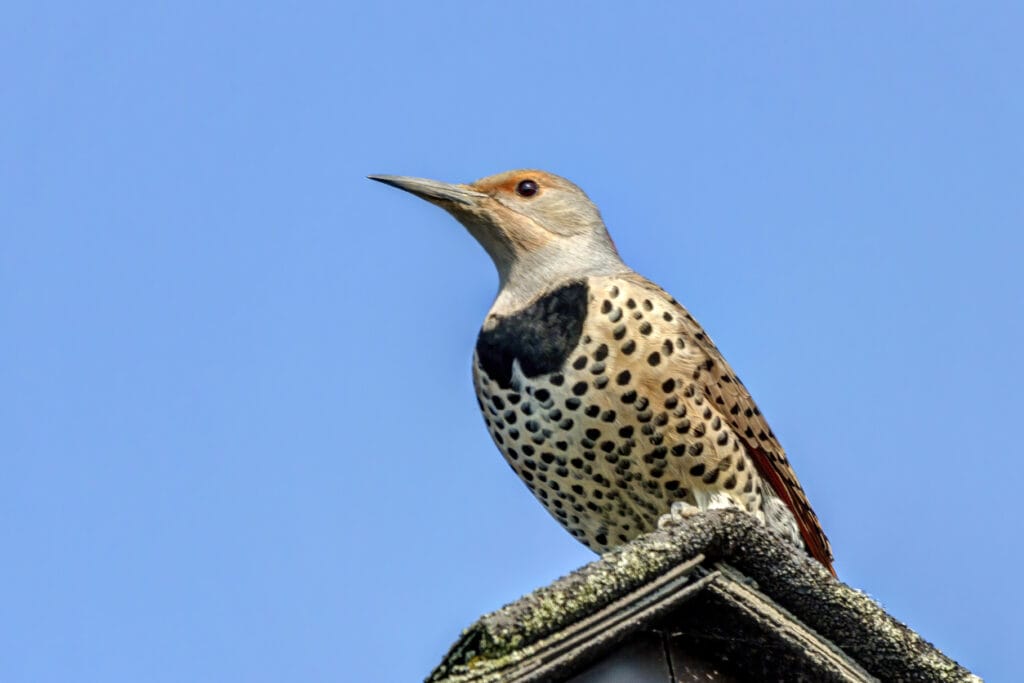
The Northern Flicker ( Colaptes auratus ) stands out from many other woodpeckers with its unique plumage. Instead of the typical black and white, it features brown feathers, black spotting on its underparts, and black barring across its back. Virginia predominantly hosts the Yellow-shafted Flicker subspecies.
Identification and Habitat: This subspecies is characterized by a brown face and throat, a gray upper head, and a red nape. Males possess a distinctive black "mustache" stripe, absent in females. Both sexes have yellow shafts on their flight feathers, a key identifying feature. Northern Flickers are relatively large, measuring 11 to 14 inches in length with a wingspan of 16.5 to 20.1 inches. They inhabit open areas with scattered trees, including parks, groves, and forest edges.
Unique Foraging Behavior: A notable characteristic of the Northern Flicker is its tendency to forage on the ground, often probing for ants, beetles, and caterpillars. This ground-feeding behavior distinguishes it from many other woodpecker species.
Population Trends: While not facing immediate endangerment, the Northern Flicker’s population has seen a decline, primarily due to habitat loss and fragmentation. Its Continental Concern Score of 10/20 suggests a moderate level of concern.
Diet: Their diet is diverse, with a strong emphasis on ants, but also includes beetles, caterpillars, fruits, seeds, and nuts.
5. The Pileated Woodpecker: The Gentle Giant of Virginia’s Forests
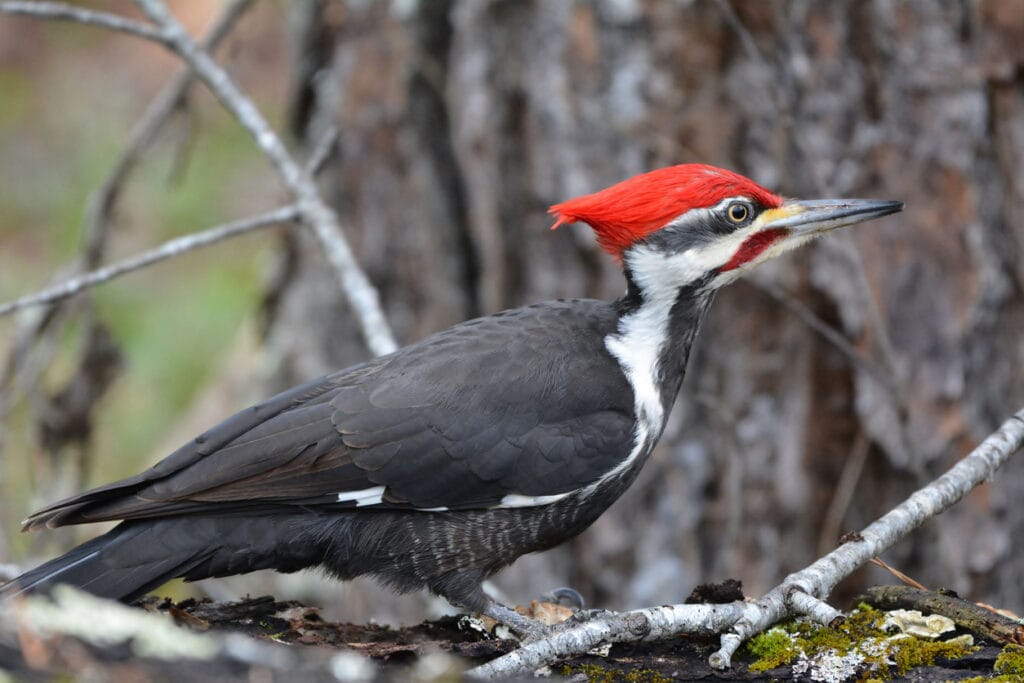
The Pileated Woodpecker ( Dryocopus pileatus ) is the largest woodpecker species found in Virginia, and indeed, one of the largest in North America. Its imposing size, coupled with its striking appearance, makes it a memorable sight. Adults are predominantly black with a distinctive white stripe running down their cheeks and throat, and most notably, a vivid red crest and often a red mustache.
Identification and Habitat: Pileated Woodpeckers measure an impressive 15.8 to 19.3 inches in length, with a substantial wingspan of 26 to 29.5 inches. Females share many of the male’s characteristics but typically have a black mustache and forehead, and a less pronounced red crest. They inhabit deciduous forests, including maple forests and cypress swamps, as well as suburban areas and parks, provided large, mature, and often dead trees are present.
Ecological Role and Nesting: These birds play a crucial role in forest ecosystems by excavating large cavities in dead or decaying trees. These cavities not only serve as their nesting sites but also provide shelter and nesting opportunities for numerous other cavity-nesting species.
Conservation Status: While not currently listed as endangered, the Pileated Woodpecker faces challenges due to the removal of large, dead trees, which are essential for both foraging and nesting. Their Continental Concern Score is 7/20.
Diet: Their primary food source consists of insects, particularly carpenter ants and other wood-boring larvae, supplemented with fruits and nuts like blackberries and hackberries.
6. The Downy Woodpecker: The Smallest and Most Abundant
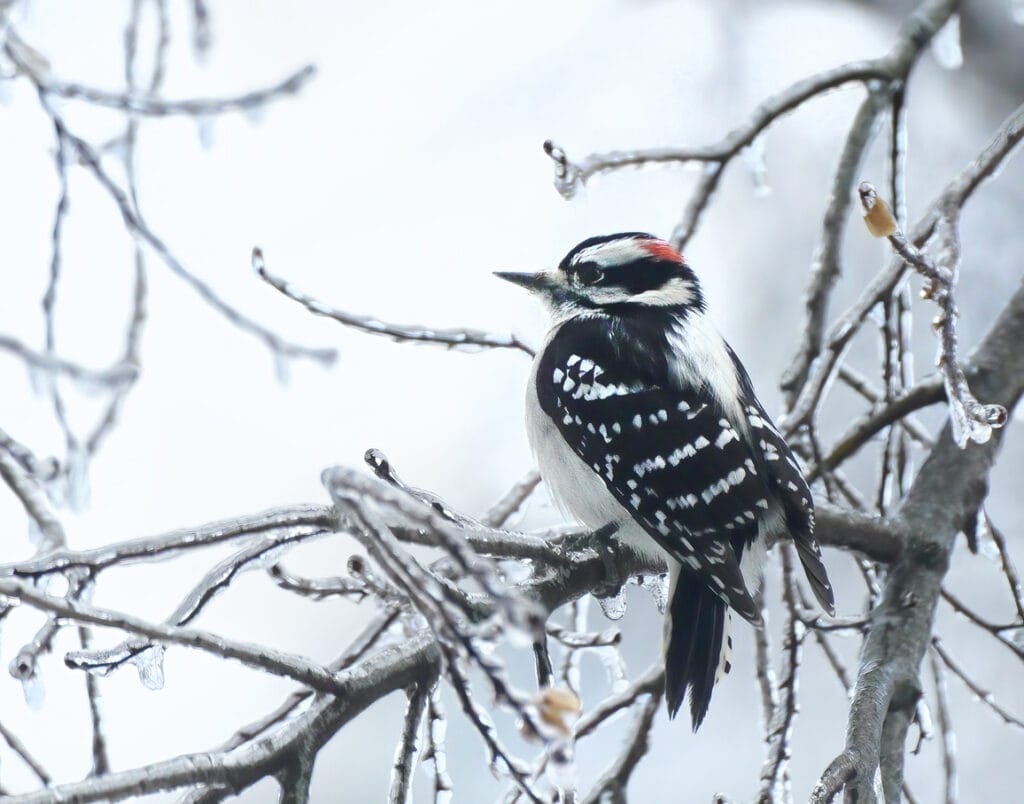
The Downy Woodpecker ( Dryobates pubescens ) is the smallest woodpecker species commonly found in Virginia, measuring a mere 5.5 to 6.7 inches in length with a wingspan of 9.8 to 11.8 inches. They exhibit the classic black and white plumage, with black wings marked by white spots, a black back featuring thick white stripes, and a black head.
Identification and Habitat: Males are distinguished by a small red patch on the back of their heads, absent in females. These adaptable birds are widespread and can be found in deciduous woods, forest edges, clearings, parks, orchards, and suburban backyards. Their small size and quick movements can make them challenging to spot, but their presence is often indicated by their frequent visits to suet feeders.
Population Stability: The Downy Woodpecker is remarkably abundant, with an estimated population of 13 to 14 million individuals. This widespread presence and stable population have led to its classification as "Least Concern" on the IUCN Red List, indicating no immediate threat to its survival.
Diet: Their diet is primarily insectivorous, consisting of ants, caterpillars, and beetles, along with fruits and seeds, including berries and grains.
7. The Hairy Woodpecker: The Downy’s Larger Cousin
The Hairy Woodpecker ( Dryobates villosus ) shares a striking resemblance to the Downy Woodpecker, often leading to confusion between the two. However, key differences in size and bill length are reliable identifiers. Hairy Woodpeckers are significantly larger, measuring 7.1 to 10.2 inches in length with a wingspan of 13 to 16.1 inches.
Distinguishing Features: The most evident distinction is size. Furthermore, the Hairy Woodpecker possesses a longer bill, nearly as long as its head, whereas the Downy’s bill is shorter than its head. Another reliable distinguishing mark is found on the outer tail feathers: Hairy Woodpeckers have plain white outer tail feathers, while Downy Woodpeckers exhibit black barring on theirs.
Sexual Dimorphism: Similar to the Downy Woodpecker, male Hairy Woodpeckers display a red spot on the upper part of their heads, absent in females.
Habitat and Diet: Hairy Woodpeckers inhabit deciduous forests with large trees, as well as burned forests, orchards, and suburban areas. Their diet primarily consists of insects, with a particular focus on the larvae of bark beetles and wood-boring beetles. They also consume ants, caterpillars, fruits, and nuts.
Conservation Status: With an estimated population of 9 million and a Continental Concern Score of 6/20, the Hairy Woodpecker is generally considered to be in a stable and healthy condition.
8. The Yellow-Bellied Sapsucker: A Specialized Sap-Feeder
The Yellow-bellied Sapsucker ( Sphyrapicus varius ) possesses a distinctive appearance, characterized by its white belly often tinged with yellow, and black backs, wings, and tails marked by white barring. Its most striking features are its red crests and the white stripes that frame its face.
Identification and Sexual Dimorphism: Juvenile sapsuckers have a predominantly brown plumage, differing significantly from the adults. The sexes can be differentiated by their throats: males have a red throat, while females have a white throat. Yellow-bellied Sapsuckers are of medium size, ranging from 7.1 to 8.7 inches in length with a wingspan of 13.4 to 15.8 inches.
Unique Feeding Strategy: Unlike most woodpeckers that excavate for insects, the Yellow-bellied Sapsucker drills small, precise holes in the bark of trees to feed on the sap that wells up. They also consume spiders and ants, and will eat fruit. Their feeding habits make them less reliant on dead trees for nesting and foraging, allowing them to inhabit a wider range of woodlands, including orchards, forest edges, and pastures, particularly those with maple and fruit trees.
Population and Conservation: The Yellow-bellied Sapsucker boasts a healthy population of approximately 10 million individuals. With a Continental Concern Score of 7/20, they are not considered to be in any significant danger.
Understanding Woodpecker Adaptations
The remarkable success of woodpeckers in their arboreal niche is a testament to their specialized adaptations:
Zygodactyl Feet: The Key to Arboreal Agility
Woodpeckers possess zygodactyl feet, characterized by two toes pointing forward and two pointing backward. This unique arrangement provides exceptional grip, allowing them to cling securely to vertical tree surfaces and even hang upside down to access food and excavate cavities. This adaptation is crucial for their lifestyle, enabling them to maneuver with agility on tree trunks and branches.
Sharp Beaks and Sticky Tongues: Tools for Excavation and Foraging
The strong, chisel-like beaks of woodpeckers are perfectly suited for drilling into wood to create nest cavities and search for insects hidden within. Complementing their beaks is a long, sticky tongue, often barbed at the tip, which they can extend far beyond the beak to probe crevices and extract insects from deep within tree bark and wood.
The Hyoid Bone: A Natural Shock Absorber and Extension Mechanism
A fascinating adaptation found in woodpeckers is the hyoid bone, which extends from the base of the skull, wraps around the cranium, and attaches to the nasal cavity. This unique structure serves a dual purpose: it acts as a shock absorber, protecting the woodpecker’s brain from the repetitive impacts of drumming, and it facilitates the remarkable extension of their tongues. This intricate system allows them to reach deep into crevices and extract insects with precision.
Conclusion: A Rich Tapestry of Avian Life in Virginia
Virginia’s diverse landscapes provide a vital habitat for a remarkable array of woodpecker species. From the critically endangered Red-Cockaded Woodpecker, a symbol of dedicated conservation efforts, to the common and adaptable Downy Woodpecker, each species contributes uniquely to the Commonwealth’s ecological richness. Understanding their distinct characteristics, habitat needs, and conservation challenges allows for a deeper appreciation of these fascinating birds and reinforces the importance of preserving their natural environments. For bird lovers and nature enthusiasts, Virginia offers an unparalleled opportunity to observe and learn about the vibrant world of woodpeckers.
Frequently Asked Questions About Virginia’s Woodpeckers
Are woodpeckers common in Virginia?
Yes, woodpeckers are quite common throughout Virginia. Species like the Downy and Hairy Woodpeckers are frequently observed in wooded areas. The much larger Pileated Woodpecker is also a common sight in suitable forest habitats across the state.
What is the rarest woodpecker in Virginia?
The Red-Cockaded Woodpecker is considered one of the rarest woodpeckers in Virginia. Sightings are infrequent, with less than a thousand reported on platforms like eBird, underscoring its endangered status and the critical need for ongoing conservation.
Are woodpeckers protected in Virginia?
Woodpeckers, like most native bird species in the United States, are protected under federal law, including the Migratory Bird Treaty Act. This means it is illegal to harm them, hunt them, or disturb their nests and eggs without proper permits. This protection extends to all woodpecker species found in Virginia.

