


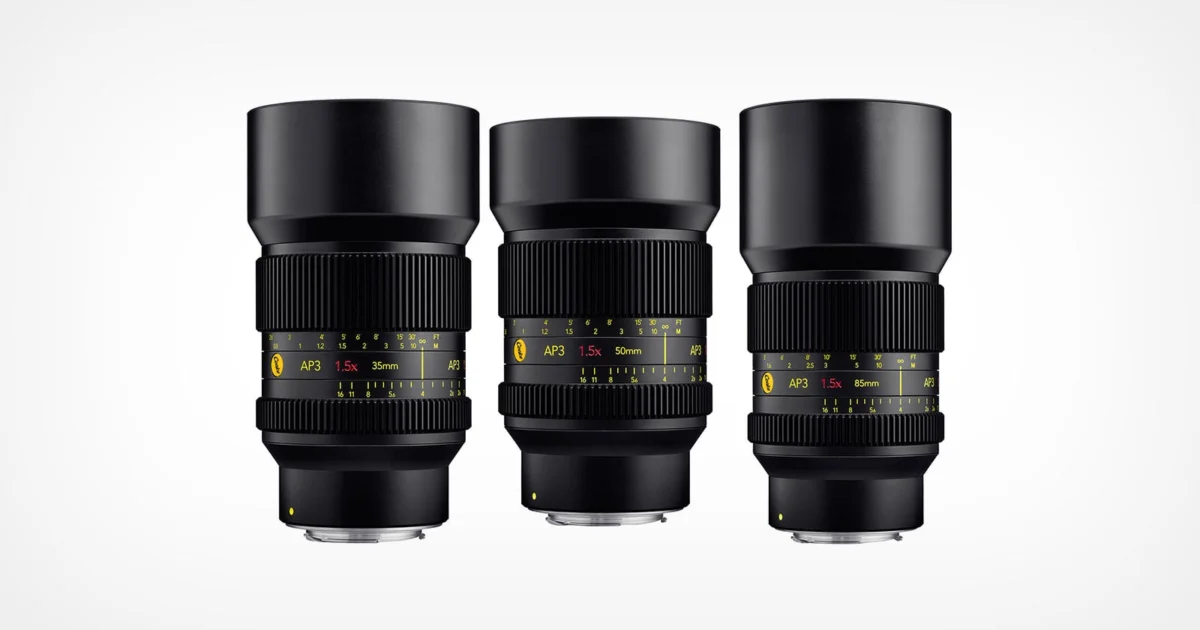
Cooke Optics, a manufacturer synonymous with the prestigious "Cooke Look" in the global cinema industry, has officially announced the launch of the AP3 FF series. This new lineup represents a significant strategic shift for the Leicester-based company, as it introduces a series of 1.5x anamorphic prime lenses designed specifically for the burgeoning full-frame mirrorless camera market. By moving beyond the traditional PL-mount ecosystem that has defined high-end cinematography for decades, Cooke is addressing a new generation of filmmakers who utilize compact, high-performance mirrorless systems for narrative features, high-end commercials, and documentary work.
The initial rollout of the AP3 FF series includes three essential focal lengths: a 35mm, a 50mm, and an 85mm prime. All three lenses share a fast T2.4 maximum aperture, ensuring consistent exposure and depth-of-field characteristics when switching between focal lengths on set. This launch marks Cooke’s most aggressive move yet into the mirrorless space, blending the company’s century-long optical heritage with the ergonomic demands of modern digital cinematography.
Technical Specifications and Optical Philosophy
The AP3 FF lenses are engineered to provide a 1.5x anamorphic squeeze, a ratio that has gained significant popularity in recent years. While traditional 2x anamorphic lenses were designed for 4:3 film strips, the 1.5x ratio is optimized for modern 16:9 and 3:2 full-frame digital sensors. This squeeze factor allows filmmakers to achieve a widescreen cinematic aspect ratio without the extreme distortion or light loss often associated with higher squeeze factors, while still maintaining the distinctive oval bokeh and horizontal flare characteristics that define the anamorphic aesthetic.
Cooke’s design philosophy for the AP3 series focuses on "controlled anamorphic character." Historically, anamorphic lenses were prized for their "imperfections"—swirly bokeh, heavy edge softening, and unpredictable flares. However, modern high-resolution sensors often demand more clinical precision. Cooke claims the AP3 series strikes a balance, offering the clarity and dependability required for 8K productions while retaining the "painterly" rendering and organic transitions that have made the brand a staple of Hollywood productions.
According to technical data released by the manufacturer, the lenses are remarkably consistent in their physical dimensions. Each lens features a unified 87mm front diameter, which simplifies the use of matte boxes and filters. The weight of the lenses ranges from 1.2 kilograms (2.6 pounds) to 1.4 kilograms (3.1 pounds), making them exceptionally lightweight for anamorphic glass. This weight profile is specifically intended to facilitate handheld shooting, gimbal use, and drone cinematography, where traditional, heavier cinema lenses would prove cumbersome.
Ergonomics and Workflow Integration
The AP3 FF series is built with a "mirrorless-first" architecture. While Sony E-mount is the default configuration, Cooke has implemented an interchangeable mount system. In a move that caters to the fragmented mirrorless landscape, the company is offering Canon RF, L-mount, and Leica M mounts as free accessories upon order. This versatility ensures that the lenses can remain in a filmmaker’s kit even if they migrate between camera systems, such as moving from a Sony FX9 to a Canon C400 or a Panasonic LUMIX S1H.
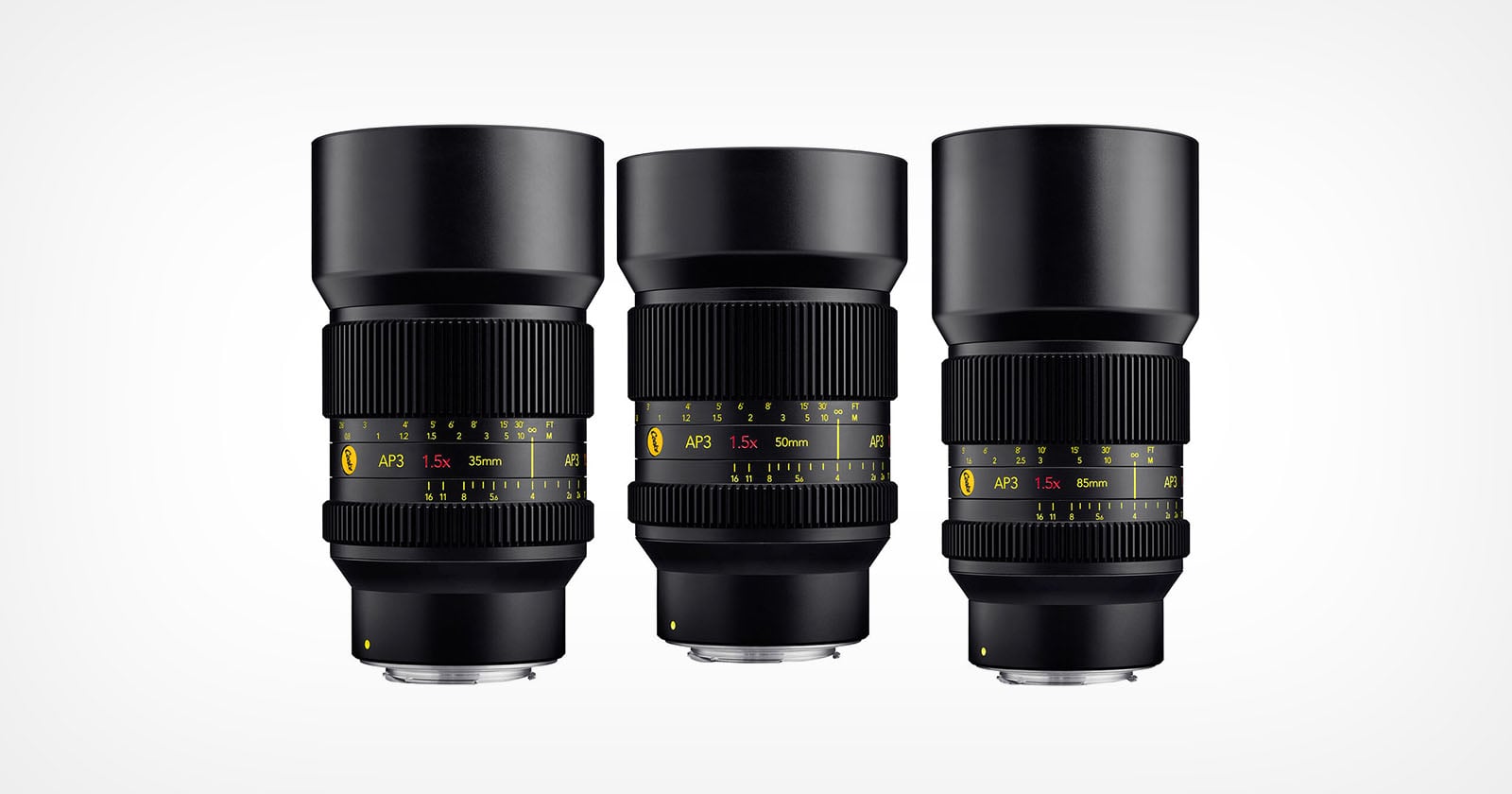
For focus pullers and camera assistants, the AP3 lenses provide industry-standard 0.8 MOD gears for both focus and iris rings. The focus ring offers 160 degrees of rotation, providing enough throw for precise manual adjustments without requiring the massive rotations found on larger studio lenses. The iris ring features 79 degrees of rotation. These unified gear positions across the 35mm, 50mm, and 85mm models allow for rapid lens changes without the need to reposition follow-focus motors or iris control systems.
One of the most discussed aspects of anamorphic lenses is "focus breathing"—the slight change in focal length that occurs when racking focus. Cooke has taken a nuanced approach to this phenomenon. While the AP3 series features minimal breathing compared to vintage anamorphic glass, the company has intentionally avoided eliminating it entirely. Cooke representatives noted that a subtle amount of breathing serves as a creative tool, providing a visual cue of depth shifts that audiences associate with classic cinema.
The Aesthetic Profile: Bokeh and Flare
The "Cooke Look" is often described as having a certain warmth, a smooth roll-off in highlights, and a dimensionality that makes digital images feel more like film. The AP3 FF series seeks to translate this to the anamorphic realm. The 1.5x squeeze produces oval-shaped out-of-focus highlights (bokeh) that are described by the company as "impressionistic" and "dappled." Unlike budget anamorphic lenses that may produce harsh or distracting bokeh shapes, the AP3 is designed to keep the background creamy and non-distracting, drawing the viewer’s eye toward the sharp center-frame subjects.
In terms of flare, the AP3 lenses produce the classic horizontal streaks associated with anamorphic optics. However, Cooke emphasizes that these flares have "depth and complexity," avoiding the "one-dimensional" blue streaks often seen in lower-cost anamorphic adaptations. The flare characteristics are engineered to be consistent across all three focal lengths, ensuring visual continuity during the editing process.
Sharpness is another area where Cooke has differentiated the AP3 from its competitors. While some modern "vintage-inspired" lenses are purposefully soft to hide the clinical nature of digital sensors, the AP3 series maintains high resolution in the center of the frame. This ensures that skin textures and fine details are preserved, while the anamorphic characteristics provide the "expressive" softening toward the edges of the frame.
Chronology and Industry Context
The announcement of the AP3 FF series comes at a time of rapid transition in the cinema equipment market. For decades, the high-end anamorphic market was dominated by a few players, including Panavision, Arri/Zeiss, and Cooke, with lenses often costing upwards of $30,000 to $50,000 per prime. These were almost exclusively rental items, accessible only to large-budget productions.
However, the last five years have seen an explosion of "affordable" anamorphic glass from manufacturers like Sirui, Venus Optics (Laowa), and Atlas Lens Co. These companies proved there was a massive appetite for anamorphic aesthetics among independent filmmakers and content creators. Cooke’s entry into the $7,000–$8,000 price bracket with the AP3 series is a direct response to this market shift. It represents a "mid-tier" luxury option: significantly more expensive than entry-level anamorphic lenses, but vastly more accessible than Cooke’s own flagship Anamorphic/i Full Frame Plus series, which remains the standard for top-tier Hollywood cinematography.
Pricing, Availability, and Market Impact
The Cooke AP3 FF 1.5x Anamorphic primes are positioned as a premium investment for owner-operators and boutique rental houses. Individually, the 35mm, 50mm, and 85mm lenses are priced at $7,750 each. To encourage the purchase of a complete set, Cooke is offering a three-lens bundle for $22,250, representing a $1,000 discount over purchasing the units separately.
Industry analysts suggest that the AP3 series could significantly impact the "prosumer" and independent film sectors. By providing the "Cooke" name—a brand with immense cultural capital in the film world—at a sub-$10,000 price point, the company is likely to capture a segment of the market that previously opted for brands like Atlas or used vintage conversions.
The decision to support the Leica M mount is also noteworthy. While primarily a stills mount, the M mount is increasingly used on cinema cameras like the RED Komodo or specialized Leica systems. This suggests Cooke is looking beyond traditional video workflows and into the high-end "street photography" and "cinematic reportage" markets.
Analysis of Implications
The release of the AP3 FF series suggests three major trends in the optical industry:
- The Standardisation of 1.5x Squeeze: While 1.33x was once the standard for 16:9 sensors, the industry is coalescing around 1.5x as the ideal compromise. It provides a more pronounced anamorphic look than 1.33x but avoids the technical complexities and extreme cropping required by 2x squeeze factors on modern sensors.
- The Decline of the "PL-Mount Only" Paradigm: High-end lens manufacturers can no longer ignore mirrorless mounts. The flange distance advantages and the sheer volume of mirrorless cameras in professional use have made E, RF, and L mounts essential for new lens designs.
- The Democratization of "Prestige" Glass: As camera bodies become more affordable and capable, the "glass" (lenses) has become the primary way for filmmakers to differentiate their work. Cooke’s move allows smaller production houses to market their projects as "Shot on Cooke," a phrase that carries weight with distributors and clients alike.
As of the announcement, Cooke has not specified whether additional focal lengths (such as a wide 25mm or a longer 135mm) will be added to the AP3 lineup. However, given the company’s history of expanding its lens families, industry experts anticipate that the success of these first three primes will dictate the future roadmap of the AP3 series. For now, the 35mm, 50mm, and 85mm trio provides a solid foundation covering the wide, normal, and portrait fields of view essential for most narrative storytelling.

