


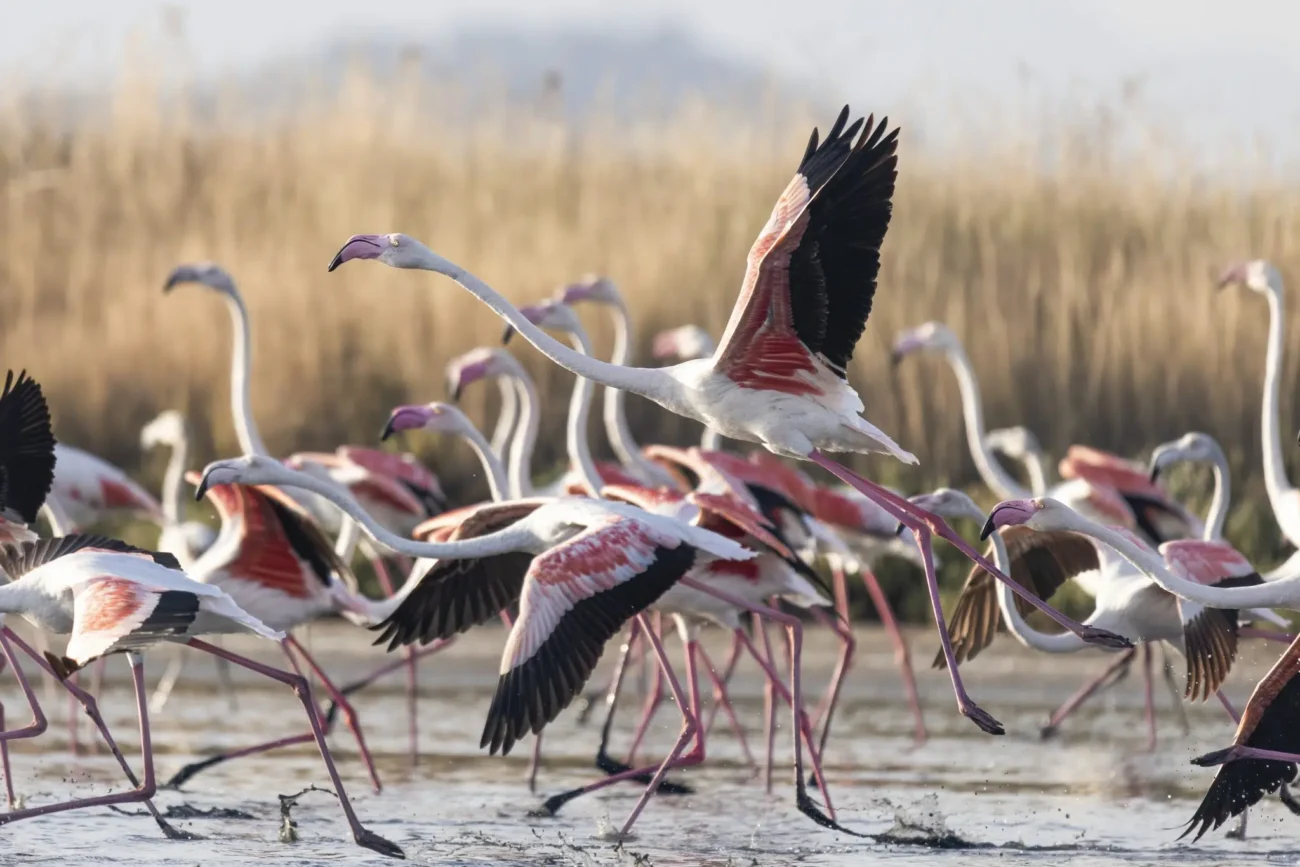
On Albania’s southwestern coast, where the Vjosa River, one of Europe’s last great wild rivers, meets the Adriatic Sea, a unique and ecologically vital landscape is facing unprecedented threats. The delta, a vast mosaic of lagoons, salt marshes, and coastal forests, forms the Pishë-Poro-Nartë Protected Landscape, a critical sanctuary for an astonishing array of biodiversity, including some of the continent’s most endangered species. However, since early May 2026, this delicate ecosystem has been subjected to disruptive activities linked to a proposed luxury resort development, sparking widespread public outcry and raising urgent questions about the future of Albania’s natural heritage.
The Pishë-Poro-Nartë Protected Landscape, encompassing over 250 square kilometers, is a testament to nature’s intricate design. It hosts 18 habitat types recognized under the European Union’s Natura 2000 framework, with six of these designated as priority habitats – a classification reserved for ecosystems of the highest ecological significance. This rich tapestry of environments supports over 2,300 species, many of which are rare and vulnerable.
A Haven for Endangered Wildlife
The ecological importance of the Vjosa-Narta delta is underscored by the presence of species teetering on the brink of extinction. The Mediterranean monk seal, one of the world’s most endangered marine mammals, with only a few hundred individuals remaining globally, finds refuge in these waters. The delta is also a crucial stronghold for the Dalmatian pelican, a species that has seen a partial recovery in Europe precisely because of the existence of such undisturbed habitats. More than 70 species classified as endangered rely on this ecosystem for survival. Furthermore, the Narta lagoon meets the stringent criteria of the Ramsar Convention on Wetlands, an international benchmark for ecological significance, highlighting its status as one of the most valuable remaining wild coastlines in the Mediterranean.

The landscape itself is a marvel of natural processes. At dawn, a serene spectacle unfolds: mist hovers over still waters, sunlight filters through reeds, and Greater Flamingos stand in pale pink stillness, their reflections mirroring perfectly in the glass-like lagoon. Overhead, Dalmatian pelicans glide with an effortless grace, while egrets and herons meticulously forage along the water’s edge. This tranquil scene is framed by an ancient pine forest, its trees standing like natural architecture, their roots deeply anchored in sand shaped by centuries of salt winds. The scent of pine and sea mingles in the air, creating an atmosphere of profound natural beauty.
This ancient forest plays a vital role as a critical stopover point for millions of migratory birds navigating the Adriatic Flyway, a vital corridor connecting breeding grounds in the north with wintering grounds in Africa. For these avian travelers, the forest represents the last shelter before the vast expanse of open water or the first solid ground after a perilous crossing. Species like the Wood Warbler, Wryneck, and Collared Flycatcher depend on these specific trees for rest and refueling during their continent-spanning journeys. The irreplaceable nature of such old-growth forests for migratory species cannot be overstated.
Beyond the forest, rolling sand dunes, sculpted by wind and tide over millennia, form a natural barrier between the saline lagoon system and the open Adriatic. These dunes are not only aesthetically beautiful but also functionally crucial, absorbing storm surges, preventing saltwater intrusion into the wetlands, and thus ensuring the habitability of the delicate ecosystem behind them. Amidst these seemingly inhospitable dunes, wildflowers bloom, and loggerhead sea turtles, ancient navigators, return to the beaches where they were born to nest, a ritual that has persisted for eons, long before human settlements marked this coastline.
The Onset of Destruction: A Chronology of Concern
The idyllic picture of the Vjosa-Narta delta began to fracture in early May 2026 with the arrival of heavy machinery. The initial incursions were characterized by a lack of transparency, with bulldozers and trucks appearing without a publicly disclosed project plan, environmental impact assessment, or any form of public consultation.

- Early May 2026: Bulldozers and heavy machinery begin operations within the Pishë-Poro-Nartë Protected Landscape. Initial reports indicate the absence of published project details, environmental impact assessments, or public consultation processes.
- Subsequent Weeks: Roads are reportedly cut through ancient pine forests, and gravel is dumped onto sand dunes officially designated as Natural Monuments under Albanian law. New access routes are carved through previously undisturbed habitats, disrupting crucial breeding and migration cycles.
- Mid-May 2026: Scientists begin to voice concerns, warning that without immediate and active restoration efforts, the damage to the dune system alone could take centuries to repair. The interconnectedness of the lagoon, forest, and dunes is highlighted, with experts emphasizing that damage to one component inevitably degrades the entire system.
- Late May 2026: The connection between the destructive activities and a proposed luxury resort development, reportedly backed by investors including Jared Kushner and Ivanka Trump, becomes public. Ivanka Trump’s comments in May, expressing captivation with the area and describing the project as "the culmination of all my experience in real estate," draw significant attention.
- Early June 2026: Albanian Prime Minister Edi Rama confirms the link to the development and defends it, stating that projects should not be judged before their existence. His office claims the ongoing works are for technical surveys and environmental measurements, not construction.
- June 2026 onwards: In response to the unfolding events, hundreds of thousands of Albanian citizens mobilize, staging daily protests in Tirana, many carrying pink flamingos and expressing their deep attachment to the wildlife sanctuary.
- Present: While works have reportedly halted temporarily, the government maintains that the project is continuing. Environmental advocates and the public are demanding the complete abandonment of the development, the active restoration of damaged areas, and the implementation of robust legal protections for the landscape.
Analysis of Implications: An Interconnected Ecosystem Under Siege
The ecological integrity of the Vjosa-Narta delta is predicated on the delicate balance and interconnectedness of its constituent parts. The lagoon system, the ancient pine forest, and the coastal dunes are not isolated entities but are hydrologically and ecologically linked. The lagoon’s salinity, water quality, and the viability of its breeding grounds are all directly influenced by the health of the surrounding forest and dunes.
The construction of new roads and the dumping of materials onto sensitive dune systems have immediate and far-reaching consequences. Habitat fragmentation disrupts wildlife corridors, isolates populations, and increases the vulnerability of species to predation and environmental stressors. The destruction of ancient pine trees, which have taken centuries to mature, eliminates vital resting and foraging grounds for migratory birds. The impact on the dune system is particularly alarming, as these natural barriers are crucial for coastal protection and the prevention of saltwater intrusion, which can irrevocably alter the freshwater balance of the wetlands. Scientists estimate that the damage to the dunes alone could require centuries of active restoration, a timeline that far exceeds the operational lifespan of a resort development.
The implications extend beyond the immediate ecological damage. The proposed luxury resort development, while potentially promising economic benefits, poses a direct conflict with the core values of ecotourism and sustainable development. The very natural assets that draw visitors to such pristine environments – the ancient forests, the unique lagoons, the untouched dunes – are precisely what are being jeopardized by the project. The loss of these habitats would irrevocably diminish the area’s appeal to discerning travelers and undermine the long-term sustainability of any tourism-related ventures.
Official Responses and Public Mobilization

The Albanian government, through Prime Minister Edi Rama’s office, has stated that the current works are limited to technical surveys and environmental measurements, not full-scale construction. This assertion has been met with skepticism by environmental groups and the public, given the visible scale of the operations, including road construction through sensitive habitats. The government has also defended the development itself, arguing that projects should not be condemned prematurely and that Albania needs to attract investment.
In stark contrast to the official stance, a powerful wave of public opposition has swept across Albania. Hundreds of thousands of citizens have taken to the streets in mass demonstrations, a clear indication of the deep emotional and cultural connection Albanians feel towards the Vjosa-Narta delta. The imagery of pink flamingos, a symbol of the delta’s vibrant birdlife, has become synonymous with the protest movement, amplifying their message and drawing national and international attention. This groundswell of public sentiment highlights a growing awareness and demand for environmental protection, challenging the traditional development paradigm.
A Call for Preservation: The Path Forward
The situation in the Vjosa-Narta delta presents a critical juncture for Albania and the broader Mediterranean region. Environmental advocates are united in their call for a decisive course of action:
- Complete Abandonment of the Development: The primary demand is the immediate and permanent cessation of all activities related to the luxury resort project within the protected landscape.
- Active Restoration Efforts: A commitment to undertaking comprehensive and scientifically guided restoration of the damaged areas is essential to mitigate the immediate impacts and begin the long process of ecological recovery.
- Genuine Legal Protection: The establishment of robust and legally binding protections for the Vjosa-Narta Protected Landscape is crucial. This protection must be immune to amendment by future governments susceptible to investor pressure, ensuring the long-term security of this invaluable natural asset.
The argument is not against tourism itself, but against a model of tourism that consumes and destroys rather than sustains and respects. The unique natural beauty of the Vjosa-Narta delta – its ancient pines, its sculpted dunes, its tranquil lagoons – are precisely the attractions that appeal to travelers seeking authentic and meaningful experiences. Sustainable tourism, focused on preserving these natural wonders and developed in already degraded or urbanized areas at the delta’s margins, is a viable alternative that can bring economic benefits without compromising ecological integrity.

The fate of the flamingos, and indeed countless other species that depend on the Vjosa-Narta delta, hangs in the balance. The decision made now will determine whether this last bastion of wild nature in the Mediterranean will be preserved for future generations or sacrificed for short-term development. The call to action is clear: Stop the destruction, reverse the damage, and protect this irreplaceable landscape. The logic of nature, which has sustained life here for centuries, must be allowed to continue uninterrupted.

