


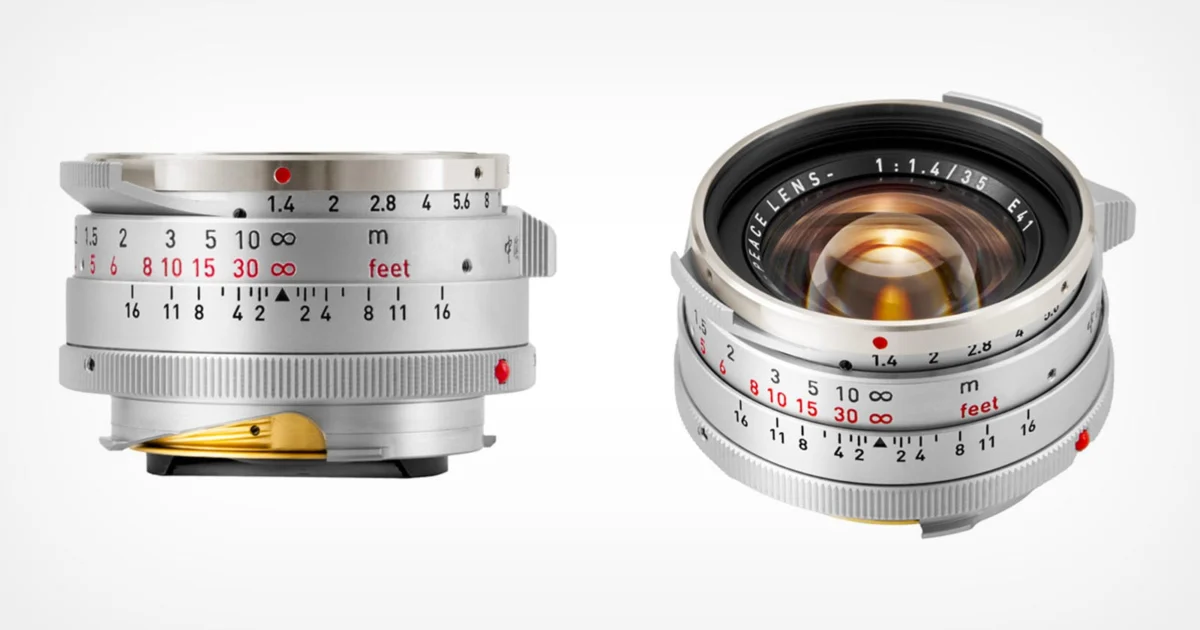
The Japanese photography retailer Shoten Kobo has officially announced the release of the Wahei Optical ‘Peace’ 35mm f/1.4 E41 Classical Silver Chrome lens, a specialized prime lens designed for the Leica M-mount system. This new offering represents a growing trend within the high-end photography market: the revival of "character-driven" optics that prioritize aesthetic rendering over the clinical perfection of modern digital lenses. The Peace 35mm f/1.4 is a deliberate tribute to one of the most celebrated lenses in photographic history, the 1961 Leica 35mm f/1.4 Summilux, colloquially known among collectors and enthusiasts as the "Steel Rim" due to its distinctive stainless steel front ring.
By targeting the M-mount ecosystem, Wahei Optical is positioning itself within a niche but highly lucrative segment of the industry. Leica M-mount cameras, known for their rangefinder manual-focus systems, have maintained a loyal following for decades. The introduction of the Peace 35mm f/1.4 provides these photographers—as well as mirrorless camera users who utilize adapters—with an affordable alternative to both rare vintage originals and Leica’s own modern "Classic" re-issues.
Historical Context and the Legacy of the Steel Rim
To understand the significance of the Wahei Optical Peace 35mm f/1.4, one must look back to the early 1960s. When Leica released the original 35mm f/1.4 Summilux in 1961, it was a feat of optical engineering, holding the title of the fastest wide-angle lens available for a 35mm camera at the time. The original "Steel Rim" (Version 1) was produced in relatively small quantities until 1966, making it a highly sought-after item on the secondary market today, where pristine copies can fetch prices upwards of $20,000 to $30,000.
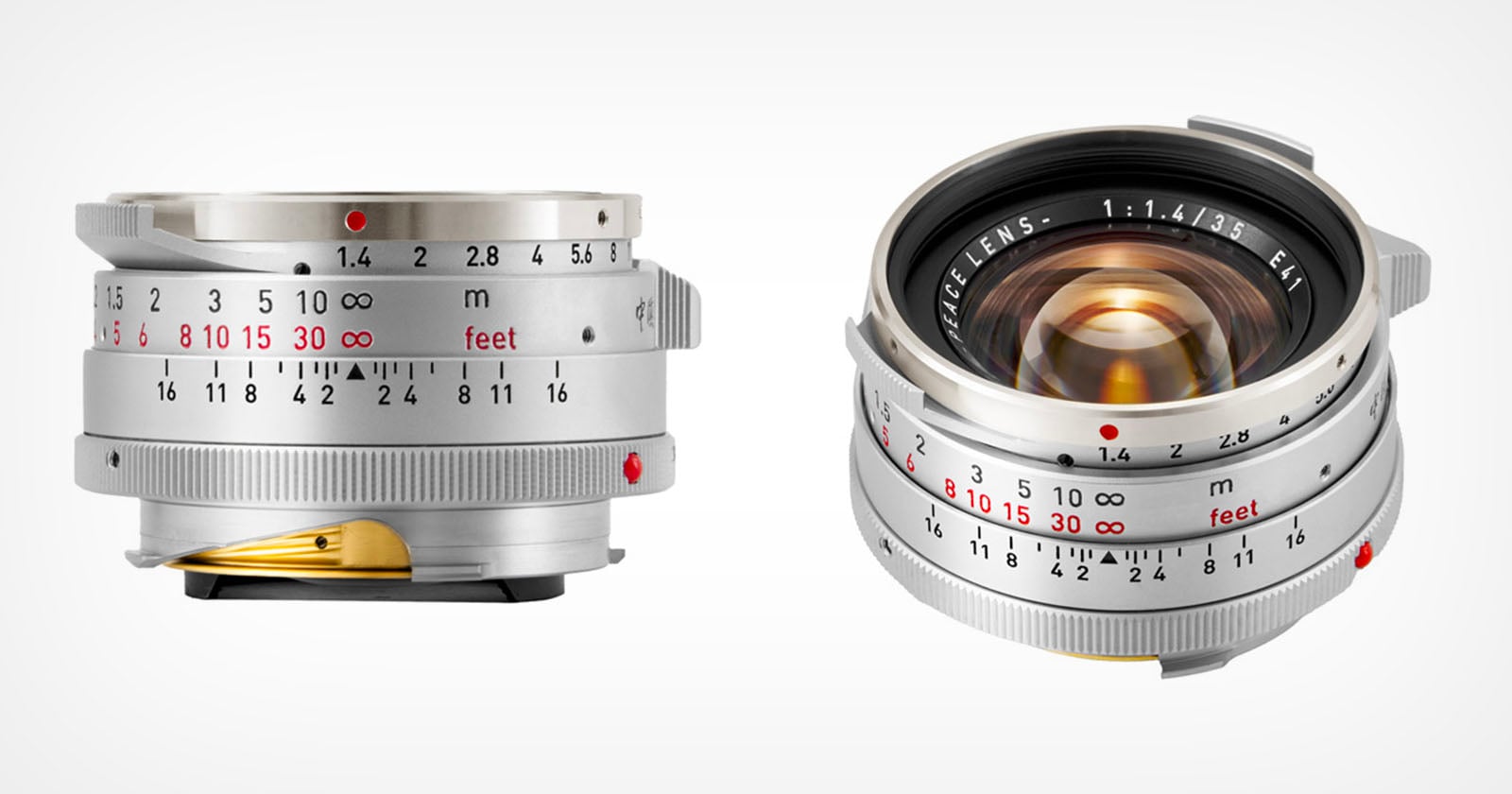
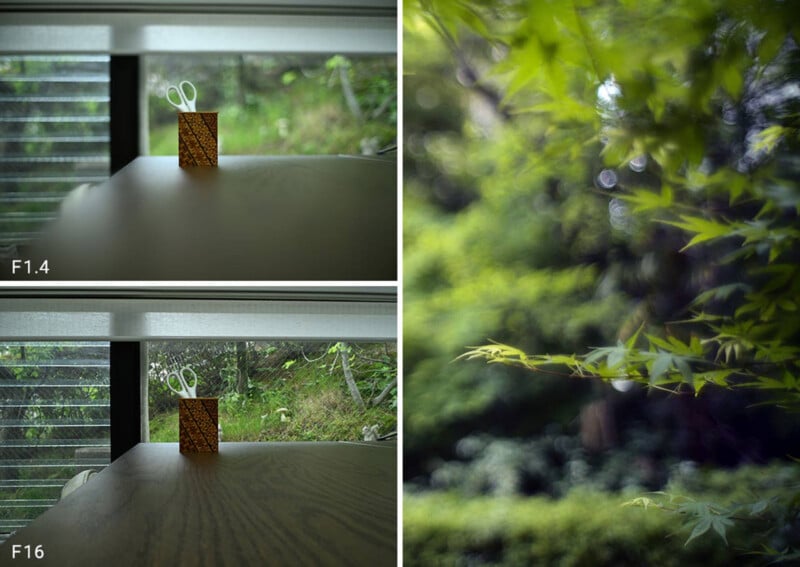
The original lens was famous for its "glow"—a result of uncorrected spherical aberrations when shot wide open at f/1.4. This characteristic created a dreamy, ethereal quality in highlights while maintaining a sharp core of detail. As the lens was stopped down to f/2.8 or f/4, these aberrations vanished, resulting in a remarkably sharp and high-contrast image. It is this dual personality—dreamy at wide apertures and clinical at smaller ones—that Wahei Optical seeks to replicate with the Peace 35mm f/1.4.
The "E41" designation in the new lens’s name refers to the 41mm filter thread, a specific and somewhat unusual size that was a hallmark of the original 1961 design. By adhering to these specific dimensions, Wahei Optical ensures that the lens maintains the compact, "pancake-adjacent" profile that made the original Summilux a favorite for street photographers who valued discretion and portability.
Technical Specifications and Optical Architecture
The Wahei Optical Peace 35mm f/1.4 is constructed with an optical formula consisting of seven elements arranged in five groups. This configuration utilizes a classic Double Gauss-type design, a symmetrical arrangement that has been the foundation of high-speed prime lenses for over a century. The Double Gauss design is particularly effective at correcting chromatic aberrations and distortion, though in this specific "Classical" execution, certain aberrations are intentionally left under-corrected to preserve the vintage "look."
The lens features a 10-bladed aperture diaphragm, which is designed to produce smooth, circular "bokeh" (the quality of out-of-focus areas). In contrast, many modern lenses use fewer blades or different shapes that can lead to distracting polygonal patterns in the background. The manual focus mechanism is rangefinder-coupled, meaning it integrates seamlessly with the mechanical focusing systems of Leica M-series cameras, ensuring accurate focus through the camera’s viewfinder from its minimum focusing distance up to infinity.
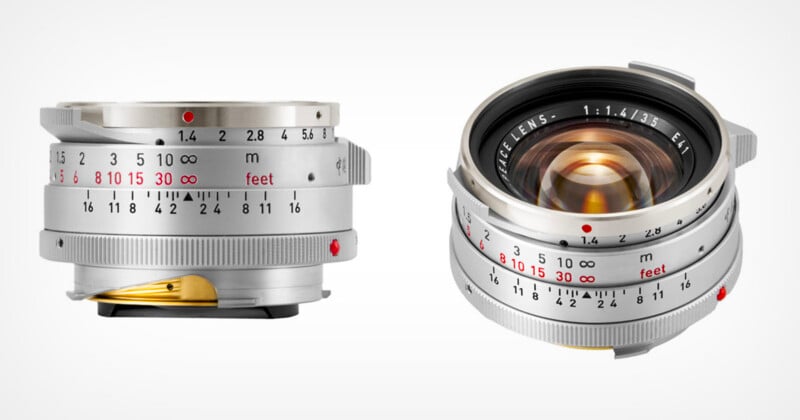
Physically, the lens is built to a high standard of craftsmanship, featuring a barrel made of brass. Brass is the preferred material for premium vintage-style lenses because of its weight, durability, and the way the focus ring "glides" with a dampened, high-friction feel that aluminum cannot easily replicate. The lens weighs approximately 210 grams (7.4 ounces), making it an exceptionally light addition to a camera kit, ideal for all-day use.
Performance Characteristics: Character Over Perfection
In a market saturated with lenses that utilize aspherical elements and specialized coatings to eliminate every possible optical flaw, Wahei Optical is taking a counter-cultural approach. The company’s marketing materials explicitly state that the lens is not intended to compete with modern, high-resolution optics in terms of uniform edge-to-edge sharpness at maximum aperture.
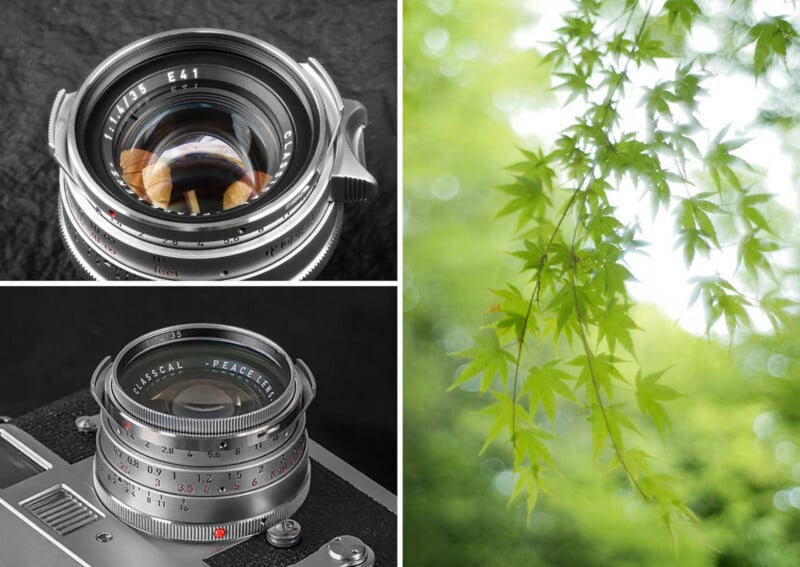
At f/1.4, the Peace 35mm exhibits a "soft-focus" effect and a gentle lowering of contrast, particularly in high-contrast lighting scenarios. This produces a cinematic quality that is often used in portraiture to soften skin tones and create a nostalgic atmosphere. However, the versatility of the lens is found in its "stopping down" behavior. By the time the user adjusts the aperture to f/5.6 or f/8, the Peace 35mm transforms into a modern performer, capable of resolving the high-megapixel counts of contemporary digital sensors found in cameras like the Leica M11 or the Sony Alpha 7R series.
This "variable rendering" allows photographers to make creative decisions based on their subject matter. A street photographer capturing a gritty urban scene at night might choose f/1.4 to emphasize the flare of streetlights and the mood of the environment, while a landscape photographer would stop the lens down to f/11 to ensure every leaf and architectural detail is rendered with crisp precision.
Market Trends and the Rise of Boutique Optics
The release of the Wahei Optical Peace 35mm f/1.4 is part of a broader "renaissance" of vintage-inspired glass. In recent years, several manufacturers have entered this space to cater to photographers who are fatigued by the "perfect but soul-less" nature of modern digital imagery.
Other notable entries in this category include Mandler’s "7 Elements" 35mm f/2—a recreation of the Leica Summicron Version 4—and various offerings from Light Lens Lab, a company that has gained a cult following for its faithful recreations of the "8-Element" Summicron and the original "Steel Rim." Additionally, mainstream brands like Voigtländer have found success with their "Vintage Line" of lenses, which combine 1950s aesthetics with modern optical coatings.
This trend is driven largely by the digital revolution. As sensors become more capable and "clean," the flaws of old lenses become a tool for artistic differentiation. For many professionals, using a lens like the Peace 35mm f/1.4 is a way to achieve a "film-like" aesthetic without the cost and complexity of actually shooting on 35mm film.
Compatibility and Adaptability
While the Peace 35mm f/1.4 is natively designed for the Leica M-mount, its utility extends far beyond Leica camera bodies. The M-mount has a short flange focal distance, which makes it one of the most adaptable mounts in existence. Using simple mechanical adapters, this lens can be mounted on:

- Sony E-mount: (Alpha 7 and Alpha 9 series)
- Nikon Z-mount: (Z6, Z7, Z8, Z9, and Zf)
- Canon RF-mount: (EOS R series)
- Fujifilm X and GFX-mounts: (Note: On X-mount APS-C sensors, it acts as a 50mm equivalent; on GFX medium format, it may exhibit significant vignetting).
The manual nature of the lens—lacking electronic contacts—means that users must set their cameras to "shoot without lens" mode. However, many modern mirrorless cameras offer "focus peaking" and "focus magnification" features, which actually make manual focusing with a lens like the Peace 35mm easier and more accurate than it was on the original film cameras of the 1960s.
Pricing, Availability, and Value Proposition
The Wahei Optical Peace 35mm f/1.4 E41 Classical Silver Chrome is currently available through the Japanese retailer Shoten Kobo. For international customers, the lens is primarily distributed through Shoten Kobo’s eBay storefront, where it is listed at a retail price of $1,329.99.
While $1,300 is a significant investment for a third-party manual focus lens, it must be viewed in the context of the Leica ecosystem. A brand-new Leica 35mm f/1.4 Summilux-M "Classic" re-issue from Leica itself retails for approximately $4,495. Meanwhile, as previously mentioned, original vintage "Steel Rim" lenses are priced as collector’s items rather than tools. At roughly 30% of the cost of the Leica equivalent, the Wahei Optical Peace offers a similar aesthetic experience and build quality for a broader range of enthusiasts and working professionals.
Analysis of Implications for the Industry
The launch of the Wahei Optical Peace 35mm f/1.4 signals a maturation of the third-party lens market. For years, third-party manufacturers focused on producing the cheapest possible alternatives to name-brand glass. Now, companies like Wahei Optical and Shoten Kobo are shifting toward "premium boutique" products. They are no longer just competing on price; they are competing on "optical signature" and historical authenticity.
This shift suggests that the future of the lens market may be bifurcated. On one side, we will see the continued development of "perfect" lenses—autofocus-driven, electronically corrected, and ultra-sharp—produced by giants like Sigma, Tamron, and the camera manufacturers themselves. On the other side, a vibrant ecosystem of smaller firms will continue to mine the history of optics, bringing back the "imperfections" that gave 20th-century photography its distinctive look.
For the consumer, this represents a "golden age" of choice. The ability to mount a brand-new, brass-constructed 1960s-style lens onto a 60-megapixel digital body allows for a fusion of technologies that was previously impossible. The Wahei Optical Peace 35mm f/1.4 is more than just a piece of glass; it is a bridge between the mechanical tactile past and the high-resolution digital future.

