


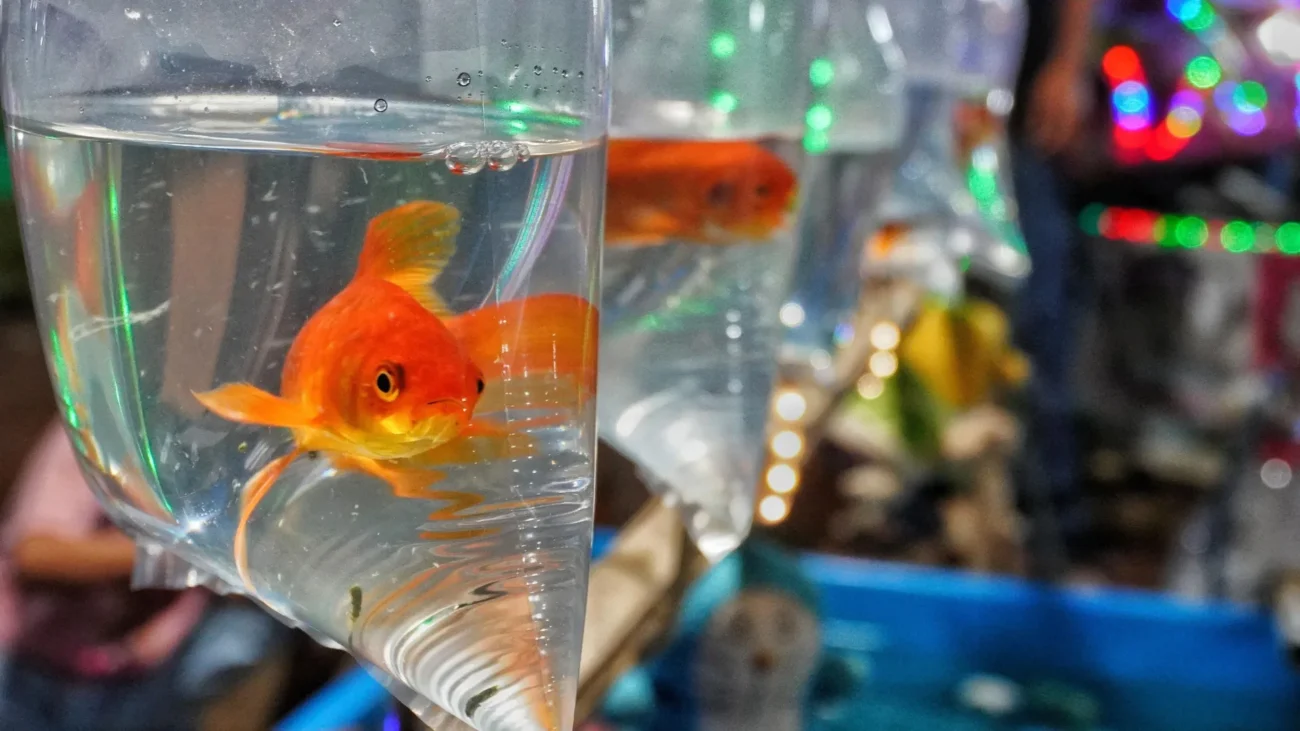
A groundbreaking peer-reviewed study conducted by researchers at The University of Toledo and the University of Missouri has delivered a stark warning regarding the ecological consequences of releasing common goldfish into natural freshwater environments. The research, published in the prestigious Journal of Animal Ecology, provides some of the most robust experimental evidence to date demonstrating that these seemingly innocuous pets can drastically alter lake ecosystems, leading to significant and often irreversible damage. The findings underscore a critical need for public awareness and proactive management strategies to mitigate the threat posed by invasive goldfish populations.
The Unseen Ecological Threat of Pet Goldfish
Goldfish (Carassius auratus), a species widely cherished as a household pet, are far from harmless when introduced into the wild. The study’s lead investigator, Dr. William Hintz, an associate professor in The University of Toledo’s Department of Environmental Sciences and Lake Erie Center, emphasized the critical nature of the findings. "It is critically important to inform the public that their pets can become pests that will harm freshwater ecosystems," Dr. Hintz stated. "The evidence is now clear—releasing a goldfish into the wild might be seen as an act of kindness, but it can turn into a major ecological threat." This sentiment is echoed by Rick Relyea, a professor in the University of Missouri College of Agriculture, Food and Natural Resources and director of Mizzou’s Johnny Morris Institute of Fisheries, Wetlands and Aquatic Systems, who co-authored the study. "If goldfish are released into the wild, they rapidly grow into very large fish that stir up lake sediments, consume large numbers of prey and compete with native fish," Professor Relyea explained.
Experimental Design: Mimicking Nature to Uncover Truths
To rigorously assess the impact of goldfish, the research team employed large-scale outdoor freshwater mesocosms. These mesocosms are essentially experimental ponds designed to meticulously replicate the complex conditions found in natural lake environments. This controlled yet realistic setting allowed scientists to introduce goldfish and observe their effects over time, isolating their influence from other environmental variables.
The study investigated two distinct types of freshwater conditions commonly found in lakes: nutrient-poor (oligotrophic) waters and nutrient-rich (eutrophic) waters. These different trophic states represent varying levels of primary productivity and are home to distinct ecological communities. By testing goldfish in both scenarios, the researchers aimed to understand the breadth of their disruptive capabilities.
Goldfish as Agents of Ecological Disruption
Across both oligotrophic and eutrophic mesocosms, the introduction of goldfish resulted in substantial ecological disruption. The study meticulously monitored a range of ecological indicators, including water quality, phytoplankton abundance, invertebrate communities, the growth of filamentous algae, and the condition of native fish populations.
One of the most significant findings was the direct link between goldfish presence and severe degradation of aquatic vegetation. Goldfish are known for their voracious appetites and their habit of foraging by stirring up sediments. This behavior not only makes the water turbid, reducing light penetration crucial for plant growth, but also exposes nutrient-rich sediments that can fuel algal blooms.
Distinguishing Goldfish Effects from General Fish Abundance
A critical aspect of the research involved carefully distinguishing the specific impacts of goldfish from the general effects of increased fish biomass. The researchers utilized both additive and substitutive experimental designs. In additive designs, goldfish were added to existing fish communities, allowing for the observation of their direct impact. In substitutive designs, goldfish replaced other fish species, helping to isolate the unique effects of goldfish themselves.
This rigorous approach revealed that while an increase in total fish abundance could contribute to some changes in aquatic vegetation, the most severe and detrimental ecological damage was unequivocally linked to the presence of goldfish. This indicates that goldfish are not merely another fish in the water; they possess specific traits that make them particularly destructive invasive species.
The Concept of a "Regime Shift"
Perhaps the most alarming conclusion drawn from the study is the evidence of a "regime shift" in the experimental ecosystems. A regime shift represents a critical threshold where an ecosystem undergoes a rapid and fundamental reorganization into a new, often degraded, state. Once such a shift occurs, the ecosystem’s structure, function, and species composition are so altered that returning it to its previous condition becomes exceedingly difficult and prohibitively expensive.
The study’s findings suggest that goldfish can act as a catalyst for these regime shifts, pushing lakes past a point of no return. This has profound implications for conservation efforts and resource management, as it highlights the long-term, cascading consequences of introducing non-native species.
The Global Scale of the Goldfish Problem
The ubiquity of goldfish as pets contributes to their widespread presence in natural waterways. Globally, ornamental fish are among the most frequently transported aquatic species, facilitated by the vast and ever-expanding pet trade. This international movement of species, while driven by commerce, carries an inherent ecological risk.
When goldfish are released into ponds, rivers, or lakes, or when they escape due to events like flooding, they can establish self-sustaining invasive populations. Their adaptability, rapid reproduction rates, and lack of natural predators in many non-native environments allow them to spread quickly, colonizing new habitats and outcompeting native species.
Why Goldfish Thrive as Invasive Species
Several factors contribute to the success of goldfish as invasive species. As mentioned by Professor Relyea, they grow to remarkably large sizes in the wild, often far exceeding the dimensions of their captive counterparts. This increased size grants them a competitive advantage and allows them to exert greater influence on their environment.
Their foraging behavior, which involves vigorously stirring up bottom sediments, has multiple detrimental effects. This turbidity reduces water clarity, hindering the growth of submerged aquatic vegetation that provides habitat and food for native aquatic life. Furthermore, this sediment disturbance can release nutrients previously locked in the sediment, potentially exacerbating eutrophication and leading to harmful algal blooms.
Goldfish are also highly opportunistic feeders. They consume a wide range of food sources, including plant matter, invertebrates, and even the eggs and larvae of native fish. This broad diet allows them to thrive in diverse conditions and directly competes with native species for essential resources. The combination of their physical disruption of the environment, their competitive feeding habits, and their ability to grow large and reproduce prolifically makes them a formidable invasive threat.
A Call for Proactive Management and Public Education
In light of these findings, the researchers are urging that goldfish be classified as a high-priority invasive species. They advocate for natural resource agencies to focus their efforts on prevention, early detection, and rapid control measures before wild populations become firmly established and difficult to manage.
Crucially, the authors underscore the necessity of enhanced public education campaigns. Many pet owners may not be aware of the significant environmental harm their actions can cause. Understanding the ecological consequences of releasing aquarium animals into natural waterways is paramount to preventing future introductions.
The study provides clear alternatives for individuals who can no longer care for their goldfish. These include returning the fish to a reputable pet store, finding a new, responsible aquarium owner for adoption, or contacting local wildlife authorities for guidance on humane disposal or management. These proactive steps can significantly reduce the likelihood of goldfish ending up in vulnerable ecosystems.
The Global Context of Invasive Species
The problem of invasive goldfish is not an isolated incident but rather a facet of a larger global challenge posed by invasive aquatic species. Throughout history, human activities have facilitated the movement of organisms across geographical barriers. However, the scale and speed of introductions have dramatically increased in recent centuries due to globalization, international trade, and increased travel.
Organizations like the International Union for Conservation of Nature (IUCN) recognize invasive alien species as one of the top five drivers of biodiversity loss worldwide. The economic impacts of invasive species are also substantial, costing billions of dollars annually in damage to ecosystems, agriculture, and infrastructure, as well as in control and eradication efforts.
The ecological impacts extend beyond simple competition. Invasive species can alter food webs, introduce diseases, change habitat structure, and even hybridize with native species, leading to genetic dilution. The case of the goldfish highlights how even a seemingly benign and common species can, under the right circumstances, become a significant ecological disruptor.
Future Research and Policy Implications
The research conducted by Hintz and Relyea provides a crucial experimental foundation for understanding goldfish impacts. Future research could focus on long-term monitoring of established wild goldfish populations to track their spread and ongoing ecological effects in diverse geographic regions. Further studies could also explore the efficacy of various control methods, should populations become established, and investigate the genetic adaptations that allow goldfish to thrive in novel environments.
The policy implications of this study are significant. It reinforces the need for stricter regulations on the trade and transport of aquatic pets, particularly those with a known propensity for invasiveness. Public awareness campaigns, often spearheaded by government agencies and environmental non-profits, will need to be intensified and clearly communicate the risks associated with releasing pets into the wild. Collaboration between researchers, policymakers, and the public will be essential in developing and implementing effective strategies to protect freshwater ecosystems from the pervasive threat of invasive goldfish.
About the Study
The comprehensive study, "Invasive goldfish trigger a regime shift in experimental lake ecosystems of varying trophic state," was a collaborative effort authored by Dr. William Hintz of The University of Toledo, Hannah Barrett, and Dr. Rick Relyea of the University of Missouri. The research methodology involved the use of outdoor freshwater mesocosms, carefully calibrated to replicate realistic lake conditions. The study employed a combination of additive and substitutive experimental approaches across both oligotrophic (nutrient-poor) and eutrophic (nutrient-rich) trophic states. This design allowed for a detailed evaluation of the multifaceted effects of goldfish (Carassius auratus) on key ecological parameters, including water quality, phytoplankton dynamics, invertebrate community structure, filamentous algae proliferation, and the overall condition of native fish populations. The rigorous scientific approach and the experimental design provide strong support for the study’s impactful conclusions.

