


The American Federation of Aviculture (AFA) has long stood at the forefront of bird preservation, responsible ownership, and scientific study, anchoring its mission in the continuous education of aviculturists, breeders, and bird enthusiasts worldwide. As the landscape of exotic animal care grows increasingly complex, the need for standardized, scientifically backed educational resources has never been more critical. To meet this demand, the AFA has developed an expansive suite of educational platforms designed to elevate the standard of avian husbandry. Chief among these initiatives are the comprehensive Fundamentals of Aviculture online curriculum and the adaptable Avian Biology Classroom (ABC). These programs provide foundational knowledge, intermediate scientific training, and ready-to-use teaching tools for individuals, local bird clubs, and academic instructors dedicated to the welfare of feathered species.
The Genesis and Collaborative Foundation of Avian Education

The development of the AFA’s premier educational infrastructure did not happen in a vacuum; it represents a collaborative milestone born from a shared commitment to animal welfare and scientific rigor. The creation and continual refinement of the Fundamentals of Aviculture program were made possible by a foundational grant from the Pet Care Trust, an organization widely recognized for supporting educational programs that enhance the quality of life for companion animals. Furthermore, the initiative received vital funding, academic oversight, and institutional support from the Schubot Exotic Bird Health Center, housed within the College of Veterinary Medicine at Texas A&M University.
This partnership bridged the gap between academic veterinary medicine and practical aviculture. Historically, information regarding bird care was passed down informally through generational knowledge, folklore, or anecdotal breeder experiences. While practical insight remains invaluable, the integration of peer-reviewed veterinary science, microbiology, and avian physiology into a structured curriculum marked a significant turning point. By aligning its educational tools with esteemed institutions like Texas A&M, the AFA ensured that its courses would meet rigorous scientific standards, offering students reliable, evidence-based methodologies for avian management.
Fundamentals of Aviculture Level I: Building a Solid Foundation

Designed as an introductory online portal, the Fundamentals of Aviculture Level I course serves as the gateway for anyone entering the science of aviculture. Whether an individual is a seasoned hobbyist looking to formalize their knowledge or a novice pet owner seeking to understand the intricate needs of their companion bird, Level I delivers a broad yet thorough overview across nine distinct chapters.
The curriculum is meticulously structured to cover the core pillars of avian care. Students begin by exploring avian anatomy and physiology, gaining a structural understanding of how birds breathe, metabolize food, and maintain flight capabilities. From there, the course transitions into avian behavior, helping caretakers interpret body language, vocalizations, and psychological cues that indicate stress, contentment, or illness.
Legal and regulatory frameworks also occupy a prominent place in the Level I syllabus. Navigating the complex web of local, national, and international laws—such as the Convention on International Trade in Endangered Species of Wild Fauna and Flora (CITES) and the Migratory Bird Treaty Act—is essential for responsible aviculturists. The course equips students with the knowledge required to ensure full compliance with conservation laws. Additionally, Level I places heavy emphasis on preventative medicine, detailing proper housing requirements, nutritional baselines, and biosecurity measures designed to mitigate common illnesses in captive-bred bird populations.

Fundamentals of Aviculture Level II: Advanced Intermediate Studies
For those who have successfully completed the foundational coursework and wish to deepen their expertise, the AFA offers Fundamentals of Aviculture Level II. Serving as an intermediate tier, this advanced curriculum expands the scope of study across 15 comprehensive chapters, diving deep into the biological, genetic, and ecological mechanics of aviculture.
Admission to the Level II course requires proof of completion for Level I, ensuring that all participants possess the baseline understanding necessary to tackle complex topics. To encourage ongoing professional development, the introductory admission fee for Level II is set at $75 for current AFA members. Non-members are also provided a seamless enrollment pathway by purchasing a one-year AFA membership concurrently during the admission process, utilizing the integrated options available on the official payment portal via the AFA Campus.
The breadth of subjects covered in Level II reflects the multidisciplinary nature of modern aviculture. The curriculum investigates global conservation efforts and current field research, connecting captive breeding programs to wild population preservation. Students explore the nuances of courtship and nesting behavior, which are critical for successful captive propagation. Furthermore, the course demystifies basic avian genetics, examining color mutations and the biology of hybrids, while analyzing the physiological and environmental breeding stimuli required to trigger successful reproduction.
Moving beyond breeding, Level II addresses the delicate stages of incubation and hand-rearing, equipping caretakers with the technical skills needed to support neonates through their most vulnerable weeks. The curriculum also branches out into non-parrot studies, acknowledging the diverse needs of softbills, raptors, and waterfowl. On the medical and scientific front, students are introduced to basic microbiology, common avian pathologies, emergency first-aid protocols, and the principles of avian environmental enrichment—a vital practice focused on psychological well-being through cognitive and physical stimulation.
The Avian Biology Classroom: Democratizing Science for Clubs and Classrooms
Recognizing that education must extend beyond individual online modules, the AFA developed the Avian Biology Classroom (ABC). This initiative is specifically tailored for bird clubs, educators, and community leaders who are passionate about sharing the science of aviculture with a broader audience. The ABC program functions as an open educational resource, allowing dedicated mentors to download fully structured presentation materials and bring avian biology directly into classrooms, community centers, and club meetings.
The materials are made readily accessible in standard digital formats, including Microsoft PowerPoint (PPT) and Adobe Portable Document Format (PDF). To ensure accessibility, users require standard viewing software, such as Adobe Acrobat Reader, to open and review the PDF modules. By lowering the barrier to entry for instructional materials, the AFA empowers local organizations to host workshops, educational seminars, and youth outreach programs without the burden of developing curriculum content from scratch.
Modular Structure of the Avian Biology Classroom

The Avian Biology Classroom is divided into five distinct, sequentially organized modules, each targeting a fundamental aspect of biological and ecological science as it applies to avian species.
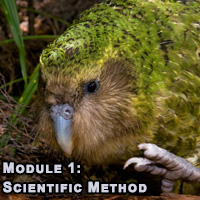
Module 1 centers on the Scientific Method. This foundational module teaches students how to formulate hypotheses, conduct controlled observations, collect empirical data, and draw objective conclusions. By instilling scientific literacy, the module encourages aviculturists to approach animal husbandry, dietary trials, and behavioral modifications through an analytical, evidence-based lens.
Module 2 investigates the Characteristics of Life. This section explores the biological definitions of living organisms, examining cellular structure, metabolic processes, homeostasis, growth, and adaptation. When applied to avian species, students learn how these universal biological traits manifest uniquely in birds, such as their high metabolic rates, specialized respiratory systems, and homeothermic adaptations.
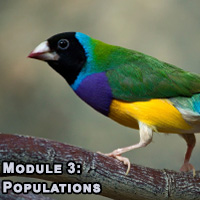
Module 3 focuses on Populations. Shifting from the individual bird to macro-level dynamics, this module analyzes population genetics, carrying capacities, resource competition, and demographic distribution. For aviculturists and conservationists alike, understanding population dynamics is crucial for managing sustainable captive breeding programs and supporting ex-situ conservation initiatives that mirror natural demographic structures.
Module 4 dives into Mendelian Genetics. Building upon the basic genetic principles introduced in the advanced aviculture tiers, this module breaks down the predictability of inheritance patterns. Students study dominant and recessive traits, Punnett squares, and the transmission of specific physical markers, providing a theoretical framework for understanding how physical characteristics and color mutations are passed down across generations.
Module 5 concludes the series with Ecological Terminology. This final module familiarizes learners with the complex relationships between organisms and their environments. Covering concepts such as niches, ecosystems, biomes, and trophic levels, Module 5 contextualizes the natural histories of avian species, reminding caretakers that every bird’s biological design is an evolutionary response to its native ecological environment.
Broader Implications and Future Outlook for Avian Education
The provision of structured, scientifically validated educational tools by the American Federation of Aviculture addresses a longstanding vulnerability within the exotic animal community: the prevalence of misinformation. Historically, the aviculture community has occasionally struggled with fragmented practices, where outdated or unverified methods persisted simply due to a lack of accessible alternatives.
By institutionalizing education through programs like the Fundamentals of Aviculture and the Avian Biology Classroom, the AFA is helping to professionalize the field. The implications of this shift are profound. Improved educational standards directly correlate with higher standards of animal welfare, reduced mortality rates during incubation and hand-rearing, and a deeper understanding of biosecurity that protects both captive collections and wild bird populations from zoonotic disease outbreaks.
Furthermore, these educational resources serve as a bridge between hobbyist aviculture and professional conservation biology. As natural habitats continue to face unprecedented pressures from climate change, deforestation, and human encroachment, captive populations managed by knowledgeable, scientifically literate aviculturists increasingly serve as biological insurance policies for endangered species. Through rigorous coursework, strategic partnerships with academic institutions like Texas A&M University, and accessible community-level teaching tools, the AFA ensures that the future of aviculture rests on a foundation of knowledge, ethics, and unwavering scientific integrity.

