


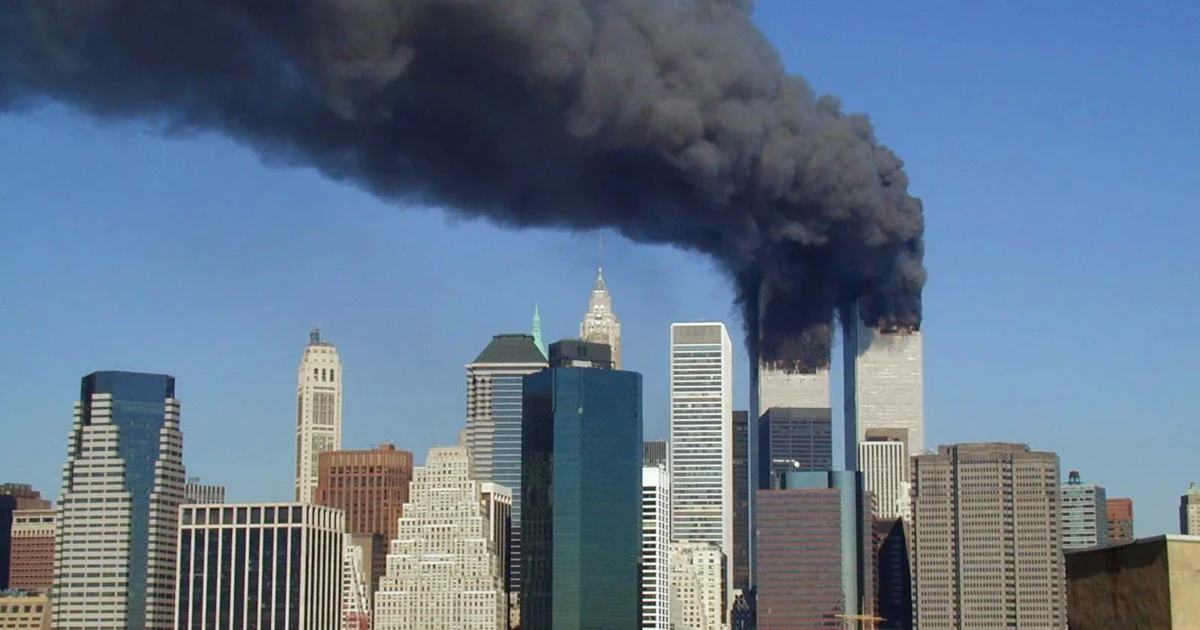
Twenty-five years ago today, the United States suffered the most devastating terrorist attack in modern history, a coordinated strike that claimed the lives of 2,977 victims and fundamentally altered the trajectory of the 21st century. As the nation pauses to commemorate the silver anniversary of September 11, 2001, the focus remains not only on the profound loss of life but also on the extraordinary visual record created in the crucible of that day. Often cited as the most photographed event in human history, the attacks on the World Trade Center, the Pentagon, and the hijacked flight that crashed in Pennsylvania serve as a grim testament to the power and the heavy burden of photojournalism.
A Chronology of the Coordinated Assault
The events of September 11 unfolded with a rapid, terrifying precision that left little room for comprehension. At 8:46 AM ET, American Airlines Flight 11 struck the North Tower of the World Trade Center. Initially viewed by many observers as a horrific aviation accident, the reality of a coordinated attack became undeniable at 9:03 AM, when United Airlines Flight 175 struck the South Tower—an impact broadcast live to millions of television viewers.
At 9:37 AM, American Airlines Flight 77 crashed into the Pentagon, the headquarters of the U.S. Department of Defense. Finally, at 10:03 AM, United Airlines Flight 93 plummeted into a field near Shanksville, Pennsylvania, after passengers and crew fought back against their hijackers, preventing the aircraft from reaching its intended target in Washington, D.C. The collapse of the South Tower at 9:59 AM and the North Tower at 10:28 AM transformed lower Manhattan into a landscape of ash and debris, creating a scene of unparalleled chaos that photographers risked their lives to document.
The Paradox of the Pre-Smartphone Era
To understand the visual legacy of 9/11, one must consider the specific technological environment of 2001. The digital revolution was still in its relative infancy; smartphone technology, which today allows for the instantaneous dissemination of real-time imagery, was years away. Most news organizations were still in the process of transitioning from film to digital capture. Consequently, the visual record of the day was created by a smaller, more deliberate cohort of professional photojournalists rather than the mass participation of citizen journalists seen in modern crises.
This limitation, paradoxically, imbued the images with a singular, harrowing clarity. Without the noise of millions of amateur social media uploads, the photographs captured by professionals like Spencer Platt, Mario Tama, and the late Bill Biggart stand as defining, singular records. These images do not merely document the destruction of architecture; they capture the immediate human reaction to an unfolding, incomprehensible trauma.
The Professional and Personal Toll
For the men and women behind the lenses, the transition from civilian observer to professional witness was often seamless, yet psychologically corrosive. Many photographers found themselves navigating the dual roles of first responders and historians.
Bill Biggart, a veteran photographer who rushed to the scene after hearing the initial reports, remains the most poignant example of the professional cost of bearing witness. After ensuring his family’s safety via a brief phone call, he moved toward the collapse of the towers. He was killed at the age of 54 when the North Tower fell. The subsequent recovery of his camera, with 154 frames of film intact, provided the world with one of the final, visceral accounts of the disaster from the ground level. His work, now housed in the Imperial War Museum in London, serves as a permanent memorial to the danger inherent in the profession.
Others, like Richard Drew of the Associated Press, captured images that challenged the ethical boundaries of journalism. His photograph of a man falling from the towers remains one of the most debated images in history. While some critics labeled the image as voyeuristic or grotesque, Drew maintained that he was preserving the dignity of a human being in their final moment, ensuring that the victims were not merely erased from history.

Broader Implications and Long-term Health Impacts
The death toll of September 11 did not conclude on that Tuesday in 2001. In the intervening quarter-century, thousands of survivors, first responders, and residents of lower Manhattan have succumbed to illnesses directly linked to the toxic dust and debris released by the collapse of the towers. The "heroic" narrative of the rescue and cleanup efforts is now inextricably linked to a long-term medical crisis, with the World Trade Center Health Program continuing to monitor thousands of individuals suffering from respiratory diseases and cancers.
Furthermore, the geopolitical implications were immediate and far-reaching. The attacks prompted the initiation of the Global War on Terror, fundamentally shifting United States foreign policy and domestic security protocols. The "dichotomy of the view from space," as described by NASA astronaut Frank L. Culbertson, who witnessed the smoke plumes from the International Space Station, captured the collective global sentiment: the realization that the world had changed, and that the domestic sanctuary of the United States had been permanently breached.
The Ethical Burden of Documentation
The debate regarding the ethics of photographing catastrophe remains a central theme in journalism schools and newsrooms. Is the camera a tool for empathy or an instrument of exploitation? For those who covered the events of 2001, the answer lies in the necessity of the record.
"I think about how to document tragedy with proximity and sensitivity," says documentary filmmaker and former photojournalist Yoni Brook. This sentiment is echoed by many who were on the ground at the Pentagon and in New York. The photographs were not taken to satisfy voyeuristic impulses; they were taken to ensure that future generations understood the scale of the atrocity.
As the years pass, the images of 9/11 have transitioned from breaking news to historical artifacts. They serve as a bridge for a generation born after the attacks, providing a visual language to understand an event that shaped their world. Whether it is the haunting silhouette of the "Falling Man," the ghostly, ash-covered figures walking across the Brooklyn Bridge, or the satellite imagery showing the smoke rising from the island of Manhattan, these photos demand that the public confront the reality of the day.
Reflecting on a Quarter-Century
As we reach the 25-year mark, the images of 9/11 continue to serve as the primary vessel for the collective memory of the American public. They are an impossible mixture of beauty—in their technical mastery and composition—and horror.
The sacrifice of the photographers who were there—some of whom lost their lives, and many of whom lost their peace of mind—cannot be understated. By stepping into the dust and danger of Ground Zero, they performed an essential service for humanity. They ensured that when the towers fell and the smoke cleared, the evidence of what had occurred would remain.
The legacy of 9/11 is not only found in the legislation, the wars, or the memorial foundations that followed; it is found in the archival storage of film rolls and digital files that preserve the faces, the fear, and the resilience of that day. In the final analysis, the cameras did exactly what they were designed to do: they froze time, preventing the events of September 11, 2001, from being lost to the erosion of history. The images remain as a silent, powerful, and necessary reminder of the fragility of peace and the enduring strength of the human spirit in the face of absolute darkness.

