


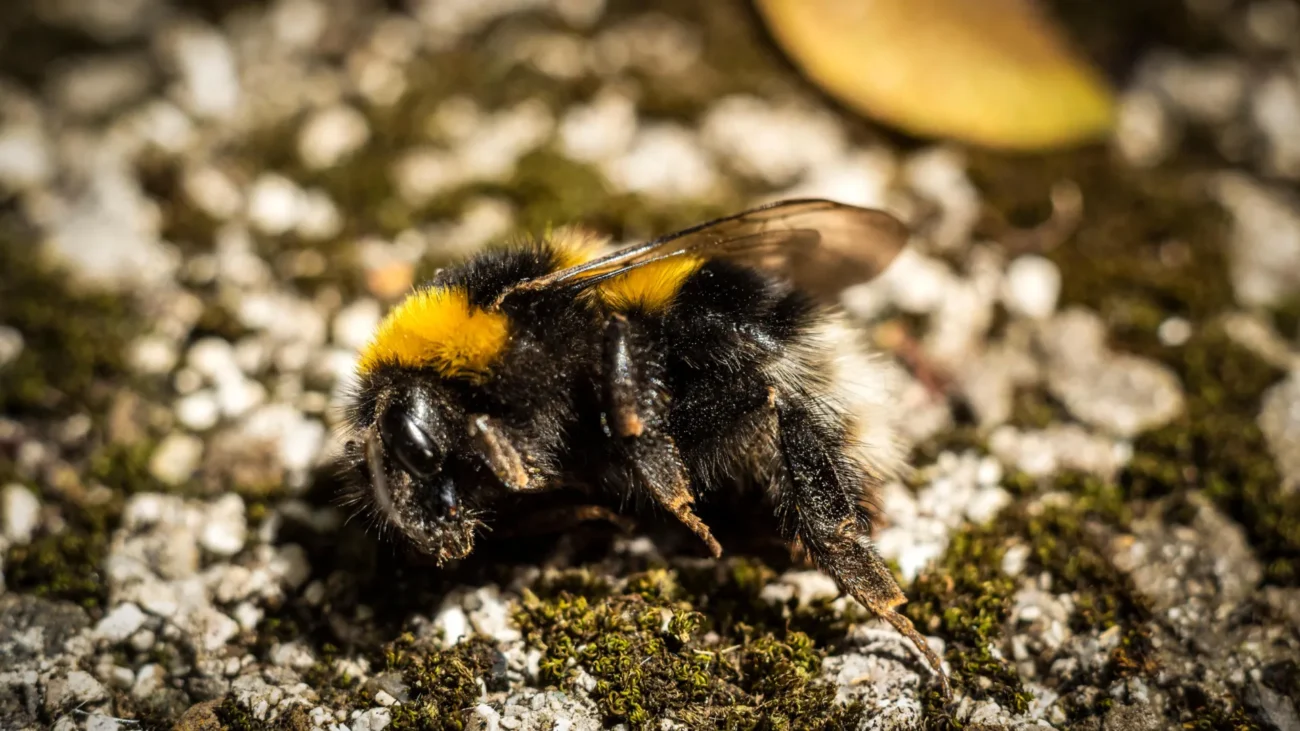
During the sweltering weeks of mid-summer, citizens across Europe and North America frequently encounter a disheartening sight: the motionless bodies of bumblebees scattered across paved walkways, urban asphalt, and suburban sidewalks. While urban pedestrians often assume these tiny creatures have simply succumbed to old age, entomologists and conservation scientists point to a complex web of environmental pressures. This annual mortality phenomenon is not merely a natural lifecycle event; it is an increasingly visible indicator of severe ecological stress driven by record-breaking temperatures, chemical exposure, habitat fragmentation, and the growing disruptions of climate change.
To understand the full scope of this urban phenomenon, researchers look closely at the social structure of bumblebee colonies. Bumblebees are eusocial insects, living in tightly coordinated colonies maintained by highly active worker bees. These workers shoulder the demanding burdens of foraging, defending the nest, and rearing the brood, all within a remarkably compressed adult lifespan lasting a mere four to six weeks. Consequently, as the summer progresses, aging generations of worker bees naturally reach the end of their biological clocks and die off in rapid succession.
However, the discovery of dead bees on pavements is also an intentional act of colony hygiene. When a worker bee dies within the underground or surface nest, healthy young workers immediately intervene to prevent the spread of pathogens, parasites, and disease throughout the hive. These sanitation workers transport the deceased bees away from the colony, frequently dropping them considerable distances away, which often results in bodies landing on artificial urban surfaces like concrete and asphalt.
While natural colony turnover accounts for a portion of these roadside casualties, contemporary environmental factors have drastically accelerated bee mortality rates. Chief among these external pressures is extreme weather, highlighted by unprecedented global heatwaves. Meteorological agencies confirmed that recent summers have shattered historical temperature records, including the warmest June on record in England and similarly severe heat anomalies across the broader United Kingdom and continental Europe.
These extreme spikes in ambient temperature expose vulnerable insects to acute thermal stress. Prolonged exposure to extreme heat fundamentally alters the physiological development of bees and threatens the long-term stability of local populations. Furthermore, severe heatwaves disrupt core behavioral mechanisms, severely impairing flight capacity, homing abilities, and the capacity to forage for essential sustenance. Social insects rely on specialized cooling behaviors to buffer their hives against overheating, such as cooperative wing-fanning. However, under conditions of extreme, prolonged heat, these internal cooling mechanisms quickly reach their physiological limits.
As temperatures soar, bees are forced to increase their foraging activity and travel much greater distances under duress. While insects possess remarkable internal thermoregulation systems capable of redistributing body heat during flight, relentless thermal extremes degrade their overall health and reduce their life expectancy.
Compounding the physiological toll of extreme weather is the persistent threat of agricultural and domestic chemicals. The widespread application of synthetic pesticides, herbicides, and insecticides remains a cornerstone of modern land management, yet these chemicals inflict profound damage on non-target beneficial insects. Chemical exposure diminishes overall bee fitness, compromises immune responses, and directly causes acute or delayed mortality.
Beyond direct toxicity, herbicides systematically eradicate crucial botanical resources that bees rely upon for daily survival, leading to widespread nutritional stress and starvation. A prominent example is the common dandelion. Long maligned by homeowners and managed landscapes as an invasive weed, dandelions serve as an essential early-season nectar and pollen lifeline for emerging pollinators. Eradicating these plants via chemical weed control deprives hungry insects of critical caloric intake at a time when alternative floral sources may be scarce.
Pesticide utilization has historically stood as a primary driver of global pollinator declines. In a profound ecological irony, agricultural chemicals deployed to protect crops from herbivorous pests frequently inflict devastating collateral damage upon the very organisms responsible for pollinating those exact food supplies. Although regulatory bodies in the United Kingdom and the European Union have implemented strict bans on the most hazardous neonicotinoid pesticides, chemical pest control methods remain deeply entrenched in commercial agriculture and urban gardening.
Modern insecticides—including organophosphates, synthetic pyrethroids, and phenylpyrazoles—continue to cause neurotoxic paralysis, navigational disorientation, and death among wild and managed bee populations. Scientific literature underscores the severity of these chemicals; notable studies demonstrate that common soil and systemic pesticides can reduce wild bee reproductive success by alarming margins, threatening regional biodiversity.
Simultaneously, relentless habitat loss continues to erode the geographical foundations required to sustain healthy pollinator communities. The conversion of wild meadows, ancient woodlands, and diverse grasslands into urban housing developments, intensive monoculture agriculture, and hard infrastructure such as roads and transport networks forces bees into fragmented, isolated patches of land. Deprived of continuous foraging corridors and safe nesting sites, local bee populations suffer from chronic genetic isolation and resource depletion.
Climate change introduces an additional systemic threat known in ecological circles as phenological mismatch. Phenological mismatch occurs when two interdependent organisms—such as a specific wild bee species and the flowering plants upon which it feeds—fall out of sync due to shifting climatic triggers. As global temperatures rise unpredictably, plants may flower weeks earlier or later than their historical averages.
If spring temperatures prompt plants to bloom before bees emerge from hibernation, or conversely, if bees wake to find their primary floral resources exhausted or not yet available, the consequences are disastrous. This temporal misalignment creates starvation bottlenecks for pollinators and results in unpollinated flora, triggering a cascading failure throughout interconnected terrestrial ecosystems.
The broader implications of these compounding crises extend far beyond the conservation community. Insects represent the most diverse and abundant group of animals on Earth, yet they are simultaneously among the most threatened by human activity. Data compiled by the International Union for Conservation of Nature (IUCN) highlights the alarming acceleration of this trend: the number of wild European bee species classified as facing extinction risks has more than doubled over the past decade, with roughly 10 percent of all assessed species now standing on the brink.
The loss of these pollinators carries profound consequences for global ecological balance and human economic stability. Scientists categorize the functions performed by insects as essential ecosystem services, which include nutrient recycling, soil aeration, natural pest control, and serving as a foundational food source for higher trophic levels such as birds, amphibians, and small mammals.
However, one particular ecosystem service holds disproportionate importance for human survival: agricultural crop pollination. Bees represent one of the most ecologically diverse insect groups, supporting an estimated 75 percent of global food crop pollination and nearly 90 percent of all wild flowering plants. Staple foods, fruits, vegetables, and nuts that provide essential human micronutrients depend almost entirely on insect pollination. Agricultural economists and environmental scientists warn that the unchecked collapse of pollinator populations could trigger severe global food security crises, destabilizing agricultural markets and threatening nutritional access worldwide.
Despite the gravity of these challenges, conservationists, entomologists, and agricultural experts emphasize that individuals, communities, and policymakers can implement actionable solutions to mitigate the crisis.
At the consumer level, adopting thoughtful purchasing habits can drive systemic change in agricultural practices. Consumers can support sustainable, nature-friendly food systems by purchasing from regional producers who prioritize regenerative agriculture and minimize chemical inputs. While organic certification is one pathway, the core objective is supporting farming systems that actively protect and enhance local biodiversity. For homeowners and urban gardeners, shifting away from routine chemical treatments in favor of mechanical weeding, companion planting, and biological pest controls can dramatically reduce urban environmental toxicity.
Combating habitat loss requires localized, grassroots interventions. Homeowners and municipal authorities can create vital ecological stepping stones by planting diverse arrays of native flowering species that bloom sequentially across the spring, summer, and autumn months. Furthermore, adopting "No Mow May" initiatives or intentionally leaving designated areas of domestic lawns and public parks unmown provides essential nesting habitats, safe cover, and abundant forage for struggling pollinators.
For citizens encountering individual bees in distress on urban pavements during the intense heat of summer, direct humanitarian intervention can offer a localized lifeline. Entomologists and wildlife charities note that a lethargic or heat-exhausted bee can often be temporarily revived with a simple mixture of white granulated sugar and clean water. Experts recommend mixing a solution at a ratio of two parts sugar to one part water in a shallow container or spoon, allowing the insect to replenish its depleted energy reserves.
Once the bee has fed and regained its physical strength, safely moving it onto a nearby flowering plant or into a shaded, protected niche out of the path of pedestrian traffic can prevent accidental trampling. Conservation groups advise that these rescue efforts should be undertaken cautiously, keeping personal safety and potential insect sting allergies in mind. Through a combination of conscious consumer choices, habitat restoration, regulatory oversight, and everyday mindfulness, humanity can begin to reverse the decline of these indispensable ecological architects and secure a resilient future for global ecosystems.

