


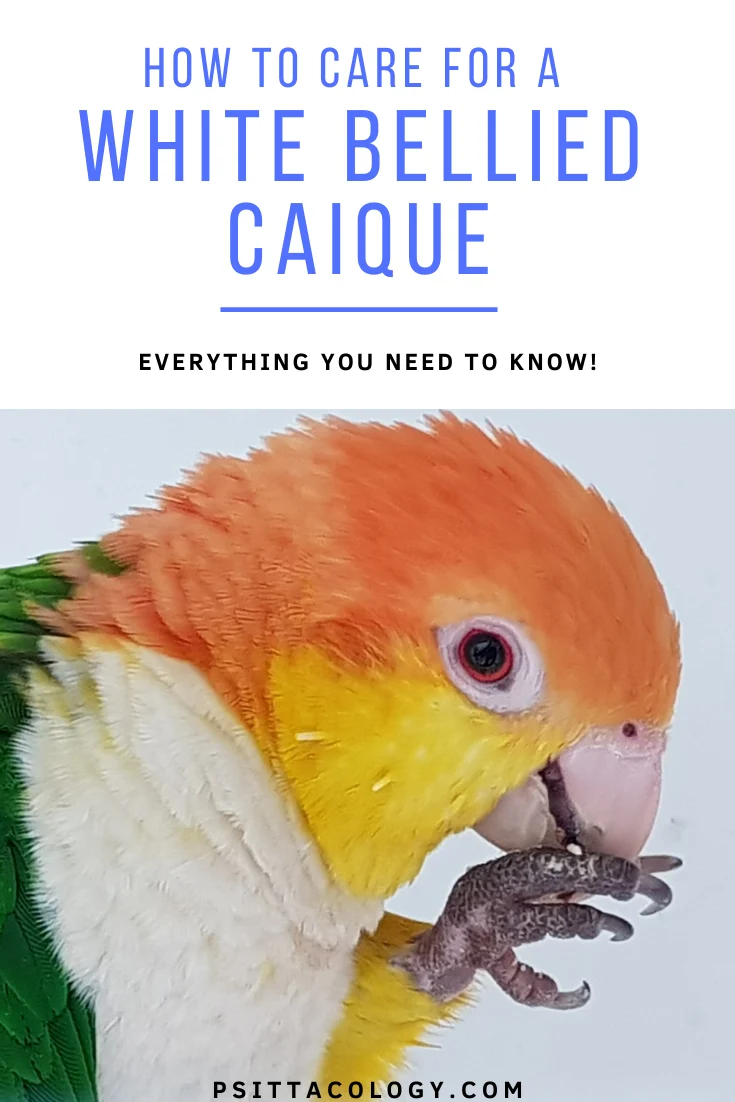
The white-bellied caique, scientifically recognized within the genus Pionites (primarily Pionites leucogaster), has increasingly captured the attention of avian enthusiasts worldwide. Hailing from the lush tropical rainforest canopies of the Amazon basin, these compact yet remarkably energetic South American parrots are frequently celebrated as the clowns of the avian kingdom due to their acrobatic antics and vibrant plumage. However, beneath their playful exterior lies a complex, highly intelligent, and demanding species that requires specialized knowledge in husbandry, behavioral management, and long-term commitment. Prospective owners must carefully weigh the realities of living with a creature that demands extensive daily interaction, strict dietary oversight, and a multi-decade lifestyle adjustment.
Taxonomic Classification and Physical Characteristics
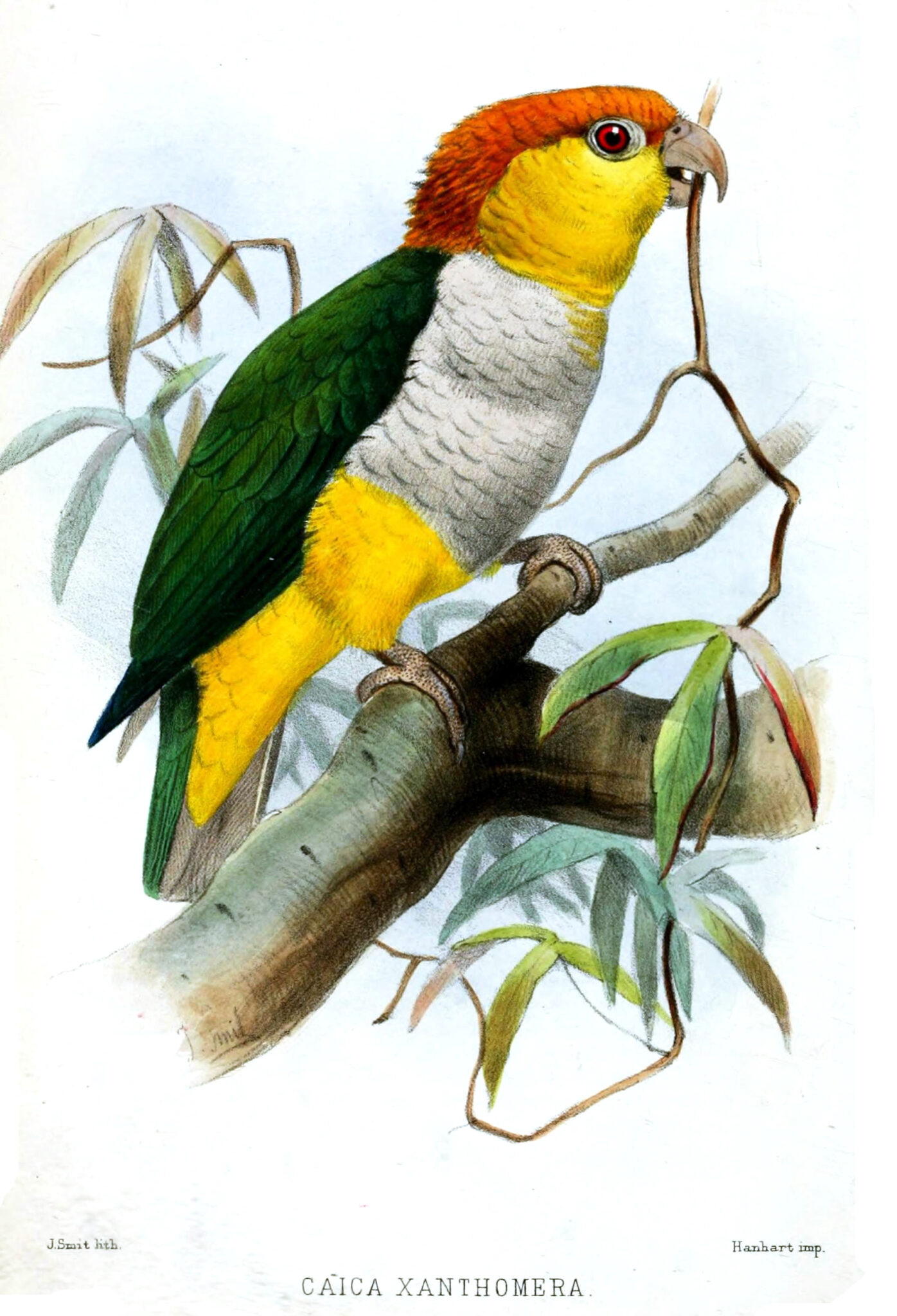
Understanding the biological and physical profile of the white-bellied caique requires navigating a complex history of avian taxonomy. Traditionally, the genus Pionites was broadly categorized into two primary species: the white-bellied parrot (Pionites leucogaster) and the black-headed parrot (Pionites melanocephalus). Within the white-bellied classification, ornithologists historically recognized three distinct subspecies: P. l. leucogaster, P. l. xanthomerius, and P. l. xanthurus. In contemporary avian science, however, authoritative resources such as Birds of the World elevate certain subspecies, notably P. l. xanthurus and P. xanthomeria, to full species status based on distinct variations in coloration, particularly regarding the hues of their thighs and tails.
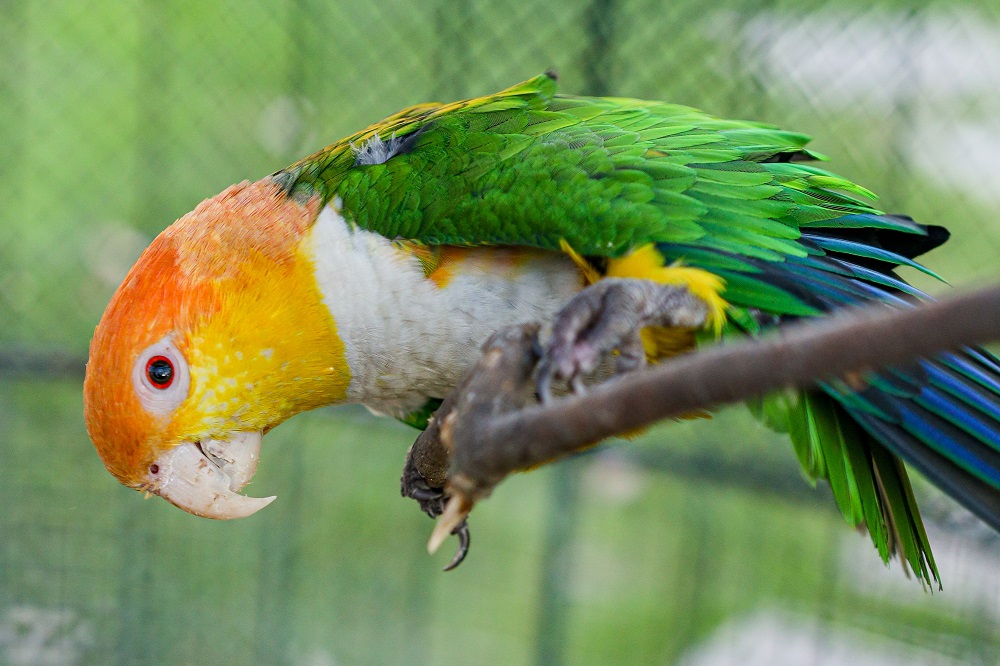
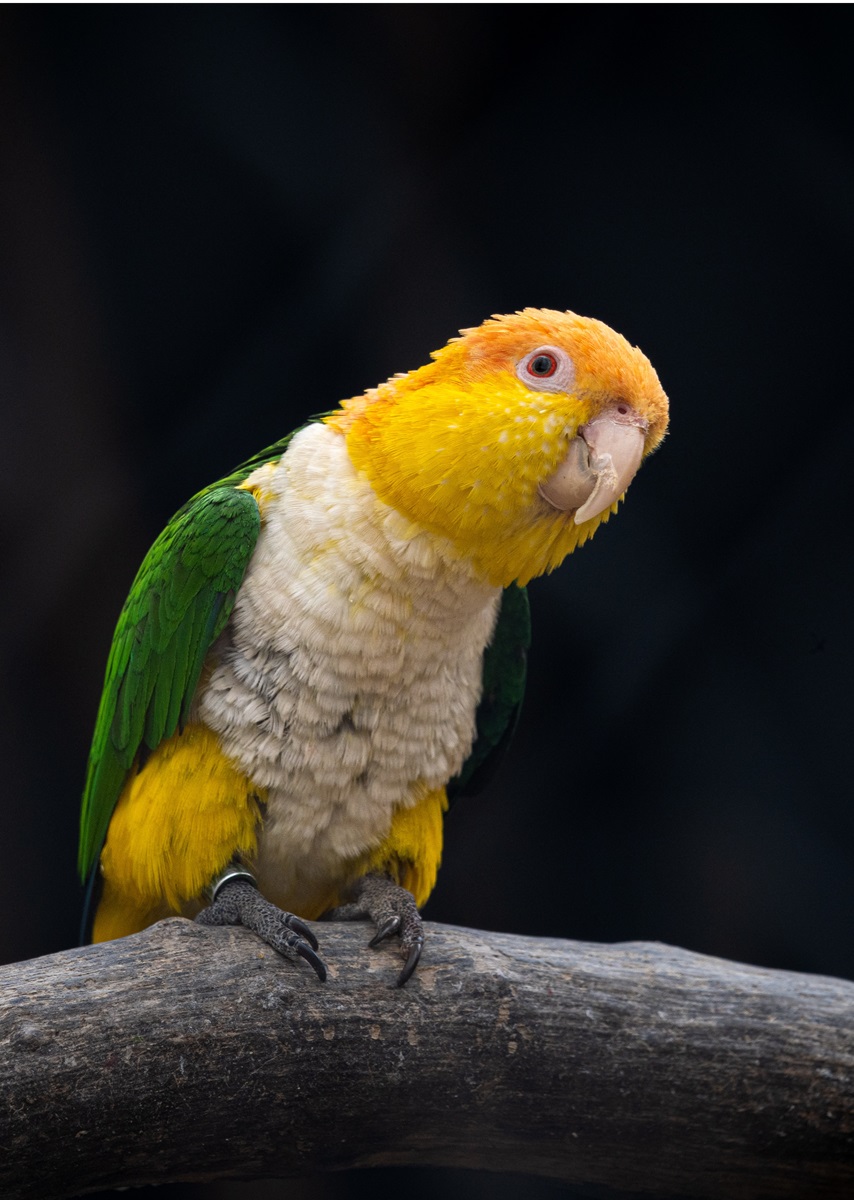
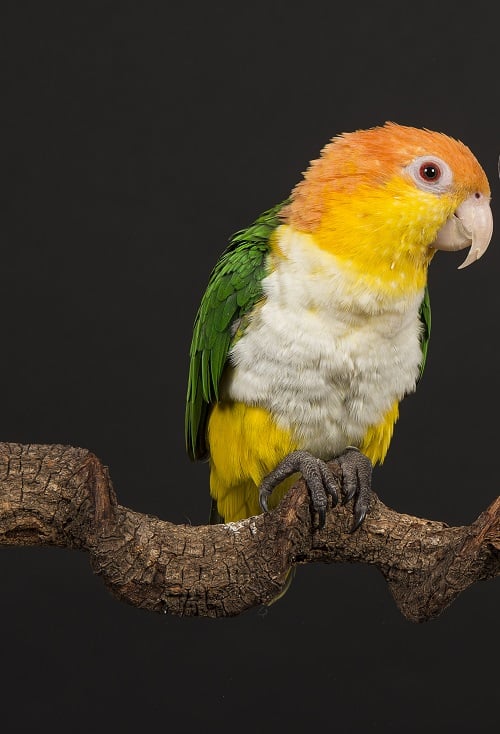
Physically, the white-bellied caique is a distinctively stocky bird. It typically reaches a maximum adult length of approximately nine inches (23 centimeters) and weighs up to 170 grams, supported by a short, slightly stumpy tail. True to their common name, these parrots feature a striking, immaculate white to cream-colored chest and belly. This stark brightness contrasts sharply with their vibrant orange crowns, sunny yellow cheeks, and rich green backs and wings. Their beaks exhibit a neutral beige tone, while their unusually intense reddish eyes are framed by a prominent, bare eye-ring. Because male and female white-bellied caiques are visually monomorphic—meaning there are no external physical traits to distinguish gender—veterinary professionals and breeders rely on DNA sexing to accurately determine the sex of an individual specimen.
Natural Habitat, Conservation Status, and Social Dynamics

In the wild, white-bellied caiques are endemic to South America, with their primary strongholds located within the tropical forest canopies of the Brazilian Amazon basin. Their geographic distribution also extends across neighboring nations, including Bolivia, Peru, and Ecuador. Within these dense ecosystems, the species predominantly inhabits the upper strata of tropical rainforests, utilizing hollow trees as natural nesting sites to raise their young.
Field observations and ornithological studies indicate that these parrots are inherently social creatures, typically organizing themselves into small flocks consisting of up to ten individuals. This social structure is vital for foraging, predator avoidance, and communication across the dense forest canopy. Despite their adaptability to the wild, wild populations of white-bellied caiques face severe environmental pressures. The International Union for Conservation of Nature (IUCN) categorizes the species with varying levels of concern, driven largely by accelerating habitat loss resulting from extensive deforestation throughout the Amazon region. Agricultural expansion, logging, and infrastructure development continue to fragment their natural ranges, posing ongoing challenges to the long-term survival of wild flocks.
Nutritional Requirements: Wild Foraging Versus Domestic Diets

Research into the dietary habits of wild white-bellied caiques reveals a remarkably diverse and dynamic natural menu. A comprehensive 2014 field study conducted by Lee and colleagues examined 190 wild white-bellied caiques, documenting that the birds consumed food items from no less than 44 different plant species. Their findings highlighted that caique diets shift seasonally, with a heavy emphasis on seeds—including those harvested from unripened fruits—as well as a wide variety of fresh fruits. Flowers, flower buds, pollen, and nectar also form a crucial component of their nutritional intake, establishing the species as an important vector for tree pollination within the Amazon ecosystem.
In addition to plant matter, wild caiques occasionally consume leaves, bark, and protein sources such as ants. Field researchers have also observed these parrots visiting natural clay licks to ingest soil, a behavior widely believed to provide essential micronutrients and neutralize dietary toxins.
Replicating this complex, varied diet in a domestic setting presents a significant challenge for pet owners. Avian veterinarians and nutritionists strongly caution against relying on traditional seed-based diets, which are excessively fatty and deficient in critical micronutrients necessary for long-term health. Similarly, feeding an excessively fruit-heavy diet can prove detrimental; cultivated fruits designed for human consumption contain significantly higher sugar concentrations than the wild, often unripe fruits caiques consume in their natural habitat.
Instead, a balanced domestic diet should incorporate:
- High-quality, commercially formulated pelleted food as a nutritional baseline
- A diverse rotation of fresh vegetables and leafy greens
- Controlled, limited portions of fresh, low-sugar fruits
- Occasional nutrient-rich botanical items such as safe flowers or sprouted seeds
- High-fat nuts and dried fruits strictly reserved as behavioral training treats
- Continuous access to clean, fresh water from multiple sources
- Supplemental calcium sources, such as a dedicated calcium block, to support skeletal and metabolic health
Behavioral Temperament, Socialization, and Housing
The temperament of the white-bellied caique is arguably its defining characteristic, setting it apart from nearly all other companion parrot species. Widely known as the "clowns of the parrot world," caiques possess boundless energy, an irrepressible penchant for play, and an intelligence that demands constant mental stimulation. They are capable of forming profoundly deep, affectionate bonds with their human caregivers, often displaying a strong preference for constant physical proximity.

However, this intensity comes with notable behavioral challenges. Following the onset of sexual maturity, caiques can undergo significant hormonal shifts. They are notoriously prone to targeting a single favored human while displaying unpredictable aggression toward others, a phenomenon that requires experienced handling and consistent behavioral boundaries. Furthermore, caiques are fiercely territorial birds and generally cannot be safely housed or mixed with other avian species, as disputes over cage territory or food resources can quickly escalate into violent confrontations.
Given their high activity levels, caique housing requires careful planning. Even with several hours of out-of-cage time guaranteed each day, a caique necessitates a sturdy, spacious enclosure equipped with secure locking mechanisms to outsmart their considerable problem-solving abilities. The interior should feature multiple natural wood perches, durable feeding stations, and an array of rotating chew toys to satisfy their relentless urge to manipulate and destroy objects. Outside the cage, dedicated playstands constructed from bird-safe natural woods help accommodate their energetic routines, while thorough parrot-proofing of the home environment is mandatory to prevent accidental poisonings or injuries during their unsupervised explorations.
Enrichment, Vocalization, and Health Management
Preventing boredom is paramount in caique husbandry. Inadequate mental stimulation often manifests in severe psychological and physical distress, including feather-destructive behaviors, chronic screaming, and heightened aggression. Daily enrichment must mimic their natural foraging behaviors, utilizing puzzle toys, hidden food items, and interactive training sessions that challenge their cognitive abilities.
Vocalizations in caiques differ notably from larger parrot species. While they are not classified among the loudest companion birds, they are far from silent. Throughout the day, caiques utilize a repertoire of whistles, electronic-sounding beeps, and soft squawks at a moderate decibel level. However, when communicating across distances or expressing excitement, they can produce exceptionally shrill, high-pitched screams reminiscent of their rainforest calls. While their capacity for human speech is limited compared to master talkers like African greys, caiques can successfully learn to mimic short tunes, whistles, and simple vocal phrases through consistent positive reinforcement training.
Medical preparedness is another critical responsibility for caique owners. Because of their intense curiosity, these parrots are highly susceptible to accidental ingestions, toxic exposures, and environmental hazards. Establishing a relationship with a qualified avian veterinarian prior to bringing a caique home is essential. Furthermore, young caiques are particularly vulnerable to polyomavirus, a serious condition that attacks vital organs and can prove fatal; veterinary professionals frequently recommend proactive vaccination protocols to safeguard juvenile birds against this pathogen.
Long-Term Commitment and Ownership Realities
Prospective owners must evaluate the extensive lifespan of the white-bellied caique before making a commitment. With a potential lifespan exceeding 40 years in captivity, adopting a caique represents a decades-long responsibility that will span multiple phases of an owner’s life. Due to their high-energy antics, demanding behavioral traits, and potential for hormonal aggression during maturity, avian experts universally agree that white-bellied caiques are fundamentally unsuited for beginning bird keepers. Those prepared to provide the rigorous structure, time investment, and specialized care required, however, will find themselves partnered with one of the most charismatic, endlessly entertaining companions the avian world has to offer.

