


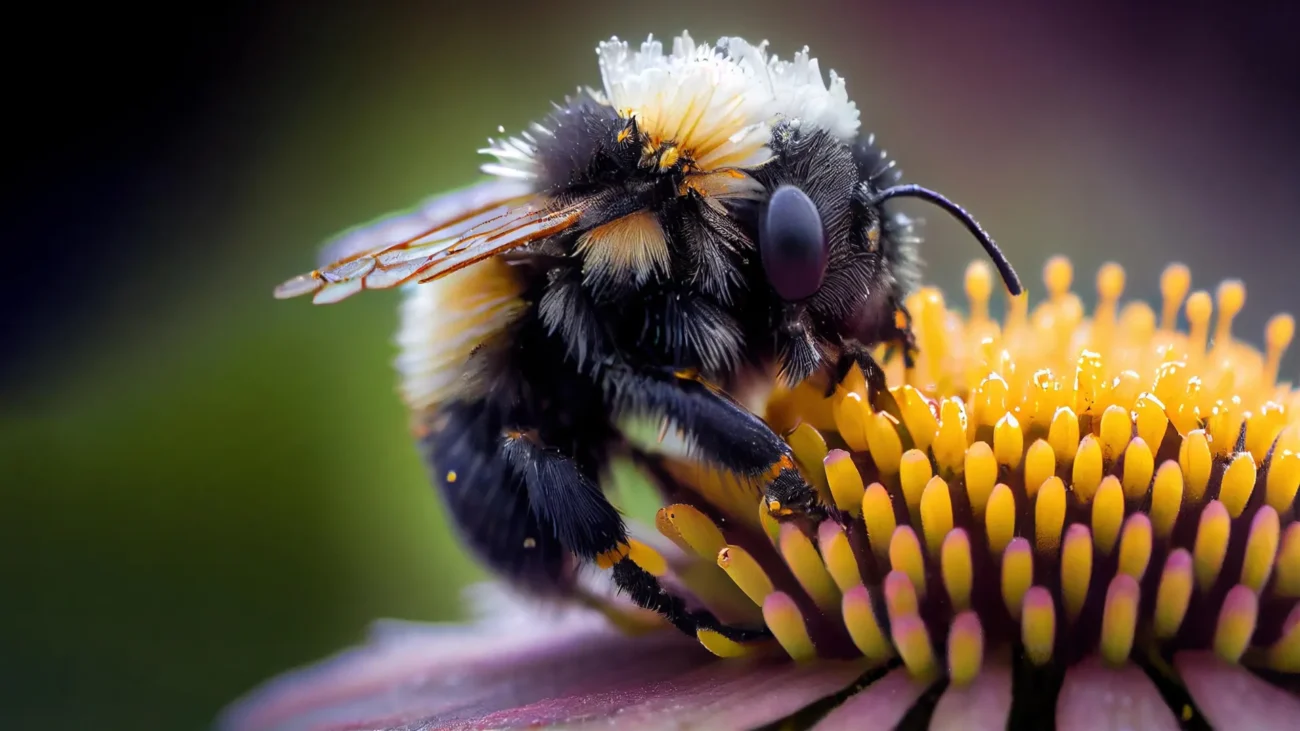
Environmental contamination poses a silent and pervasive threat to global insect populations, yet the specific vulnerabilities of different pollinator species remain poorly understood. Groundbreaking research recently published in the journal Ecological Entomology has revealed that bumblebees accumulate up to seven times more toxic heavy metals in their pollen loads than honeybees, even when both species forage within the exact same geographical environments. Conducted by a team of scientists at the Department of Zoology at the University of Cambridge, this study sheds new light on the hidden dangers of industrial, agricultural, and urban pollution. While heavy metal exposure has long been recognized as a hazard near factories and mines, the Cambridge study demonstrates that these toxic elements present significant risks even in ostensibly clean rural landscapes. The findings complicate conventional conservation efforts, urging scientists, policymakers, and environmental agencies to reconsider how heavy metal pathways affect distinct pollinator architectures and behaviors.
Background and Context of the Environmental Threat
Heavy metal pollution is an enduring legacy of industrialization, mining operations, urban development, and intense chemical agriculture. Contaminants such as arsenic, cadmium, chromium, cobalt, lead, and tin do not break down easily in the environment; instead, they persist, accumulating in soils, waterways, and vegetation over decades. While major industrial zones and urban centers are well-documented hotspots for such contamination, rural landscapes are far from pristine. Agricultural practices frequently introduce heavy metals into the soil and food webs through the widespread application of phosphate fertilizers, sewage sludge, animal feeds, and agrochemicals. Furthermore, atmospheric deposition allows airborne particulate matter emitted by distant factories and vehicular traffic to settle silently over vast expanses of countryside.
For decades, environmental scientists have relied on honeybees (Apis mellifera) as biological indicators of local pollution. Because honeybees fly extensive distances and visit thousands of flowers daily, their bodies and hives can be analyzed to map the concentration of heavy metals and other environmental toxins across a given region. However, this new research highlights a critical blind spot in ecological monitoring: assuming that all bees interact with their environment in the same way can lead to severe miscalculations of risk. Bumblebees (Bombus species), with their distinct biological traits and foraging behaviors, experience vastly different exposure dynamics that render them significantly more vulnerable to metallic toxicity than their managed honeybee counterparts.
Chronology of the Cambridge Study
The research project was developed and executed by a team of zoologists led by Dr. Sarah Scott during her tenure at the University of Cambridge, in collaboration with senior author Professor Lynn Dicks. The fieldwork and laboratory analyses took place over a multi-year timeline, culminating in the formal publication of their findings in Ecological Entomology, the official journal of the Royal Entomological Society, with financial backing from the Royal Society.
The investigative process began with the selection of study sites in Cambridgeshire, England, a region characterized by mixed agricultural land where baseline soil contamination is generally considered low to moderate. To ensure a rigorous comparative framework, the researchers deployed side-by-side colonies of honeybees and native bumblebees, exposing both species to identical environmental and climatic conditions. By placing the colonies in close proximity, the research team effectively controlled for external variables such as local soil chemistry, atmospheric deposition rates, and floral availability.
During the active foraging seasons, the research team utilized specialized pollen traps attached to the hives and colonies to harvest provisions brought back by the workers. Simultaneously, samples of adult forager bees from both species were collected. Back in the laboratory, the researchers employed advanced analytical chemistry techniques to measure the exact concentrations of six key heavy metals: arsenic, cadmium, chromium, cobalt, lead, and tin. The resulting dataset provided a direct, empirical comparison of how two of Europe’s most vital wild and managed pollinators accumulate toxic elements from the exact same shared landscape.
Comparative Data: Bumblebees Versus Honeybees
The empirical results yielded by the Cambridge study were striking, revealing stark disparities in how bumblebees and honeybees process and accumulate heavy metals. When analyzing the pollen loads gathered by the insects, the researchers found that bumblebee-collected pollen contained between two and seven times higher concentrations of heavy metals across nearly every element tested compared to the pollen harvested by honeybees.
The accumulation did not stop at the food supply. When examining the bodies of the adult bees themselves, the scientists discovered that bumblebees carried roughly three times higher internal concentrations of heavy metals than honeybees foraging in the same fields. These metrics confirm that bumblebees are not merely exposed to higher levels of contamination; their physiological and behavioral makeup causes them to retain these toxins at significantly elevated rates.
To contextualize these findings, toxicologists evaluate the biological impact of heavy metals on insects through both lethal and sublethal endpoints. Dr. Sarah Scott, now based at Newcastle University, emphasized that the metal concentrations detected in the Cambridgeshire study were generally not high enough to cause immediate mortality. However, entomological science has established that even low-level exposure to heavy metals can impair insect physiology in subtle yet devastating ways. Previous toxicological studies have linked chronic, low-dose metal exposure to impaired learning and memory retention in bees. Because foraging requires complex spatial navigation, orientation, and flower-recognition skills, neurological impairment directly compromises a bee’s ability to locate food sources and return safely to its colony. Furthermore, metal ingestion has been correlated with reduced reproductive success, lower queen survival rates, stunted brood development, and a smaller overall workforce.
Behavioral and Biological Drivers of Vulnerability
To understand why bumblebees accumulate dramatically higher levels of toxic metals than honeybees under identical environmental conditions, the Cambridge researchers analyzed the fundamental differences in the biology, nesting habits, and foraging strategies of the two groups.
-
Nesting Ecology and Colony Size: Honeybees are social insects that typically construct large colonies numbering between 30,000 and 60,000 individuals, housing them safely above ground in hollow trees, wall cavities, or managed wooden hives. In contrast, bumblebees build much smaller subterranean nests beneath the soil or hidden within dense leaf litter. Because bumblebee nests are located directly in or on the ground, the developing brood and adult workers are in continuous, close contact with soil particles and dust that naturally harbor higher concentrations of settled heavy metals. Furthermore, bumblebee colonies are vastly smaller, typically housing between 50 and 500 individuals. This low population ceiling means that the loss of even a few dozen foragers can catastrophically undermine the operational capacity of the entire colony.
-
Foraging Range and Dietary Dilution: The foraging behavior of the two species dictates their exposure distribution. Honeybees are prolific travelers capable of ranging up to 10 kilometers from their hive in search of high-quality nectar and pollen. Their large workforce allows them to spread out over expansive territories, diluting their potential exposure by visiting a vast array of plant species across diverse micro-habitats, which may allow them to inadvertently bypass localized pockets of high contamination. Bumblebees, conversely, are localized foragers, typically remaining within a radius of approximately 1.5 kilometers from their nests. This restricted flight range limits their ability to avoid localized pollution hotspots. Additionally, bumblebees tend to collect smaller quantities of pollen from a narrower selection of plant species, making their nutritional intake highly vulnerable if their preferred floral resources happen to absorb elevated levels of heavy metals from the soil.
-
Morphology and Surface Area: Physical characteristics also play a decisive role in contaminant uptake. Bumblebees possess significantly larger, hairier, and denser bodies than honeybees. These specialized, branched hairs—known as plumose setae—are evolutionarily designed to trap pollen grains efficiently. However, this same morphological trait makes bumblebees exceptionally effective at capturing airborne dust, industrial fallout, and soil particles laden with heavy metals. These particulate pollutants cling to the bee’s dense coat, eventually being transported back to the nest alongside the pollen stores, thereby increasing internal and external exposure.
Official Responses and Expert Perspectives
The publication of this study has prompted discussions among conservationists, toxicologists, and agricultural scientists regarding the hidden vulnerabilities of wild pollinators. Professor Lynn Dicks, senior author of the study and a Fellow at Selwyn College, University of Cambridge, highlighted the paradox of rural safety assumptions.
"Even in areas that we usually consider safe or lower risk for heavy metals—typically rural areas, away from industrial or mining areas—bees can pick up toxic metals," Professor Dicks explained. She noted that because bumblebee colonies operate with a fraction of the workforce found in honeybee hives, the premature death or impairment of individual workers inflicts a disproportionately severe blow on colony survival and reproductive output.
Despite the concerning data regarding heavy metal accumulation, the research team was quick to caution against unintended negative consequences from their findings. Environmental advocates and gardeners might worry that planting flowers in areas with potential soil contamination could harm local pollinators. However, the Cambridge researchers strongly advise the public to continue planting pollinator-friendly gardens regardless of location.
Dr. Sarah Scott addressed this practical dilemma directly: "Bees play a critical role in both biodiversity and food security, so we’d still encourage people to plant flowers to help them, even if you live in an area more likely to be contaminated. At the end of the day, bees still need food. Even if it carries traces of heavy metals, having some food is better than having no food."
Broader Impacts and Policy Implications
The implications of the Cambridge study extend far beyond local ecosystems, offering a vital framework for future environmental policy and biomonitoring protocols. For decades, regulatory agencies have utilized honeybee data as a reliable proxy for environmental health. The new findings demonstrate that honeybees alone provide an incomplete picture, underestimating the heavy metal burden borne by ground-nesting, wild pollinators such as bumblebees.
As industrial activities, urban sprawl, and chemical-dependent agriculture continue to deposit persistent pollutants into the biosphere, wild bee populations face mounting pressures. Habitat fragmentation already forces pollinators into smaller, more contaminated patches of land, while climate stress exacerbates physiological vulnerabilities. If conservation strategies fail to account for species-specific vulnerabilities like those documented in bumblebees, protective measures may miss the most at-risk populations.
Ultimately, the research underscores the urgent need for broader regulatory controls on heavy metal emissions and soil contamination, aiming not just to protect industrial zones, but to safeguard the delicate ecological foundations of rural and semi-urban landscapes. Until broader systemic changes are enacted, supporting pollinators through continuous floral provisioning remains an essential, albeit imperfect, defense against a chronically polluted environment.

