



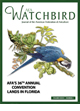
The American Federation of Aviculture (AFA) has officially maintained and cataloged an exhaustive digital archive of its flagship publication, Watchbird magazine, spanning over four decades of ornithological research, conservation efforts, and avicultural development. Encompassing issues from the inaugural volume in 1974 through the mid-2010s, this extensive repository offers researchers, breeders, conservationists, and bird enthusiasts unprecedented access to the historical trajectory of captive bird management. The digital library serves as a critical bridge between early conservation methodologies and modern avian veterinary science, documenting a transformative era in how human societies interact with, study, and protect avian species.
Main Facts and Scope of the Archive
The newly accessible collection details a comprehensive chronology of avian husbandry, featuring thousands of peer-reviewed articles, field reports, breeding logs, and legislative updates. Watchbird magazine has historically functioned as the primary communication channel for the AFA, connecting hobbyists with academic researchers and zoological professionals.
The digital compilation covers continuous publication volumes from Volume 1, Number 1 (1974) up through Volumes 41 and 42 (2014-2015). Each entry has been meticulously preserved to maintain the original layout, photography, and advertisements of the era, providing cultural context alongside scientific data. Subjects spanning nutrition, behavioral psychology, enclosure design, disease pathology, and international wildlife trade regulations are thoroughly represented across the decades.
Chronological Evolution of Aviculture (1970s–2010s)
The Formative Years: 1974–1980
During the 1970s, the publication focused heavily on establishing baseline husbandry standards for exotic species entering Western aviculture. Early issues of Watchbird reflect a community transitioning from localized hobbyist breeding to structured, cooperative aviculture. Articles from this period prioritized fundamental dietary requirements, basic hand-feeding techniques, and initial legislative frameworks surrounding the import of exotic birds.
The Scientific Shift: 1981–1995
As international wildlife regulations tightened—most notably with the implementation of the Convention on International Trade in Endangered Species of Wild Fauna and Flora (CITES) and the Wild Bird Conservation Act of 1992 in the United States—the focus of Watchbird shifted dramatically. The 1980s and 1990s documented a vital pivot away from wild-caught specimens toward sustainable captive breeding programs. Researchers published landmark studies on incubation parameters, genetic management of closed populations, and the identification of avian diseases such as Proventricular Dilatation Disease (PDD) and Psittacine Beak and Feather Disease (PBFD).

Modern Advancements and Conservation: 1996–2015
Entering the late 1990s and through the 2010s, the archive highlights sophisticated veterinary breakthroughs, advanced behavioral enrichment models, and collaborative conservation initiatives between private aviculturists and accredited zoological institutions. Articles from this era emphasize holistic welfare, habitat simulation, and the role of private breeders in insurance populations for threatened or extinct-in-the-wild species.

Supporting Data and Demographics of Avian Research
An analysis of the cataloged editions reveals shifting trends in species focus over the 41-year span. While Psittacines (parrots and macaws) consistently dominated publication space—comprising approximately 65% of all husbandry-related articles—significant research segments were dedicated to Estrildid finches, softbills, columbiforms (doves and pigeons), and raptors.
| Decade | Primary Research Focus | Regulatory Milestone | Notable Technological Shift |
|---|---|---|---|
| 1970s | Basic diet, housing, importation | CITES formulation | Standardization of open-band identification |
| 1980s | Captive propagation, incubation | Increased federal oversight | Widespread adoption of artificial incubation |
| 1990s | Disease pathology, genetics | Wild Bird Conservation Act (1992) | DNA sexing and closed-studbook tracking |
| 2000s | Behavioral enrichment, nutrition | Global conservation integration | Digital record-keeping and veterinary imaging |
Institutional and Expert Perspectives
Avicultural historians and conservation biologists have widely praised the digitization of the Watchbird archive, noting its value in preserving empirical data that might otherwise be lost to time.
Dr. Elizabeth Vance, an avian ecologist specializing in psittacine conservation, emphasized the historical utility of the resource. "Modern researchers often suffer from a lack of historical baseline data," Dr. Vance stated. "When we look at captive breeding success rates, dietary formulations, or the early identification of pathology decades ago, Watchbird served as the crucible where these ideas were tested. Having this archive searchable and intact provides an invaluable roadmap for contemporary species recovery plans."

Similarly, policy analysts note that the magazine’s historical advertisements and editorial columns offer a rare sociological lens into the shifting legal landscape of animal ownership and conservation ethics over the last half-century.
Broader Impact and Implications for Future Conservation
The preservation and accessibility of this comprehensive archive carry profound implications for both amateur aviculturists and professional conservationists. As global biodiversity faces unprecedented threats from habitat destruction and climate change, captive populations increasingly serve as biological reserves for vulnerable species.
The historical methodologies documented within Watchbird provide crucial insights into what has succeeded—and failed—in managing delicate avian populations over the long term. By synthesizing decades of practical breeder experience with rigorous scientific inquiry, the archive ensures that foundational knowledge is not lost between generations.
Furthermore, making these resources publicly and digitally available democratizes information, empowering regional sanctuaries, independent researchers, and educational institutions worldwide to elevate standards of care. As the American Federation of Aviculture continues to adapt to modern ecological challenges, the Watchbird archive stands as a testament to the dedication of a global community striving to understand, nurture, and protect the avian world.

