


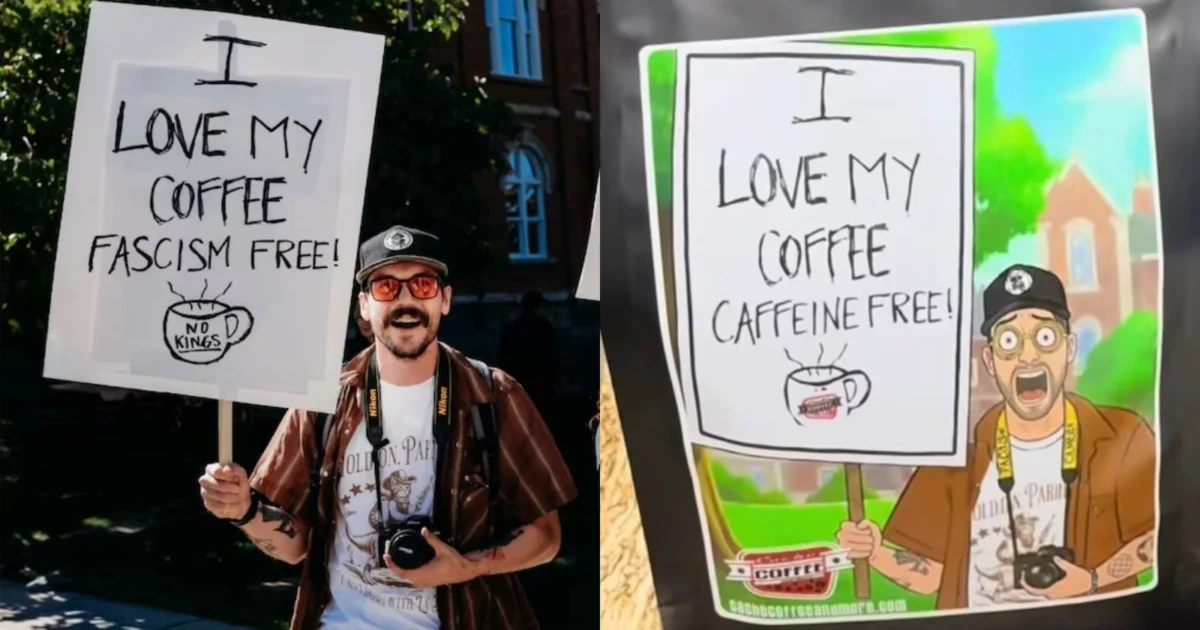
Professional photographer Sharon Rose Vanygriff Christenson has initiated a significant legal challenge in the United States District Court for the District of Utah, alleging that a local coffee establishment misappropriated her intellectual property for commercial gain. The lawsuit, Christenson v. Cache Coffee LLC et al., centers on the unauthorized use of a photograph captured during a political demonstration, which was subsequently adapted into a cartoonish marketing mascot for the defendant’s product line. The case highlights the escalating tensions between digital content creators and small businesses that utilize social media imagery for branding without securing proper licensing or permissions.
The dispute involves Cache Coffee and More, a business based in Logan, Utah, and its co-owner, Jamie Buttars. At the heart of the litigation is a photograph Christenson took in October during a "No Kings" rally held in Cache Valley, Northern Utah. The image featured a protester holding a handwritten sign that read, "I love my coffee fascism free." According to court filings, the photographer later discovered that the "patriot-owned" coffee shop had not only shared the image on social media but had also integrated a derivative version of it into their commercial branding for a decaffeinated coffee roast.
The Chronology of the Dispute
The timeline of the conflict began in the autumn of 2025, during a period of heightened local political activity in Northern Utah. Christenson, acting in her professional capacity, documented the "No Kings" rally, an event characterized by participants protesting various forms of perceived government overreach. Among her subjects was an individual whose sign made a pointed political statement regarding "fascism-free" coffee—a phrase that seemingly caught the attention of the management at Cache Coffee and More.
Shortly after the rally, the coffee shop reportedly posted the photograph on its official Facebook page. However, the version posted by the business featured a scribble over the protester’s face, effectively obscuring their identity while retaining the overall composition of Christenson’s work. The post included a caption that read, "I normally don’t feed the trolls, however, he went out of his way to make a special sign just for Jamie." This initial use prompted Christenson to issue a formal request for the image’s removal via Facebook’s copyright enforcement tools.
While the social media platform eventually removed the post following Christenson’s complaint, the legal documents suggest that the confrontation did not end there. The photographer alleges she provided a direct warning to Cache Coffee and More, asserting her copyright ownership and explicitly stating that the image could not be used for any purpose without her expressed consent. Despite this warning, the coffee shop allegedly proceeded to commission or create a cartoon illustration based directly on the photograph.
By July 2026, the cartoon version—which depicts a character holding a sign modified to read "I love my coffee caffeine free"—appeared on the shop’s decaf coffee bags, cups, and digital storefront. Although the product appeared to have been removed from the company’s website shortly after the lawsuit became public knowledge, the photographer maintains that the damage from the infringement had already been sustained through the commercialization of her artistic vision.
Legal Allegations and Financial Claims
The lawsuit filed by Christenson seeks substantial financial compensation under the United States Copyright Act. The complaint argues that the defendants’ actions constitute a "willful" infringement of copyright, a designation that significantly increases the potential for damages.
Under 17 U.S.C. § 504, a copyright owner can elect to recover statutory damages instead of actual damages and profits. For standard infringement, these damages typically range from $750 to $30,000 per work. However, if the court finds that the infringement was committed "willfully"—meaning the defendant knew they were infringing or acted with reckless disregard for the law—the court has the discretion to increase the award to as much as $150,000.
Christenson’s legal team argues that the shop’s decision to continue using a derivative of the image after being served with a takedown notice and a direct warning qualifies as willful conduct. The lawsuit seeks the maximum statutory damages of $30,000 for the initial infringement and an additional $150,000 in damages for the continued, intentional use of the work in a commercial capacity. Furthermore, the plaintiff is seeking the recovery of attorney’s fees and legal costs, which often exceed the damages in complex intellectual property litigation.
The "Derivative Work" and Fair Use Analysis
A central point of contention in this case will likely be the transformation of the photograph into a cartoon. In copyright law, a "derivative work" is an expressive creation that includes major copyrightable elements of an original, previously created first work. Under the law, the owner of the original copyright has the exclusive right to prepare derivative works.
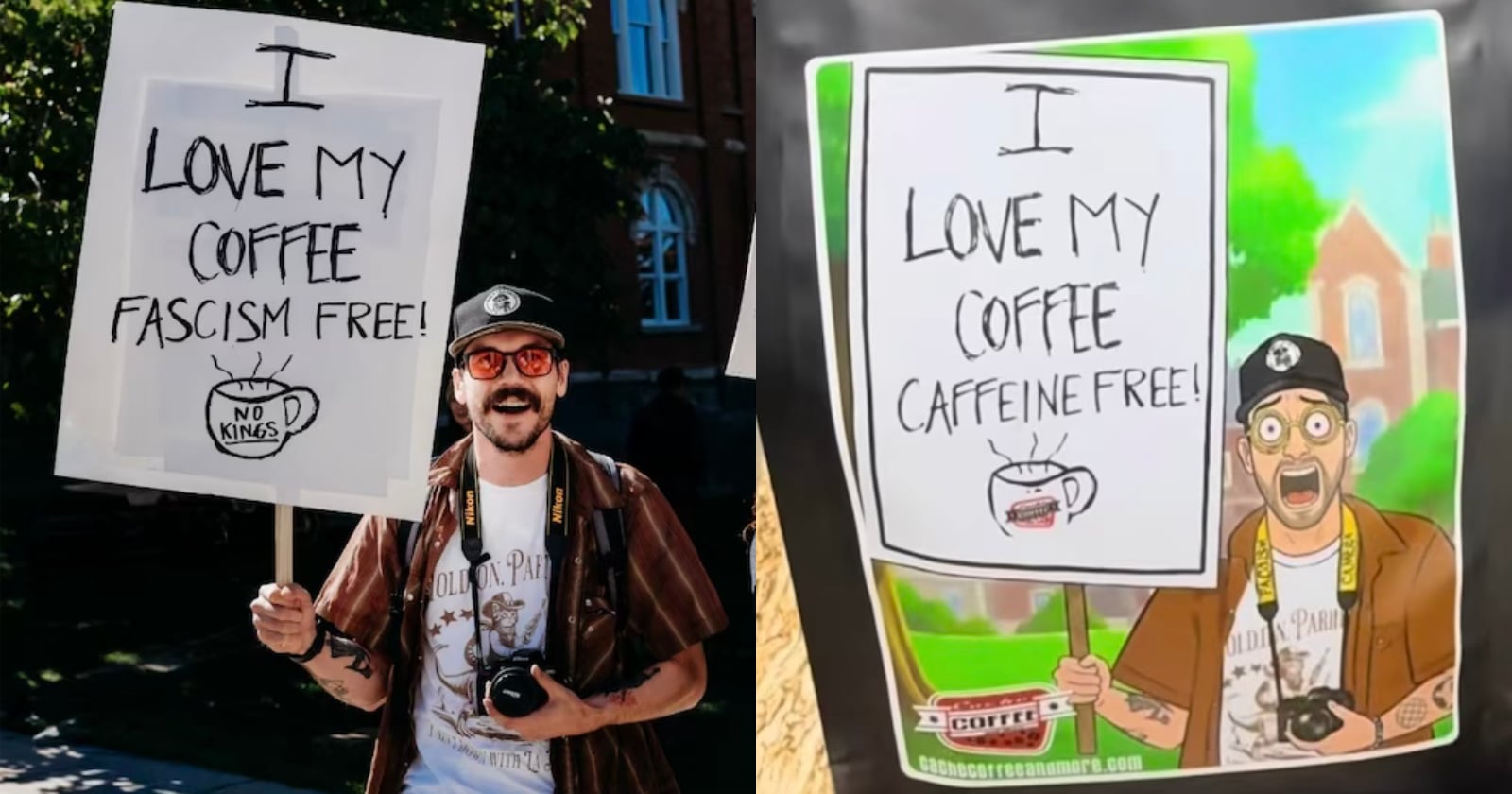
Cache Coffee may attempt to argue that the cartoon version constitutes "fair use," specifically under the umbrella of parody or satire. The Supreme Court of the United States has previously ruled on the boundaries of transformative use in cases such as Campbell v. Acuff-Rose Music, Inc. and more recently in Andy Warhol Foundation for the Visual Arts, Inc. v. Goldsmith. In the Warhol case, the court clarified that if a derivative work has the same commercial purpose as the original—or if it competes with the original in the marketplace—it is less likely to be considered fair use.
In this instance, Christenson’s original work was a piece of photojournalism documenting a public event. Cache Coffee’s use, however, was purely commercial, designed to sell a specific product (decaffeinated coffee). The change of the text from "fascism free" to "caffeine free" serves as a pun, but the lawsuit contends that the visual composition, the posture of the subject, and the overall framing were lifted directly from Christenson’s protected photograph.
Broader Implications for the Photography Industry
This lawsuit arrives at a time when professional photographers are increasingly utilizing the legal system to protect their livelihoods from "right-click-save" culture. The proliferation of high-quality imagery on social media has led many small business owners to believe that images found online are in the "public domain," a common legal misconception.
Data from the U.S. Copyright Office and various legal analytics firms suggest a steady rise in copyright litigation involving digital assets. As artificial intelligence and digital editing tools make it easier to alter or "cartoonize" images, the definition of what constitutes an original work versus an infringing derivative is being tested in courts across the country.
For independent photographers like Christenson, the unauthorized use of an image is not merely a matter of credit; it is a matter of economic survival. When a business uses a professional image to brand its products, it bypasses the licensing fees that provide the primary income for photographers. In the context of the Utah coffee shop, the use of the image on physical merchandise like bags and cups represents a direct commercial exploitation that many photographers argue must be met with legal consequences to deter future infringements.
Community and Political Context
The location of the dispute, Cache Valley, adds a layer of cultural complexity to the case. Cache Coffee and More has built its brand around a "patriot-owned" identity, often appealing to a conservative demographic that values individual liberty and small business rights. Conversely, the "No Kings" rally where the photo was taken was a site of political expression that the shop seemingly mocked by altering the protester’s message for a decaf coffee label.
This "weaponization" of an image for a purpose diametrically opposed to the context in which it was taken is a recurring theme in modern copyright disputes. While the political leanings of the parties are technically irrelevant to the legal merits of copyright ownership, they often influence the public’s perception of the case and the motivations behind the litigation.
Official Responses and Current Status
As of the latest court filings, Cache Coffee and More and Jamie Buttars have not publicly released a comprehensive statement regarding the merits of the lawsuit. The removal of the decaf roast from their online store suggests a pivot in strategy, potentially aimed at mitigating future damages. However, the presence of the cartoon on physical inventory already sold or distributed remains a primary focus of the plaintiff’s claim for damages.
The case is currently proceeding through the U.S. District Court for the District of Utah. Legal experts suggest that such cases often result in settlements before reaching a full trial, as the costs of defending against a willful infringement claim can be ruinous for a small business. Nonetheless, the filing serves as a stark reminder to businesses that the transition from a social media post to a commercial product requires more than just a creative idea—it requires the legal right to the underlying imagery.
Conclusion and Future Outlook
The outcome of Christenson v. Cache Coffee LLC will likely be watched closely by both the photography community and small business advocacy groups. If the court sides with Christenson, it will reinforce the principle that transforming a photograph into an illustration does not automatically grant a user immunity from copyright law. It would also underscore the high financial risks associated with ignoring takedown notices and direct warnings from creators.
As the digital landscape continues to evolve, the boundaries of intellectual property remain a critical frontier for the creative economy. For Sharon Rose Vanygriff Christenson, the lawsuit is a bid to reclaim control over her work. For Cache Coffee, it is a legal hurdle that challenges the limits of how a "patriot-owned" business can utilize the public square—and the images captured within it—for private profit.

