


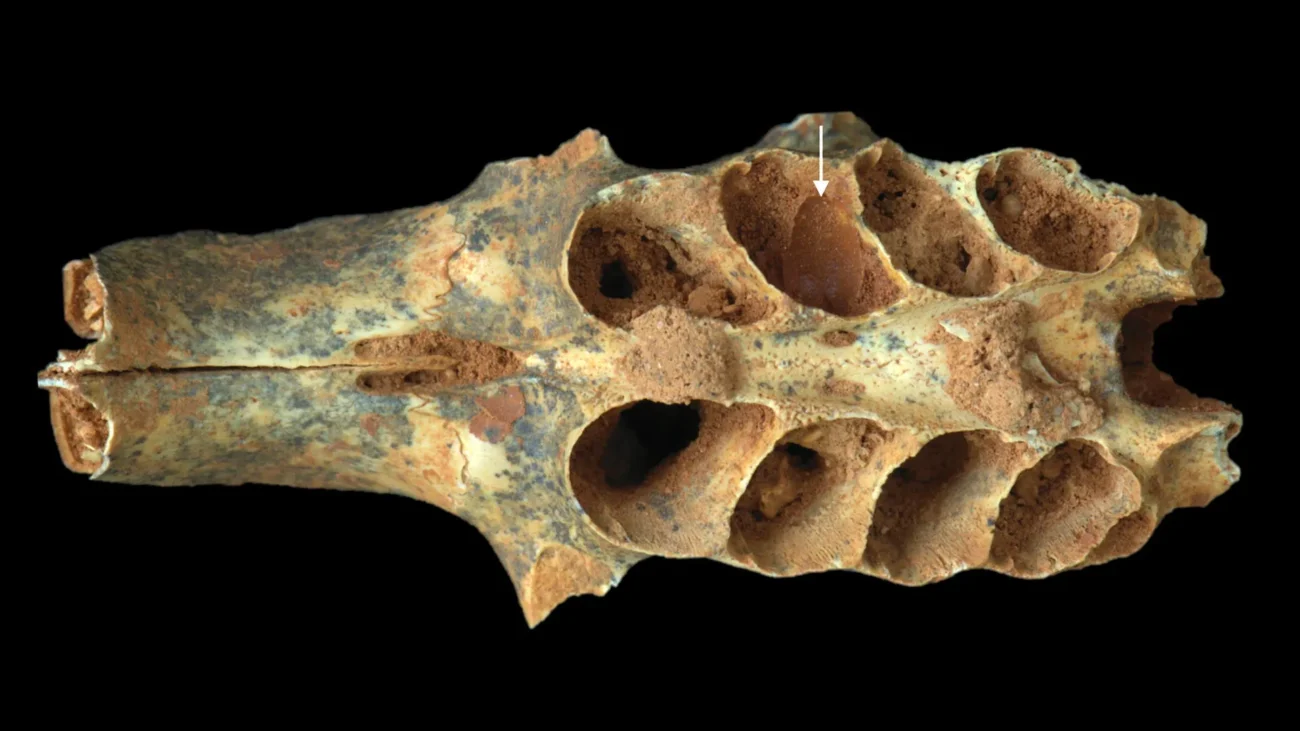
Approximately 20,000 years ago, a remarkable ecological interaction unfolded within a cave system on the Caribbean island of Hispaniola. Generations of owls, whose discarded pellets are a common geological indicator, left behind a bounty of prey bones. Unbeknownst to them, these calcified remnants would become an unexpected, and entirely novel, nursery for an ancient species of bee. A groundbreaking study, published in the esteemed journal Royal Society Open Science, has unveiled the first definitive evidence of bees utilizing fossilized animal tooth sockets as meticulously crafted nests for their developing offspring. This discovery fundamentally reshapes our understanding of insect behavior and offers a unique window into the intricate dynamics of prehistoric ecosystems.
Unearthing a Fossil-Rich Ecosystem
The island of Hispaniola, a shared territory of Haiti and the Dominican Republic, is renowned for its extensive network of thousands of limestone caves. These subterranean environments, carved over millennia by geological processes, have proven to be exceptionally well-preserved archives of past life. "In some areas, you’ll find a different sinkhole every 100 meters," observes Lazaro Viñola López, a postdoctoral researcher at the Field Museum in Chicago and the lead author of the study. This geological abundance creates fertile ground for paleontological exploration.
The specific cave that became the focus of this research had previously been identified by Juan Almonte Milán, a distinguished curator of paleobiology at the Dominican Republic’s Museo Nacional de Historia Natural. Milán’s keen eye had recognized the site as an exceptionally rich fossil deposit, a testament to its long-term role as a habitat and a repository for organic remains. Viñola López and his colleagues embarked on an expedition to this site during his doctoral research at the University of Florida and the Florida Museum of Natural History, drawn by the promise of uncovering significant paleontological insights.
The initial descent into the cave system presented a dramatic introduction to its ancient inhabitants. "The initial descent into the cave isn’t too deep — we would tie a rope to the side and then rappel down," recalls Viñola López. "If you go in at night, you see the eyes of the tarantulas that live inside. But once you walk down a ten-meter-long tunnel underground, you start finding the fossils." This transitional zone highlights the active ecosystem that persists within the cave even today, while also signaling the transition into a realm of ancient history.
The cave’s geological structure played a crucial role in its exceptional preservation capabilities. Multiple fossil layers, meticulously separated by carbonate deposits that accumulated during ancient rainy periods, provided distinct chronological markers. The overwhelming majority of the unearthed remains belonged to various rodent species, offering a detailed picture of the island’s mammalian past. However, the researchers’ diligent excavation also yielded fossils from a broader spectrum of fauna, including sloths, birds, reptiles, and numerous other animals, collectively representing over 50 distinct species. This diverse assemblage painted a comprehensive portrait of the ancient ecosystem, showcasing the rich biodiversity that once thrived in and around the cave.
The Owl’s Lair: A Hub of Ancient Activity
The collective evidence from the fossil record strongly suggests that this particular cave served as a long-term sanctuary for owls, spanning numerous generations. "We think that this was a cave where owls lived for many generations, maybe for hundreds or thousands of years," explains Viñola López. The owls, as apex predators within their local environment, would embark on hunting expeditions, returning to the safety and shelter of the cave to regurgitate their indigestible prey as pellets. These pellets, composed of fur, feathers, and bones, are a natural and consistent byproduct of owl biology.
The cave floor and its crevices thus became a rich midden, accumulating the skeletal remains of the owls’ meals. Among the unearthed fossils were not only the bones of the prey animals but also remains of the owls themselves, providing direct evidence of their prolonged occupancy. The presence of other creatures, such as turtles and crocodiles, whose fossils might have been found occasionally, suggests the possibility that these animals may have inadvertently fallen into the cave, further enriching the fossil assemblage and hinting at the cave’s role as a potential natural trap.
A Curious Observation Within Tooth Sockets
Viñola López’s primary research focus was on the mammalian bones deposited by the owls, aiming to reconstruct the dietary habits and evolutionary history of these ancient rodents. It was during the meticulous cleaning and examination of these fossilized jawbones that he made an unexpected and intriguing discovery. He noticed peculiar, smooth deposits nestled within the empty tooth sockets. These formations appeared distinctly different from the naturally accumulated sediment that typically fills such cavities over geological time.
"It was a smooth surface, and almost concave. That’s not how sediment normally fills in, and I kept seeing it in multiple specimens. I was like, ‘Okay, there’s something weird here,’" he recounts. The unusual morphology immediately triggered a memory from his undergraduate years. During a fossil excavation in Montana, he had been shown fossilized wasp cocoons. These small, hardened chambers, meticulously constructed by wasps, serve as nurseries for their developing larvae. The resemblance between the structures he was observing in the fossil jaws and the fossilized wasp cocoons was striking, sparking his curiosity and prompting further investigation.
Ancient Bee Nests Unearthed in Fossilized Bones
While honey bees and paper wasps are widely recognized for their impressive communal nest-building endeavors, the vast majority of bee species worldwide are, in fact, solitary. These solitary bees lead independent lives, each female responsible for constructing her own nest, provisioning it with food, and laying her eggs. "But actually, most bees are solitary. They lay their eggs in small cavities, and they leave pollen for the larvae to eat," explains Viñola López. "Some bee species burrow holes in wood or in the ground, or use empty structures for nests. Some species in Europe and Africa even build their nests in empty snail shells." This diversity in nesting habits highlights the remarkable adaptability of bees.
To definitively identify the nature of these unusual deposits, the research team employed advanced non-destructive imaging techniques. CT scans were performed on the fossil bones, generating detailed three-dimensional visualizations of the compacted material within the tooth sockets. This allowed the researchers to scrutinize the internal structure of the deposits without causing any damage to the precious fossils.
The CT scans revealed that the structures bore a striking resemblance to the mud nests constructed by certain modern solitary bee species. Crucially, some of these ancient nests even preserved microscopic grains of pollen. This discovery was particularly significant, as mother bees provision their larvae with pollen, which serves as their primary food source during development. The presence of this ancient pollen provided compelling evidence that these structures were indeed nests, meticulously built and provisioned by ancient bees.
The researchers hypothesize that these ancient bees, faced with a scarcity of traditional nesting materials, ingeniously adapted to their environment. They likely mixed local dirt with their saliva to create a sturdy, pliable material for constructing each tiny nest. These nests, measuring less than the size of a pencil eraser, were then carefully placed within the hollow tooth sockets of the larger animal bones. This choice of nesting site may have offered several advantages, including protection from the elements and, importantly, a degree of shielding from potential predators, such as wasps, that might prey on bee eggs and larvae.
A Novel Classification for a New Type of Fossil Nest
Intriguingly, the fossilized nests themselves did not contain any preserved bee bodies. The researchers attribute this absence to the cave’s environmental conditions. The warm and humid climate of the Caribbean is generally not conducive to the preservation of delicate insect exoskeletons. Despite the lack of direct fossilized bees, the distinctive morphology of the nests was sufficient for the scientific community to establish a new taxonomic classification.
The fossil nests have been formally named Osnidum almontei. This designation serves as a dual tribute. The genus name, Osnidum, is derived from "os," the Latin word for bone, and "nidus," the Latin word for nest, directly referencing the unique nesting material. The species epithet, almontei, honors Juan Almonte Milán, whose initial identification of the cave as a significant fossil site was instrumental in initiating this research. Milán’s decades of dedicated study of the region have established him as a leading paleontologist in Hispaniola.
"Since we didn’t find any of the bees’ bodies, it’s possible that they belonged to a species that’s still alive today — there’s very little known about the ecology of many of the bees on these islands," notes Viñola López. This highlights the vast unknown aspects of bee biodiversity, particularly in tropical regions. However, he also acknowledges the possibility that the bees may have belonged to an extinct species. "But we know that a lot of the animals whose bones are preserved in the cave are now extinct, so the bees that created these nests might be from a species that has died out."
Implications and Broader Impact
The discovery of Osnidum almontei marks a significant milestone in paleontology, representing the first documented instance of bees utilizing animal bones as nesting sites. This unprecedented behavior suggests a remarkable level of behavioral plasticity and adaptability within the bee lineage. Viñola López posits that several interconnected environmental factors likely converged to make this unique nesting strategy feasible.
The geological landscape of Hispaniola, characterized by extensive limestone formations, often exhibits limited soil cover. This scarcity of readily available soil can present a challenge for ground-nesting bee species. Simultaneously, the consistent deposition of owl pellets over millennia provided an abundant and accessible supply of hollow tooth sockets, offering an alternative and protected nesting substrate. The synergy between limited traditional nesting resources and the abundant availability of bone cavities likely drove this innovative evolutionary adaptation.
"This discovery shows how weird bees can be — they can surprise you. But it also shows that when you’re looking at fossils, you have to be very careful," emphasizes Viñola López. This sentiment underscores the importance of meticulous observation and a willingness to consider unconventional interpretations of fossil evidence. He further elaborates that without his prior experience recognizing fossilized wasp nests, he might have inadvertently discarded the unusual sediment during routine fossil preparation, thus missing this extraordinary discovery.
The study serves as a potent reminder of the value of trace fossils – indirect evidence of past life, such as footprints, burrows, and nests. These traces can provide invaluable insights into the behavior and ecology of organisms, particularly invertebrates, that might not otherwise be preserved. "Even if you’re looking primarily for fossils of larger, vertebrate animals, you should keep an eye out for trace fossils that can tell you about invertebrates like insects. Knowing about insects can tell you a lot about a whole ecosystem, so you have to pay attention to that part of the story," Viñola López advises.
This discovery has far-reaching implications for our understanding of prehistoric ecosystems. It demonstrates that even seemingly insignificant components of the fossil record can unlock profound biological insights. It prompts paleontologists to broaden their search parameters and to consider the complex interplay between different species and their environments. Furthermore, the identification of Osnidum almontei contributes to the growing body of evidence highlighting the remarkable ingenuity and adaptive capacity of insects throughout evolutionary history, underscoring their vital role in shaping the natural world. The ongoing study of Hispaniola’s caves promises to yield further revelations, continuing to illuminate the intricate tapestry of ancient life.

