


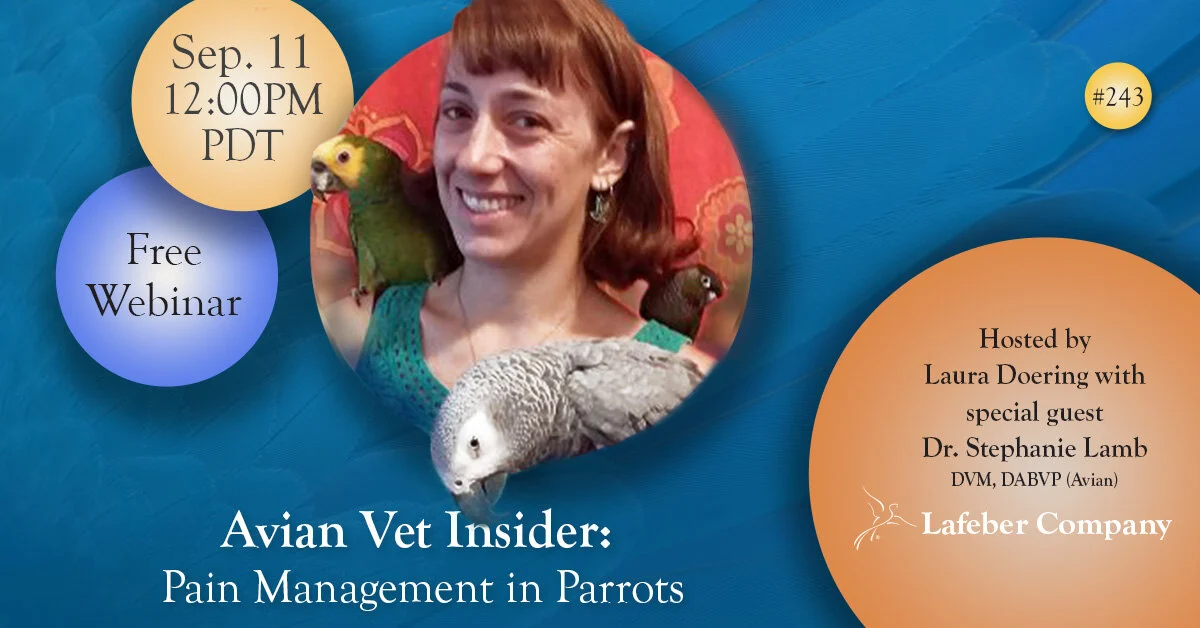
September is internationally recognized as Animal Pain Awareness Month, a period dedicated to educating pet owners, veterinarians, and the public about the necessity of identifying, preventing, and treating chronic and acute pain in companion animals. While advancements in feline and canine pain management have been substantial over the last two decades, avian medicine remains a complex, evolving field. To address the unique physiological and behavioral challenges of diagnosing distress in psittacines, Lafeber’s Pet Birds has announced a specialized webinar, "Avian Vet Insider — Pain Management in Parrots," scheduled for September 11, 2026.
The Diagnostic Challenge of Avian Pain
The webinar will be led by Dr. Lamb, an expert in avian medicine, who intends to provide a comprehensive breakdown of why birds are historically difficult to assess for pain. In the wild, birds are prey species; consequently, they possess an evolutionary imperative to mask signs of illness or injury to avoid appearing vulnerable to predators. This behavior often persists in domestic environments, leading many bird owners to remain unaware that their pets are suffering from underlying health issues until the condition reaches a critical, and often irreversible, stage.
Dr. Lamb’s presentation will focus on the subtle, often overlooked behavioral indicators of discomfort. Unlike mammals, which may vocalize, limp, or display obvious changes in activity levels, parrots may manifest pain through subtle shifts in grooming habits, localized feather destruction, changes in vocalization frequency, or alterations in appetite. Recognizing these "silent" signals is the cornerstone of responsible avian husbandry and represents a critical gap in the knowledge base of many novice bird owners.
Webinar Schedule and Technical Details
The session is set to commence on Friday, September 11, 2026, at 12:00 p.m. PDT. Given the global reach of avian veterinary education, organizers are emphasizing the importance of time zone coordination. Participants are encouraged to utilize online conversion tools to ensure they do not miss the live session, as the real-time nature of the webinar will allow for a Q&A segment that provides direct access to veterinary expertise. Registration is currently open through the official Lafeber Zoom portal, with the session structured to provide both foundational knowledge for new owners and advanced insights for long-term caregivers.
Pharmacological Interventions and Therapeutic Alternatives
A significant portion of the presentation will be dedicated to the pharmacological landscape of avian pain management. The administration of analgesics in birds is a delicate process, as avian metabolism differs significantly from that of mammals. Dr. Lamb will examine the mechanism of action for common non-steroidal anti-inflammatory drugs (NSAIDs) and opioids used in avian practice.
Crucially, the discussion will not be limited to pharmaceutical intervention. The modern veterinary approach to chronic pain, particularly in geriatric parrots, often involves a multimodal strategy. Dr. Lamb is expected to cover:
- Environmental Modifications: How adjusting perch texture, cage layout, and ambient temperature can reduce the physical strain on birds with arthritis or pododermatitis.
- Physical and Nutritional Support: The role of specialized supplementation in joint health and the efficacy of integrative therapies, such as low-level laser therapy or acupuncture, which are increasingly being adapted for avian patients.
- Risk Mitigation: The importance of accurate dosing, as the narrow therapeutic window in small psittacines makes medication errors particularly dangerous.
Data and Veterinary Context
Current veterinary research indicates that pain is one of the most under-diagnosed conditions in avian medicine. According to avian veterinary literature, conditions such as osteoarthritis are common in older parrots, yet they are rarely treated with the same consistency as similar conditions in dogs or cats. A study published in the Journal of Avian Medicine and Surgery noted that while diagnostic imaging (radiographs) has improved the ability to visualize bone and joint degeneration, the challenge remains the lack of standardized pain-scoring systems for birds.
The inclusion of Pain Awareness Month in the educational calendar is an attempt by the veterinary community to formalize the standard of care. By standardizing the assessment of pain, veterinarians can work more effectively with owners to improve the quality of life for parrots suffering from chronic conditions like atherosclerosis or reproductive-related discomfort.

Implications for the Avian Care Community
The shift toward proactive pain management has profound implications for the pet bird industry. Historically, avian care was viewed through the lens of acute injury response. The current trend, bolstered by webinars like those hosted by Lafeber, signals a transition toward a model of preventative wellness.
If owners become more proficient at identifying the early signs of pain—such as a shift in posture or a slight reduction in foraging activity—interventions can occur much earlier. This, in turn, reduces the long-term reliance on heavy medication and improves the bird’s overall lifespan and emotional well-being. Furthermore, providing owners with a deeper understanding of how their birds "think" and "feel" helps to bridge the communication gap that often causes stress in the human-animal bond.
The Role of Expert Guidance
The choice to host this webinar under the "Avian Vet Insider" banner underscores a commitment to evidence-based medicine. In an era of rampant misinformation on social media, where amateur advice on "home remedies" can often be detrimental or even fatal to birds, the reliance on board-certified or highly experienced veterinary professionals is essential.
Dr. Lamb’s involvement provides a necessary layer of credibility. Her expertise will help attendees distinguish between anecdotal advice and scientifically backed medical protocols. By focusing on the "how-to" of pain management, the session serves as a practical guide rather than a theoretical lecture, ensuring that attendees walk away with actionable steps to improve the day-to-day existence of their pets.
Future Directions in Avian Pain Research
Looking ahead, the field of avian medicine is leaning heavily into the development of species-specific analgesia. One of the primary limitations in avian care is the lack of FDA-approved medications specifically labeled for birds; most treatments are "extra-label," meaning they are adapted from human or canine dosages. This requires a high degree of clinical judgment.
The webinar is expected to touch upon these regulatory and clinical realities, providing owners with a realistic understanding of what they can expect from their own local veterinarians. It also serves as a rallying point for the community to demand more research and development in avian-specific pharmaceuticals. As the population of pet birds continues to grow, so too does the need for a standardized, ethical, and effective approach to managing pain, ensuring that these complex animals receive the level of care afforded to more traditional companion animals.
Conclusion
The upcoming webinar on September 11, 2026, represents a critical educational opportunity for the avian community. By highlighting the complexities of pain management—from the evolutionary necessity of hiding symptoms to the nuanced application of pharmacological and alternative therapies—the session aims to elevate the standard of domestic avian care. For those responsible for the health and happiness of parrots, participation in this session is not merely an educational exercise but a vital step toward ensuring a higher quality of life for one of the most sensitive and intelligent animals kept in captivity.
As Animal Pain Awareness Month progresses, the knowledge shared in this webinar will serve as a foundational resource. Whether one is a first-time budgie owner or a long-time caretaker of a macaw, the ability to recognize and mitigate pain is the most fundamental aspect of compassionate animal stewardship. Registration remains the primary gate for access to this expertise, and prospective attendees are encouraged to secure their spots to participate in the real-time discourse on this vital health topic.

