


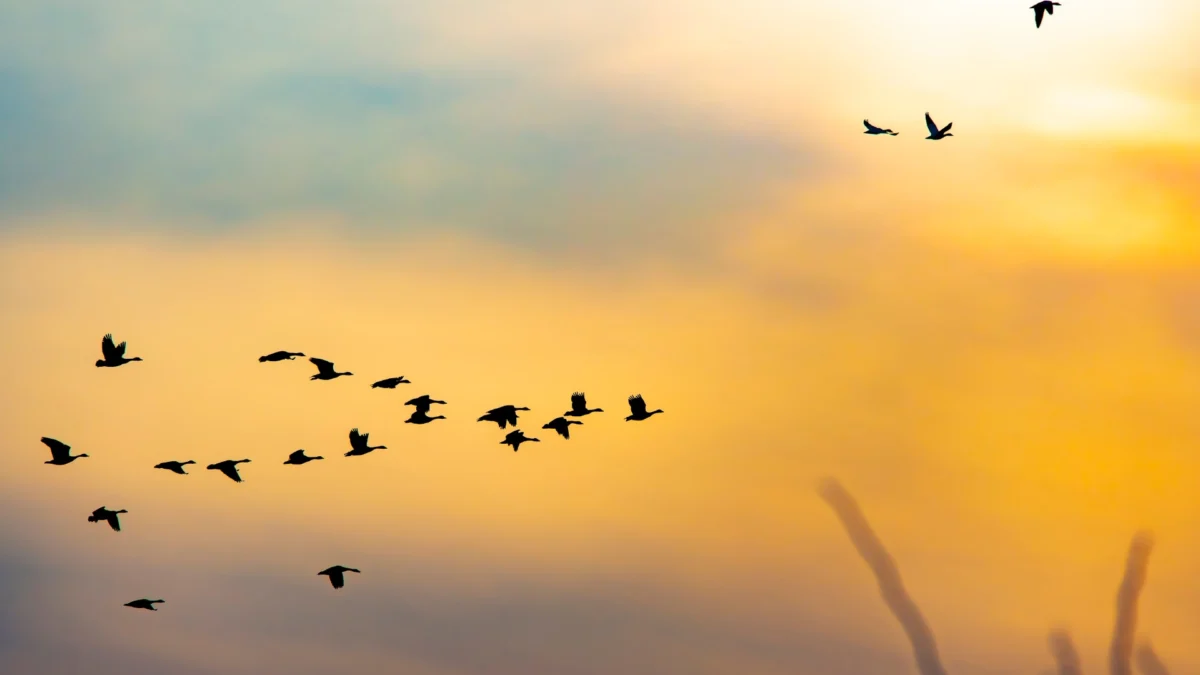
The current surge, identified by the Cornell Lab of Ornithology’s BirdCast project, represents a substantial early-season migration event. While migration is often perceived as a linear, steady trek, the reality is far more episodic. The movement of these 200 million birds is dictated by a precise combination of wind patterns, temperature shifts, and the physiological readiness of the birds themselves. As of late August 2026, the primary concentration of this activity is centered over the central United States, particularly Iowa, Missouri, Kansas, Oklahoma, and Texas, with significant pulses also noted in Minnesota, North Dakota, and South Dakota.
The Mechanics of Nocturnal Migration
A common misconception among the general public is that bird migration is a daylight spectacle. In reality, the vast majority of North American landbird migration—including warblers, thrushes, and flycatchers—occurs under the cover of darkness. Nocturnal migration offers several distinct evolutionary advantages. By traveling at night, birds avoid the intense daytime heat, which can lead to dehydration and heat stress during long-distance flights. Furthermore, the cooler, more stable air masses present at night often provide more favorable wind conditions for long-duration flight. Perhaps most importantly, traveling at night provides a critical layer of protection from diurnal predators, such as hawks and falcons, which are highly effective at hunting in broad daylight.
Ornithologists rely on weather surveillance radar to monitor these nighttime movements. These radar systems, originally designed to track precipitation, are sophisticated enough to detect the "biological clutter" of birds in flight. By filtering out rain and wind, researchers can estimate the volume and direction of migratory waves. On peak nights during the height of the season, it is estimated that more than one billion birds can be airborne simultaneously across the United States. While the current count of 200 million is a lower figure than the mid-autumn peak, it serves as a robust indicator that the migration cycle is progressing on schedule.
A Chronology of the 2026 Fall Migration
The migration process is a highly choreographed biological sequence. While individual species have their own distinct timing, the movement generally follows a predictable timeline influenced by photoperiod—the length of daylight—and the availability of food sources.
- Late July to Early August: The earliest migrants, particularly shorebirds, begin their journey as they depart the Arctic breeding grounds.
- Mid-August: The movement becomes more diverse, with early-arriving warblers and flycatchers joining the stream.
- Late August (Current Phase): A significant increase in bird density across the Great Plains and Midwest. Atmospheric conditions over the last 48 hours have aligned to facilitate massive departures from the northern states, leading to the current peak in Kansas, Oklahoma, and Texas.
- September and October: This period represents the "migration heart," where the sheer volume of birds in flight reaches its annual maximum. Species diversity peaks as sparrows, hawks, and waterfowl begin their southern transit.
- November and December: The final stages of the migration occur as the last of the hardy species make their way to the Gulf Coast, Central America, or South America.
The activity observed on the morning of August 26 is a direct result of atmospheric cold fronts that moved across the northern plains, providing tailwinds that encouraged birds to push southward. For birdwatchers, this creates a "pulse" effect: a region may appear empty of migratory songbirds on Monday, only to be teeming with them by Tuesday morning, as thousands of individuals drop down from the night sky to refuel.
Data-Driven Insights and BirdCast Technology
The use of the BirdCast platform has transformed how the scientific community and the public engage with avian migration. By integrating real-time weather data with historical migration records, the Cornell Lab of Ornithology provides predictive modeling that acts as a weather forecast for the avian world. This data is not merely academic; it has profound implications for conservation.
The data reveals that migration is highly dependent on "stopover habitats." These are the patches of woodland, wetlands, and even urban parks where birds pause to recover their fat reserves. Because birds are flying hundreds of miles on a single night, the quality of these stopover sites is directly linked to their survival rates. If a bird arrives in a habitat that has been degraded by urban development or pollution, it may lack the energy to complete the next leg of its journey.

According to reports from field biologists, the current migration density is consistent with expectations for this time of year, though researchers continue to monitor how climate change may be altering the timing of these movements. Early departures or delayed arrivals can create a "phenological mismatch," where birds arrive at their destination before or after the peak abundance of the insects they rely on for food.
The Perspective of the Ornithological Community
Experts emphasize that the current surge is a reminder of the fragility of migratory corridors. "The migration we are seeing this week is a testament to the resilience of these species, but it also highlights how much they depend on favorable conditions," noted one lead researcher monitoring the current wave. "When we see 200 million birds in motion, we are seeing a massive, coordinated effort to survive. Any disruption—whether it is light pollution in urban areas, which can disorient migrating birds, or the loss of native vegetation—can have a cumulative impact on these populations."
The implications for conservationists are clear: protecting stopover sites is just as important as protecting nesting grounds. During the peak migration weeks, many organizations advocate for "Lights Out" programs, which encourage building owners to dim or turn off non-essential exterior lighting during the night. By reducing light pollution, cities can significantly lower the risk of bird collisions, which are a major cause of mortality for migrating songbirds.
Practical Guidance for Birdwatchers
For those interested in observing this migration event, the morning hours are critical. The birds that travel overnight are typically exhausted and hungry upon arrival. They will often descend into the first suitable habitat they find, making this the ideal time for observation.
- Select the Right Habitat: Look for areas with dense vegetation, fruit-bearing trees, and water sources. Parks and nature preserves are excellent, but backyard gardens with native plants are also highly attractive to tired migrants.
- Monitor the Weather: Use the BirdCast dashboard to see if migration intensity is high in your specific area. If the forecast predicts high activity, expect a high density of birds the following morning.
- Use Passive Observation: Because these birds are focused on refueling, they are often less wary of human presence than they would be during the breeding season. Moving slowly and remaining quiet will increase the likelihood of spotting species that are usually elusive.
- Check for Variety: Late August is an excellent time to spot warblers in their "fall plumage," which can look quite different from their vibrant spring colors. Look for species like the Yellow Warbler, American Redstart, and various flycatcher species that are currently in transit.
Broader Implications: Migration and the Ecosystem
The migration of millions of birds is not merely a spectacle for birdwatchers; it is a vital ecological function. Migratory birds play a critical role in controlling insect populations, including agricultural pests. As they travel from the northern forests to the tropics, they act as agents of seed dispersal and nutrient cycling. The loss of migratory birds would result in significant imbalances in both agricultural yields and forest health.
Furthermore, the scale of this movement underscores the interconnectedness of the Western Hemisphere. A bird currently passing through Oklahoma may have spent its summer in the boreal forests of Canada and will spend its winter in the rainforests of Central America. This reliance on multiple international ecosystems means that the health of these bird populations is a bellwether for the health of the entire continent.
As the 2026 fall migration continues to unfold, the data provided by these meteorological and biological tracking systems will be essential. The 200 million birds currently in the air are just the beginning of a season that will involve billions of individuals. Each one represents a survival story, a link in an ecological chain, and a reason for continued investment in the conservation of the wild corridors that sustain them. Whether you are a casual observer in a backyard or a researcher analyzing radar data, the sheer scale of this migration is a humbling reminder of the enduring rhythms of the natural world. As the season progresses, the focus will shift from the central plains to the coastal routes, but for now, the heart of the continent remains the primary theater for this remarkable journey.

