


The intersection of animal welfare and urban homelessness in Los Angeles has reached a critical juncture following new disclosures regarding conditions on Skid Row. Newly obtained public records, released during a press conference by People for the Ethical Treatment of Animals (PETA), indicate a stark contrast between municipal promises and the reality on the ground. Despite repeated assurances from Los Angeles Mayor Karen Bass that her administration is actively cracking down on animal abuse, neglect, and illegal breeding in the city’s most vulnerable districts, evidence points to a persistent lack of active law enforcement and regulatory oversight.
The revelations center on the roughly 50-block area of downtown Los Angeles known as Skid Row, where thousands of unhoused individuals reside in temporary encampments, tents, and makeshift shelters. While the humanitarian crisis in the district has long dominated public discourse, animal advocates argue that the severe suffering of dogs trapped in these environments has been systematically overlooked by city leadership. The ongoing crisis highlights systemic failures in enforcing existing municipal codes designed to protect animals, raising urgent questions about accountability, municipal priorities, and the enforcement of local legislation across California’s largest city.
Background and Regulatory Framework
The regulatory framework governing animal care in Los Angeles includes strict provisions intended to curb overpopulation and protect animals from abuse. Under current city ordinances, all dogs must be spayed or neutered. Additionally, Los Angeles maintains a mandatory breeding moratorium that is legally triggered whenever municipal animal shelters exceed 75% capacity—a threshold that has remained continuously breached, keeping the moratorium in active status since its passage in 2024.
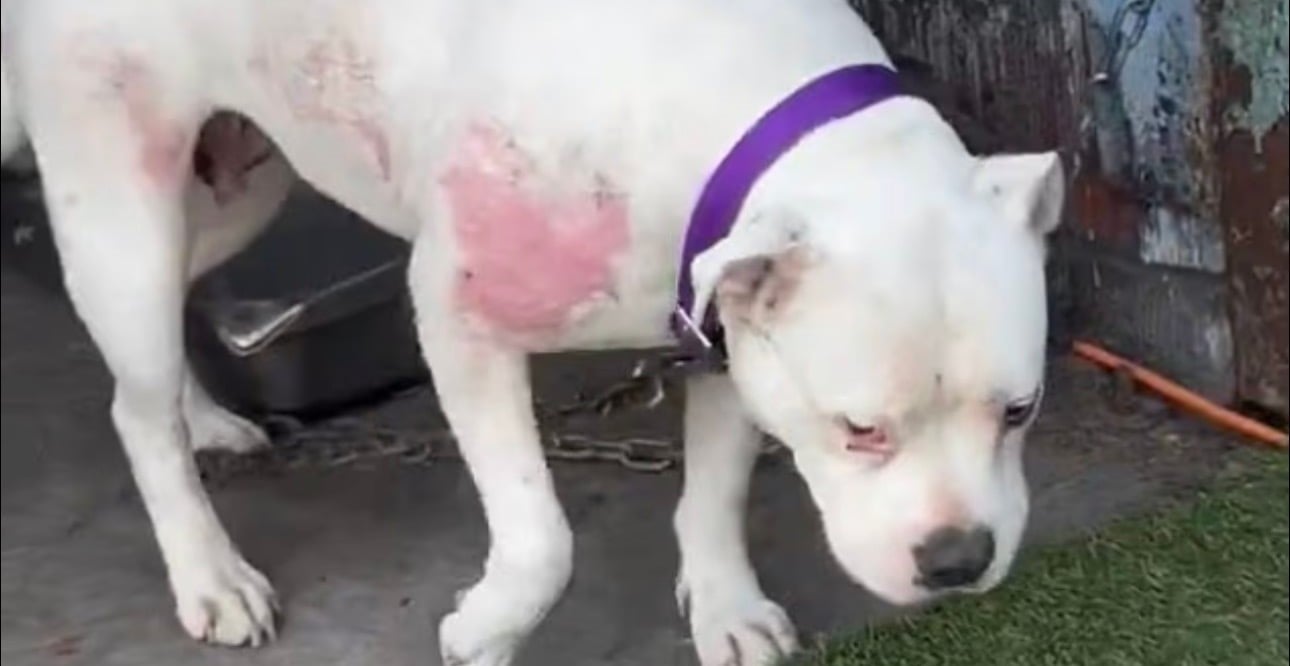
Despite these clear legal mandates, animal welfare organizations report widespread non-compliance within Skid Row. Activists have documented rampant illegal breeding, severe neglect, animals deprived of basic veterinary care, and instances of physical abuse occurring in plain sight. Local rescue organizations, including Starts With One Today (SWOT), have repeatedly flagged these violations to municipal authorities, only to encounter what they describe as institutional indifference. According to reports from frontline volunteers and rescue workers, local law enforcement and animal control officers have allegedly been instructed by municipal leadership to exercise leniency or stand down entirely regarding the enforcement of animal protection and spay/neuter laws within unhoused encampments. This alleged hands-off directive has created an effective enforcement vacuum, leaving vulnerable animals exposed to continuous harm.
Chronology of Events and Activism
The public campaign to bring visibility to the plight of animals on Skid Row has unfolded across several distinct phases over the past year:
June 2026: The crisis gained widespread attention when PETA released an investigative video documenting conditions in downtown Los Angeles. The video featured actors Jesse Kove and David Chokachi alongside social media influencer Nathan the Cat Lady. Accompanied by SWOT founders Jonathan and Victoriah Bech Parker and volunteer Joey Tuccio, the group documented numerous instances of severe neglect and illegal breeding operations. Among the documented cases were a female Yorkie reportedly being bred with her offspring, caged pugs confined in unsanitary conditions, and a mother dog suffering from a chronic medical condition whose owners allegedly refused veterinary care while continuing to breed her. Despite reports filed with Animal Control, activists noted that interventions were minimal and failed to remove the animals from dangerous situations.
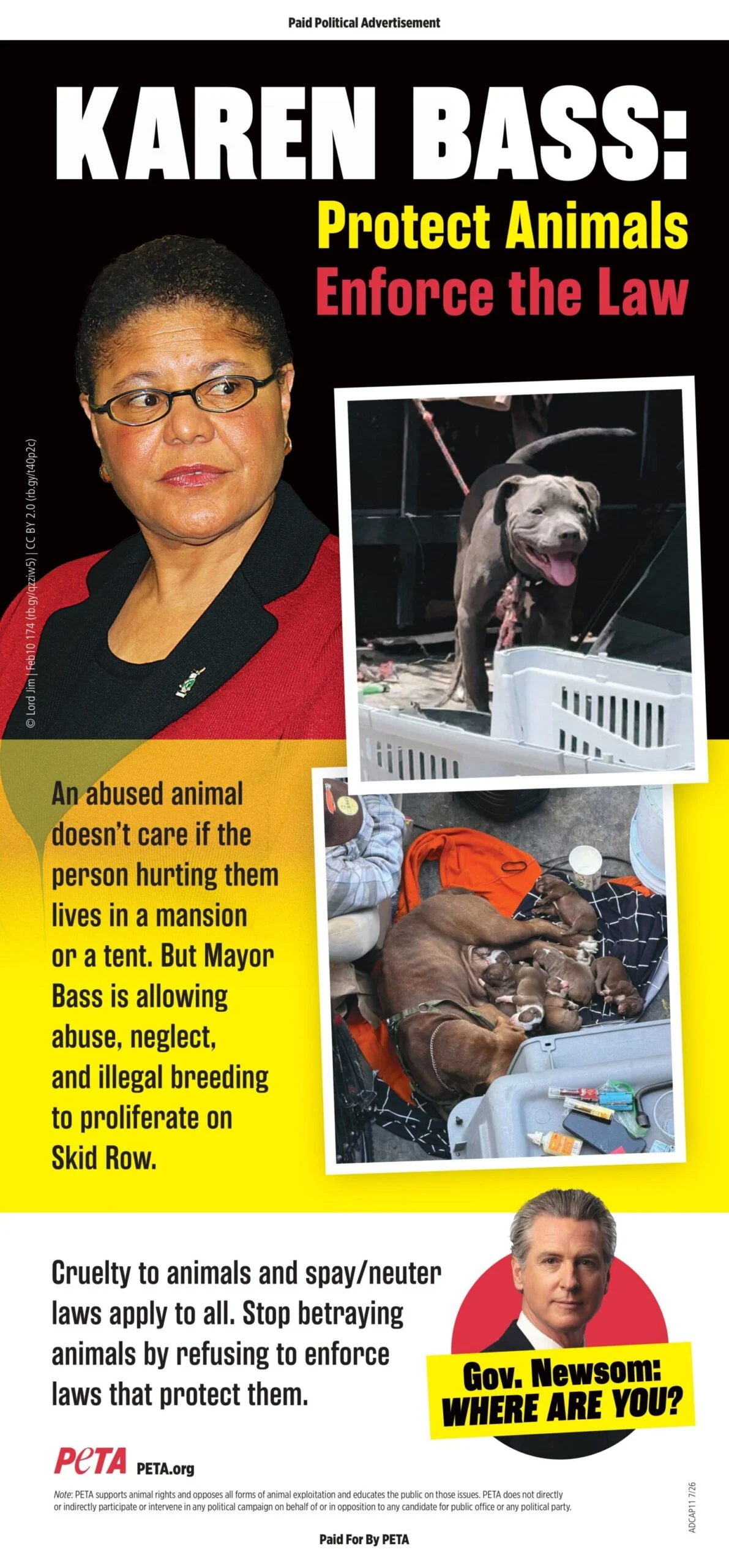
July 2026: Frustrated by months of perceived inaction from city hall, PETA escalated public pressure by publishing a full-page advocacy advertisement in the Los Angeles Times. The prominent ad directly targeted Mayor Karen Bass and California Governor Gavin Newsom, demanding immediate intervention, stricter enforcement of existing animal protection laws, and an end to regulatory exemptions for specific urban zones.
September 2026: PETA held a formal press conference to release the findings of a public records request submitted to the Los Angeles Police Department (LAPD) and Los Angeles Animal Services. The request sought to verify the concrete outcomes of the specialized task force previously announced by Mayor Bass to address animal welfare on Skid Row. The resulting documents revealed that municipal activity in the area primarily consisted of routine food and supply distributions, alongside a negligible number of documented animal-related service calls and virtually no active enforcement of breeding or anti-cruelty statutes.
Official Responses and Conflicting Narratives
The ongoing friction between municipal leadership and animal advocacy groups underscores a complex policy challenge for city officials. Representatives for Mayor Karen Bass have previously defended the administration’s approach to Skid Row, emphasizing comprehensive humanitarian initiatives aimed at housing unhoused residents and providing social services. City officials maintain that addressing complex urban poverty requires delicate coordination between public health, sanitation, and law enforcement agencies.
However, critics and animal rights organizations argue that humanitarian aid for human residents should not come at the expense of enforcing baseline animal protection laws. PETA and allied rescue groups contend that ignoring animal abuse within encampments perpetuates a cycle of suffering that violates state and local statutes. The public release of LAPD and animal services logs directly challenges the narrative presented by the Mayor’s office regarding the efficacy and scope of the announced animal welfare task force, suggesting that administrative claims of a robust crackdown are significantly exaggerated.
Broader Impact and Implications
The situation on Skid Row serves as a micro-level illustration of broader systemic challenges facing Los Angeles. As the city grapples with intersecting crises of housing affordability, homelessness, and animal shelter overcrowding, the enforcement of municipal ordinances often becomes politically fraught.
Legal analysts note that the selective enforcement of laws—whether driven by informal administrative directives, resource constraints, or competing humanitarian priorities—creates significant legal and ethical gray areas. When animal control officers are allegedly discouraged from intervening in cases of active abuse or illegal breeding due to the unhoused status of the perpetrators, it creates a dual system of justice where animal welfare standards are compromised.
Furthermore, the involvement of high-profile public figures and prominent advocacy organizations has transformed a localized municipal issue into a statewide political talking point. The direct appeals directed at both Mayor Bass and Governor Newsom signal that animal welfare advocates are prepared to leverage public campaigns, media pressure, and legal transparency mechanisms to demand systemic reforms.
As public scrutiny intensifies, pressure is mounting on municipal leaders to reconcile their stated commitments to public safety and animal welfare with verifiable, transparent enforcement actions. Without increased coordination between animal services, law enforcement, and social outreach programs, advocates warn that animals on Skid Row will continue to suffer the consequences of institutional neglect, leaving foundational animal protection laws unenforced in the heart of Los Angeles.

