


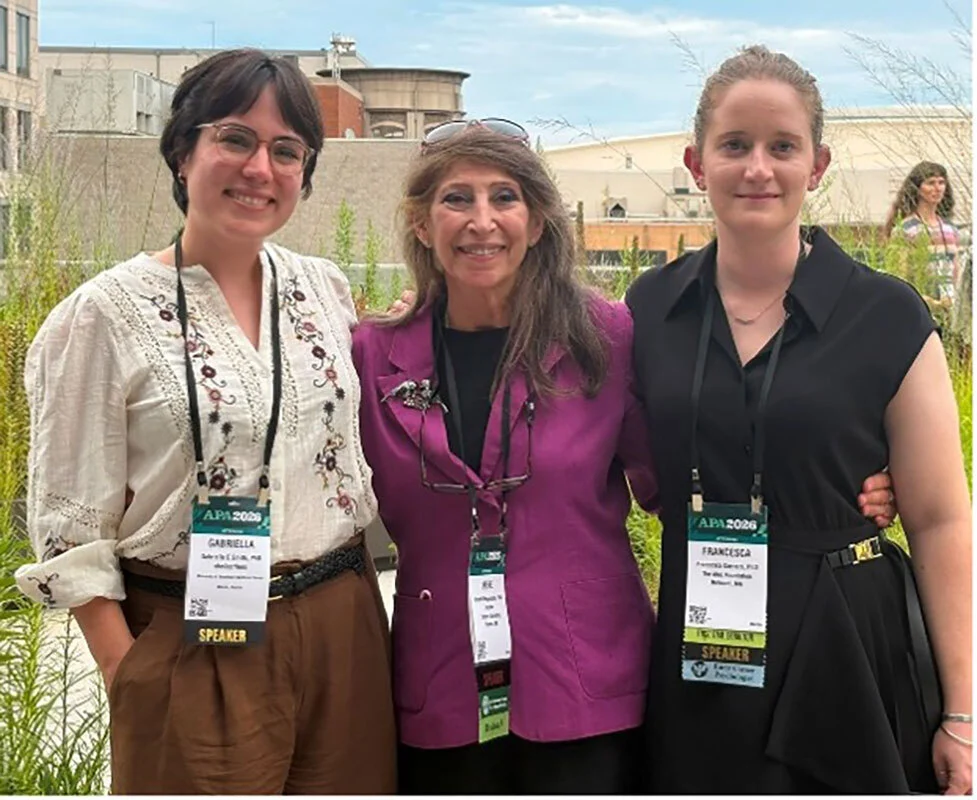
The year 2026 has been marked by significant geopolitical instability, ranging from regional conflicts in the Middle East to shifting global economic policies. Amidst this backdrop of volatility, the scientific community has continued to recognize foundational contributions to ethology and psychology. Dr. Irene Pepperberg, a pioneer in the study of avian intelligence, recently received two prestigious lifetime achievement awards: one from the Coller-Dolittle Foundation and another from Division 3 (Experimental Psychology) of the American Psychological Association (APA). Additionally, Dr. Pepperberg was elected to a three-year term as a Member-At-Large for APA Division 3. These accolades underscore the profound shift in psychological science regarding how humanity perceives the cognitive capabilities of non-human species.
The Evolution of Avian Cognition: A Chronological Overview
Dr. Pepperberg’s career began in 1977, a period when the scientific consensus largely dismissed the possibility of complex cognition in birds. The prevailing academic sentiment was that avian vocalizations were largely instinctual or mimicry-based, rather than cognitive, communicative tools.
The foundational work began at Purdue University in borrowed laboratory space. Without initial institutional funding, the early research relied heavily on volunteer support and undergraduate students. The methodology, inspired by the work of researcher Dietmar Todt, utilized a "model/rival" technique. In this approach, a bird observed two humans interacting; one acted as the trainer and the other as the "rival" student. The bird learned that by correctly labeling objects, it could earn the object as a reward. This technique successfully bypassed the limitations of traditional operant conditioning, which often failed to elicit the level of cognitive engagement necessary for complex communication.
By the early 1980s, the data gathered by the lab—which famously included the subject Alex, an African Grey parrot—began to challenge the status quo. Alex demonstrated the ability to categorize materials (paper, wood, hide) and distinguish between colors and shapes, such as identifying "3-corner" triangles versus "4-corner" squares. These breakthroughs eventually secured the first National Science Foundation (NSF) grant, providing the necessary capital to formalize the research.
A Geographic Odyssey: Building Labs and Navigating Constraints
The history of Dr. Pepperberg’s laboratory is a study in academic resilience. The research group transitioned through several major institutions, each move necessitated by changing academic circumstances or the requirement for specialized facilities.
From Purdue, the team moved to Northwestern University, where the research gained institutional standing within the Department of Anthropology. This period was critical for the survival of the subjects, particularly Alex, who required advanced veterinary interventions for aspergillosis, a fungal infection common in captive parrots. The collaboration between veterinarians—including Dr. Susan Brown, Dr. Richard Nye, and Dr. Greg Harrison—proved essential for preserving the long-term data continuity that defines the project.
The subsequent move to the University of Arizona facilitated the introduction of new avian subjects, including Griffin, Kyaaro, and Alo. This period expanded the laboratory’s research scope to include studies on social learning and numerical cognition. However, the lack of departmental alignment regarding avian research led to a further relocation to the Massachusetts Institute of Technology (MIT) Media Lab and, subsequently, Brandeis University. During this tenure, the laboratory benefited from a fellowship at the Radcliffe Institute, providing the stability required for rigorous data analysis and manuscript preparation.
The final major academic transition occurred at Harvard University’s Department of Psychology. This partnership with the Vision Lab and researchers such as Dr. Susan Carey marked a transition into more integrated studies of cross-species cognitive parallels. Following the disruptions caused by the COVID-19 pandemic, which necessitated a temporary relocation to a private research facility, the lab settled into its current iteration, associated with Boston University.

Data, Methodology, and Academic Significance
The implications of Dr. Pepperberg’s work extend far beyond the success of a single parrot. The longitudinal data set, spanning nearly 50 years, provides a window into the cognitive architecture of Grey parrots (Psittacus erithacus).
Data gathered during the Harvard and Boston University years have shown that these birds possess cognitive abilities previously attributed only to great apes or human children. Specifically, the laboratory has documented:
- Numerical Competence: The ability to understand the concept of zero and perform basic addition.
- Abstract Reasoning: The capacity to understand "same/different" relationships across novel objects.
- Inference by Exclusion: The ability to logically deduce the location of an object based on the absence of other possibilities.
These findings have forced a revision of textbooks on animal intelligence. The methodology—moving away from sterile, stimulus-response boxes toward socially mediated, interactive learning environments—has become the gold standard for studies involving high-functioning non-human species.
Collaborative Dynamics: Acknowledging the Human Element
Dr. Pepperberg emphasizes that the awards recently bestowed upon her are reflective of a collective effort rather than individual achievement. The operational success of the lab for half a century required a complex network of research assistants, lab managers, and administrative supporters.
"It is an army of individuals—human and non-human—who worked alongside me," Dr. Pepperberg noted. She specifically cites the contributions of lab managers such as Arlene Levin Rowe and Suzanne Gray, who provided the logistical infrastructure required to navigate the daily operations of a lab that frequently relocated. The reliance on graduate students and research assistants—names such as Spencer Lynn, Francesca Cornero, and Gabriella Smith—demonstrates the pedagogical nature of the laboratory, which has served as a training ground for dozens of students who have gone on to influence the fields of biology, psychology, and cognitive science.
The Broader Impact and Future Implications
The recognition by the APA and the Coller-Dolittle Foundation serves as a broader validation of the field of avian cognition. In the current academic climate, where funding is increasingly directed toward immediate clinical applications or technology-heavy neuro-imaging, the persistence of long-term behavioral research is notable.
The ongoing research at the Boston University-affiliated facility focuses on the limits of these cognitive abilities and the extent to which they are shaped by social interaction. As the field moves toward a more integrated understanding of "animal minds," the foundational work done by this group serves as a baseline for future studies.
The logistical challenges faced by the lab—ranging from securing rental properties in urban environments to managing the daily care of the avian subjects—highlight the precarious nature of independent scientific research. The successful integration of these birds into high-level cognitive studies while maintaining their welfare remains a primary focus of the team.
Conclusion: A Legacy of Persistence
As Dr. Pepperberg’s career nears its fifth decade, the focus remains on the synthesis of decades of data. The awards represent not just an individual accolade, but a culmination of sustained effort, scientific rigor, and the ability to adapt to changing environments. The trajectory of this research—from the borrowed labs of the 1970s to the current collaborations in Boston—reflects a broader shift in the scientific world’s view of intelligence. By dismantling the binary between human and animal cognition, the laboratory has provided a template for how interdisciplinary, long-term studies can survive and flourish, regardless of the institutional hurdles encountered along the way.

