


The transition from the glare of 1950s Hollywood spotlights to the quiet, dusty expanse of a rural sanctuary is a journey few major motion picture stars have ever successfully navigated. For Kim Novak, the iconic leading lady of Alfred Hitchcock’s psychological masterpiece Vertigo, 1957’s Pal Joey, and 1958’s Bell, Book and Candle, stepping away from the height of studio-system fame was not merely a career pivot; it was an existential rescue mission. In a candid and reflective interview released by People and People for the Ethical Treatment of Animals (PETA) on October 6, 2026, Novak opened up to writer Elena Waldman about why she traded legendary leading men like James Stewart and Frank Sinatra for a radically different circle of companions: a perfume-averse goat, an injured desert snake, and a devoted Steller’s jay named Shadow.
This rare retrospective provides a profound look at the psychological tolls of mid-century stardom, the mechanics of identity reclamation, and the profound lessons in authenticity that non-human animals can offer when humans take the time to truly listen.
The Weight of Stardom and the Search for Authenticity
During the golden age of Hollywood, Novak was one of Columbia Pictures’ most prized assets. Discovered as a teenager and carefully molded by studio executives who changed her name and dictated her public image, Novak quickly learned the suffocating nature of manufactured fame. In her conversation with PETA, the legendary actor explained that playing a revolving door of scripted characters began to erode her sense of self.
When an actor constantly wears the psychological and physical costumes of others, the boundary between the performance and the person blurs. For Novak, escaping this labyrinth required a drastic environment change. She sought out a life away from the soundstages where she could be surrounded by animals—creatures that, unlike studio heads, critics, or directors, had no interest in box-office receipts, public relations, or socioeconomic status.
According to Novak, animals offer a rare psychological mirror because they demand absolute honesty. They do not care about a person’s filmography, net worth, or address; they care about integrity. Novak noted that the moment animals learned to trust her was the exact moment she finally learned to trust herself. In an industry where artificiality is currency, the unvarnished, instinctual reactions of animals provided a grounding force that helped Novak establish a genuine sense of self-worth and self-love.
Unconventional Companions: From Perfume-Hating Goats to Desert Snakes
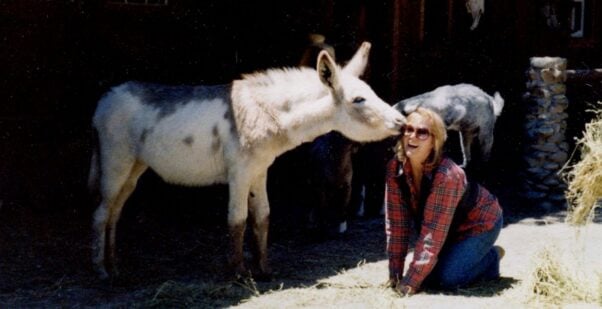
Novak’s life away from Hollywood became populated by a diverse menagerie of rescued animals, each teaching her distinct lessons about boundaries, communication, and mutual respect. Among her earliest domestic lessons was an encounter with a remarkably discerning goat.
In Hollywood, actors are routinely expected to wear heavy cosmetics, hair products, and designer fragrances as part of their daily routine. Novak brought some of these habits into her new rural life until her resident goat intervened. Whenever Novak wore perfume, the goat would stand on his hind legs, lower his horns, and charge at her. To the animal, the artificial scent signaled an impostor. The goat’s physical reaction—effectively communicating, “You’re not the person I know, you’re not Kim”—became a pivotal teaching moment. Novak permanently abandoned synthetic perfumes, recognizing that the animal was demanding she strip away Hollywood artifices to remain true to her authentic self.
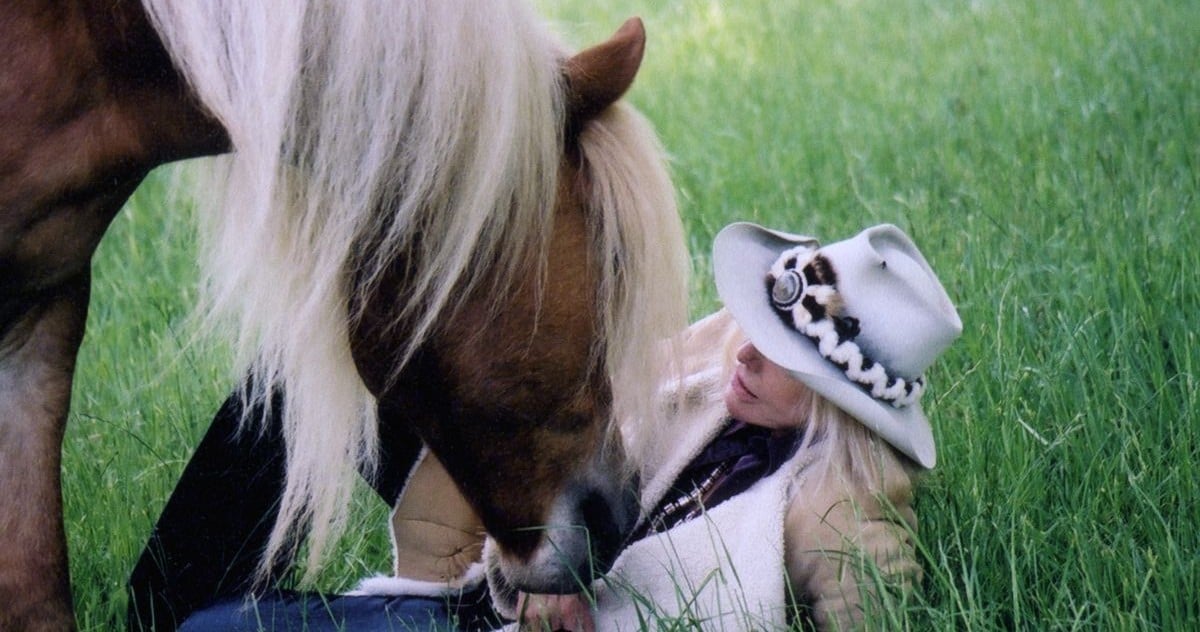
Her animal family extended far beyond farm animals. Among her fondest memories is her relationship with a small desert snake she named Sincerely. While transporting her horse to New Mexico so the animal could run freely in the sand for his birthday, Novak encountered an injured snake near a freeway in the early morning hours. The snake’s jaw was severely broken and out of alignment. Demonstrating the deep empathy that would characterize her post-Hollywood life, Novak arranged for veterinarians to repair the reptile’s jaw and subsequently took him home to recuperate.
Before leaving the area, Novak returned to the desert to release Sincerely back into the wild. After initially disappearing into the brush, the snake turned around, crawled back toward her, and climbed up her horse’s leg. The bond was permanent. Novak recalled that every evening, she and her companions would play cards while the small snake traveled across her shoulders, making a complete circuit around the group. Sincerely became one of her most cherished confidants.
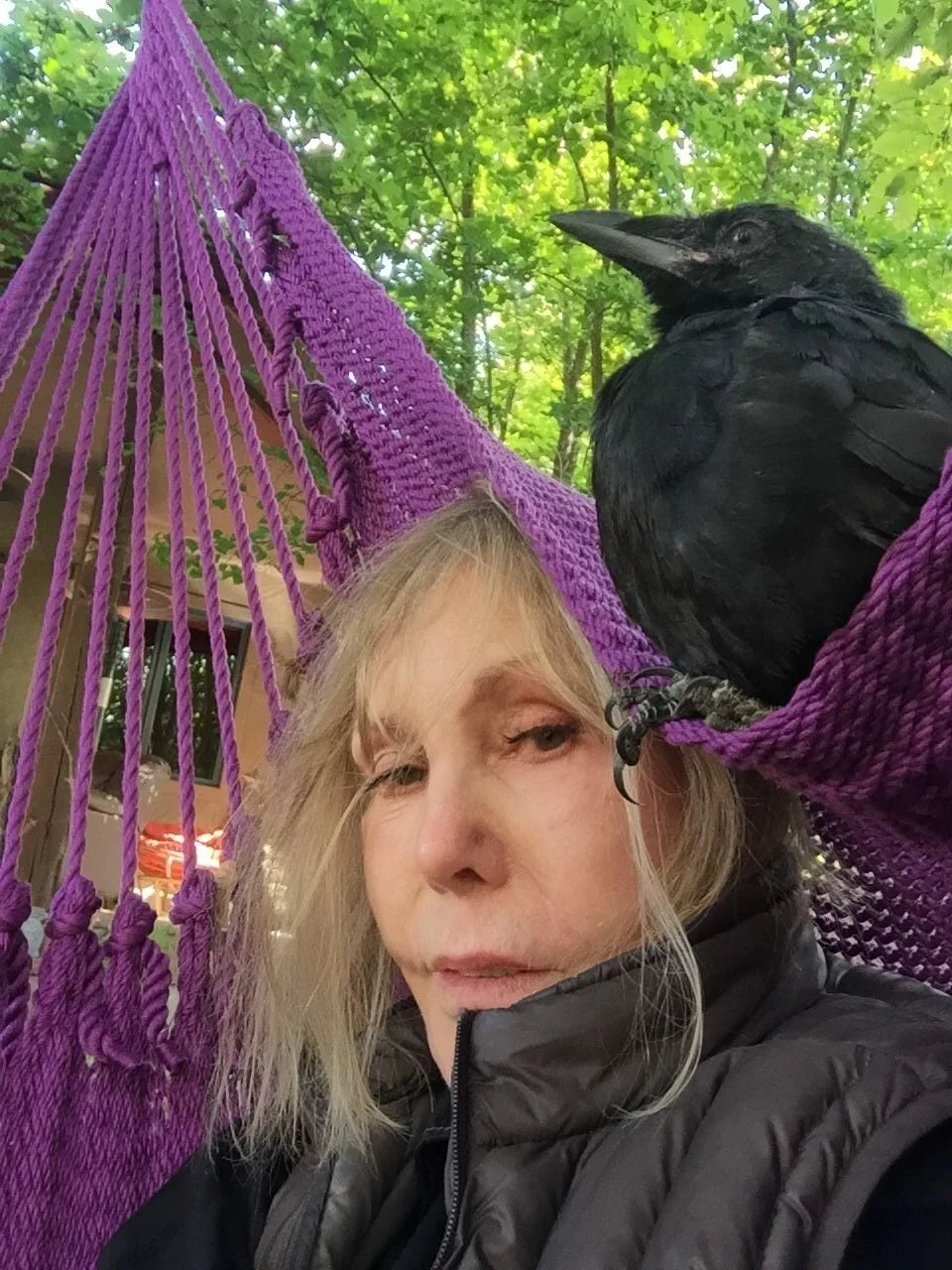
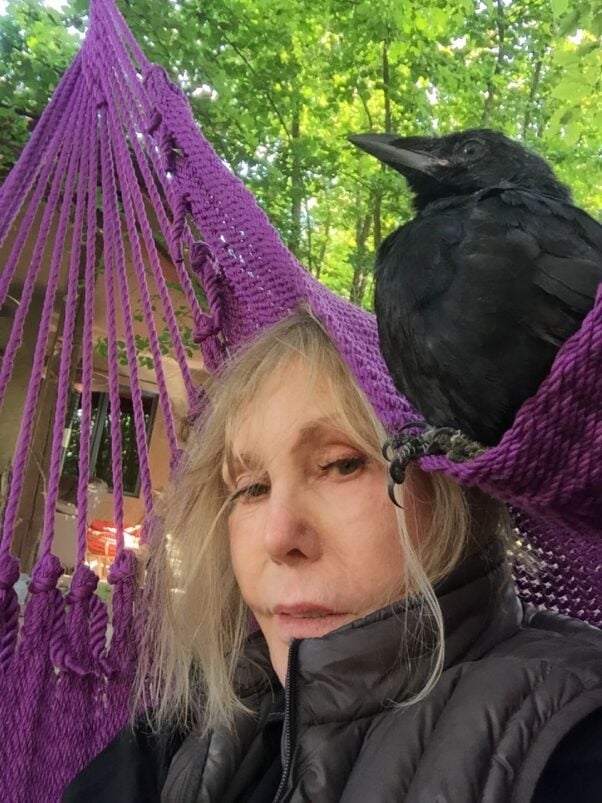
Another prominent figure in Novak’s rural household was Shadow, a Steller’s jay that had fallen from its nest. Novak’s husband, a veterinarian, successfully mended the bird’s injured wing. Expecting the bird to return to the wild upon recovery, Novak was surprised when Shadow chose to stay. The bird integrated itself seamlessly into the household rhythm. When Novak and her husband burned yard brush, Shadow would mimic them, picking up small twigs and dropping them onto the burn pile. On Sunday mornings, her husband would cook miniature pancakes specifically for Shadow, who would pick them up and fly them off to share with other local birds.
Shadow’s attachment to Novak was remarkably complex. The windows of the home were always kept open to ensure the bird retained absolute freedom, yet Shadow repeatedly chose domestic companionship. At Christmas, Novak would wrap small presents containing the bird’s favorite treats. Conversely, when Novak had to pack her bags to travel for an occasional film project, Shadow’s distress was palpable; he would pull items out of her suitcases and block the tires of her car, physically attempting to prevent her departure.
The Broader Implications: Rethinking Human-Animal Relationships
Novak’s reflections extend beyond personal nostalgia into a broader philosophical critique of human exceptionalism. Throughout her interview, she challenged the prevailing cultural assumption that human beings occupy a position of inherent superiority over other species.
From a cognitive and biological standpoint, Novak’s observations align with growing scientific consensus regarding animal sentience and communication. Ethologists and animal behaviorists have increasingly documented complex emotional lives, grieving processes, and sophisticated communication networks across mammalian, avian, and reptilian species. Novak pointed out the profound arrogance in human claims of superiority, noting that humans cannot match the olfactory capabilities of dogs or the aerodynamic mastery of birds. Recognizing these unique biological gifts, she argued, is not only an act of humility but a cognitive necessity.
Novak suggested that many of the conflicts plaguing human society—ranging from interpersonal disputes to global warfare—stem from a fundamental failure to communicate and listen. Just as humans frequently fail to interpret the signals, needs, and boundaries of non-human animals, they similarly fail to listen to one another. By learning to pay close attention to the behavioral cues of animals, Novak believes humans can cultivate a broader capacity for empathy that translates into healthier interactions across all species lines.
A Legacy Rooted in Compassion and Vegan Advocacy
The release of Novak’s interview through PETA serves a dual purpose: honoring the cinematic legacy of a Hollywood icon while redirecting public attention toward modern animal welfare and ethical living. Novak’s narrative underscores a fundamental ethical shift—moving away from viewing animals as commodities, props, or passive sources of entertainment, and moving toward recognizing them as autonomous individuals with distinct personalities and emotional needs.
PETA utilized the platform of Novak’s reflections to advocate for lifestyle changes that align with these ethical principles, most notably the adoption of a vegan diet. According to animal welfare advocates, transitioning to a plant-based lifestyle is one of the most effective ways an individual can reduce animal suffering, sparing nearly 200 animals annually per person while simultaneously mitigating environmental degradation.
By sharing her decades of living alongside horses, goats, snakes, birds, and dogs, Kim Novak bridges the gap between classic Hollywood glamour and contemporary ecological ethics. Her journey illustrates that true peace is found not in the applause of a packed theater, but in the quiet, honest validation of a world where humans finally stop trying to teach animals and, instead, begin to listen.

