


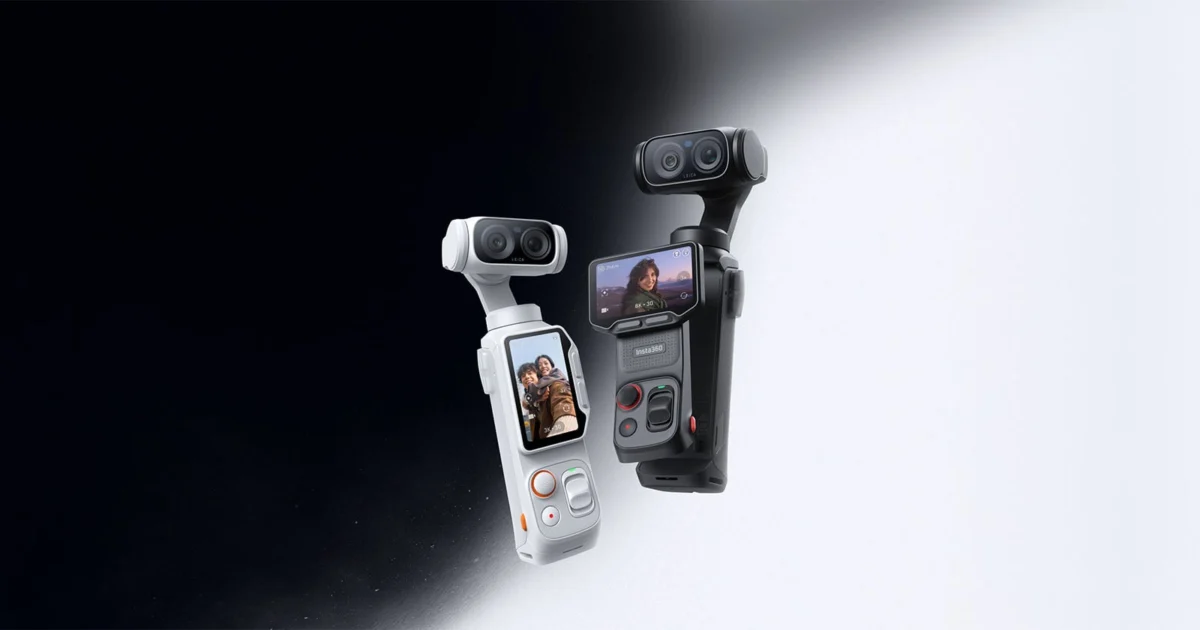
The global imaging industry is currently witnessing a paradigm shift as hardware manufacturers move beyond traditional optics to embrace deep integration with artificial intelligence and robotics. Following the recent launch of the Insta360 Luna and Luna Ultra, company founder JK Liu has articulated a long-term strategic vision that challenges the very nature of how humans interact with recording technology. In a series of recent disclosures, including an extensive interview with the Japanese imaging publication DC.Watch and subsequent clarifications provided to PetaPixel, Liu suggested that the ultimate goal of camera development is to create devices so intuitive and autonomous that users effectively "forget" they are even there. This philosophy marks a departure from the history of photography, which has traditionally required the user to act as a technical intermediary between the scene and the sensor.
The Philosophical Shift: From Operator to Participant
The catalyst for Liu’s vision was a personal realization regarding the intrusive nature of modern documentation. During a trip where he tested a Luna Ultra prototype, Liu found himself recording a street performance. He noted that instead of experiencing the artistry of the performers, his attention was entirely consumed by the camera’s monitor, ensuring the subject remained in frame and the settings were optimized. This "tension in imaging"—the conflict between documenting a moment and actually living it—has become the central problem Insta360 seeks to solve.
Liu’s objective is to transform the camera from a tool that demands attention into a "future cameraman." This concept envisions a device that functions like a professional human photographer: an entity that understands the context of a scene, identifies the most compelling action, and executes the technical requirements of filming without requiring constant input from the user. By delegating the mechanics of capture to an autonomous system, the user is liberated to remain present in the moment, effectively removing the friction that has defined photography since its inception.
A Five-Year Development Cycle: The Genesis of Luna
The launch of the Luna and Luna Ultra represents a significant milestone in this chronological journey toward autonomy. Reported to have been in development for approximately five years, the Luna series was designed to bridge the gap between traditional handheld gimbals and fully autonomous systems. A key feature of this development was the introduction of a detachable display-and-controller unit, a design choice intended to give users flexibility in how they monitor their shots while encouraging hands-free operation.
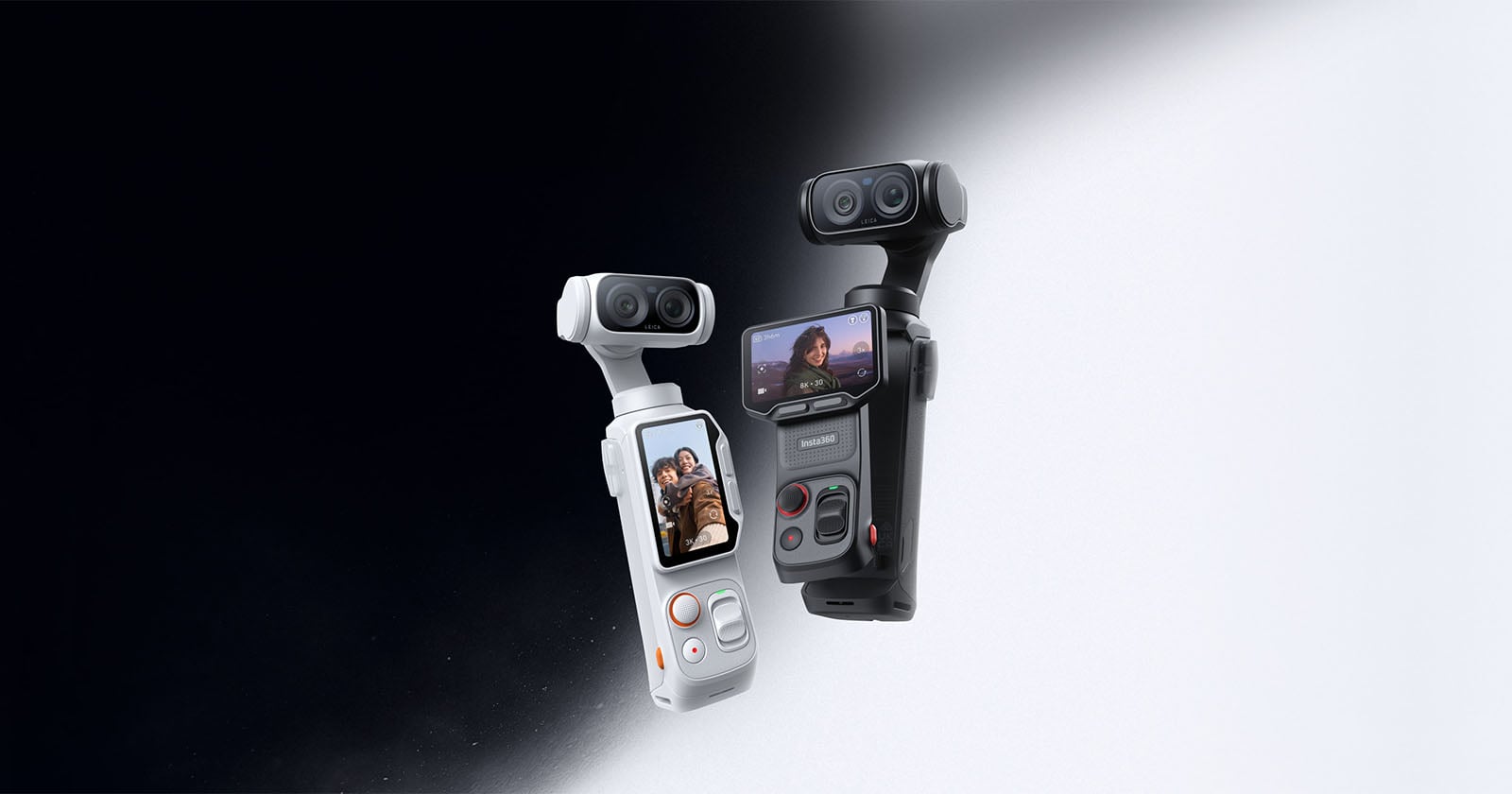
The development process also involved a deep technical partnership with Leica, particularly for the Luna Ultra. This collaboration focused on optimizing the imaging pipeline to ensure that as cameras become more automated, they do not sacrifice the high-fidelity visual quality expected by professional creators. The Luna series introduces the "POV Tracker," a feature that allows the camera to follow the movement of the user’s head. This is a foundational step toward Liu’s "invisible camera" goal, as it allows for hands-free, point-of-view recording that mimics human perception.
The Three Pillars of the Autonomous Cameraman: See, Understand, and Act
To achieve a truly autonomous imaging system, Liu identifies three critical technological requirements that must converge: the ability to see the entire environment, the intelligence to understand the scene, and the capability to act in real-time.
1. Total Environmental Vision
Liu argues that traditional cameras are limited by their narrow field of view, which forces the user to make framing decisions in real-time. This is why Insta360 has prioritized 360-degree imaging since its founding in 2015. A 360-degree sensor captures the entire spherical environment, providing a massive data set that serves as the foundation for AI-driven tracking and reframing. By capturing everything, the camera ensures that no critical action is missed, allowing the "framing" to happen either through AI automation or in post-production.
2. Spatial Intelligence
Beyond merely recording pixels, the future camera must possess "spatial intelligence." This involves on-device AI that can interpret depth, motion, and orientation. The camera needs to recognize what it is looking at—distinguishing between a primary subject and background noise—and understand the physical layout of the environment. This level of scene understanding is necessary for the camera to make "creative" decisions, such as when to zoom, when to pan, and how to stabilize a shot based on the terrain.
3. Real-Time Autonomous Action
The final pillar is the ability to act without human intervention. This includes predictive subject tracking, where the AI anticipates where a person or object will move next, and real-time stabilization that adjusts to the physical dynamics of the moment. Liu posits that for a camera to behave like a cameraman, it must be an active creative partner. It must be able to compose shots and make filming decisions instantly, responding to the environment with the same "taste" and intuition as a human operator.
Technical R&D: Building the Perception System
Insta360’s roadmap for achieving this vision involves heavy investment in several cutting-edge computational imaging technologies. According to Liu, the company is currently developing sophisticated models that will serve as the "brain" of future devices:
- Panoramic Depth Foundation Models: These models allow the camera to calculate depth across a full 360-degree field, enabling more accurate object isolation and spatial mapping.
- Diffusion Transformer Architecture: Utilizing the same logic behind state-of-the-art generative AI, this architecture helps the camera "generate" or enhance panoramic images by understanding the relationship between different parts of a scene.
- Unified Monocular 3DGS (3D Gaussian Splatting): This technology allows for high-fidelity 3D reconstruction of a scene from a single lens. It works across wide-angle, fisheye, and 360-degree formats, helping the camera "perceive" the world in three dimensions rather than as a flat 2D image.
These research initiatives suggest that the next generation of cameras will be less about the physical glass and sensor and more about the perception system and the software that interprets the visual data.
Market Context and Industry Implications
The shift toward autonomous cameras comes at a time when the broader imaging market is struggling to compete with the ubiquity and convenience of smartphones. While traditional DSLR and mirrorless camera sales have stabilized among enthusiasts and professionals, the "casual" and "prosumer" segments are increasingly looking for devices that offer specialized capabilities without the steep learning curve of manual operation.
Insta360’s "shoot first, frame later" philosophy has already carved out a significant niche in the action camera and vlogging markets, directly competing with industry giants like GoPro and DJI. By focusing on reducing "capture anxiety"—the fear of missing a shot because the camera wasn’t pointed in the right direction—Insta360 is positioning its hardware as a lifestyle accessory rather than just a piece of technical equipment.
Industry analysts suggest that if Insta360 successfully realizes a fully autonomous camera, it could disrupt several sectors, including:

- Sports Broadcasting: Automated tracking could allow for high-quality coverage of amateur and niche sports without the need for expensive camera crews.
- Content Creation: Solo creators could produce multi-angle, cinematic content that previously required a dedicated videographer.
- Personal Documentation: Families and travelers could capture candid, high-quality memories without the "intrusion" of a person holding a camera.
The Evolution of Insta360: A Timeline of Innovation
The journey to the Luna Ultra is rooted in a decade of iterative hardware and software releases.
- 2015: Insta360 is founded, focusing initially on 360-degree camera attachments for smartphones.
- 2017-2019: The company releases the ONE and ONE X series, introducing "FlowState" stabilization, which used gyroscopic data and AI to mimic the smoothness of a professional gimbal without the bulk.
- 2020: The launch of the ONE R, a modular system that allowed users to swap between 360 lenses and wide-angle sensors, highlighting the company’s focus on versatility.
- 2022-2023: The introduction of the X3 and the AI-powered "Ace Pro," which integrated 5nm AI chips for low-light enhancement and gesture control.
- 2024-2026: The development and launch of the Luna series, marking the move into dedicated gimbal-integrated cameras with a focus on autonomous tracking and "invisible" operation.
Conclusion: Reclaiming the Human Experience
The ultimate goal of Liu’s "autonomous cameraman" is not to replace human creativity, but to enhance it by removing the mechanical burdens of capture. By creating a perception system with "taste," Insta360 aims to return the user’s attention to the world around them.
As Liu concluded, the best technology is that which gives time and attention back to the user rather than demanding it. While the industry is not yet at the stage of a fully independent, robotic camera operator that can think and move with complete human-like agency, the building blocks—AI-based stitching, spatial intelligence, and real-time tracking—are already present in consumer devices. For Insta360, the future of imaging is not just about better pixels; it is about the total disappearance of the camera as an obstacle to experience.

