


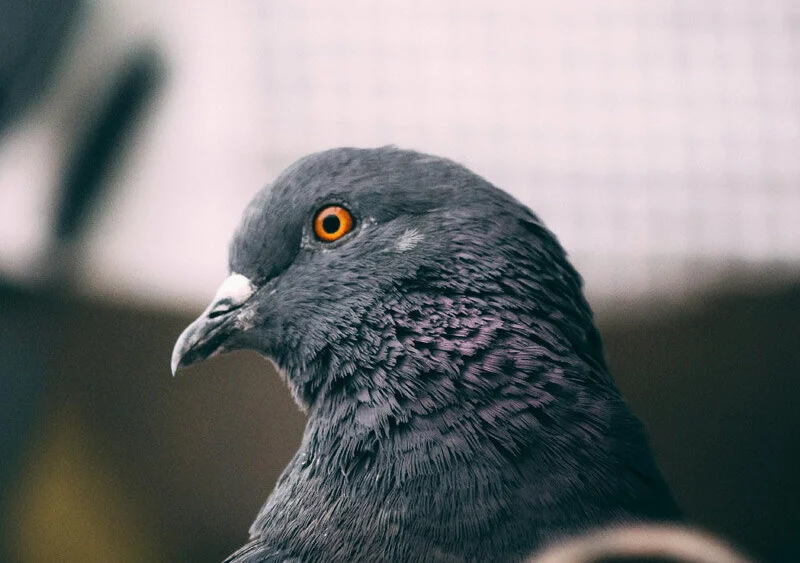
For centuries, the pigeon has occupied a unique space in human history, serving as an indispensable courier during periods of extreme geopolitical volatility and war. From the ancient Persian Empire to the trench warfare of World War I, these birds demonstrated a seemingly supernatural capacity to navigate hundreds of miles back to their home lofts with pinpoint accuracy. While historical records are replete with accounts of their bravery and reliability, the biological mechanisms governing their homing instinct have long remained a subject of scientific debate. Recent findings published in the journal Science have brought the avian community closer to a definitive answer, suggesting that the secret to their navigation may lie deep within their liver.
The Historical Context of Avian Navigation
The use of pigeons as messengers relies on a trait known as "homing," an instinctive ability to return to a nesting site from great distances. During the First World War, the U.S. Army Signal Corps maintained a fleet of over 600 pigeons in France alone. These birds were credited with a 95 percent success rate in message delivery, often navigating through smoke, artillery fire, and adverse weather conditions that would ground modern electronic equipment.
Despite this long-standing utility, scientists have historically struggled to isolate a singular "compass" within the bird. The traditional understanding of avian navigation has been a multifaceted model. Research has consistently shown that pigeons utilize a multi-modal approach: they map the position of the sun, recognize low-frequency acoustic signatures (infrasound), and detect the Earth’s magnetic field. However, these inputs are not equally effective in all conditions. When solar cues are obscured by heavy cloud cover, or when terrain-based landmarks are unavailable, the bird must rely on its internal "backup" systems.
Anatomy of a Discovery: The Liver’s Role
A breakthrough in understanding these backup systems centers on the role of superparamagnetic microphages. These specialized cells, located within the liver, appear to act as biological sensors for geomagnetic flux. The study indicates that these microphages function by collecting iron-oxide nanoparticles, which are ingested from the bloodstream. Once these particles are concentrated in the liver tissue, they become strongly magnetized upon contact with an external magnetic field.
These cells are situated in close proximity to hepatic nerve fibers, creating a direct pathway between the magnetic interaction and the bird’s nervous system. When a pigeon is in flight, the Earth’s magnetic field interacts with these magnetized microphages, providing the bird with a continuous stream of navigational data. This mechanism is particularly vital during overcast conditions when visual solar cues are absent. The researchers propose that when the liver is saturated with these microphages, the pigeon maintains a precise sense of orientation; conversely, when these cells are depleted, the bird’s ability to "home" in on its target is severely compromised.
Experimental Methodology and Chronology
To validate this hypothesis, researchers conducted a controlled experiment involving 34 trained pigeons. The methodology was designed to isolate the impact of liver-based magnetic sensing from other navigational tools.
- Training Phase: The pigeons were conditioned to navigate a specific 11.80-mile (19km) corridor, ensuring they were familiar with the geography.
- Depletion Phase: Under controlled conditions, a subset of the test group underwent a procedure to reduce the concentration of microphages in their livers, while the control group remained untreated.
- Deployment: The birds were released under heavy overcast skies to eliminate the possibility of solar navigation.
- Monitoring: Each bird was fitted with a miniaturized, internet-connected tracking device to record real-time flight paths.
The data gathered during the study was unequivocal. The pigeons with intact, microphage-rich livers successfully navigated back to their home lofts in every instance. In contrast, the pigeons with depleted liver cells failed to complete their journey, exhibiting erratic flight patterns that suggested a total loss of spatial orientation. This chronological success in testing reinforces the theory that the liver acts as a sensory organ, not merely a metabolic one.
Magnetoreception: The Four Pillars
The scientific community currently categorizes the study of animal navigation under the umbrella of "magnetoreception." There are four prevailing theories regarding how animals sense the Earth’s magnetic field:
- Radical Pair Mechanism: This theory posits that light-sensitive proteins in the eye (cryptochromes) allow birds to "see" magnetic fields as patterns of light or shadow.
- Magnetite-Based Sensory Transduction: This involves clusters of iron-based crystals in the beak or inner ear that detect magnetic fields through mechanical pressure on nerve endings.
- The Liver-Microphage Mechanism: As highlighted by the recent study, this involves the interaction between hepatic cells and magnetic fields, providing a non-visual, internal orientation system.
- Infrasound and Olfactory Mapping: This theory suggests birds create "acoustic maps" of their environment, though this is generally considered a supplementary rather than primary navigation tool.
The discovery regarding the liver adds a significant layer to the magnetite-based theory, suggesting that the avian body may have evolved redundant magnetic sensors to ensure survival across diverse environments.
Implications for Ornithology and Beyond
The confirmation of the liver’s role in navigation has broader implications for avian biology and migration studies. If the liver serves as a critical component of the internal compass, then environmental pollutants that interfere with iron-oxide levels in a bird’s bloodstream could potentially disrupt migration patterns on a global scale.
Furthermore, this study provides a new lens through which to view the physical toll of migration. If the "battery" for magnetic navigation is a biological cell that can be depleted, then the energy expenditure required for long-distance flights may involve more than just caloric intake; it may involve the rapid turnover of specific cellular components. This discovery may lead to further research into how birds maintain their physiological "navigational health" during multi-week migrations that span thousands of miles.
Official Reactions and Scientific Peer Review
The findings, published in the journal Science, have been met with cautious optimism by the ornithological community. While the data from the 34-pigeon test is compelling, experts note that the interaction between the liver and the brain requires further neurological mapping. Dr. Elena Vance, a lead researcher in avian cognition, noted that "while the correlation between liver microphage density and navigational success is statistically significant, we are currently investigating the neural signaling pathway that translates hepatic magnetic interaction into motor commands for the bird’s flight muscles."
The ongoing research is expected to continue for several years, with efforts currently focused on whether this mechanism is unique to the Columbidae family (pigeons and doves) or if it is a conserved trait in other migratory species, such as arctic terns or bar-tailed godwits.
Conclusion: A Legacy of Precision
The pigeon’s ability to traverse the globe has long been a source of fascination. By shifting the focus from the eyes and the beak to the internal organs, scientists have uncovered a complex biological system that is as robust as it is invisible. As we continue to decode the biological marvels of these birds, we gain not only a better understanding of avian history but also a deeper appreciation for the precision of nature. Whether through the sun, the stars, or the iron-rich cells of the liver, the pigeon remains a master of the skies—a creature that, despite the chaos of the world, never loses its way home.

