


The legal landscape surrounding theme park safety has intensified following the filing of a significant lawsuit against Universal Orlando Resort. Jennifer Lundy, a mother seeking justice for her nine-year-old son, identified in court documents as L.L., has initiated litigation against the entertainment giant following an incident on the Stardust Racers rollercoaster. The lawsuit, filed on August 17, alleges that the child suffered severe, permanent injuries after losing consciousness due to the extreme physical forces exerted by the attraction on October 13, 2025.
The case, which centers on the mechanics of one of Universal’s newest high-speed attractions, has drawn public attention not only due to the vulnerability of the victim but also because of the existence of on-ride photographic evidence that appears to corroborate claims of the child’s physical distress.
The Incident at Epic Universe
The Stardust Racers rollercoaster is a marquee attraction at Universal Epic Universe, the latest addition to the Universal Orlando Resort portfolio. The ride is marketed as a high-octane experience, boasting speeds reaching 62 mph and vertical peaks of 133 feet. For a child, these specifications represent significant gravitational and lateral forces.
According to the complaint, L.L. met the established 48-inch height requirement to board the coaster. However, the legal filing contends that the ride’s design failed to adequately secure a child of his stature. The plaintiff alleges that as the rollercoaster navigated its course, the G-forces caused L.L. to lose consciousness. Once unresponsive, the child’s body reportedly lacked the necessary lateral support to prevent his head and face from striking the hard surfaces of the ride vehicle.
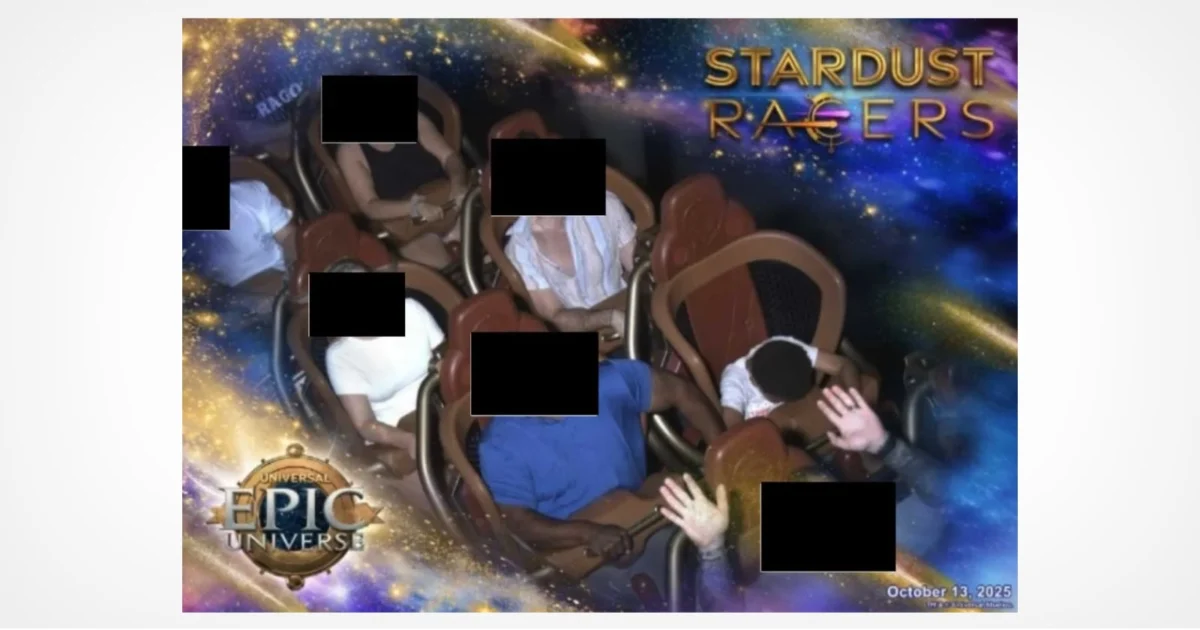
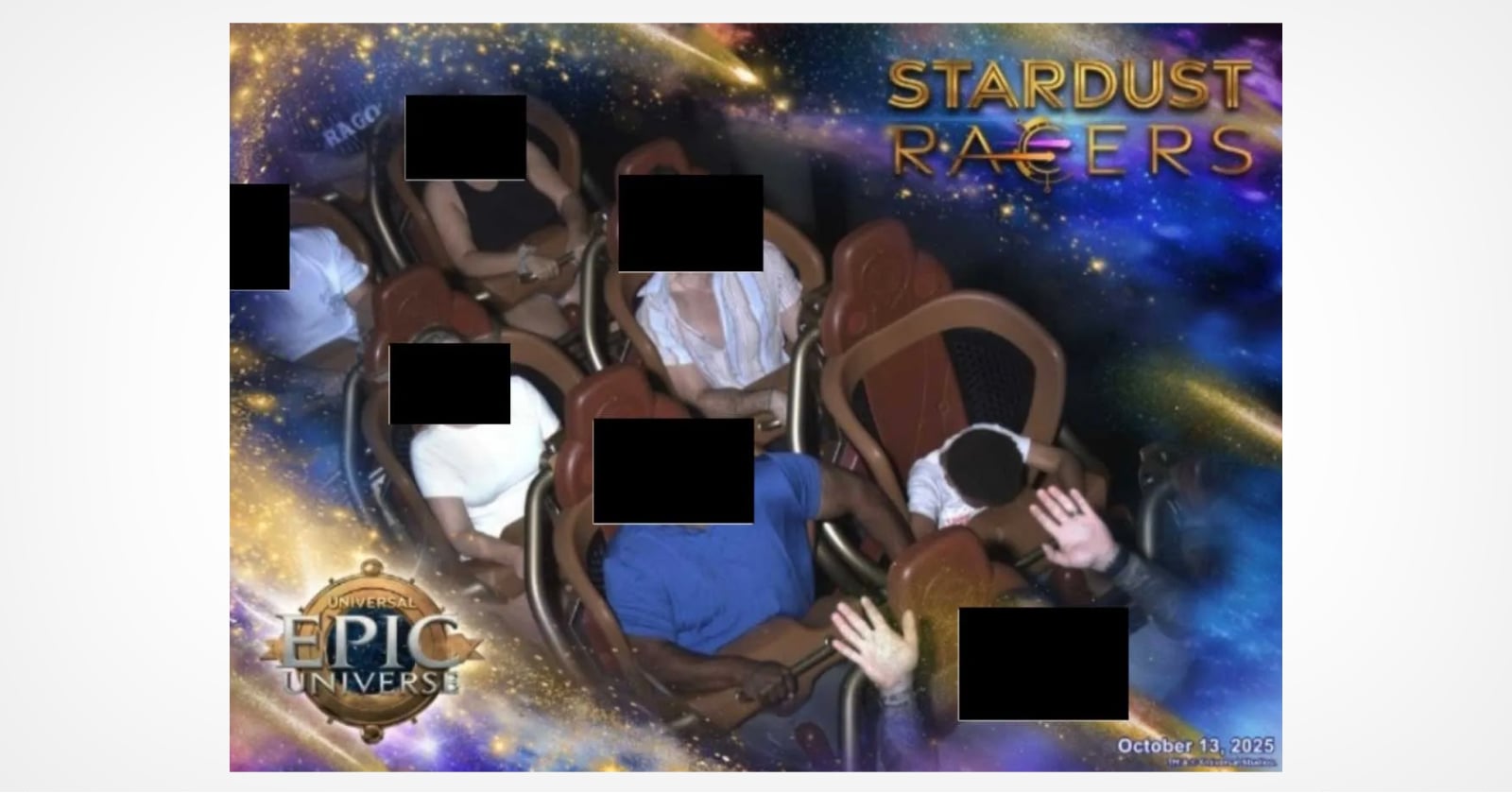
The most compelling piece of evidence presented by the Lundy legal team is an on-ride photograph taken by the park’s automated camera system. The image, which has been entered into the public record via PacerMonitor, reportedly shows the young boy slumped over and clearly unconscious while the ride was in motion. This visual documentation serves as the cornerstone of the plaintiff’s argument that the ride’s safety constraints were insufficient for the forces exerted upon the passenger.
Chronology of Events and Legal Proceedings
The timeline of this litigation reveals a rapid escalation between the incident date and the formal response from the park’s legal representatives:
- October 13, 2025: The incident occurs at the Stardust Racers attraction within Universal Epic Universe.
- August 17, 2026: Jennifer Lundy formally files a lawsuit against Universal City Development Partners, Ltd., alleging negligence and failure to provide a safe environment for minors.
- September 18, 2026: Universal Orlando Resort files a formal response to the complaint, denying liability and shifting the burden of responsibility toward the parents.
The complaint specifies that L.L. suffered a constellation of injuries, including blunt force trauma to the head and face, as well as complex orthopedic and spinal damage. The lawsuit seeks damages in excess of $50,000 to cover mounting medical expenses and long-term care for the boy’s injuries, which the filing describes as "severe and permanent."
Broader Context: A Pattern of Concern
The lawsuit filed by Lundy is not an isolated instance of alarm regarding the safety protocols at the Stardust Racers attraction. The legal complaint explicitly cites a tragic precedent: the death of 32-year-old Kevin Rodriguez Zavala in September 2025.
Zavala reportedly lost consciousness while on the same ride, leading to blunt impact injuries that proved fatal. His family subsequently entered into an independent investigation, which concluded in a settlement with Universal for an undisclosed amount. The inclusion of this prior incident in Lundy’s lawsuit suggests a strategy to establish a "pattern and practice" of negligence or design flaws, moving the argument beyond a singular accident to a systemic failure to protect riders from the inherent intensity of the attraction.
Official Responses and Defense Strategy
Universal Orlando Resort’s defense, as outlined in their September 18 court filing, adheres to a standard corporate liability defense strategy. The park’s attorneys argue that the responsibility for the child’s safety rested primarily with the parents, who were tasked with assessing whether their child was fit for the rigors of a high-speed thrill ride.
The defense contends that the family was "negligent in failing to use reasonable care for L.L.’s safety." Furthermore, the park invokes the doctrine of "assumption of risk." By boarding the ride, the defense argues, the plaintiffs knowingly and voluntarily accepted the inherent dangers of the attraction, including "significant acceleration, deceleration, lateral forces, and head and body movement."
This argument hinges on the legal assumption that theme park patrons are adequately warned of the physical demands of such attractions. However, the plaintiff’s counsel argues that there is a critical distinction between "inherent risk" and "negligent design," asserting that a ride should be safe for any patron who meets the mandated height requirements.
Implications for the Theme Park Industry
The ongoing litigation carries significant weight for the theme park industry at large. High-speed, high-thrill attractions are the primary drivers of tourism and revenue, yet they exist in a regulatory gray area. While ride manufacturers must adhere to ASTM International standards for safety, these standards are often criticized by consumer advocates as being outdated or insufficient for the extreme physics of modern rollercoasters.
If the court finds that the photographic evidence of an unconscious child is sufficient to prove that the ride’s restraint system was inadequate, it could set a precedent requiring more stringent, age-appropriate safety measures for "all-ages" thrill rides. This could lead to a wave of retrofitting costs for major parks or a shift in the way "thrill" is defined for younger demographics.
Furthermore, the case highlights the tension between the "buyer beware" culture of theme parks and the expectation of absolute safety for minor guests. When a park sets a height requirement, it effectively signals to parents that the ride is safe for a child of that size. If injuries occur despite compliance with these rules, the legal system is forced to determine whether the park’s warnings were sufficient or if the machinery itself is fundamentally incompatible with the physiology of a nine-year-old.
Analytical Outlook
As the case moves toward potential discovery and trial, the focus will likely shift to the engineering specifications of the Stardust Racers. Experts in biomechanics and rollercoaster design will likely be called to testify regarding the G-force profiles experienced by riders of different heights and weights.
The defense’s emphasis on parental negligence suggests that the case will also turn on the quality of the signage and warnings provided by Universal. If the court determines that the warnings were clear and the parents ignored them, the suit may be dismissed. Conversely, if the discovery process reveals that Universal was aware of a high frequency of "gray-outs" or losses of consciousness among riders—even if those incidents did not always lead to injury—the park may face significant liability.
For now, the case of Lundy v. Universal City Development Partners stands as a cautionary tale regarding the rapid evolution of ride technology. As attractions continue to push the boundaries of velocity and force, the mechanisms meant to protect the human body must be held to a standard that accounts for the most vulnerable among the riding public. The outcome of this case will undoubtedly influence future safety policies and potentially alter the way theme parks manage risk for their youngest guests.

