


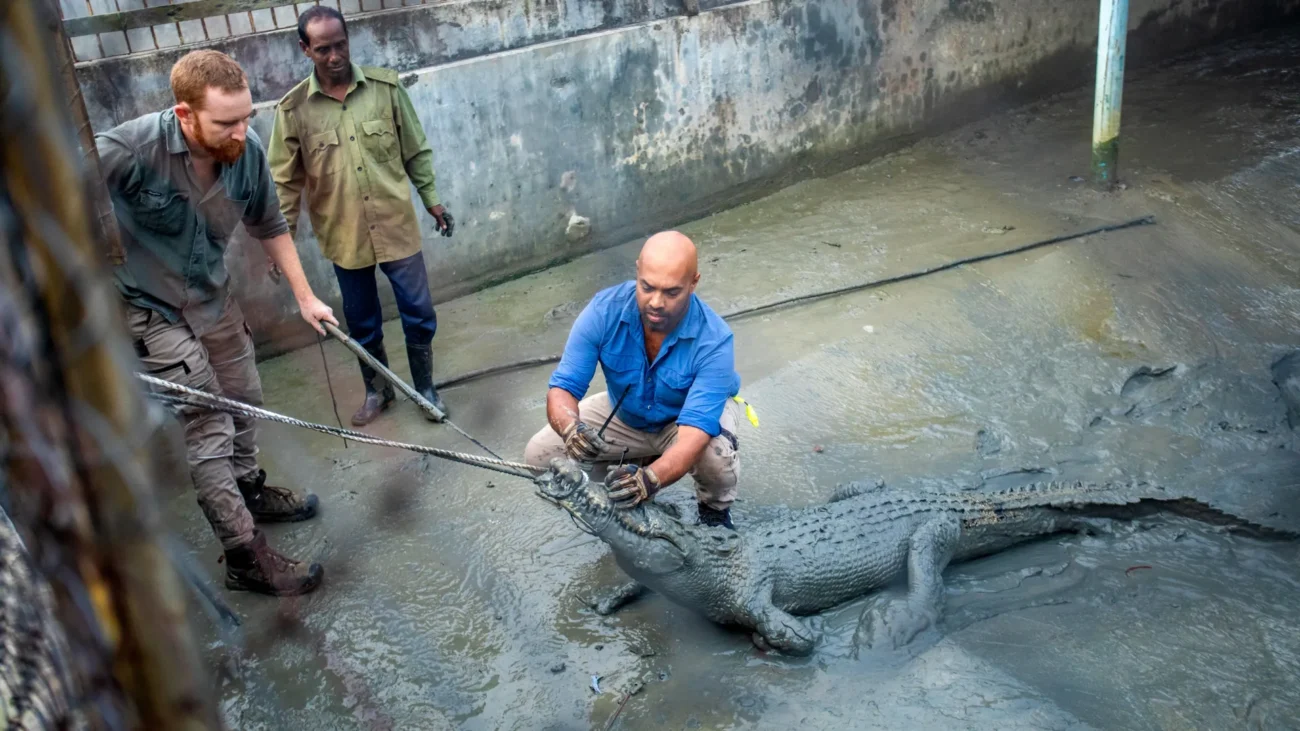
The global conservation community has received a significant boost following the publication of a new scientific study revealing that saltwater crocodiles bred or raised in captivity do not exhibit the strong homing instincts that typically complicate wildlife relocation programs. Published in the peer-reviewed journal Wildlife Research under the title "What is home? Post-release movements of captive-reared and translocated mature saltwater crocodiles in Bangladesh," the research offers a promising pathway for replenishing depleted apex predator populations in their native habitats.
Historically, conservation efforts aimed at restoring dwindling crocodilian populations have faced a persistent behavioral barrier: their powerful homing instinct. While navigating back to a familiar territory is a vital evolutionary adaptation for many species—enabling animals to locate established nesting sites, secure reliable food sources, and maintain territorial boundaries—it often undermines human intervention. When adult or subadult crocodiles are removed from problem areas and relocated, or when captive animals are introduced to new ecosystems, their innate drive to return to their original capture sites or breeding enclosures frequently results in failed reintroduction initiatives.
However, the new findings suggest that this behavioral hurdle may not apply to individuals that have spent extended periods in captivity. According to the study’s lead researchers, saltwater crocodiles raised in controlled environments fail to display the traditional urge to navigate back to their breeding centers upon release. Instead, these mature animals demonstrate a surprising capacity to integrate seamlessly into wild ecosystems, establishing localized home ranges that mirror the behaviors of native populations. This revelation could fundamentally alter how conservationists approach the management and restoration of vulnerable and endangered crocodilian species across the globe.
A Precarious Status in the Sundarbans Mangrove Forest
The research was conducted within the Sundarbans mangrove forest in Bangladesh, a vast and complex delta region that serves as one of the nation’s final remaining ecological strongholds for the saltwater crocodile (Crocodylus porosus). Once abundant across the tropical and subtropical freshwater and brackish environments of the region, the species suffered catastrophic population declines over the course of the 20th century.
The primary driver of this collapse was intensive, unmitigated commercial hunting driven by the global demand for high-grade crocodile skins for the leather industry. By the 1970s, unregulated harvesting had brought the saltwater crocodile to the brink of local extinction in Bangladesh. In response to the crisis, the government enacted formal legal protections for the species in 1973, halting direct commercial exploitation. Despite more than half a century of statutory protection, however, population recovery has remained stagnant.
Surveys conducted within the Sundarbans indicate that the local population remains critically small and vulnerable. The most recent comprehensive ecological assessments estimate that the entire region harbors a mere 140 mature individuals. This persistently low count has alarmed wildlife authorities and conservation organizations, who argue that natural recruitment alone is insufficient to pull the species back from the precipice. Without active management interventions—such as the systematic release of captive-reared animals—the long-term viability of saltwater crocodiles in Bangladesh remains in severe jeopardy.
Evaluating the Reintroduction Dilemma
For decades, conservation biologists working with crocodilians have confronted a difficult logistical choice when designing reintroduction programs. The traditional methodology relied heavily on releasing hatchlings or very young crocodiles into the wild. The logic behind this approach was that very young animals would naturally imprint on the wild environment rather than a captive facility, thereby avoiding the homing behaviors observed in older specimens.
Yet, this strategy is fraught with biological inefficiencies. Hatchlings face staggering mortality rates in the wild, falling victim to a wide array of natural predators, environmental fluctuations, and metabolic stressors before they can reach breeding age. Furthermore, because crocodilians are long-lived animals that grow slowly, it takes many years for a released hatchling to mature and contribute to the local gene pool.
Consequently, conservationists have increasingly wondered whether older, larger, captive-bred crocodiles could be utilized instead. Subadults and adults possess a significantly higher survival rate upon release due to their sheer size and defensive capabilities. Until now, however, researchers could not reliably predict whether an adult crocodile, having spent years or decades within the confines of a breeding facility, would simply attempt to migrate back to its familiar enclosure once given freedom. If captive-raised adults retained a powerful compulsion to return to their artificial homes, reintroduction campaigns would inevitably fail, wasting precious resources and placing the released animals at risk during long, hazardous journeys through human-dominated landscapes.
Methodology and Satellite Tracking Data
To resolve this critical knowledge gap, an international team of researchers—led by the International Union for Conservation of Nature (IUCN) Bangladesh and the Bangladesh Forest Department, with funding from the Deutsche Gesellschaft für Internationale Zusammenarbeit (GIZ)—initiated a comprehensive tracking project in the Sundarbans.
The scientific team selected a cohort of five mature saltwater crocodiles to monitor via advanced satellite telemetry. The study group was carefully curated to compare different life histories and environmental backgrounds. It included three captive-reared females that had spent between 8 and 22 years living in controlled captive environments. To provide comparative baselines, the researchers also tracked two wild individuals: one local crocodile that was captured and immediately released at the same site, and a second wild crocodile—subsequently named Jongra—that was captured and translocated a significant distance away from its home territory.
Each of the five animals was fitted with a satellite tracking device securely attached to its osteoderms (dorsal scutes), allowing the research team to monitor their spatial movements, travel distances, and habitat selection over the course of several months.
Contrasting Behaviors: Captive-Reared versus Translocated Wild Crocodiles
As the tracking data accumulated, clear behavioral divergences emerged between the captive-raised cohort and the translocated wild specimen, providing profound insights into post-release ecology.
The most encouraging data centered on the three captive-reared females. Despite having spent up to two decades in human care, none of the three animals displayed any behavioral indicators of attempting to navigate back to their original breeding facilities. Instead, their post-release movements demonstrated a rapid adaptation to the wild environment. The tracking data showed that these crocodiles settled into small, well-defined geographic areas within the mangrove forest. Their daily movement patterns, ranging behaviors, and habitat utilization closely mirrored those of the local wild crocodile included in the study, signaling that captive-raised adults are fully capable of transitioning to independent survival without exhibiting disorientation or distress.
In sharp contrast, the translocated wild crocodile, Jongra, exhibited textbook homing behavior. Captured in his native territory and relocated approximately 132 kilometers away before release, Jongra immediately initiated a purposeful journey. While he did not complete the entire 132-kilometer trek back to his original capture site during the monitored timeframe, the trajectory of his movements was unmistakably oriented in that direction.
Jongra’s metrics stood out dramatically from the rest of the study group. He traveled significantly greater distances each day, roamed across an exceptionally expansive geographic area, and recorded single-day movement spikes exceeding 30 kilometers. These high-energy, directional movements are classic markers of homing activity in large vertebrate predators, as the animal prioritizes navigation and boundary-seeking over local foraging and territory establishment.
Implications for Global Crocodilian Conservation
The stark contrast between the captive-reared females and the translocated wild male carries profound practical implications for wildlife management strategies, both in Bangladesh and across the broader international scope of crocodilian conservation.
Behavioral ecologist and Adjunct Associate Professor Ru Somaweera of Murdoch University, a key contributor to the research, emphasized the potential applications of these findings. "These findings suggest that releasing subadult and adult captive-reared crocodiles can be a viable strategy to strengthen wild populations," Associate Professor Somaweera stated. By bypassing the high-mortality hatchling stage and directly introducing robust, older animals into depleted ecosystems, conservation programs can achieve a much higher success rate in population augmentation.
At the same time, the study underscores the necessity of caution when handling wild-caught problem animals. Jongra’s persistent directional travel demonstrates that translocating mature wild crocodiles over long distances is often an ineffective long-term solution for human-wildlife conflict or population management. Because wild adults retain an unyielding memory and affinity for their home territory, translocated animals are likely to expend vital energy attempting to return, frequently traversing hazardous areas or coming into conflict with human communities along the way. Therefore, conservation planners must implement rigorous release protocols and carefully evaluate spatial management strategies to account for the homing tendencies of wild-caught adults.
A Collaborative Scientific Milestone
The publication of "What is home? Post-release movements of captive-reared and translocated mature saltwater crocodiles in Bangladesh" in Wildlife Research marks a milestone in applied behavioral ecology. By combining advanced satellite tracking technology with rigorous field biology, the research team has provided empirical evidence that removes a major barrier to the rehabilitation of an endangered apex predator.
With the foundational data now established, conservation authorities in Bangladesh and international partners are expected to review current captive breeding and release protocols. If integrated effectively into broader biodiversity strategies, the use of older, captive-reared saltwater crocodiles could breathe new life into conservation initiatives, offering a viable method to restore balance to the fragile ecosystems of the Sundarbans and ensure the long-term survival of one of the planet’s most formidable living reptiles.

