


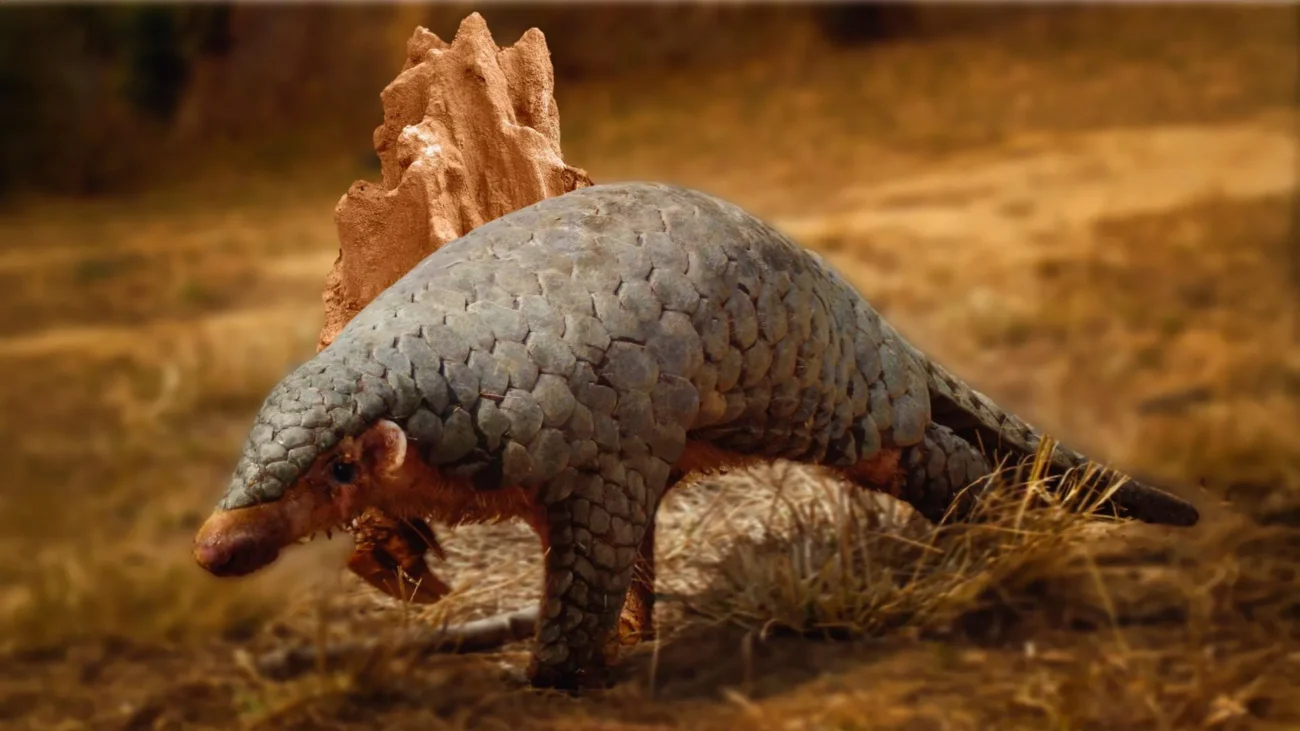
Resembling prehistoric creatures wandering through a modern landscape, pangolins are medium-sized mammals defined by their long, powerful tails, large curved claws, and heavy armor of overlapping, pinecone-like scales. Found exclusively across regions of Africa and Asia, these solitary animals have unfortunately earned the grim distinction of being the most heavily trafficked mammals on Earth. Plagued by relentless poaching driven by the demand for their scales in traditional medicine practices—where they are mistakenly valued for supposed medicinal and aphrodisiac properties—multiple pangolin species currently hover on the precipice of extinction. Law enforcement and conservationists have long battled this illicit trade, often severely hindered by a fundamental hurdle: an incomplete understanding of pangolin taxonomy, geographic distribution, and species boundaries.
Now, an international team of researchers has fundamentally altered the scientific landscape of wildlife conservation. By sequencing DNA from a nearly two-century-old museum specimen, scientists have officially confirmed that a previously unrecognized Asian pangolin species, Manis aurita, is actively living in Nepal and Northern India. Published in the peer-reviewed journal Communications Biology, the groundbreaking study not only untangles a complex evolutionary web but also equips authorities with vital forensic tools to track illegal trafficking networks, pinpoint poaching hotspots, and refine species-specific conservation strategies.
Unraveling a Century-Old Taxonomic Mystery
The road to confirming Manis aurita as a distinct, valid species required years of meticulous detective work, bridging modern molecular biology with historical archives. The taxonomic puzzle began to shift significantly in 2025, when a separate research team determined that animals previously lumped together under the broad classification of Chinese pangolins actually represented two distinct species. While one lineage primarily inhabited regions of China, the other was found along the rugged Himalayan foothills traversing parts of Nepal, India, Bhutan, and Myanmar. That mountain-dwelling population was initially designated as Manis indoburmanica, commonly known as the Indo-Burmese pangolin.
However, the rigid rules of scientific nomenclature dictate that priority must be given to the earliest valid name assigned to a species. As a separate group of investigators—led by Anderson Feijó, the Negaunee Assistant Curator of Mammals at the Field Museum and co-corresponding author of the study—conducted a decade-long genetic and morphological review of pangolin evolution, they encountered historical records pointing to Manis aurita. Originally described in 1836, M. aurita had long been dismissed and reclassified merely as a subspecies of the Chinese pangolin.
This realization sparked a critical scientific question: What was the precise biological relationship between the newly proposed indoburmanica and the historical aurita? Were they the same species, or distinct evolutionary lineages?
The definitive answer came from across Europe, specifically the Natural History Museum in London. Through rigorous collaboration and specialized expertise, the museum team successfully extracted and sequenced DNA directly from the original type specimen of the Nepalese subspecies, which had been archived since 1836. When geneticists compared this ancient DNA to modern tissue samples gathered from Himalayan pangolins, the results were unequivocal: the modern animals matched the 190-year-old genetic profile of aurita. Because aurita was formally described nearly two centuries prior to modern reclassifications, it took strict taxonomic precedence. Consequently, Manis indoburmanica was set aside in favor of the revived and valid name, Manis aurita.
Chronology of a Breakthrough
The confirmation of Manis aurita represents the culmination of intense, multi-year scientific efforts involving global institutions. The timeline of this discovery highlights the intersection of modern genetics and archival science:
- 1836: A Nepalese pangolin specimen is formally documented and described in scientific literature under the name Manis aurita, later relegated to the status of a subspecies.
- 2015–2025: A decade-long investigation led by Anderson Feijó, Kai He, and international colleagues commences, combining DNA sequencing and physical morphology to evaluate global pangolin biodiversity.
- 2025: A separate research team proposes that Himalayan pangolins represent a distinct species, temporarily naming them Manis indoburmanica.
- Mid-2025: Researchers at the Natural History Museum in London successfully extract DNA from the 1836 aurita type specimen, nearly 190 years after its collection.
- Recent Publication: Genetic matching proves that modern Himalayan pangolins and the historic aurita specimen are the same, formally establishing Manis aurita as the correct scientific designation and unlocking vital conservation frameworks.
Distinguishing the Himalayan Pangolin
Morphologically and geographically, Manis aurita stands apart from its relative, the true Chinese pangolin (Manis pentadactyla). According to researchers, the Himalayan pangolin features a noticeably larger body, an elongated tail, and smaller external ears. In fact, the specific Latin epithet aurita is a direct nod to the animal’s distinctive ear morphology. Furthermore, the known geographic ranges of the Chinese pangolin and the Himalayan pangolin do not overlap, highlighting distinct evolutionary adaptations to their respective environments.
"We can’t protect what we do not know, and now that we have confirmed that this other species of pangolin exists, we can use that information to help protect these endangered animals," emphasized Anderson Feijó.
Narayan Koju, a researcher at the Nepal Engineering College at Pokhara University and the study’s first author, echoed the sentiment, noting the profound implications for on-the-ground protection. "The confirmation of Manis aurita as a valid species demonstrates the importance of long-term research, international collaboration, and museum collections. Most importantly, it provides a strong scientific basis for conservation planning, wildlife forensics, and efforts to protect one of the world’s most trafficked mammals from extinction."
Transforming Wildlife Forensics and Anti-Trafficking Enforcement
Beyond resolving academic debates over taxonomy, the formal validation of Manis aurita offers an immediate, powerful weapon against illegal wildlife trafficking. Pangolins are notoriously difficult to monitor in the wild due to their shy, nocturnal, and solitary behaviors. Compounding this challenge, law enforcement officers intercepting illegal shipments rarely encounter live or intact animals. Instead, black-market seizures typically consist of sacks containing thousands of dried, overlapping keratin scales.
In past enforcement scenarios, inspecting isolated scales made it nearly impossible for authorities to determine which specific pangolin species had been poached, or precisely which forest ecosystems were being targeted by organized crime syndicates.
The DNA extraction and genetic profiling methods validated in this new study change that dynamic entirely. Conservation scientists can now analyze confiscated scale shipments, accurately identify whether the material originated from Manis aurita, the Chinese pangolin, or other Asian species, and map those results back to specific geographic zones. Armed with this forensic intelligence, law enforcement agencies and conservation groups can adopt a proactive stance, tracing illegal commodities backward from urban distribution hubs to the exact rural populations facing severe poaching pressure.
Implications for Reintroduction and Habitat Management
A precise understanding of species boundaries is equally vital for ecological restoration initiatives, including captive breeding and reintroduction programs. Historically, conservationists attempting to restore local mammal populations risked releasing animals into inappropriate habitats or mixing distinct evolutionary lineages due to taxonomic ambiguity.
For example, prior to the clear delineation of these species, wildlife managers might have inadvertently introduced Chinese pangolins into historical Himalayan habitats where Manis aurita naturally belongs. By establishing the exact geographical limits and biological traits of each species, conservation planners can now execute targeted rewilding initiatives with scientific precision, ensuring that the right animals are returned to the correct ecosystems.
"By defining the differences between the species and the limits of where each species is found, we can make better conservation decisions," Feijó noted.
The Indispensable Value of Natural History Museums
The success of this landmark study underscores an often-overlooked dimension of modern biodiversity research: the critical importance of natural history museums and institutional archives. Without historical specimens preserved across generations, scientists would be severely restricted to contemporary field samples—a difficult prospect when studying critically endangered, elusive mammals whose wild populations have plummeted.
Museum collections act as irreplaceable biological libraries, housing specimens collected decades or even centuries ago from habitats that may now be altered, degraded, or entirely devoid of wildlife. By leveraging these archival resources, modern geneticists can peer backward in time, capturing a more complete picture of genetic diversity across entire species ranges.
Yan Hua, a co-corresponding author of the study and researcher at the Guangdong Academy of Forestry, summarized the broader impact of the findings: "This taxonomic clarification provides a crucial scientific basis for combating illegal poaching and lays the groundwork for protecting this cryptic endangered species."
The collaborative study reflects a massive global effort, featuring contributions from scientists representing Guangzhou University, Nepal Engineering College, Pokhara University, the Chinese Academy of Sciences, the University of Washington, the Smithsonian National Museum of Natural History, the University of Sevilla, the Guangdong Academy of Forestry, Tribhuvan University, Aspect Ecology Oxfordshire, the Chinese Wildlife Forensic Science Service, the Chengdu University of Traditional Chinese Medicine, and the Field Museum.
As international pressure mounts to save the world’s remaining pangolin populations from commercial extinction, the resurrection of Manis aurita proves that looking backward into history can provide the exact clarity needed to secure a future for endangered wildlife.

