


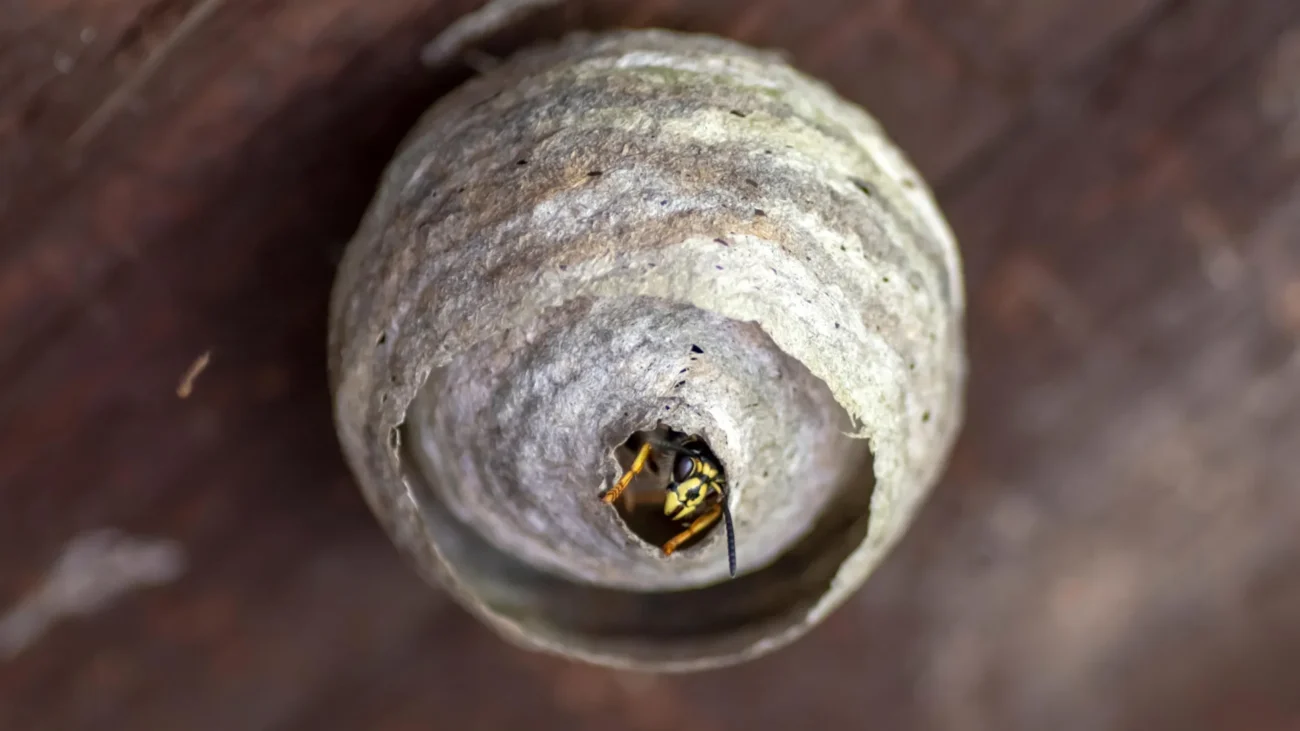
For millions of people across the Northern Hemisphere, summer is traditionally synonymous with the persistent buzz of social wasps. Whether perceived as an irritating picnic visitor hovering over a plate of charcuterie or an uninvited loft guest establishing a paper nest under the eaves, common social wasps are as much a fixture of the warmer months as outdoor festivals, sunscreen, and the seasonal challenge of keeping children entertained. Yet, the summer of 2026 has introduced a profound and unsettling anomaly: an acute scarcity of wasps.
Across public parks, gardens, and rural landscapes, the familiar amber-and-black yellowjackets are conspicuously missing. For entomologists, researchers, and professional pest-control agencies, this widespread absence is not merely a welcome relief for picnickers; it is a major ecological warning sign. As researchers scramble to understand the phenomenon, the missing wasp populations highlight the increasingly volatile impacts of extreme weather on insect biodiversity and ecosystem stability.
Main Facts and Current Observations
The realization of this population drop first became apparent in academic and professional settings where wasps are systematically tracked or utilized. Wasp biologists attempting to source specimens for laboratory experiments and behavioral studies have reported unprecedented difficulty locating colonies in the wild. Pest-control operators corroborate this observation, noting a drastic reduction in residential and commercial service calls requesting the removal of wasp nests compared to previous years.
This stark contrast is amplified by the absence of the typical media frenzy. In a normal summer—particularly one preceded by a warm spring—mainstream news outlets are routinely dominated by sensationalized headlines warning of "plagues of wasps" driven by accelerated colony growth. In stark contrast, the airwaves and print media have remained entirely quiet on the subject through the peak of the 2026 season. While comprehensive empirical data from national monitoring initiatives, such as the Big Wasp Survey, are still being compiled, the preliminary observational evidence points toward a severe population contraction.
Chronology of a Disrupted Season
To understand how the 2026 population crash unfolded, entomologists look back to the unusual trajectory of the seasons, tracing a timeline of environmental stress from early spring through the height of summer.
The sequence began with a deceptively promising spring. Exceptionally warm and dry weather in March and April prompted a surge of newly emerged foundresses—fertilized young queens—to break hibernation. These queens faced the monumental task of establishing nests entirely on their own, undertaking nest construction, egg laying, foraging, and initial brood rearing. Historically, a warm, dry spring is considered advantageous because it guarantees an abundant supply of early nectar for the queens’ nutritional needs and robust prey populations to feed their developing larvae.
However, the climate pattern quickly turned erratic. Unprecedented and unseasonal daytime heat spikes were abruptly punctuated by unseasonably cold, damp days and unusually chilly nights. This volatile meteorological seesaw proved disastrous for the delicate life-cycle phase of solitary queens. Many abandoned their fledgling nests or succumbed to environmental exposure, leading to a significant contraction of the initial queen population before the first wave of worker wasps could even emerge.
Supporting Data and Physiological Vulnerabilities
As the surviving colonies limped into early summer, they encountered a relentless series of heatwaves. While certain insect groups, such as butterflies, reportedly thrived under these conditions due to uninterrupted periods for foraging and mating, social wasps faced severe physiological barriers.

All insects possess a critical thermal maximum (CTmax)—the upper temperature threshold beyond which their biological systems fail, leading to desiccation, severe muscle spasms, and physiological stupor. While honeybees have a CTmax of approximately 49°C, and can endure considerable warmth, ground surfaces in the UK and broader European regions regularly exceeded 50°C during the peak 2026 heatwaves.
Furthermore, research indicates that an insect does not need to reach its absolute CTmax to suffer behavioral and cognitive deficits. Heatwaves exceeding 32°C have been shown to severely impair foraging efficiency and cognitive function in related Hymenoptera species like bumblebees. Wasps, despite possessing sophisticated thermoregulatory behaviors—such as wing-fanning to cool developing larvae—and specialized nest architectures with insulating paper envelopes, appear uniquely vulnerable. Their estimated CTmax sits lower than that of many other social insects, hovering around 45°C (113°F). This lower threshold likely made them acutely susceptible to the extreme ground-level temperatures recorded during the summer heatwaves.
In addition to thermal stress, researchers have noted a striking morphological anomaly: the few adult wasps observed in mid-to-late summer are uncharacteristically small, resembling the diminutive size of early spring workers. In social insects, adult size is fixed during the larval stage and is dictated entirely by the quantity and quality of nutrition provided. While early-season workers are naturally small due to the solitary queen’s limited foraging capacity, colonies should normally produce substantially larger workers by August as foraging power scales up.
The persistence of "spring-sized" wasps in 2026 suggests two primary compounding factors: restricted nutritional intake due to depressed prey populations, and heat-accelerated larval development, which forces insects to pupate prematurely at a smaller size. This real-time observation mirrors broader scientific trends suggesting that global temperature increases over the past century are driving a gradual reduction in the body size of social wasps.
Official Responses and Ecological Implications
Environmental organizations, conservation trusts, and agricultural agencies have voiced growing concern over the cascading impacts of extreme weather on insect populations. While organizations like the Bumblebee Conservation Trust monitor declining floral resources and struggling bee colonies, entomologists emphasize that wasps occupy a critical, albeit underappreciated, niche within global ecosystems.
Often vilified by the public, social wasps play three vital ecological roles:
- Pest-Controllers: As voracious predators, colonies consume immense quantities of garden and agricultural pests, including caterpillars, aphids, and flies, providing a natural form of pest management.
- Pollinators: While not as specialized as bees, adult wasps visit a wide variety of flowers to feed on nectar, inadvertently transferring pollen and contributing to plant reproduction.
- Decomposers and Nutrient Cyclers: Wasps help break down organic matter and carrion, maintaining cleanliness and nutrient flow within local food webs.
The sudden drop in wasp numbers removes a major predatory check on pest populations, potentially leading to cascading imbalances in local habitats and agricultural zones.
Broader Impact and Public Action
The 2026 wasp anomaly serves as a stark reminder of how rapidly climate change and extreme weather volatility can disrupt complex ecological networks. Species once considered resilient and invasive are now encountering physiological limits that even remarkable evolutionary adaptations—such as cuticular hydrocarbons that alter their chemical structure to prevent desiccation—cannot entirely offset.
Researchers are urging the public to shift their perspective on wasps during this critical period. Rather than immediately swatting away an uninvited picnic guest, scientists suggest observing them. A wasp approaching an outdoor meal may not be acting out of mere nuisance, but out of desperate survival necessity, seeking protein like ham or chicken to feed its starving brood, or sugar like jam to sustain its own energy.
To capture a more accurate picture of this ecological shift, academic institutions and research groups are encouraging citizens to participate in observational monitoring projects, such as the Wasp Picnic Survey. By submitting photographs and behavioral data of wasps visiting outdoor meals, the public can directly aid entomologists in quantifying the scale of the population decline and securing the baseline data necessary to protect these vital insects in an increasingly warming world.

