


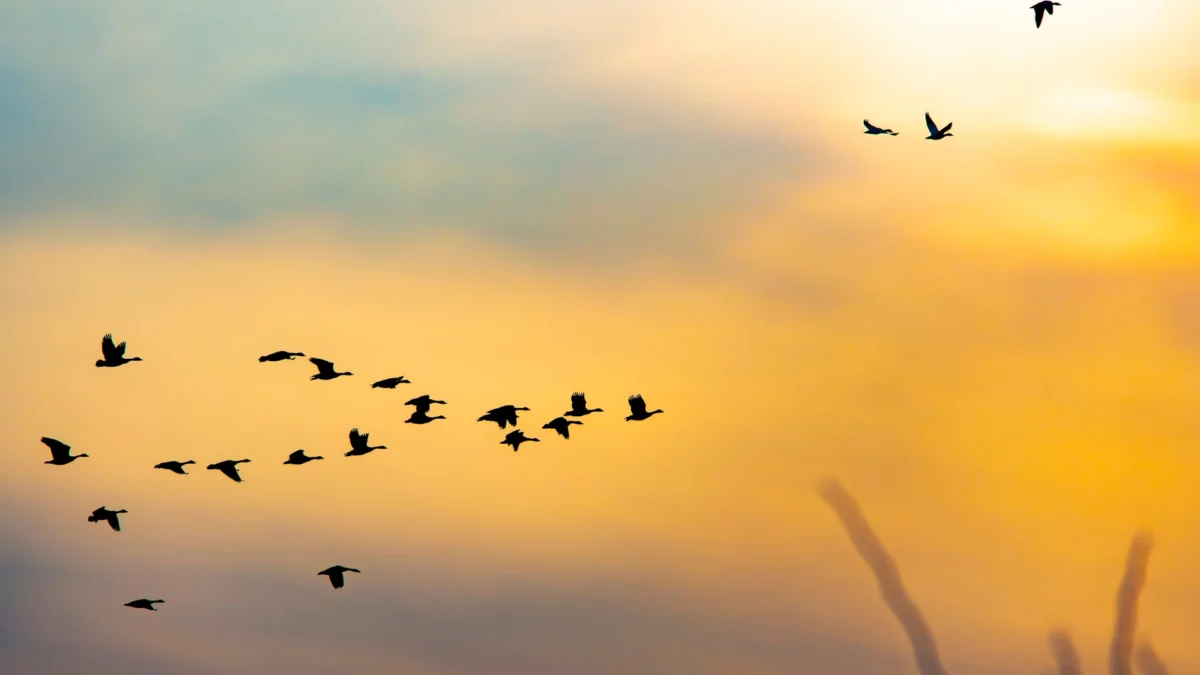
The United States is currently witnessing a massive ecological event as the autumn migration cycle officially gains momentum. According to the latest forecasts provided by the Cornell Lab of Ornithology’s BirdCast initiative, more than 200 million birds are expected to traverse the skies over the course of this week. Utilizing sophisticated weather surveillance radar technology, meteorologists and ornithologists have mapped a concentrated movement of avian species across the central United States, signaling a dramatic shift in the North American landscape as millions of birds relocate to warmer southern climates.
A Concentrated Surge in the Central Corridor
The current migration activity is most intense across the central plains and midwestern regions. Data from August 26 indicates that Iowa, Missouri, Kansas, Oklahoma, and Texas are currently at the epicenter of this avian transit. Furthermore, significant activity has been recorded in Minnesota, as well as North and South Dakota, where birds began their southward journey in large numbers overnight. This movement is not a gradual, steady drift; rather, it is characterized by pulses of activity that coincide with favorable atmospheric conditions.
The phenomenon serves as a stark reminder that migration is a high-stakes, strategic endeavor for migratory species. Birds often wait for optimal wind patterns and temperature conditions before launching their long-distance flights. For the casual observer, this means that a local landscape can appear static for days, only to be transformed overnight into a bustling stopover point for dozens of species that were previously absent from the region.
The Science of Nocturnal Migration
One of the most profound aspects of this annual event is that the vast majority of the migration occurs under the cover of darkness. While popular culture often envisions birds flying in grand daylight formations, the reality is that the most strenuous segments of these journeys happen at night. Nocturnal migration allows songbirds, such as warblers, vireos, and flycatchers, to take advantage of cooler temperatures and more stable atmospheric conditions. By avoiding the heat of the day, birds can maintain a more consistent flight speed and conserve energy, while simultaneously reducing the risk of predation from hawks and other diurnal raptors.
Ornithologists have refined the process of tracking these silent travelers by repurposing weather surveillance radar—the same technology used to detect rainstorms and fronts. By filtering out weather-related data, researchers can isolate the signatures of birds, bats, and insects, providing a high-resolution map of where and when millions of individuals are moving. While an average autumn night might see fewer birds in transit, peak evenings can result in more than one billion birds being airborne simultaneously across the United States. The current forecast of 200 million birds represents a substantial, albeit standard, early-season surge.
The Mechanics of the Journey: A Chronological Overview
The migration process is a complex orchestration of biological timing and environmental navigation. In the late summer, birds undergo a process known as hyperphagia—an intensive feeding phase where they pack on body fat to fuel their transcontinental journeys. As day length shortens and internal biological clocks are triggered, these birds become restless, a behavior known as zugunruhe.
Throughout late August, the migration begins in earnest for species that have completed their breeding cycles in the northern reaches of the continent. Early migrants often include shorebirds, which have been on the move since mid-summer, followed by insectivorous songbirds. By mid-September, the movement broadens to include a wider variety of passerines, raptors, and waterfowl. The current peak in the central U.S. is a critical juncture, as it represents the first major wave of this multi-month process.
What Birdwatchers Should Look For
For those interested in observing this movement, the best time to venture into the field is early in the morning, immediately following a night of significant radar activity. Because birds are exhausted from their nocturnal transit, they often descend into the first suitable habitat they encounter at dawn. This makes public parks, suburban backyards, wetlands, and woodland edges prime locations for birding.

Species that observers can expect to encounter include:
- Warblers: Often referred to as "the jewels of the forest," these small, active birds move through the canopy, often in mixed-species flocks.
- Flycatchers: Known for their habit of returning to a favorite perch after catching insects, these birds become much more visible during their stopovers.
- Thrushes: Often shy and elusive, they may be found foraging on the forest floor during their migration rest.
- Shorebirds: In areas with water, such as mudflats or shallow ponds, sandpipers and plovers are frequently found refueling for their next leg of the journey.
Broader Ecological and Conservation Implications
The migration of 200 million birds is not merely a spectacle for hobbyists; it is a vital biological function that underpins the health of ecosystems across the hemisphere. Birds act as essential pollinators, seed dispersers, and controllers of insect populations. However, this journey is fraught with hazards. As urbanization continues to expand, the availability of high-quality "stopover habitat" is diminishing.
Conservationists and urban planners are increasingly focused on the concept of "Lights Out" programs. Because many migratory birds are attracted to and disoriented by artificial light, high-rise buildings and brightly lit cities can become death traps, leading to millions of window collisions annually. During the peak migration weeks, organizations like the Cornell Lab of Ornithology and various Audubon societies urge residents to dim unnecessary outdoor lighting to provide a safer passage for these travelers.
Furthermore, the impact of climate change on migration timing is a subject of intense scientific scrutiny. As spring arrives earlier and autumn conditions become more volatile, there is a growing concern about "phenological mismatch." This occurs when birds arrive at their breeding or wintering grounds at a time when their primary food sources—such as emerging insect larvae—are no longer available, leading to decreased reproductive success and survival rates.
The Economic and Scientific Value of Bird Migration
Beyond the ecological necessity, birdwatching—or "birding"—is a significant economic driver in the United States. According to the U.S. Fish and Wildlife Service, tens of millions of Americans participate in birdwatching, contributing billions of dollars annually to the economy through travel, equipment sales, and nature-based tourism. The data provided by BirdCast helps land managers and park officials understand when to protect sensitive habitats from human disturbance, ensuring that high-traffic migratory sites remain conducive to bird health.
From a scientific standpoint, the ability to track these movements in real-time is a triumph of modern technology. Before the widespread use of weather radar, migration was largely a mystery, with ornithologists relying on visual counts and banding stations to infer population trends. Today, the synthesis of radar data, citizen science reports from platforms like eBird, and climatic modeling allows for a comprehensive understanding of avian ecology that was previously impossible.
Guidance for the Coming Week
As the migration continues through the end of August and into September, the center of activity will likely shift eastward and southward, tracking the prevailing weather systems. Residents in the currently active states—Iowa, Missouri, Kansas, Oklahoma, and Texas—are encouraged to monitor the BirdCast live migration maps. These maps provide a localized perspective, indicating the "intensity" of the movement in specific counties.
For those looking to assist in the preservation of these species, the most effective measures are simple: provide clean water sources, maintain native plantings that offer seeds and berries, and minimize the use of pesticides that reduce the insect biomass available to migratory birds.
As millions of wings continue to beat over the heart of the nation, the scale of this journey remains a testament to the resilience and complexity of the natural world. Whether one is a seasoned ornithologist or a casual observer looking up at the sky, the migration serves as a poignant reminder of the interconnectedness of our global environment. While we may not be able to see all 200 million birds as they navigate the night, their presence is felt in every park, garden, and wilderness area they touch upon during their long journey south. The season is only beginning, and as the weeks progress, the diversity of species moving through the landscape will only increase, offering a continuous and ever-changing display of nature’s most impressive endurance feat.

