


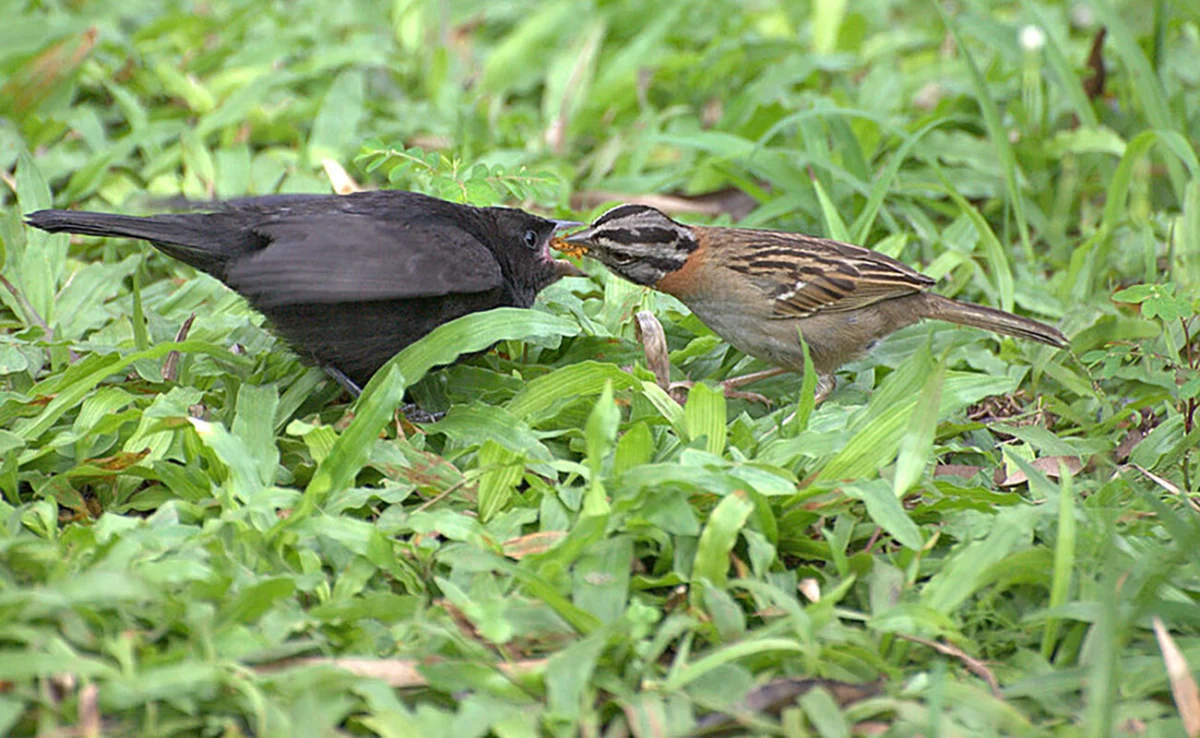
The complexity of communication is often viewed through the narrow lens of human linguistics, where regional dialects and cultural barriers frequently impede the transfer of meaning. However, evolutionary biology has long hypothesized that certain signals exist beyond the constraints of specific languages. A landmark study published in 2025 by a collaborative team of researchers from Cornell University, the Doñana Biological Station in Seville, Spain, and various international institutions, has provided compelling evidence that this principle extends to the avian world. The study suggests that birds possess an innate, universal "vocabulary" of danger, specifically designed to identify and thwart the existential threat posed by brood parasites.
Understanding the Brood Parasite Phenomenon
To grasp the significance of these findings, one must first understand the high-stakes conflict between host birds and brood parasites. Brood parasitism is a reproductive strategy in which a bird species avoids the energy-intensive tasks of nest building, egg incubation, and chick rearing by laying its eggs in the nests of other species. This behavior, observed in iconic birds like the common cuckoo and various cowbird species, forces the host bird to inadvertently become a surrogate parent.
The parasitic interaction is inherently antagonistic. In many instances, the newly hatched parasite chick will instinctively eject the host’s biological offspring from the nest, or compete so aggressively for food that the host’s young perish from starvation. Consequently, host species have been under intense evolutionary pressure to develop recognition mechanisms. The primary defense is the identification of the parasite near the nest. When a host bird detects a parasitic intruder, it must broadcast a warning—not just to its mate, but potentially to neighboring birds—that a threat is present.
Chronology of the 2025 Study
The research initiative, which spanned several years of field observations and acoustic analysis, sought to validate Charles Darwin’s long-standing theory that birds developed innate vocalizations to signal danger across species boundaries. The investigation was structured in three distinct phases:
- Phase One: Global Data Collection (2022–2023): Researchers monitored 21 distinct bird species across disparate geographical regions, including North America, Europe, Asia, and Australia. These species, though phylogenetically distant, all faced the threat of brood parasitism.
- Phase Two: Acoustic Mapping (2023–2024): The team recorded thousands of hours of alarm calls. Using advanced spectrogram analysis, they mapped the frequency, duration, and modulation of the vocalizations emitted when a parasitic bird entered the nesting territory.
- Phase Three: Comparative Analysis and Synthesis (2024–2025): The data was compared to determine if commonalities existed between species that had never encountered one another, effectively ruling out the possibility of learned behavior or cultural transmission.
Supporting Data: The Universal Whine
The most startling discovery of the study was the existence of a "whining alarm" call that remained consistent across continents. Despite the lack of any shared evolutionary lineage or environmental contact, the birds in China, Australia, and the United States exhibited identical acoustic responses to the presence of a parasite.
Quantitative data from the study indicated that these alarm calls shared a specific frequency range—typically higher-pitched and staccato—which is known to be easily localized by predators and conspecifics alike. By analyzing the "acoustic signatures," researchers found that the structural similarities were far too significant to be a result of convergent evolution alone; rather, they point to a hard-wired, innate cognitive template. When a host bird in a forest in Brazil emits a specific warning, a bird of a different species in a European woodland reacts with the same physiological alertness, even though they have never heard that specific sequence before.
Implications of Evolutionary "Built-in" Communication
The findings offer a profound window into how avian brains prioritize survival. Much like human infants who exhibit universal cries for distress or hunger regardless of their native language, birds appear to have a "pre-installed" software for danger detection. This suggests that the brain regions responsible for processing these calls are highly conserved across the class Aves.

Dr. Elena Vance, a lead researcher involved in the collaboration, noted in a preliminary briefing that the universality of these calls indicates that "evolution has favored a standard system of warning because the cost of a ‘misunderstanding’ is the total loss of a brood." From an evolutionary perspective, the ability to recognize a warning signal from a neighboring, different species increases the collective safety of the environment, creating a "mutual defense pact" among the avian community.
Fact-Based Analysis of Avian Cognitive Development
The study also touched upon the parallels between avian communication and human linguistic development. While human language is largely cultural and learned, the underlying infrastructure for communication is biological. The 2025 research suggests that birds operate in a similar way. While birds do learn specific songs for mating or territory marking, their emergency warning systems appear to be immune to the "drift" that occurs in learned communication.
This stability is essential. If a warning signal were to evolve too quickly or diverge based on local populations, the effectiveness of the alarm would be lost. By remaining "hard-coded," the signal ensures that every generation of a host species is born with the capability to identify a parasite threat from the moment they are mature enough to interact with their environment.
Broader Impact on Ornithology and Conservation
The recognition that birds share a common "emergency language" has immediate implications for conservationists and ornithologists. For species currently threatened by the expansion of brood parasites—often driven by human-induced habitat fragmentation—understanding these signals can provide new tools for population management.
Furthermore, this study challenges the traditional view of bird intelligence. By highlighting the sophistication of their inter-species communication, the researchers have moved the goalposts for what constitutes "advanced" cognition in non-human animals. The fact that a bird in Australia can, in theory, understand the alarm of a bird in North America suggests that the avian world is far more interconnected than previously imagined.
Official Perspectives and Future Directions
While the academic community is still reviewing the full dataset, the initial reactions from the field have been largely positive. Ornithologists who were not part of the study have praised the rigorous methodology, particularly the use of global, multi-continent sampling.
Looking forward, the research team plans to investigate whether these universal signals extend to other types of threats, such as ground predators versus aerial predators. If it is discovered that birds possess a "universal grammar" for various types of threats, it could fundamentally reshape our understanding of animal communication.
In conclusion, the 2025 study serves as a critical reminder that we are not the only species to have developed complex, far-reaching systems of communication. The "whining alarm" of the host bird is not merely a sound; it is a testament to millions of years of evolutionary refinement. It is a signal that transcends geography, species, and culture—a reminder that in the high-stakes game of survival, nature often chooses the simplicity of a universal truth over the complexity of a local dialect. As we continue to study the avian brain, we may find that the boundaries we perceive between species are much thinner than we once believed, linked by a shared, ancient vocabulary of life and death.

