



The Vivo V70 represents the latest iteration in Vivo’s ambitious V Series, a lineup traditionally positioned to bridge the gap between accessible mid-range pricing and the high-end photographic capabilities of the company’s X Series flagships. Priced strategically within the $400 to $500 bracket, the V70 arrives as a successor to the V60, released less than a year prior. While the device maintains several hardware legacies from its predecessors, it introduces significant shifts in build quality, software architecture, and telephoto capabilities that signal a move toward a more premium user experience. Despite a rapid product cycle that some industry analysts suggest may lead to consumer fatigue, the V70 aims to solidify Vivo’s reputation for mobile imaging excellence in the competitive mid-tier market.

Evolution of the V Series: A Chronological Perspective
The trajectory of the Vivo V Series has been characterized by rapid-fire releases, often seeing two generations within a single calendar year. To understand the V70, one must look at the progression from the V50 and V60. The V50 established the series as a portrait-centric device, utilizing the "Aura Light" system to differentiate itself from competitors like the Samsung Galaxy A series and the Google Pixel "a" models.
By the time the V60 launched, Vivo began integrating more sophisticated Zeiss-tuned optics, though it remained tethered to the Funtouch OS software overlay, which often drew criticism for being less intuitive than the company’s domestic-market OriginOS. The V70, arriving approximately eight months after the V60, represents a pivot point. It abandons the plastic-heavy construction of previous models in favor of aluminum and high-grade glass, while simultaneously migrating the software experience to OriginOS. This transition suggests a strategic alignment of Vivo’s mid-range and flagship tiers, offering a unified aesthetic and functional language across the brand’s global portfolio.

Technical Specifications and Hardware Analysis
The Vivo V70 is powered by the Qualcomm Snapdragon 7 Gen 4 chipset, a processor designed specifically to provide near-flagship performance while optimizing power efficiency for mid-range devices. This silicon choice enables advanced AI processing for photography, a critical component given the V70’s focus on imaging.
The device features a 6.59-inch AMOLED display, a slight reduction in size from the 6.77-inch panel found on the V60. This change appears to be a deliberate move toward improved ergonomics. The screen supports a 120Hz refresh rate and HDR10+, though software implementation remains a point of contention. Under the "Smart Adaptation" setting, the device frequently caps the refresh rate at 90Hz to preserve battery life, requiring users to manually toggle "High" mode to achieve the full 120Hz experience. Even with manual overrides, certain third-party applications do not consistently trigger the highest refresh speeds.

A standout hardware feature is the 6,500mAh silicon-carbon battery. This technology allows for significantly higher energy density compared to traditional lithium-ion batteries, enabling the V70 to maintain a relatively slim profile despite its massive capacity. However, the omission of wireless charging remains a notable gap in the spec sheet, especially as competitors like the Google Pixel 10a and various Xiaomi models have begun standardizing the feature in this price segment.
Memory configurations for the V70 are diverse, ranging from a base model with 8GB of RAM and 128GB of storage to a high-end variant featuring 12GB of RAM and 512GB of storage. Vivo continues to employ its "Extended RAM" feature, which utilizes a portion of the internal flash storage as virtual memory to enhance multitasking capabilities during intensive workloads.
The Camera System: Zeiss Collaboration and Sensor Selection
The V70’s primary value proposition lies in its rear camera module, which has transitioned to a squared-off design, reflecting current industry trends. The partnership with Zeiss, previously a hallmark of the expensive X Series, is more deeply integrated here, focusing on color science and lens simulation rather than just branding.
Primary and Telephoto Performance
The main camera utilizes the 50-megapixel Sony IMX766 sensor (Type 1/1.56). While this sensor has been used in Vivo devices since the V40, its longevity is a testament to Vivo’s ability to extract maximum performance through software optimization. With an f/1.9 aperture and optical image stabilization (OIS), the main sensor delivers consistent results in diverse lighting conditions, though it lacks the Zeiss T* Coating found on flagship models.

The most significant upgrade is the return of a dedicated telephoto lens. The 50-megapixel periscope telephoto camera uses the Sony LYT-600 sensor (IMX882), providing 3x optical zoom with an f/2.65 aperture. This hardware is identical to that found in the Vivo X200 FE, offering the V70 a level of reach and clarity in street photography that is rarely seen in the $400-$500 range. The telephoto lens also benefits from OIS, which is essential for maintaining sharpness at longer focal lengths.
Ultra-Wide and Front-Facing Limitations
Conversely, the 8-megapixel ultra-wide camera (OmniVision OV08D10) remains a weak point. This sensor has been recycled for multiple generations and lacks the resolving power of the primary and telephoto lenses. While it now includes autofocus—a feature missing in some earlier iterations—the image quality suffers from significant detail loss at the edges of the frame.
The front-facing camera continues to use the 50-megapixel Isocell JN1 sensor. While high in resolution, the sensor’s performance is familiar to long-time Vivo users, as it has been a staple of the series since the V29. It remains a capable tool for social media and video conferencing but does not represent a technological leap forward.
Software Shift: The Move to OriginOS
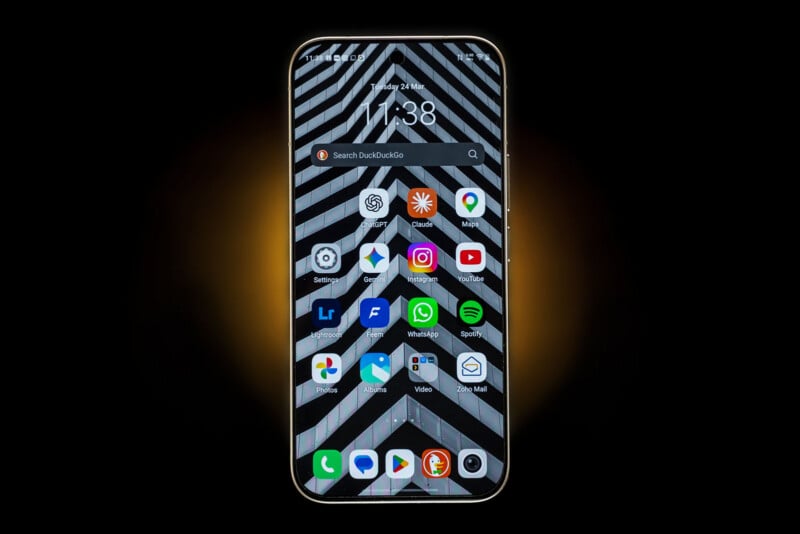
Perhaps the most impactful change for the V70 is the replacement of Funtouch OS with OriginOS. For years, Vivo’s international software experience was viewed as a secondary version of its more polished Chinese counterpart. OriginOS brings a more sophisticated widget system, improved fluid animations, and a cleaner aesthetic that rivals the best Android skins on the market.

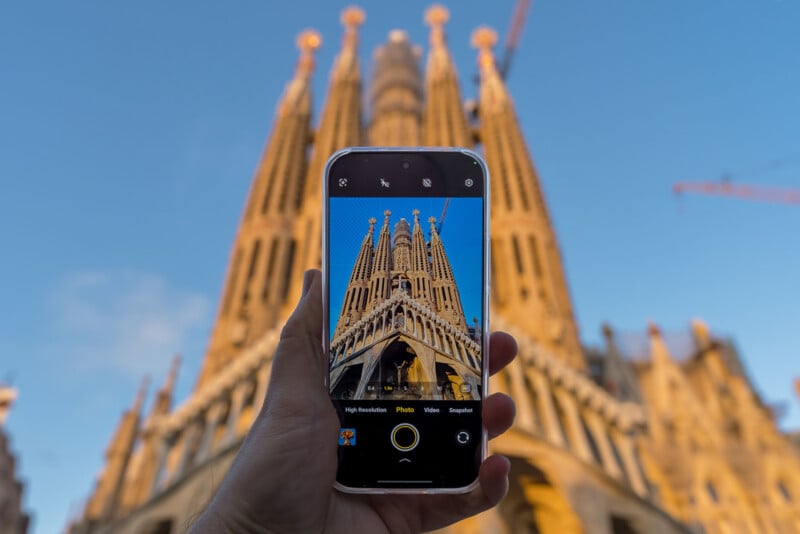
This software shift enhances the "Snapshot" mode, which is designed to freeze fast-moving subjects. By leveraging the Snapdragon 7 Gen 4’s ISP (Image Signal Processor) and the new software architecture, the V70 can capture action shots with minimal shutter lag. However, the software suite is not without its omissions; the "Long Exposure" mode, a popular feature in previous V Series models, is curiously absent from the V70’s launch firmware.
Market Context and Competitive Landscape
The mid-range smartphone market in 2026 is increasingly crowded, with manufacturers forced to make difficult choices regarding which features to prioritize. The Vivo V70 faces stiff competition from several directions:

- Google Pixel 10a: While the Pixel offers superior AI features and immediate software updates, it lacks the V70’s dedicated telephoto hardware and fast-charging capabilities.
- Oppo Reno 15 Pro: Often priced slightly higher, the Reno series competes directly on portrait photography and design, though Vivo’s Zeiss partnership provides a unique color-grading advantage.
- Xiaomi 15T: Xiaomi typically leads on raw hardware specifications, but Vivo’s move to OriginOS has narrowed the gap in software refinement.
- Samsung Galaxy A5X Series: Samsung remains the market leader in long-term software support and brand recognition, but often lags behind Vivo in charging speeds and camera sensor size.
In North America, the V70 remains a niche enthusiast device due to the lack of official carrier partnerships. While it supports physical SIM cards and some travel eSIMs, the absence of full band support for major U.S. carriers limits its appeal to travelers and tech enthusiasts rather than the general public. In contrast, the device is expected to be a high-volume seller in Southeast Asia, India, and parts of Europe, where Vivo has established a strong retail presence.
Broader Industry Implications and Analysis
The release of the Vivo V70 highlights a growing trend in the smartphone industry: the "premiumization" of the mid-range. By utilizing aluminum frames, IP68/69 durability ratings, and periscope zoom lenses, manufacturers are making it increasingly difficult for consumers to justify the $1,000+ price tags of flagship models.

However, the V70 also illustrates the pitfalls of rapid iteration. By releasing new models every eight to ten months, brands risk alienating customers who find their "new" devices superseded almost immediately. The heavy reliance on recycled sensors (like the IMX766 and OV08D10) suggests that hardware innovation is hitting a plateau, forcing brands to rely on software and build materials to drive sales.
Furthermore, the shift to silicon-carbon battery technology in the mid-range signifies a transition in mobile power management. As users demand longer battery life without increased bulk, the V70’s 6,500mAh cell sets a new benchmark for endurance in its class. This will likely force competitors to adopt similar high-density battery technologies in the coming year.

Conclusion: A Strategic Balance
The Vivo V70 is a device of calculated trade-offs. It excels in build quality, battery life, and telephoto photography, offering a flagship-lite experience for half the cost of a traditional premium smartphone. The move to OriginOS is a significant victory for the user experience, providing a level of polish that the V Series has previously lacked.
While the recycling of older sensors and the lack of wireless charging prevent it from being a perfect device, the V70 remains one of the most compelling options for mobile photographers on a budget. It is a testament to the maturity of Vivo’s imaging pipeline that a sensor as old as the IMX766 can still produce world-class results when paired with the right software and Zeiss-tuned color science. For consumers in markets where Vivo has a strong presence, the V70 represents a solid, albeit incremental, step forward in the evolution of the mid-range smartphone.

