


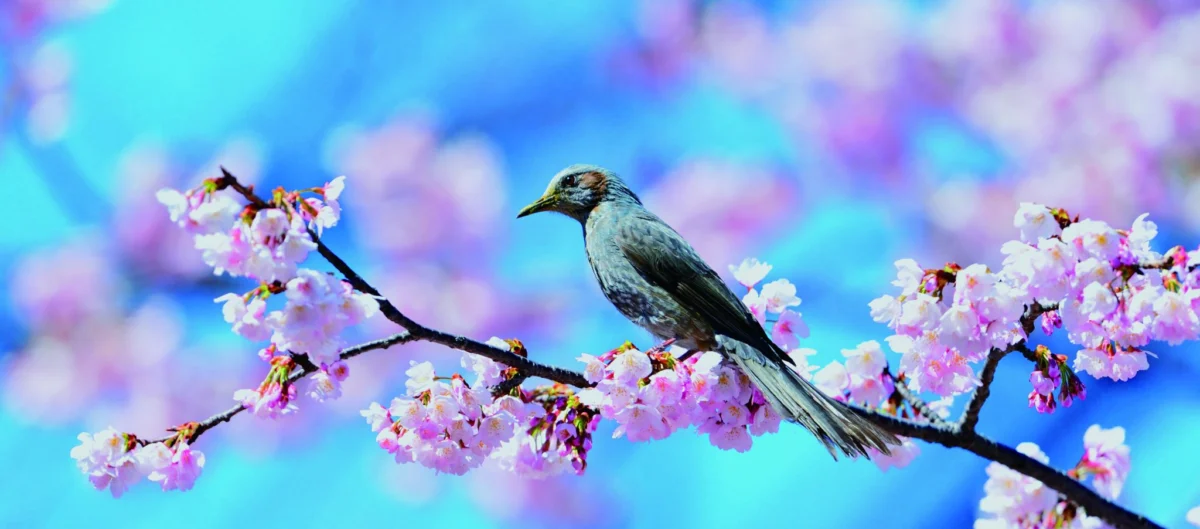
As the grip of winter loosens and the gentle whispers of spring begin to fill the air, a familiar avian presence often signals the changing seasons. HIH Princess Takamado, a renowned advocate for avian conservation, has brought renewed attention to the often-overlooked Brown-eared Bulbul (Hypsipetes amaurotis) through a compelling collection of her photographs and accompanying text, published in the April 2026 edition of Fujingahou Magazine. This insightful piece, expertly prepared in its English version by BirdLife International, urges readers to look beyond the superficial and appreciate the intricate beauty and remarkable adaptability of this common species.
A Familiar Yet Underappreciated Resident
The Brown-eared Bulbul, known in Japan as the hiyodori, is a bird deeply woven into the fabric of Japanese daily life. Its distinctive call, often described as "hee-yo, hee-yo," is as recognizable as the chirp of a sparrow or the caw of a crow. Yet, despite its ubiquity, Princess Takamado highlights a curious paradox: this bird, so present in our surroundings, often elicits a dismissive "Oh… it’s just a Brown-eared Bulbul," even among avid birdwatchers. This common sentiment, she suggests, stems from a perception of plainness and a tendency to focus on more exotic or rare species.
Princess Takamado’s photographic work, however, meticulously captures the subtle elegance of the Brown-eared Bulbul. Her images reveal a creature with a surprisingly charming countenance, characterized by its namesake brown cheek patches and a subtly tousled crest that rises when the bird is excited or alarmed. The accompanying text elaborates on the bird’s territorial nature, noting its assertive behavior when defending food sources like camellias and cherry blossoms, and its loud, piercing calls, which some find intrusive. These traits, the Princess posits, may contribute to its less-than-stellar popularity among some segments of the Japanese population.

A Global Fascination with a Local Gem
Intriguingly, the Brown-eared Bulbul holds a special allure for international birders visiting Japan. This appreciation is largely attributed to its limited geographical distribution. Primarily inhabiting East Asia, with Japan serving as its core range, the species represents a significant draw for overseas visitors eager to add this regional endemic to their life lists. This phenomenon underscores a broader trend in ornithology, where species with restricted ranges often become highly sought-after by enthusiasts from across the globe. The presence of the Brown-eared Bulbul in Japan offers a unique opportunity for these visitors to connect with the country’s natural heritage.
Adapting to a Changing Landscape: From Satoyama to the City
The Princess’s narrative also traces the evolutionary journey of the Brown-eared Bulbul’s habitat. She recalls a childhood in central Tokyo where their calls were far less prevalent, and their presence in gardens was a rarity. This stands in stark contrast to their current year-round visibility in urban environments. Historically, the Brown-eared Bulbul primarily resided in satoyama forests – the semi-natural woodlands traditionally managed by local communities – at elevations between 400 to 1,000 meters, migrating to lower plains during the winter months.
The significant shift into urban landscapes is a compelling story of adaptation, closely linked to the increase in urban "greening" initiatives and the proliferation of food sources. Brown-eared Bulbuls are opportunistic omnivores, their diet encompassing a wide array of offerings: the nectar of camellias, plum, and apricot blossoms; willow buds and young leaves; insects; and the berries of ornamental street trees like nandina and pyracantha. Their adaptability is further demonstrated by their ability to sustain themselves on sap from broken branches and to exploit readily available fruits such as persimmons, mandarins, grapes, and apples, as well as leafy vegetables like cabbage and Chinese cabbage found in suburban areas. This diverse and year-round food availability has undoubtedly facilitated their successful colonization of urban ecosystems.
Furthermore, their breeding habits reflect this urban integration. Brown-eared Bulbuls now nest in city parks, residential neighborhoods, and private gardens. Their resourcefulness extends to nest construction, where they skillfully incorporate materials found within human environments, such as vinyl and plastic, alongside traditional twigs and plant fibers. This adept utilization of human-made resources highlights their resilience and capacity for survival in anthropogenically altered landscapes.

An Unseen Struggle for Resources
Princess Takamado’s personal anecdotes offer a glimpse into the subtle dynamics of interspecies relationships, often playing out in our backyards. She recounts instances where a Brown-eared Bulbul’s alarm call would scatter other birds from a garden birdbath, illustrating its dominant presence. A particularly poignant memory involves a Brown-eared Bulbul repeatedly tapping on a sunroom window, its wings beating upwards in what appeared to be a direct plea for sustenance from an empty feeding tray. This act, she interpreted, was a form of communication, a subtle demand that, once met by replenishing the food, allowed other birds to partake. This observation hints at a complex interplay of territoriality and, perhaps, an unspoken understanding within the avian community.
Subspecies and the Specter of Future Classification
The Brown-eared Bulbul’s distribution spans the entire Japanese archipelago and extends to surrounding regions, including the southern Korean Peninsula and Sakhalin. The species exhibits remarkable regional variation, with distinct populations found from Hokkaido to Kyushu and the Izu Islands. Island populations, such as those on Ogasawara, Amami, and Okinawa, are particularly noteworthy. Currently, these variations are recognized as eight distinct subspecies, each possessing unique morphological characteristics.
These subspecies can be broadly categorized into three larger groups, raising the intriguing possibility that they may, in the future, be reclassified as three separate species. While the Brown-eared Bulbul as a whole is not currently considered globally threatened, this potential speciation carries significant implications. Should these distinct groups be elevated to species status, the smaller island populations, with their potentially more limited gene pools and localized habitats, could face heightened conservation concerns and potentially be classified as Endangered. This scenario underscores the importance of ongoing research into avian taxonomy and the potential impact of habitat fragmentation and climate change on vulnerable island populations.
The migratory patterns of some populations, particularly those in snowy regions like Hokkaido and Tohoku, add another layer to their ecological narrative. These individuals form flocks in autumn and migrate south to warmer climes, returning north between late April and May. Their diurnal migration allows for observable movements across Japan, a testament to their endurance and navigational prowess.

A Call for Reappreciation
In conclusion, Princess Takamado’s essay serves as a powerful reminder that the most common species often possess the most profound stories of resilience, adaptation, and understated beauty. The Brown-eared Bulbul, often relegated to the background noise of the natural world, is a testament to the dynamic interplay between wildlife and its environment, even in the face of rapid urbanization and environmental shifts. Her appeal to look beyond the dismissive label and to "warmly observe and appreciate its handsome appearance and acrobatic movements" is a call to a deeper engagement with the natural world that surrounds us, encouraging a more mindful and appreciative perspective on the often-unseen wonders of common birds. As the world grapples with biodiversity loss, the story of the Brown-eared Bulbul offers a valuable lesson in recognizing and valuing the ecological contributions of every species, no matter how familiar.

