


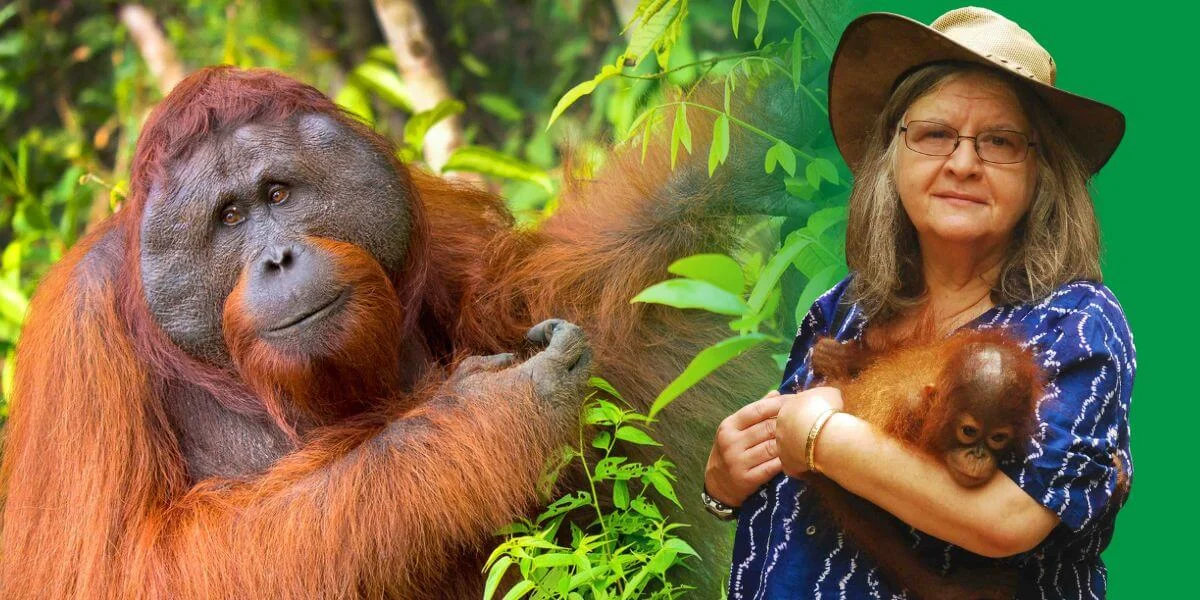
The global scientific community and conservation advocates are mourning the loss of Dr. Birutė Galdikas, a monumental figure in primatology and environmental activism whose work spanned over five decades. As a pioneering anthropologist, educator, and author, Dr. Galdikas was widely regarded as the world’s leading authority on orangutans. Her death marks the conclusion of a significant chapter in the history of biological science, as she was the last of the "Trimates"—the trio of women chosen by legendary paleoanthropologist Dr. Louis Leakey to study the great apes in their natural habitats. Alongside Jane Goodall, who studied chimpanzees, and the late Dian Fossey, who studied mountain gorillas, Galdikas revolutionized the human understanding of primates, bridging the evolutionary gap between humans and our closest biological relatives.
The Genesis of a Lifelong Mission
Born in 1946 in Wiesbaden, Germany, to Lithuanian parents and later becoming a naturalized Canadian and American citizen, Birutė Galdikas displayed an early passion for the natural world. Her academic journey led her to the University of California, Los Angeles (UCLA), where she pursued her graduate studies in anthropology. It was during her time at UCLA that she met Dr. Louis Leakey, the man who would provide the catalyst for her life’s work. Leakey believed that women were better suited for long-term field observations because of their perceived patience and attention to detail—traits he believed were essential for understanding the complex social structures of the great apes.
In 1971, at the age of 25, Galdikas arrived in the Tanjung Puting Reserve in Indonesian Borneo. At the time, orangutans were the least understood of the great apes. Unlike the highly social chimpanzees or the group-oriented gorillas, orangutans were perceived as elusive, solitary, and nearly impossible to study in the dense, swampy rainforests. Undeterred by the lack of infrastructure, the harsh tropical climate, and the daunting task of tracking arboreal primates, Galdikas established "Camp Leakey," named in honor of her mentor. This outpost would eventually become the site of the longest-running continuous field study of any wild mammal conducted by a single investigator.
Scientific Contributions and the Study of the "Red Ape"
Dr. Galdikas’ research provided the foundational data for modern orangutan biology. Before her arrival, little was known about the reproductive cycles, dietary habits, or social nuances of the Bornean orangutan (Pongo pygmaeus). Through tens of thousands of hours of observation, Galdikas documented that orangutans have the longest birth interval of any mammal—approximately eight years—a discovery that highlighted the extreme vulnerability of the species to extinction.
Her work also shed light on the cognitive sophistication of these primates. She observed orangutans using tools, constructing elaborate nightly nests from vegetation high in the canopy, and exhibiting complex emotional bonds. Her research challenged the notion that orangutans were purely solitary; instead, she described a "fission-fusion" social structure where individuals maintain loose but significant social networks.
"You’re looking at a fully conscious thinking, living being that is basically the same as us," Dr. Galdikas famously remarked, reflecting her deep-seated belief in the personhood of primates. This perspective was not merely academic; it was the driving force behind her transition from a pure researcher to a fierce conservation advocate.
The Fight Against Extinction: Habitat Loss and the Palm Oil Crisis
As the decades passed, Dr. Galdikas witnessed firsthand the rapid destruction of the Indonesian rainforests. The rise of the industrial palm oil trade, illegal logging, and gold mining began to encroach upon Tanjung Puting at an alarming rate. Recognizing that scientific data alone would not save the species, she co-founded Orangutan Foundation International (OFI) in 1986.
Under her leadership, OFI became a multifaceted organization dedicated to habitat protection, reforestation, and the rehabilitation of orphaned orangutans. The illegal pet trade often left infant orangutans without mothers, as poachers would kill the adults to capture the young. Galdikas and her team developed a rehabilitation program that taught these orphans the survival skills necessary to return to the wild—a process that often took years of dedicated care.
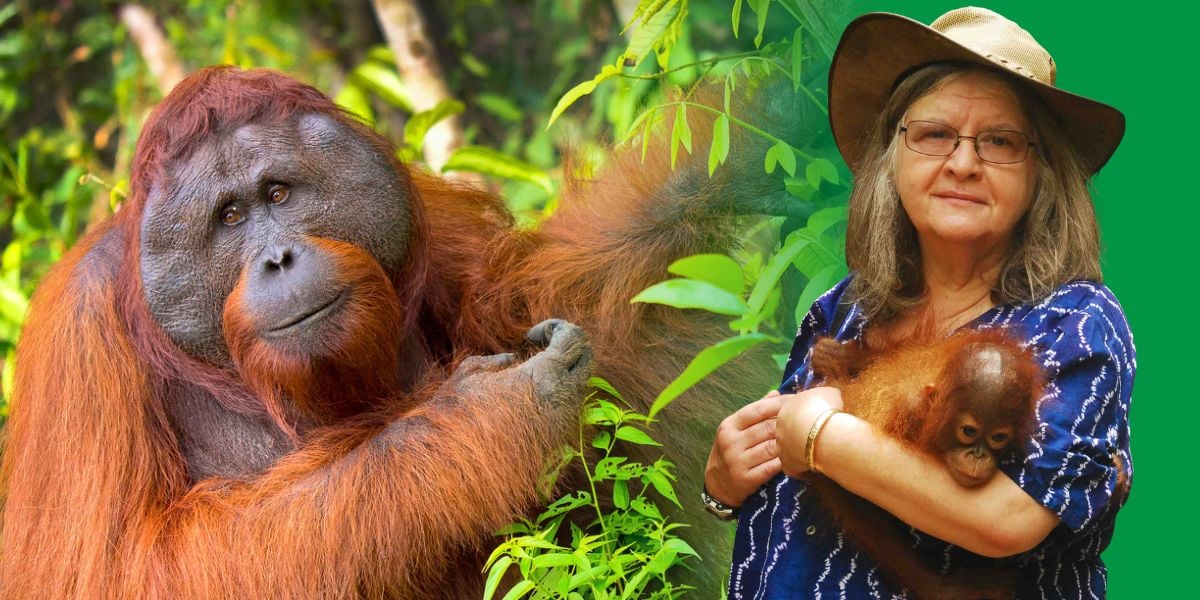
Data from the International Union for Conservation of Nature (IUCN) currently lists all three species of orangutans—the Bornean, Sumatran, and Tapanuli—as Critically Endangered. Experts estimate that the Bornean orangutan population has declined by more than 60% since 1950, with further declines projected. Dr. Galdikas was one of the first voices to sound the alarm on the environmental catastrophe of deforestation in Southeast Asia, advocating for sustainable practices long before the "green movement" gained mainstream traction.
A Legacy of Advocacy and Global Recognition
Dr. Galdikas’ influence extended far beyond the borders of Indonesia. Her life and work were brought to the global stage through two National Geographic cover stories, which introduced millions of readers to the plight of the "red apes." In 1995, she published her memoir, Reflections of Eden: My Years with the Orangutans of Borneo, which remains a seminal text in environmental literature.
Her efforts were recognized with numerous prestigious awards, including the PETA Humanitarian Award in 1990, the Tyler Prize for Environmental Achievement, and the Officer of the Order of Canada. She was also the subject of the 2011 IMAX documentary Born to Be Wild, which showcased her work in rescuing and rehabilitating orphaned primates.
Her advocacy was not limited to orangutans. Dr. Galdikas was a staunch defender of all primates, including macaques. She frequently spoke out against the use of primates in laboratory testing and the entertainment industry. She observed and wrote about the profound emotional lives of macaques, noting their complex social hierarchies and their capacity for grief, once describing a macaque mother’s palpable sorrow while carrying her deceased infant.
Timeline of a Remarkable Career
- 1946: Born in Wiesbaden, Germany.
- 1966-1969: Completes undergraduate and master’s degrees in California.
- 1971: Arrives in Tanjung Puting, Borneo, to begin field research.
- 1975: Features on the cover of National Geographic, bringing international attention to orangutans.
- 1978: Earns her Doctorate in Anthropology from UCLA.
- 1986: Co-founds Orangutan Foundation International (OFI).
- 1990: Receives the PETA Humanitarian Award for her commitment to animal welfare.
- 1995: Publishes Reflections of Eden, detailing her life in the jungle.
- 2011: Featured in the documentary Born to Be Wild.
- Present: Her passing leaves a massive void in the field of primatology and conservation.
Implications for the Future of Conservation
The passing of Dr. Galdikas raises urgent questions about the future of orangutan conservation. While she leaves behind a robust organization in OFI and a network of dedicated scientists and activists, the threats to the rainforest remain potent. The Indonesian government and international environmental bodies face the daunting task of balancing economic development with the preservation of one of the world’s most biodiverse regions.
Dr. Galdikas’ work proved that individual dedication could change the trajectory of an entire species. Her integration into the local community—including her long marriage to Pak Bohap, a local Dayak rice farmer and co-president of OFI—emphasized the importance of involving indigenous populations in conservation efforts. She understood that for the rainforest to survive, the people living within it must be its primary guardians.
Analysts suggest that her death may serve as a rallying cry for a new generation of conservationists. The "Galdikas method"—total immersion, long-term commitment, and unapologetic advocacy—remains the gold standard for field biology. As climate change and habitat fragmentation continue to threaten global biodiversity, her life serves as a blueprint for how to confront these challenges with both scientific rigor and profound compassion.
Final Reflection
Dr. Birutė Galdikas did more than just study orangutans; she gave them a voice in a world that was rapidly encroaching upon their existence. She transformed the "red ape" from a mysterious jungle dweller into a symbol of the fragility of our natural world. Her legacy lives on in the thousands of acres of forest she helped protect, the hundreds of orangutans returned to the wild, and the millions of people she inspired to look at our fellow primates and see a reflection of ourselves.
In the words of her peers, she was a "force of nature" who refused to back down in the face of political pressure or environmental devastation. As the world honors her memory, the call to action remains clear: to protect the great apes is to protect the very essence of our biological heritage. The work of Dr. Birutė Galdikas is not finished; it is now the responsibility of the global community to ensure that the forests of Borneo continue to echo with the calls of the orangutans she loved so dearly.

