


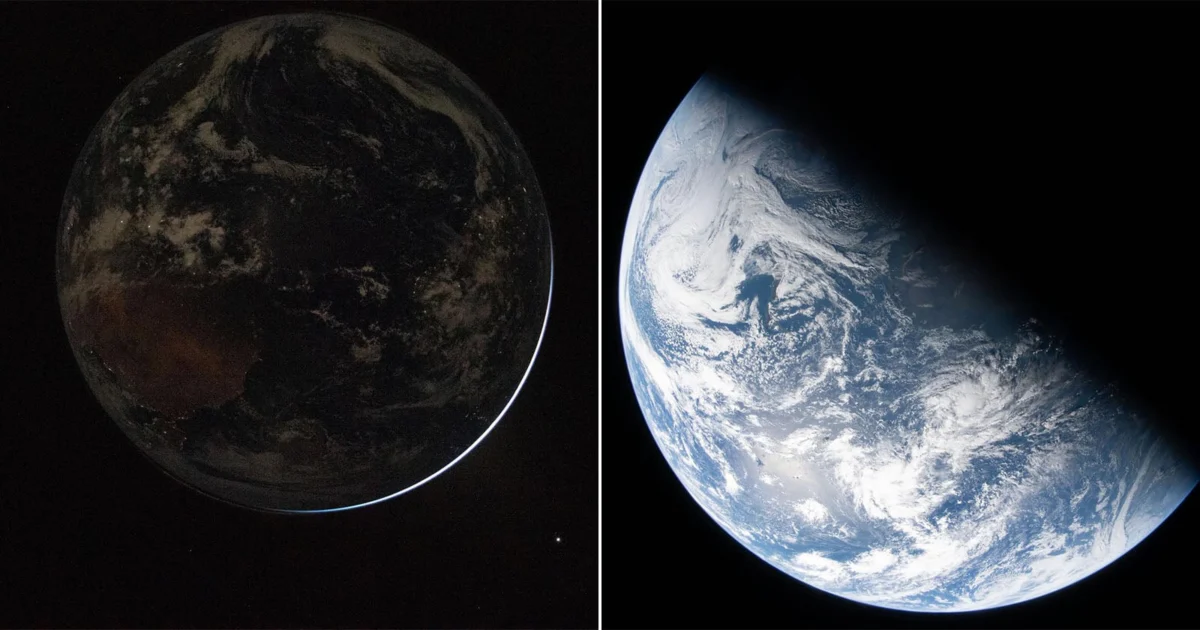
NASA’s Artemis II mission, the first crewed voyage toward the Moon in over half a century, has reached a significant milestone as Commander Reid Wiseman transmitted a series of evocative photographs capturing the Earth from a unique deep-space perspective. Released just hours after the initial set of images from the mission, these new photographs provide a rare glimpse of the "Terminator Line"—the moving boundary between day and night—and the nearly total darkness of Earth’s night side. These images, captured from the Orion spacecraft as it continues its trajectory toward the lunar environment, represent a blend of high-level ballistic physics and artistic documentation of the human experience in the cosmos.
The photographs were taken following the completion of the mission’s translunar injection (TLI) burn, a critical maneuver that propelled the Orion capsule out of Earth’s orbit and onto a path toward the Moon. Using the spacecraft’s specialized optical windows and professional-grade camera equipment, Wiseman has documented the receding home planet with a level of detail that underscores both the fragility and the isolation of Earth in the vastness of the solar system.
Technical Execution and Optical Precision
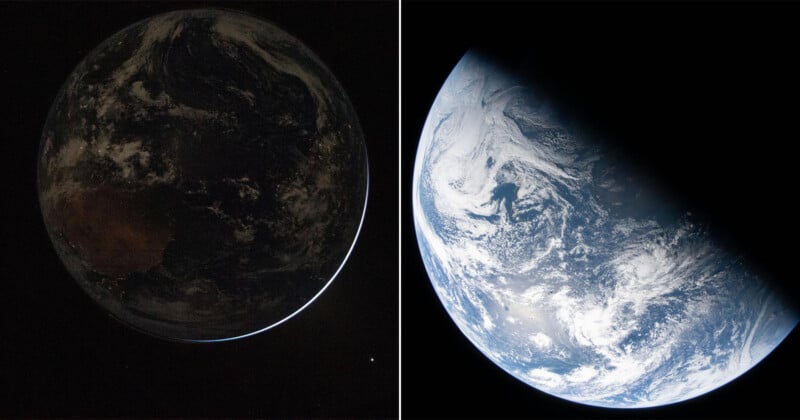
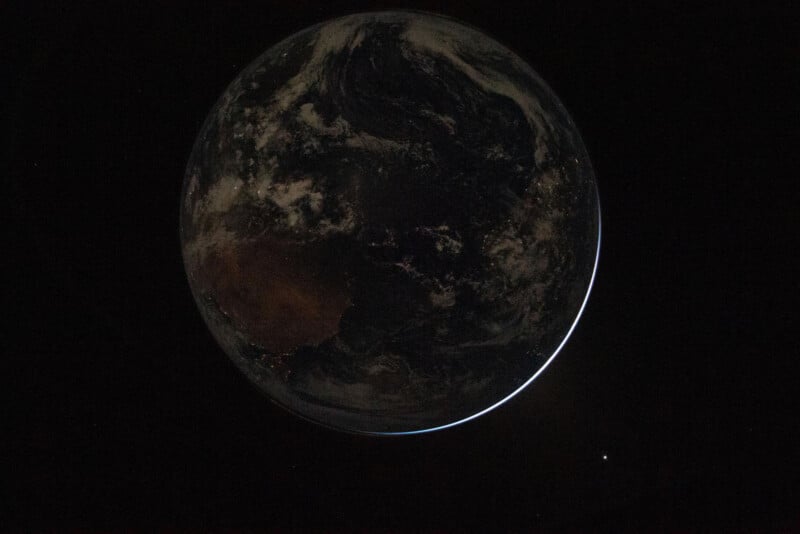
The two primary images released by NASA, titled "Artemis II Captures the Terminator Line" and "Artemis II Captures Dark Side of the Earth," demonstrate the complexities of space-based photography. According to NASA’s technical briefing, both images were captured only minutes apart, yet they appear radically different due to the deliberate manipulation of camera settings to account for the extreme dynamic range of light in space.
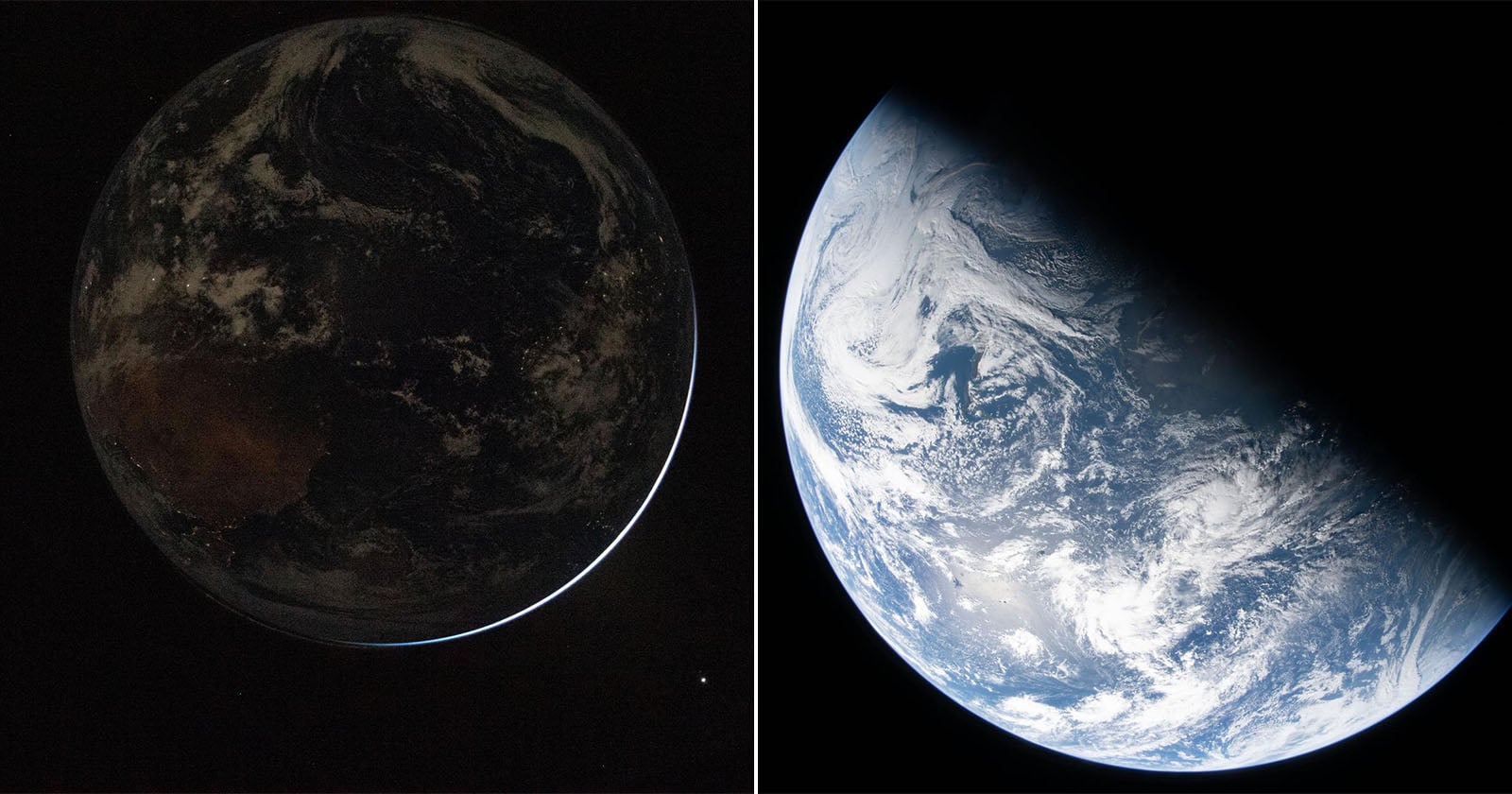
The first image, showing the Terminator Line, depicts the Earth as a partially illuminated sphere. Swirling cloud formations and the deep blue of the oceans are visible on the day side, while a soft gradient transitions into the shadowed portion of the planet. This image required a longer shutter speed to gather enough light to resolve the geographical features and atmospheric textures.
In contrast, the second image—showing the "dark side" of the planet—was captured with a shorter shutter speed. This setting was chosen to emphasize the "nighttime glow" and the thin, luminous crescent where the Sun’s light wraps around the Earth’s atmosphere. This creates a halo effect, highlighting the thinness of the Earth’s life-sustaining atmosphere against the absolute blackness of the vacuum.
NASA confirmed that the crew is utilizing Nikon D5 Digital Single-Lens Reflex (DSLR) cameras for these captures. The Nikon D5 has a long-standing history with the space agency, valued for its robust build and exceptional low-light performance. In the vacuum of space, where light is unfiltered by an atmosphere, the contrast between sunlit surfaces and shadows is incredibly sharp. The ability of the crew to manually adjust exposure settings is vital for producing images that are scientifically useful and visually compelling.
Chronology of the Artemis II Mission Milestones
The release of these photographs follows a precise timeline of mission events that have proceeded according to NASA’s flight plan. The Artemis II mission is designed to test the Orion spacecraft’s life-support systems and the crew’s ability to operate in deep space.
- Launch and Initial Orbit: The mission began with a successful liftoff from Launch Complex 39B at the Kennedy Space Center. The Space Launch System (SLS) rocket placed the Orion capsule into a high Earth orbit (HEO) to allow the crew to perform initial system checks.
- High Earth Orbit Operations: During the first 24 hours, the crew, consisting of Commander Reid Wiseman, Pilot Victor Glover, and Mission Specialists Christina Hammock Koch and Jeremy Hansen, tested the spacecraft’s maneuverability and communication arrays.
- Translunar Injection (TLI) Burn: Once the systems were verified, the Interim Cryogenic Propulsion Stage (ICPS) performed the TLI burn. This maneuver increased the spacecraft’s velocity to approximately 22,600 mph (36,370 km/h), allowing it to escape Earth’s gravitational pull.
- Photography Sequence: The images of the Terminator Line and the dark side were captured shortly after the TLI burn. At this stage, Orion was at a distance where the entire disc of the Earth could be framed within the camera’s field of view through the spacecraft’s windows.
- Outward Transit: The crew is currently in the "coastal" phase of the mission, traveling toward the Moon. They will perform a lunar flyby, using the Moon’s gravity to slingshot the spacecraft back toward Earth for a splashdown in the Pacific Ocean.
Scientific and Philosophical Implications: The Pale Blue Dot Revisited
The release of these images prompted a significant response from the scientific community, most notably from Cornell University. In a social media post, representatives from the university invoked the legacy of the late Dr. Carl Sagan, a former Cornell professor and a pioneer in planetary science.
Sagan’s famous "Pale Blue Dot" monologue was inspired by a 1990 photograph taken by the Voyager 1 spacecraft from a distance of 3.7 billion miles. While the Artemis II crew is significantly closer to Earth than Voyager 1 was, the sentiment remains identical. The images captured by Wiseman serve as a modern reminder of the "Overview Effect"—a cognitive shift reported by astronauts when viewing Earth from space, characterized by a feeling of global consciousness and an intense desire to protect the planet.
"Look again at that dot. That’s here. That’s home. That’s us," Cornell University quoted, echoing Sagan’s 1994 book. The Artemis II mission represents the first time in over 50 years that human eyes have looked back at the Earth from such a distance. Unlike the robotic cameras of the International Space Station (ISS) or weather satellites, these photos are a human-curated perspective, chosen and framed by an explorer witnessing the scene in real-time.
The Role of Photography in Modern Space Exploration
Photography has been an integral part of lunar exploration since the Apollo era. The "Earthrise" photo taken by William Anders during Apollo 8 in 1968 is credited with helping to spark the global environmental movement. NASA recognizes that high-quality imagery is essential not only for public engagement but also for documenting the performance of the spacecraft’s hardware.

The Orion spacecraft features four main windows designed to withstand the extreme temperatures of re-entry while providing clear optical paths for photography and navigation. The Artemis II mission serves as a "shakedown cruise" for these systems. By documenting the Earth under various lighting conditions, the crew is also testing the clarity and integrity of the windows, ensuring that future missions—including the Artemis III lunar landing—will have the necessary visibility for docking and landing maneuvers.
Furthermore, the data downlinked from the Orion capsule includes high-resolution RAW files. These files contain a wealth of information regarding atmospheric scattering and the "Earthshine" effect, which occurs when sunlight reflects off the Earth and illuminates other objects, such as the spacecraft’s own hull or the lunar surface.
Official Responses and Mission Outlook
NASA Administrator Bill Nelson remarked on the significance of the new images, stating that they represent the "opening of a new chapter in human discovery." He emphasized that while the photos are beautiful, they are a byproduct of a mission focused on rigorous safety and technical validation.
"Every mile that Reid, Victor, Christina, and Jeremy travel takes us closer to a sustained human presence on the Moon," Nelson said. "These images remind us why we go: to explore the unknown and to better understand our place in the universe."
The Canadian Space Agency (CSA), which contributed Mission Specialist Jeremy Hansen to the crew, also celebrated the mission’s progress. The CSA noted that the international cooperation inherent in the Artemis program is a testament to what can be achieved when nations pool their resources for the advancement of science.
As Artemis II continues its journey, the crew will prepare for the next phase of the mission: the lunar encounter. During this period, the Earth will appear even smaller, and the crew will capture the first close-up, high-resolution images of the lunar far side taken by humans since 1972.
Conclusion: A Bridge to the Future
The Artemis II mission is more than a flight around the Moon; it is a critical test of the architecture that will eventually carry humans to Mars. The images of the Terminator Line and the dark side of the Earth serve as a bridge between the pioneering days of Apollo and the future of the Artemis Generation.
By capturing these moments, Commander Reid Wiseman has provided the public with a tangible connection to the mission. In an era of digital saturation, these authentic, human-captured images of our planet standing alone in the darkness carry a weight that synthetic or robotic imagery cannot replicate. As the Orion spacecraft moves further into the void, the Earth continues to "glow" in the darkness, a solitary beacon of life that remains the primary focus of the men and women currently venturing into the deep.

