


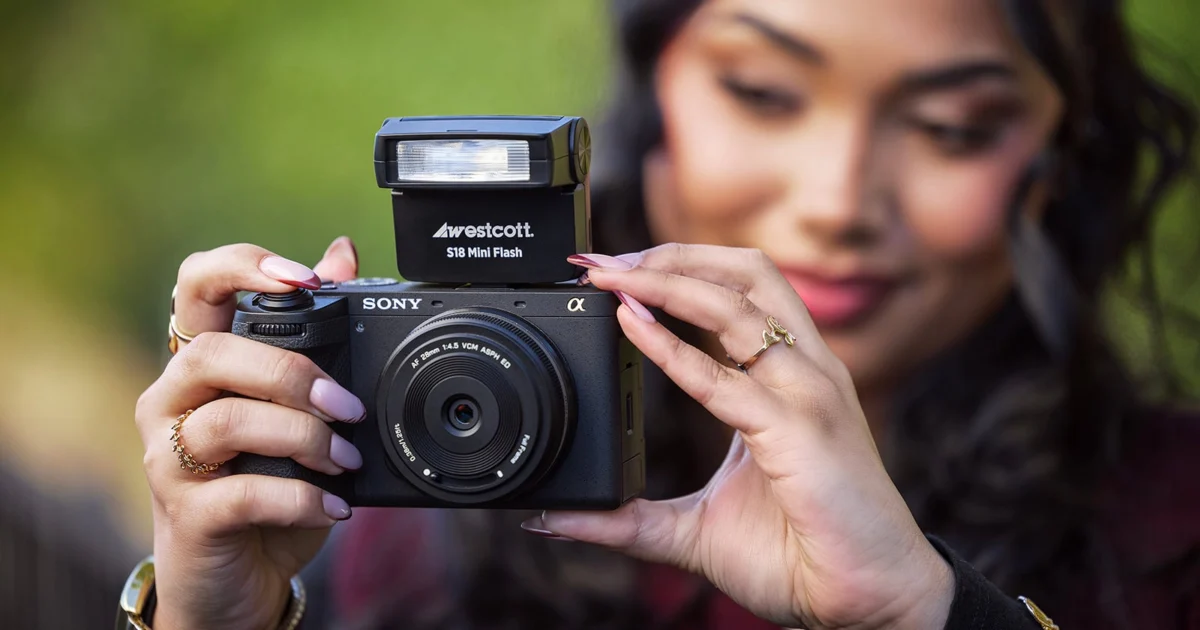
The introduction of the Westcott S18 Mini Flash marks a significant strategic pivot for the Ohio-based lighting manufacturer, traditionally known for its high-end studio strobes and professional-grade light modifiers. By launching a device priced at $39.90, Westcott is directly targeting the burgeoning market of entry-level enthusiasts, street photographers, and the growing community of "lifestyle" photographers who prioritize portability and aesthetic appeal alongside functional performance. The S18 Mini Flash is not merely a budget accessory; it represents an attempt to dismantle the technical and financial barriers that have historically discouraged novice photographers from experimenting with artificial light. With a design language that pays homage to the minimalist, utilitarian electronics of the 1990s, the S18 combines a retro form factor with modern power management, aiming to become a staple in the camera bags of those who find traditional speedlights too cumbersome or complex.
Technical Specifications and Engineering Philosophy
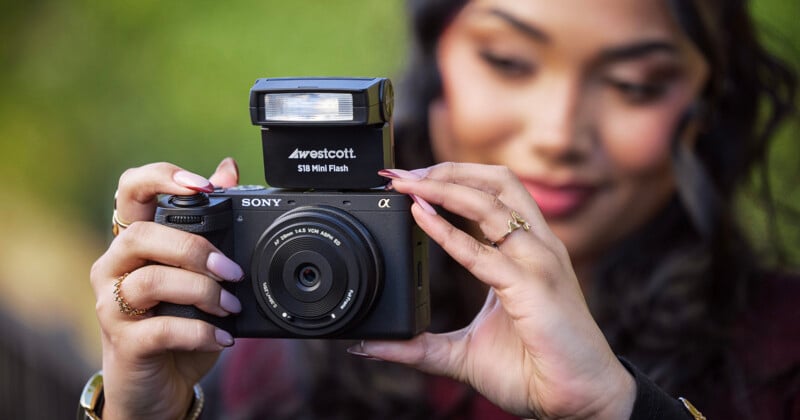
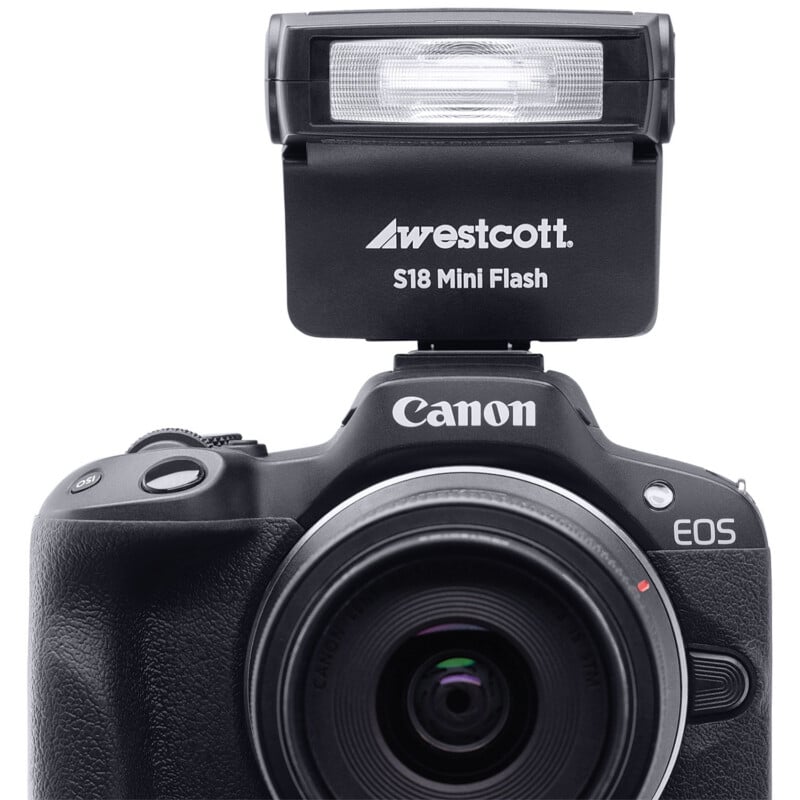
At the core of the Westcott S18 Mini Flash is a commitment to "accessible minimalism." The device weighs a mere 3.5 ounces (99 grams) and features dimensions of 2.4 x 2.1 x 0.9 inches (61 x 53 x 23 mm). To put this in perspective, the unit is roughly the size of a standard box of matches, making it one of the smallest dedicated flash units currently available on the market. This ultra-compact footprint is intentional, designed to complement the smaller mirrorless and rangefinder-style cameras that have dominated the industry in recent years.
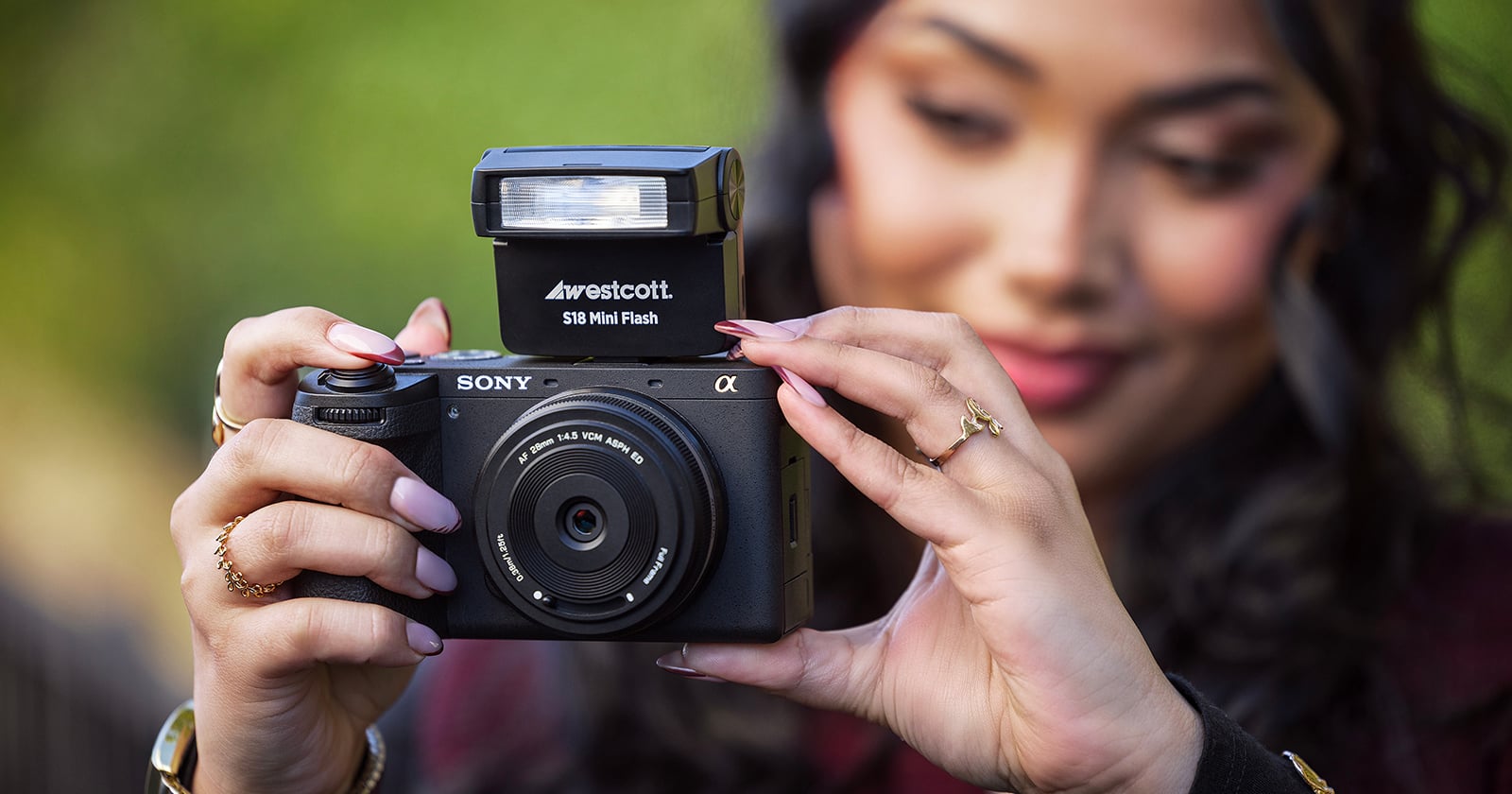
Despite its diminutive size, the S18 delivers a flash output of 18Ws with a guide number of 16 at ISO 100. While this output is modest compared to professional speedlights like the Westcott FJ80, it provides a significant boost over the built-in pop-up flashes found on older DSLR models or the meager lighting capabilities of modern smartphones. The engineering team at Westcott focused on maximizing the efficiency of this output through a 19-step manual power adjustment system. This allows users to fine-tune the light across a 7-stop range in 0.3-stop increments, providing a level of precision rarely seen in "mini" or "toy" flashes.
The flash is a manual-only unit, meaning it does not feature Through-The-Lens (TTL) metering. While this may seem like a drawback to beginners accustomed to automation, Westcott argues that manual control is a vital pedagogical tool. By forcing the user to set the power levels themselves, the S18 encourages an understanding of the relationship between light, distance, and aperture—the fundamental "Exposure Triangle" of flash photography.
A New Era of Power Management and Usability
One of the most notable departures from traditional budget flash design is Westcott’s decision to move away from AA or AAA batteries. The S18 Mini Flash is powered by an integrated 3.7V 1250mAh lithium-ion battery. This internal power source is capable of delivering up to 500 full-power flashes on a single charge, a figure that significantly outperforms many alkaline-powered competitors in the same price bracket.
The integration of USB-C charging further modernizes the device. In an era where photographers are increasingly looking to streamline their cables, the ability to charge a flash using the same cable as a laptop or smartphone is a major selling point. The S18 reaches a full charge in approximately 2.5 hours. Crucially, the unit supports "pass-through" charging, meaning it can be operated while connected to an external power bank. This feature is particularly useful for event photographers or those working on long-form projects where downtime is not an option.
The user interface on the rear of the unit is designed for rapid operation. It features a high-contrast digital display that clearly indicates the current power setting. Four primary buttons—Power, Mode (M), Plus (+), and Minus (-)—allow for intuitive navigation. The recycle time is another area where the S18 punches above its weight, ranging from a near-instant 0.01 seconds at low power to 2.5 seconds at full output. This ensures that photographers can capture successive frames without waiting for the capacitor to recharge, a common frustration with low-cost lighting gear.
Versatility Through Articulation and Connectivity
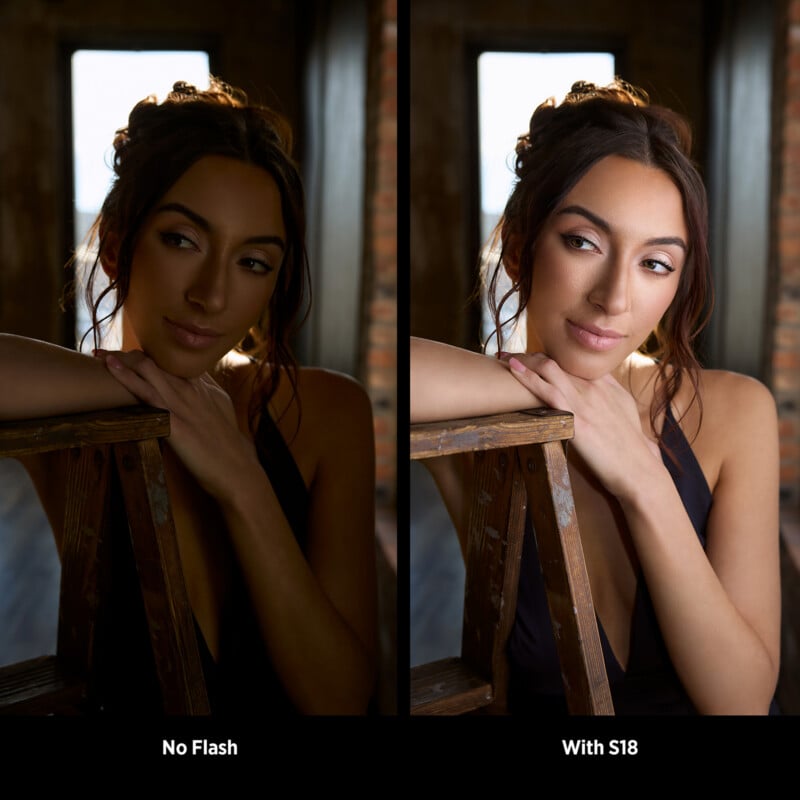
A recurring criticism of compact flashes is their inability to redirect light, often resulting in the harsh, "deer-in-the-headlights" look associated with direct flash. Westcott addressed this by incorporating a tilting flash head into the S18. The head can articulate from -3° to 72°, allowing photographers to bounce the light off ceilings or nearby walls. Bouncing the flash creates a much larger, softer light source, which is ideal for flattering portraits and interior photography.

Furthermore, the S18 is equipped with optical receiver modes (S1 and S2). This allows the unit to be used as an "off-camera" flash, triggered by the burst of another flash unit. The S1 mode triggers on the first flash it sees, while the S2 mode is designed to ignore the "pre-flash" emitted by TTL-capable cameras, ensuring it fires exactly when the shutter opens. This inclusion transforms the S18 from a simple on-camera accessory into a versatile component of a multi-light setup.
In terms of physical connectivity, the S18 utilizes a universal single-pin hot shoe. This design choice ensures compatibility with a vast array of camera brands, including:
- Canon (EOS and mirrorless series)
- Nikon (Z-series and DSLRs)
- Sony (via the Multi-Interface Shoe)
- Fujifilm (X-series and GFX)
- Panasonic Lumix and Olympus (Micro Four Thirds)
- Leica (M and SL systems)
By using a single-pin connection, the S18 avoids the proprietary pin configurations that often lead to compatibility issues between different camera systems, reinforcing its role as a "universal" tool.
Contextualizing the Release: Westcott’s Strategic Shift
The release of the S18 Mini Flash should be viewed within the context of the broader "retro-revival" in the photography industry. Brands like Fujifilm have seen massive success with cameras that prioritize tactile dials and vintage aesthetics. Simultaneously, there has been a resurgence in film photography, particularly among Gen Z and Millennial creators who appreciate the "lo-fi" look of flash-heavy images.
Westcott, a company founded in 1899, has survived for over a century by adapting to these shifts. Historically, the company’s flagship products were large umbrellas and "Scrim Jims" used on professional movie sets and in high-end studios. In the last decade, they successfully transitioned into the wireless strobe market with the FJ Wireless system. The S18 represents the next phase of this evolution: capturing the "everyday" photographer.
Brandon Heiss, President of Westcott, emphasized this during the product announcement. "The S18 is designed to remove every barrier that keeps photographers from trying flash for the first time," Heiss stated. "The price, the size, the simplicity — all of it is intentional. We wanted to create something that delivers real results from the very first shot."
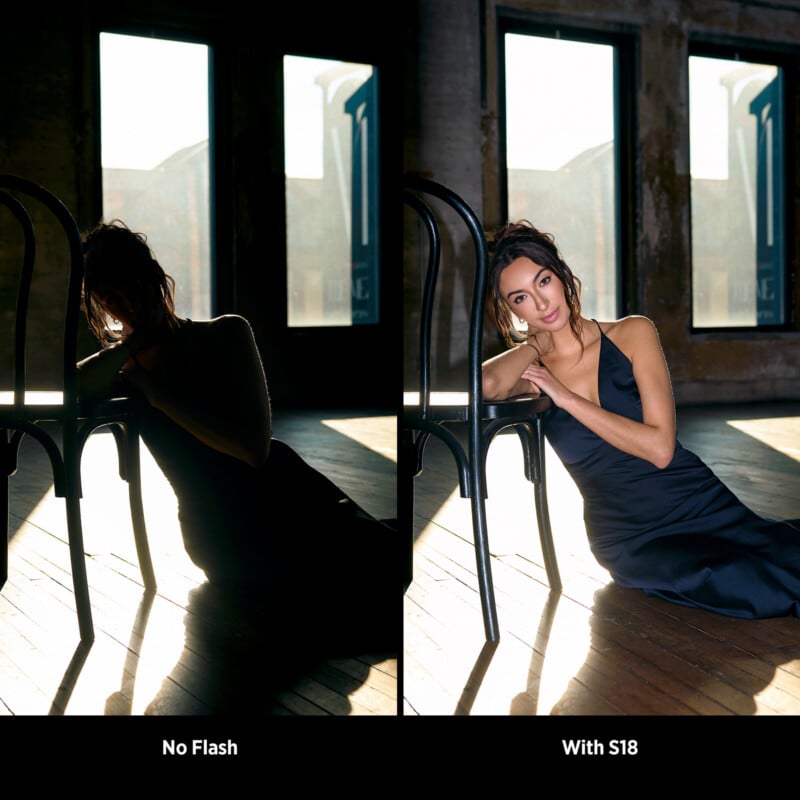
This sentiment reflects a growing trend in the industry where manufacturers are moving away from purely "spec-heavy" marketing toward "experience-based" marketing. By focusing on how the flash feels to use and how easily it fits into a pocket, Westcott is appealing to the emotion of photography rather than just the technical requirements.
Market Analysis and Competitive Landscape
The $30 to $60 price bracket for camera flashes has traditionally been dominated by third-party manufacturers like Godox and various generic "white-label" brands found on massive e-commerce platforms. The Godox Lux series (Junior and Senior) has been the primary competitor in the retro-flash niche. However, those units often rely on AAA batteries or have slightly more complex folding mechanisms.
Westcott’s entry into this space with the S18 brings the weight of a domestic (U.S.-based) brand with established customer support and a reputation for build quality. While the S18 features a predominantly plastic construction to keep weight and costs low, the fit and finish are reported to be superior to many of the "no-name" alternatives.

The inclusion of a complete "starter kit" also gives Westcott a competitive edge. Each S18 Mini Flash comes packaged with:
- Five color gels (for creative color effects or color correction).
- A dedicated travel case.
- A USB-C charging cable.
By providing these accessories in the box, Westcott ensures that the $39.90 price point is a truly "all-in" investment, further lowering the barrier to entry for beginners.
Implications for the Future of Photography Gear
The success of the S18 Mini Flash could signal a broader industry shift toward "micro-lighting." As camera sensors become increasingly capable at high ISOs, the need for massive, high-output strobes is diminishing for many casual applications. Instead, photographers are looking for "fill light"—a small pop of brightness to fill in shadows or add a "catchlight" to a subject’s eyes.
Furthermore, the S18’s compatibility with film cameras makes it an attractive option for the thriving analog community. Many vintage film cameras lack built-in flashes, and older external flashes can be dangerous to use due to high trigger voltages that can fry modern electronic components. The S18’s safe, low-voltage trigger and universal shoe make it a perfect companion for a 1970s Canon AE-1 or a Nikon FE.
In terms of broader impact, the S18 Mini Flash challenges the notion that professional results require professional prices. By democratizing access to bounce flash and manual control, Westcott is fostering a more educated and capable generation of photographers. When users eventually outgrow the 18Ws output of the S18, they are more likely to stay within the Westcott ecosystem, moving up to the FJ200 or FJ400 strobes.
Conclusion
The Westcott S18 Mini Flash is a calculated and well-timed addition to the world of photographic lighting. It successfully balances the conflicting demands of low cost, high portability, and functional versatility. While it may not replace the heavy-duty strobes used in commercial fashion or architectural photography, it serves a much larger and often underserved demographic: the everyday creator who wants to improve their images without carrying a suitcase of gear.

As the photography market continues to bifurcate between high-end professional tools and ultra-portable lifestyle accessories, the S18 sits comfortably in the latter category while retaining the DNA of a serious lighting company. Available now through major retailers and Westcott’s own digital storefront, the S18 is poised to become one of the most ubiquitous lighting accessories of the year, proving that in the world of photography, sometimes the biggest impact comes from the smallest packages.

