


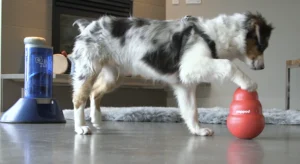
The landscape of pet care is undergoing a significant transformation, driven by advancements in smart technology aimed at enhancing animal welfare and streamlining owner responsibilities. At the forefront of this evolution is the innovative integration of the Pet Tutor automatic treat dispenser with the PupPod high-tech puzzle game. This collaboration promises to deliver unprecedented levels of mental and physical stimulation for dogs, offering a sophisticated, hands-free solution to a challenge many modern pet owners face: providing consistent enrichment amidst busy schedules. The combined system allows dogs to engage in mentally stimulating games and earn rewards autonomously, thereby fostering improved behavior, cognitive health, and overall well-being, even when their human companions are otherwise occupied.
The Enduring Need for Canine Stimulation
For centuries, dogs have been domesticated companions, their roles evolving from working animals to cherished family members. Despite this shift, their fundamental biological and psychological needs remain deeply rooted in their evolutionary history. Dogs, regardless of breed or size, are inherently intelligent and active creatures requiring regular mental and physical engagement to thrive. Research in canine cognition consistently demonstrates that a lack of adequate stimulation can lead to a host of behavioral issues, including destructive chewing, excessive barking, anxiety, aggression, and even depression. These problems not only diminish a dog’s quality of life but can also strain the human-animal bond, sometimes leading to difficult decisions such as relinquishment to shelters.
Understanding Canine Cognition and Well-being
Canine behavioral science emphasizes the importance of providing outlets for natural dog behaviors such as sniffing, problem-solving, and foraging. When dogs are given opportunities to "work" for their rewards, engage their senses, and solve puzzles, they experience a sense of accomplishment and satisfaction. This positive reinforcement cycle builds confidence, reduces stress, and promotes a more balanced temperament. Moreover, mental exercise plays a crucial role in maintaining cognitive function, particularly as dogs age. Just like humans, canine brains benefit from ongoing challenges, which can help stave off cognitive decline and conditions akin to dementia, preserving their vitality and connection with their environment for longer.
The Modern Lifestyle and Its Impact on Pet Care
The contemporary human lifestyle, characterized by demanding work schedules, extensive commutes, and a multitude of social and family commitments, often leaves pet owners with limited time and energy to dedicate to their dogs’ enrichment needs. While the love for their pets is undeniable, the practicalities of daily life can make it difficult to provide the consistent, engaging interaction that dogs require. This often results in dogs spending extended periods alone, leading to boredom and the potential onset of undesirable behaviors. The guilt associated with this imbalance is a common sentiment among pet owners, who are actively seeking solutions that allow them to fulfill their pets’ needs without compromising their own busy lives. This societal shift has created a fertile ground for innovative pet technologies that can bridge this gap.
A Timeline of Innovation: The Journey to Automated Pet Enrichment
The concept of leveraging technology to enhance pet care is not new, but its sophistication has rapidly accelerated in recent years. What began with simple automated feeders has evolved into a complex ecosystem of smart devices designed to monitor, entertain, and train pets.
The Dawn of Smart Pet Devices
Early iterations of pet technology focused primarily on convenience, such as automatic feeders that dispensed food at set times or pet doors that offered autonomous ingress and egress. These devices laid the groundwork for integrating technology into daily pet routines. As smart home technology became more pervasive, so too did the ambition for pet-centric applications. The rise of connectivity (Wi-Fi, Bluetooth) enabled remote monitoring, two-way communication, and interactive play, transforming pet ownership for many.
Pet Tutor: Pioneering Automated Positive Reinforcement
Smart Animal Training Systems introduced the Pet Tutor, an automatic treat dispenser designed to facilitate positive reinforcement training and behavior modification. Unlike basic feeders, Pet Tutor was engineered with a focus on active learning and behavioral shaping. Its ability to dispense treats on command, either manually or via programmed schedules, quickly made it a valuable tool for trainers and owners alike. It offered a hands-off approach to reinforce desired behaviors, manage separation anxiety, and even aid in crate training. The device’s robust design and reliable operation established it as a trusted component in advanced dog training protocols, demonstrating the effectiveness of automated reward systems in modifying and shaping canine behavior.
PupPod: Elevating Cognitive Play
Concurrently, PupPod emerged with a distinct vision: to create a high-tech puzzle game that challenged dogs mentally, adapting to their intelligence. The PupPod system, primarily comprising a "Wobbler" toy and a connected mobile app, introduced an interactive element that went beyond simple treat dispensing. Utilizing motion sensors, lights, and sounds, PupPod required dogs to make choices and solve increasingly complex puzzles to earn rewards. The genius of PupPod lay in its adaptive difficulty; as a dog mastered a level, the game automatically adjusted to present a greater challenge, ensuring sustained engagement and preventing boredom. This innovative approach tapped into dogs’ natural problem-solving instincts, offering a dynamic and engaging form of cognitive enrichment.
The Strategic Partnership: Unlocking Synergies
The strategic integration of Pet Tutor and PupPod represents a logical and powerful synergy. While Pet Tutor excelled at automated reward delivery and PupPod specialized in adaptive cognitive games, combining them creates a comprehensive system that addresses both aspects of canine enrichment. This partnership was born out of a recognition that the effectiveness of cognitive games could be amplified by a reliable, automated reward system, and conversely, that an automated dispenser could be leveraged for more complex, engaging activities than simple timed feedings. The collaboration allows each device to enhance the other’s capabilities, resulting in a holistic solution that is greater than the sum of its parts. This integration signifies a maturity in the pet tech market, moving from standalone gadgets to interconnected ecosystems designed for maximum impact on pet well-being.
How the Integrated System Works: A Deep Dive into Pet Tutor and PupPod
The combined Pet Tutor and PupPod system is engineered for ease of use and progressive engagement, providing a rich interactive experience for dogs while minimizing direct human intervention. The setup is streamlined, connecting the two devices via a mobile application, which acts as the central control hub.
Seamless Setup and Progressive Play
To initiate the experience, owners simply pair their Pet Tutor automatic treat dispenser with the PupPod Wobbler toy through a dedicated mobile application. Once connected, the system is ready to operate. Initially, the games are designed to be straightforward, ensuring a low barrier to entry for dogs of all ages and prior training levels. Motion detectors within the PupPod Wobbler sense when a dog interacts with it, for instance, by sniffing or nudging. Upon detecting this interaction, a signal is sent to the Pet Tutor, which then automatically dispenses a tasty treat. This immediate positive reinforcement helps the dog quickly understand the basic premise of the game: interaction with the toy leads to a reward. This initial phase is crucial for building foundational understanding and excitement for the system.
Adaptive Challenges for Sustained Engagement
As the dog repeatedly interacts with the PupPod and consistently receives rewards, the system intelligently progresses to more challenging levels. This adaptive difficulty is a cornerstone of the PupPod design, preventing the dog from becoming bored or disengaged once they’ve mastered the initial steps. The game introduces nuanced cues, such as specific light patterns and sounds, requiring the dog to differentiate between various stimuli. For example, the dog might learn that touching the toy when a green light is illuminated yields a treat, but touching it when a red light appears does not. This sophisticated level of interaction demands higher cognitive function, problem-solving skills, and impulse control. The PupPod’s algorithm continually assesses the dog’s performance, adjusting the complexity of the puzzles in real-time. This ensures that the challenges remain stimulating but achievable, fostering continuous learning and mental agility. The variety of games and the dynamic nature of the difficulty curve mean that the dog is always presented with fresh scenarios, guaranteeing sustained interest over long periods.
Beyond Play: Incorporating Mealtime and Physical Activity
The utility of the Pet Tutor and PupPod combo extends beyond just recreational play; it can also be integrated into a dog’s daily feeding routine, transforming mealtime into an enriching activity. Instead of simply eating from a bowl, dogs can earn their entire meal by successfully navigating the PupPod challenges, receiving portions of their kibble from the Pet Tutor. This "work-to-eat" approach aligns with dogs’ natural foraging instincts and can slow down fast eaters, promoting better digestion. Furthermore, the physical placement of the devices can be strategically utilized to encourage physical exercise. By positioning the Pet Tutor and PupPod at increasing distances from each other within a living space or backyard, owners can create an engaging circuit. A dog retrieving a treat from the Pet Tutor after interacting with the PupPod, then returning to the PupPod for the next challenge, can easily walk a significant distance—potentially a mile or more—within the confines of their home, providing valuable physical activity that complements the mental stimulation. This dual benefit of cognitive engagement and physical exertion makes the integrated system a comprehensive tool for canine well-being.
Expert Perspectives and User Experiences
The introduction of such an advanced pet technology solution naturally garners attention from various stakeholders, including industry experts, pet owners, and animal welfare advocates. The consensus points towards a positive reception, driven by the system’s ability to address critical needs in pet care.
Voices from the Industry: A Vision for Enhanced Welfare
Veterinary behaviorists and certified professional dog trainers consistently advocate for enriched environments as a cornerstone of canine health. "The mental and physical stimulation provided by interactive systems like the Pet Tutor and PupPod is invaluable," states Dr. Evelyn Reed, a prominent veterinary behaviorist. "We frequently see behavioral issues stemming from boredom and lack of cognitive engagement. Tools that can provide this autonomously, especially when owners are busy, represent a significant step forward in preventative behavioral healthcare." A spokesperson for Smart Animal Training Systems echoed this sentiment, emphasizing the company’s commitment to animal welfare: "Our vision has always been to empower pet owners with intelligent tools that foster healthier, happier dogs. The integration with PupPod is a natural evolution, allowing us to deliver a holistic enrichment experience that adapts to each dog’s unique learning pace and needs, ultimately strengthening the bond between pets and their families." Industry analysts predict that such integrated systems will become increasingly standard, pushing the boundaries of what automated pet care can achieve.
Owner Feedback: Bridging the Gap in Busy Lives
Anecdotal evidence and early user testimonials highlight the profound impact the Pet Tutor and PupPod system has had on both dogs and their owners. Many owners report a noticeable reduction in problematic behaviors such as destructive chewing and excessive barking. "My dog, Charlie, used to pace and whine when I left for work," shares Sarah M., a user from Seattle. "Since we got the Pet Tutor and PupPod, he’s much calmer. I can see him on the pet cam engaging with the game, and it gives me such peace of mind knowing he’s mentally active and not just waiting for me." Other owners praise the convenience, allowing them to juggle work, family, and social commitments without feeling guilty about their dog’s potential boredom. The system is particularly beneficial for dogs with high energy levels, those prone to separation anxiety, and even senior dogs who benefit from cognitive exercises to maintain mental acuity.
The Data Speaks: Quantifying the Benefits
While specific large-scale studies on the Pet Tutor and PupPod integration are nascent, broader data on canine enrichment and smart pet technology provides compelling supporting evidence. Industry reports indicate that the global pet tech market is experiencing exponential growth, projected to reach tens of billions of dollars within the next decade, driven by increasing consumer demand for solutions that enhance pet well-being and owner convenience. Furthermore, surveys among pet owners consistently show a high correlation between adequate mental and physical stimulation and fewer reported behavioral problems. For instance, studies on dogs engaged in regular puzzle-solving activities demonstrate improved attention spans, greater adaptability to new situations, and a reduction in stress-related behaviors. The ability of the Pet Tutor and PupPod to provide this enrichment automatically, and adaptively, positions it as a powerful tool in mitigating common challenges faced by contemporary dog owners.
Broader Implications: Reshaping the Landscape of Pet Ownership
The advent of sophisticated, integrated pet technologies like the Pet Tutor and PupPod system carries significant implications, not only for individual pets and their owners but for the broader pet care industry and societal perceptions of animal welfare.
Elevating Canine Mental Health and Behavior
Perhaps the most profound implication is the elevated standard for canine mental health. By making consistent, adaptive cognitive and physical enrichment accessible, this technology helps prevent the development of behavioral issues before they escalate. A mentally stimulated dog is less likely to exhibit destructive behaviors, reducing stress for both the dog and the owner. This could lead to a decrease in the number of dogs relinquished to shelters due to "unmanageable" behaviors, a significant concern for animal welfare organizations. The technology normalizes the concept of proactive mental health care for pets, moving beyond reactive training methods to preventative enrichment.
Empowering Pet Owners with Smart Solutions
For pet owners, this integration represents a new level of empowerment. It provides a practical solution to the persistent dilemma of limited time versus boundless pet needs. Owners can now confidently leave their dogs knowing they are engaged in beneficial activities, fostering a sense of responsibility fulfilled. This technology not only offers convenience but also educates owners on the importance of mental stimulation, often leading them to explore other forms of enrichment. It transforms the role of technology from a mere convenience to a vital partner in responsible pet ownership, helping owners provide a higher quality of life for their companions.
The Future Trajectory of Pet Technology
The success of the Pet Tutor and PupPod integration sets a precedent for future innovations in pet technology. It highlights the potential for interconnected smart devices to create comprehensive ecosystems for pet care. We can anticipate further advancements, including:
- Personalized Enrichment: Leveraging AI and machine learning to tailor games and activities even more precisely to an individual dog’s breed, age, personality, and learning style.
- Health Monitoring Integration: Combining enrichment with vital sign monitoring or activity trackers to provide a holistic view of a pet’s physical and mental state.
- Advanced Data Analytics: Offering owners detailed insights into their dog’s cognitive performance, activity levels, and behavioral patterns, enabling them to make more informed decisions about their pet’s care.
- Enhanced Connectivity: Integrating with smart home systems for seamless control and deeper automation, creating a truly intelligent pet home environment.
While the technology offers immense benefits, it also prompts a brief consideration of ethical aspects. Experts agree that while automation is valuable, it should enhance, not replace, human-animal interaction. These tools are designed to supplement, not substitute, the irreplaceable bond and direct engagement between a dog and its owner.
Conclusion: A New Era for Dogs and Their Humans
The integration of the Pet Tutor automatic treat dispenser and the PupPod high-tech puzzle game marks a pivotal moment in pet care technology. By addressing the fundamental need for mental and physical stimulation in dogs and simultaneously solving the modern owner’s challenge of time constraints, this system offers a robust, intelligent, and highly effective solution. It fosters happier, healthier, and better-adjusted dogs, reduces behavioral issues, and provides invaluable peace of mind for their human companions. As technology continues to advance, such innovations are not just conveniences; they are becoming indispensable tools that elevate the standard of animal welfare and strengthen the enduring bond between humans and their beloved canine friends, ushering in a new era of enlightened pet ownership.

