


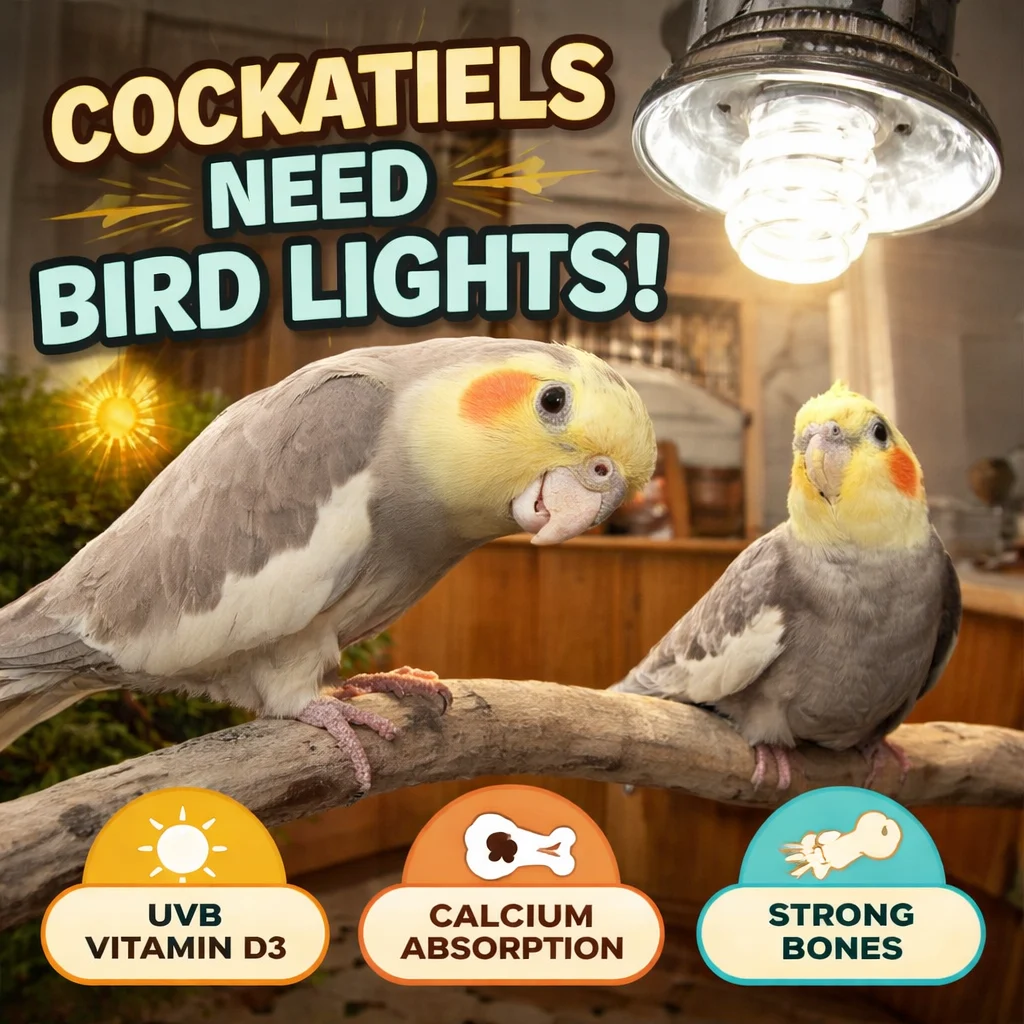
For millions of pet bird owners worldwide, the comfort of an indoor environment is a given, yet this very setting often inadvertently deprives avian companions of a fundamental biological necessity: natural sunlight, specifically its ultraviolet B (UVB) spectrum. While many assume that a brightly lit room or proximity to a window suffices, scientific understanding increasingly underscores that standard indoor lighting and filtered window light are wholly inadequate for meeting the physiological demands of birds, leading to a cascade of preventable health issues. This guide is specifically designed for bird owners whose companions reside indoors, sit near windows that filter UVB, and who are contemplating the necessity and safety of specialized bird lights. For those already employing proper UVB bird lighting at the correct distance and schedule, and whose birds exhibit strong grip, vibrant plumage, stable mood, and coordinated flight, this serves as a crucial reaffirmation and a resource for ongoing maintenance.
The Silent Deprivation: Understanding Avian Photobiology
The avian world is intrinsically linked to light. Birds possess a complex visual system, often tetrachromatic, allowing them to perceive light in the ultraviolet A (UVA) spectrum, which is invisible to humans. More critically, their physiology relies on UVB light for a vital internal process: the synthesis of pre-vitamin D3. Unlike mammals, birds primarily synthesize vitamin D3 in their preen gland secretions and, to a lesser extent, on their skin. When exposed to UVB radiation (specifically wavelengths between 290 and 315 nanometers), these secretions are converted into pre-vitamin D3. The bird then ingests these secretions during preening, allowing for the absorption and conversion into active vitamin D3 in the liver and kidneys. Active vitamin D3 is paramount for calcium absorption from the diet, phosphorus regulation, and ultimately, bone mineralization and overall metabolic function. Without sufficient UVB exposure, this critical pathway is disrupted, irrespective of dietary calcium intake.
The misconception that a bright house or a window provides adequate light is widespread but fundamentally flawed. Standard glass windows, even clear ones, effectively block almost all beneficial UVB wavelengths. Similarly, most artificial indoor lighting, including incandescent, fluorescent, and LED bulbs designed for human environments, emits negligible or no UVB. This creates a significant "light gap" for indoor birds, leading to a chronic, often undiagnosed, deficiency.
Diagnostic Indicators: Is Light the Missing Piece in Your Bird’s Health?
Observing subtle changes in a bird’s demeanor and physical condition can provide early clues to a potential light deficiency. A quick diagnostic assessment can help owners identify if specialized lighting is a critical missing component:
| If your bird… | What It Often Means |
|---|---|
| Sits near a bright window but gets no direct sunlight | Glass effectively blocks UVB radiation. While the room may appear bright to human eyes, it fails to provide the specific wavelengths necessary for usable vitamin D3 production in birds, thereby hindering calcium metabolism. |
| Seems dull, less active, or irritable, particularly in winter | Reduced natural light exposure, common during shorter winter days or prolonged indoor confinement, can significantly affect a bird’s calcium metabolism, disrupt its natural circadian rhythm, and negatively impact mood and energy levels. |
| Maintains a strong diet but still shows weaker grip, feather decline, or behavioral shifts | Despite a nutritionally sound diet, the absence of light-dependent vitamin D3 activation prevents proper calcium absorption and utilization, manifesting in symptoms like weakened muscle tone, poor feather quality, and subtle changes in temperament. |
These indicators, while not definitive diagnoses on their own, collectively point towards the potential for a UVB deficiency impacting a bird’s systemic health.
The Necessity of Specialized Avian Lighting: Dispelling Myths
The question, "My house is bright; isn’t that enough?" is frequently posed by well-meaning owners. The unequivocal answer is no. As established, indoor brightness from conventional sources or filtered window light does not provide the specific UVB wavelengths required for vitamin D3 production. Without this crucial component, calcium cannot be properly absorbed, even if the bird consumes a high-quality, calcium-rich diet. The calcium simply cannot be utilized by the body without its metabolic activator, vitamin D3.
Another common concern revolves around safety: "Are bird lights dangerous?" Used incorrectly, any source of ultraviolet radiation, whether natural sunlight or artificial lamps, can be harmful. However, when deployed correctly, bird-safe UVB lights are specifically engineered to mimic the beneficial, short, and controlled natural exposure that birds would receive in the wild. The critical factors for safe and effective use are distance, duration, and proper fixture type. Emphatically, more light is not better; precision and moderation are key to harnessing the therapeutic benefits without incurring risks.
The concern "Can too much UV cause cancer?" is valid, as excessive UV exposure over prolonged periods can indeed damage tissue, much like prolonged sun exposure can harm human skin. Therefore, limiting UVB exposure to short daily sessions, typically ranging from 1 to 3 hours, is essential. Utilizing an automated timer is highly recommended, as it protects both the bird from overexposure and the owner from the inconvenience of manual activation and deactivation, ensuring consistent and safe light cycles. This controlled approach prevents the potential for photokeratitis (corneal inflammation) or dermatological damage that could arise from misuse.
The Subtlety of Deficiency: What Happens Without Enough Light?
The consequences of insufficient UVB exposure are insidious and often progress unnoticed until severe symptoms manifest. When UVB is missing from a bird’s environment, a cascade of physiological impairments ensues:
- Impaired Calcium Metabolism: The most direct impact is the inability to synthesize active vitamin D3, leading to poor calcium absorption. This affects every system in the body that relies on calcium, from bone strength to nerve impulse transmission.
- Metabolic Bone Disease (MBD): This is a debilitating condition characterized by soft, brittle, or deformed bones. Symptoms include weak grip, lameness, bone fractures, and difficulty perching.
- Hypocalcemia: Chronically low blood calcium levels can lead to muscle tremors, seizures, and neurological issues.
- Feather and Beak Problems: Poor feather quality, dull coloration, stress bars, and overgrown or brittle beaks can often be linked to underlying nutritional deficiencies exacerbated by inadequate D3.
- Reproductive Issues: Female birds are particularly vulnerable, experiencing egg-binding, thin-shelled eggs, and calcium depletion during breeding cycles, which can be life-threatening.
- Behavioral Changes: Lethargy, increased irritability, feather plucking, and general malaise can all be subtle indicators of chronic light deprivation affecting mood and well-being.
- Weakened Immune System: Optimal vitamin D levels are increasingly recognized for their role in immune function, suggesting that a deficiency could render birds more susceptible to illness.
These issues rarely manifest dramatically overnight. Instead, they develop subtly over weeks, months, or even years, gradually eroding the bird’s health until a crisis point is reached. A crucial expert note emphasizes this: birds are prey animals, instinctively wired to hide weakness and illness. By the time overt symptoms like falling, tremors, or egg-binding become apparent, the underlying deficiency may have been developing for a prolonged period, causing significant internal damage. Therefore, proper lighting is fundamentally preventive care, not a reactive treatment for advanced disease.
Implementing the Light Reset: A Three-Step Approach
For owners realizing the critical role of UVB and seeking to rectify potential deficiencies, a structured approach to introducing avian-specific lighting is essential:
- Select the Right Equipment: Not all "full spectrum" lights are created equal. Crucially, choose a bulb specifically designed for birds that emits a measurable amount of UVB (typically 2.4% – 7% UVB output, depending on species and distance). Common choices include T5 HO (High Output) linear fluorescent tubes or compact fluorescent bulbs, always paired with a non-filtering fixture (no plastic covers over the bulb). Research specific recommendations for your bird’s species and cage size.
- Optimal Placement and Distance: Position the UVB lamp directly above the cage, ensuring the bird has access to both the illuminated area and a shaded retreat within the cage. The ideal distance typically ranges from 6 to 12 inches from the bird’s primary perching area, depending on the bulb’s intensity and the manufacturer’s guidelines. This creates a "sun puddle" where the bird can bask, mimicking natural behavior. Avoid placing the light too close, which can cause burns, or too far, rendering it ineffective.
- Establish a Schedule with a Timer: Implement a consistent daily schedule, limiting UVB exposure to 1 to 3 hours. This duration is sufficient for vitamin D3 synthesis without risking overexposure. A simple appliance timer is invaluable for automating this process, ensuring regularity and preventing accidental prolonged exposure.
Monitoring Progress: How to Know It’s Working
Improvements resulting from adequate UVB exposure are not instantaneous. They are gradual, supporting fundamental physiological processes rather than flipping an immediate switch. Owners should look for a series of incremental positive changes over weeks and months:
- Improved Feather Quality: Expect to see brighter, smoother, and more vibrant plumage, with reduced stress bars and less dullness in new feather growth.
- Enhanced Activity and Mood: Birds may exhibit increased energy, more consistent vocalization, and a generally more stable and positive temperament. Irritability or lethargy often diminishes.
- Stronger Grip and Coordination: Observe better balance, a more confident grip on perches, and improved flight coordination as bone density and muscle strength improve.
- Better Appetite and Digestion: Optimized vitamin D3 levels contribute to overall metabolic health, which can positively influence appetite and nutrient absorption.
- Resolution of Reproductive Issues (where applicable): Female birds may lay healthier eggs with stronger shells, and incidents of egg-binding may decrease.
These observations, coupled with regular veterinary check-ups, will confirm the positive impact of appropriate lighting.
Key Takeaways for Avian Well-being:
The integration of proper UVB lighting is not merely an accessory; it is a cornerstone of responsible avian husbandry for indoor birds. The critical points to remember are:
- UVB is Non-Negotiable: Indoor birds require an external source of UVB light for vitamin D3 synthesis.
- Windows and Standard Lights are Insufficient: Glass blocks UVB, and most household lights lack the necessary spectrum.
- Safety Through Specificity: Use bird-specific UVB lights at the correct distance and for limited durations, always employing a timer.
- Prevention Over Cure: Addressing light deficiency proactively prevents serious, often irreversible, health issues.
- Holistic Health: Proper lighting supports not just physical health but also contributes significantly to a bird’s psychological well-being and natural circadian rhythms.
Continuing Education in Avian Nutrition and Environment
The health of a pet bird is a complex tapestry woven from diet, environment, and specialized care. Many avian health problems are interconnected, and a deficiency in one area can exacerbate issues in others. Beyond UVB lighting, owners are encouraged to continually expand their knowledge on comprehensive avian nutrition, environmental enrichment, and preventive veterinary care. Exploring evidence-based guides on dietary needs, appropriate cage setups, mental stimulation, and regular health screenings will help build a more resilient and healthier life for any avian companion. Understanding the intricate needs of these remarkable creatures is an ongoing journey, and providing a biologically appropriate environment, including the often-overlooked necessity of UVB light, is a fundamental step towards their optimal health and longevity.

