


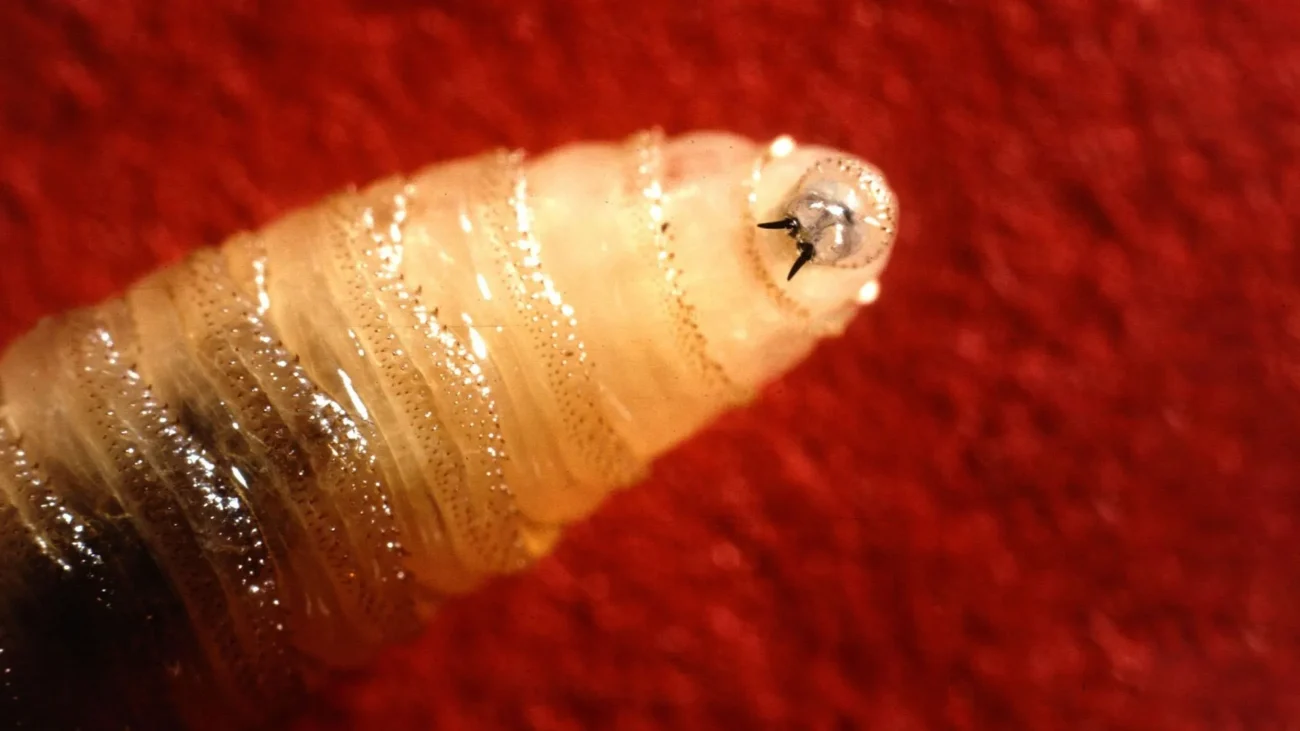
Decades after a monumental biological eradication campaign pushed the deadly parasite out of the United States and far south to the Darién Gap in Panama, the New World screwworm has returned to American soil. Detecting the flesh-eating pest in Texas and New Mexico has triggered immediate concern among agricultural officials, livestock producers, wildlife conservationists, and public health authorities. Unlike typical flies whose larvae feed on decomposing matter, the Cochliomyia hominivorax species targets healthy, living tissue. This biological reality presents a severe hazard to livestock, pets, captive and free-roaming wildlife, and, in rare instances, humans.
In response to the rapid northward expansion of the parasite, researchers at the University of California San Diego (UC San Diego) and the County of San Diego Health and Human Services Agency (HHSA) Public Health Services have engineered a sophisticated real-time tracking tool. This specialized digital dashboard monitors the geographic spread of the parasitic fly and its destructive larvae, providing public health officials with critical data needed to anticipate outbreaks, allocate resources, and deploy targeted interventions before infections take root in new regions.
Historical Context and the 1950s Eradication Campaign
To understand the gravity of the current resurgence, agricultural economists and entomologists look back to the mid-20th century, when the New World screwworm was an endemic and devastating scourge across the American Southwest. During the 1950s, infestations inflicted catastrophic financial losses on United States livestock producers. In the Southwest region alone, the pest caused an estimated $50 million to $100 million in annual damages—figures that would translate to hundreds of millions of dollars in modern currency when adjusted for inflation.
The crisis spurred a scientific revolution in biological pest control. Scientists developed the sterile insect technique (SIT), a groundbreaking methodology that involved mass-rearing millions of male screwworm flies, sterilizing them via gamma radiation, and releasing them into the wild. Because female screwworm flies mate only once in their lifetime, mating with sterile males yielded no viable offspring. This cascading reproductive failure steadily collapsed the wild population. Coordinated efforts by the United States Department of Agriculture (USDA) eventually eradicated the pest from the continental United States, pushing the northern boundary of its permanent habitat progressively southward through Mexico and Central America.
For decades, strict animal quarantine protocols, international cooperation, and continuous surveillance maintained a biological barrier—often anchored at the Darién Gap in Panama—that kept the United States free of the pest. However, shifting environmental conditions, increased movement of global trade and domestic livestock, and the natural migratory capacity of adult flies have eroded this protective buffer, allowing the parasite to breach historical boundaries once again.
The Mechanism of Infection and Clinical Dangers
The New World screwworm is distinguished from benign or beneficial fly species by its obligate parasitic nature. Female flies are attracted to warm-blooded animals and seek out any minor wound, abrasion, or natural bodily opening—such as the navels of newborn livestock or mucosal membranes—to deposit their eggs.
Within hours, the eggs hatch into voracious larvae that immediately begin burrowing directly into living flesh. As the larvae feed, they secrete enzymes that break down surrounding tissue, deepening and widening the wound. This structural damage causes severe pain, systemic infection, and, if left untreated, inevitable mortality due to toxemia, secondary bacterial infections, or blood loss.
While livestock and wildlife are the primary victims, human infections—known medically as myiasis—can occur under specific circumstances, particularly among individuals working closely with infested animals or in areas with high fly densities. Although the parasite does not transmit directly from person to person like viral pathogens such as influenza or COVID-19, accidental introduction of larvae into open wounds or mucous membranes requires immediate surgical or manual extraction to prevent extensive tissue destruction and disfigurement.
Rapid Geographic Expansion and Epidemiological Surveillance
The current resurgence has caught public health officials off guard due to the velocity of its spread. Dr. Mark Beatty, assistant medical director for the County of San Diego’s Epidemiology and Immunization Services Branch, noted the unexpected speed of the northward migration.
"We knew in 2023 that New World screwworm was going to move northward, but I wasn’t expecting it to move as fast as it has," Dr. Beatty stated. Although the precise vector or origin point of the initial re-introductions into the United States remains under active investigation by federal authorities, the presence of the parasite within Texas and New Mexico is an established reality. "Once it entered Texas, we quickly saw an increase in detections. It’s in a place where it used to live, so it’s not surprising it’s taking a hold again."
Adult screwworm flies are capable of sustained flight over several miles in search of hosts, but anthropogenic factors—namely the transportation of infested livestock, domestic pets, and exotic birds—greatly accelerate their dispersal across state lines and non-contiguous geographic zones.
Development of the Real-Time Screwworm Risk Dashboard
Recognizing the urgent need for enhanced situational awareness, local health departments turned to academic partners for technological solutions. Through Resilient Shield—a specialized CDC-funded center operating under the national Insight Net network—researchers at UC San Diego collaborated directly with San Diego County public health experts to build a custom geographic information system (GIS) and predictive risk dashboard.
Dr. Eliah Aronoff-Spencer, professor of medicine at UC San Diego School of Medicine and affiliate member of the UC San Diego Design Lab and Qualcomm Institute, emphasized the practical, user-driven design of the platform. "Our County public health partners alerted us to the need for better situational awareness of New World screwworm," Dr. Aronoff-Spencer explained. "We built a dashboard to generate regional risk profiles. This is just one example of how we are responding to County needs with a focus on real-world issues. It’s a model that has brought us great success, like the Tijuana River Crisis Environmental Dashboard."
The newly developed dashboard aggregates and analyzes a multi-layered data stream to forecast regional vulnerability. Key inputs include confirmed laboratory detections of the parasite, meteorological and environmental parameters favorable to the survival and reproduction of the fly, and automated natural language processing of media reports.
Innovation in Public Health Data Integration
A distinguishing methodological innovation of the UC San Diego tool is the deliberate integration of journalistic coverage alongside traditional epidemiological surveillance. Public health reporting channels are historically bottlenecked by rigorous verification protocols. Confirming a biological sample in a certified reference laboratory can routinely require days or weeks.
Dr. Seema Shah, medical director of the Epidemiology and Immunization Services Branch for San Diego County’s Public Health Services Department, highlighted the tactical advantages of this approach. "Traditional reporting mechanisms for public health are often delayed," Dr. Shah observed. "Lab confirmation can take days or weeks. By incorporating media reports, we can identify potential threats sooner and stay one step ahead."
By capturing early signals from local news reports, agricultural bulletins, and regional veterinary advisories, the dashboard bridges the crucial window between initial environmental emergence and official public health notification. Dr. Beatty underscored how this predictive capability informs resource allocation. "The tool gives you a sense of where you might expect to see cases next," he noted. "That’s helpful in determining how we should be preparing. Is the threat imminent, or do we have six months? We’re in a very concerning phase right now, and the tool backs that up."
Currently, system access is restricted to authorized public health officials, veterinary agencies, and project partners. However, the development team intends to refine the architecture to support a public-facing iteration in the future.
Modernizing Eradication Strategies: USDA and State Initiatives
Federal and state agricultural agencies are mounting a comprehensive multi-pronged campaign to contain and ultimately roll back the current infestation. Spearheaded by the USDA, the strategic response relies heavily on modern iterations of the sterile insect technique perfected decades ago, augmented by contemporary technological advances.
Current eradication protocols combine systematic releases of sterilized male flies over affected zones with rigorous environmental pesticide applications and strict interstate quarantines regulating the movement of susceptible livestock. Furthermore, regulatory bodies are reviewing applications for Environmental Protection Agency (EPA) approval of a genetically modified, all-male strain of screwworm fly currently undergoing advanced field trials. Concurrently, academic laboratories at UC San Diego are engineering next-generation genetic control platforms designed to enhance future vector management capabilities.
At the regional level, veterinary networks are serving as the frontline defense. Dr. Emily Trumbull, a veterinarian and lead for the Epidemiology Unit’s One Health Program within the California Department of Public Health and local agricultural frameworks, stressed the importance of cross-disciplinary collaboration. "We are working closely with the California Department of Food and Agriculture to connect local veterinarians with screwworm resources for surveillance in our region," Dr. Trumbull stated. "The flies can affect any warm-blooded animal, so working together with veterinarians serving livestock, pets and wildlife is critical for identifying suspect cases and preventing cases in people. The dashboard takes into account environmental factors that can help us understand how the risk to our local region is changing before the fly arrives. That’s why the dashboard is valuable."
The Resilient Shield Framework and National Security Networks
The creation of the screwworm tracking dashboard exemplifies a broader shift in public health infrastructure championed by the Centers for Disease Control and Prevention (CDC). Resilient Shield is one of 13 core facilities comprising Insight Net, a national academic-public health consortium dedicated to mathematical modeling and predictive analytics for emerging biological threats.
The operating philosophy of Insight Net upends traditional academic research pipelines. Rather than academic institutions generating theoretical models in isolation, operational public health agencies submit urgent, real-world problems directly to research centers, which then engineer custom, scalable solutions.
Dr. Shah praised this collaborative framework for solving immediate operational deficits. "In public health, we always know our most urgent priorities, but too often we don’t have the immediate resources or in-house technical solutions to achieve them," Dr. Shah remarked. "The screwworm is a perfect example. It is a critical threat, but it is an issue our academic partners might never have prioritized without our direct ticket. This partnership solves our immediate problem while providing shareable, open reference designs that demonstrate exactly how public health, academia, and industry can successfully work together."
The modular infrastructure of Resilient Shield—developed in strategic partnership with technology leaders such as Google and MITRE—allows researchers to rapidly configure digital tools from a shared resource hub. Whether deploying secure epidemiological databases, artificial intelligence-driven predictive models, or public-facing risk communication portals, the system is designed to adapt fluidly to novel biological crises.
"Our central innovation is the true convergence of partner priorities with scalable engineering," concluded Dr. Aronoff-Spencer. "We do not build in a vacuum. Our infrastructure is built directly on the priorities dictated by our partners. In addition, because our platform is built on an open, modular architecture, every solution we develop strengthens the system and makes it more adaptable for the next public health challenge."
As federal agencies push forward with sterile insect releases and regional health departments leverage advanced digital surveillance, the containment of the New World screwworm remains a high-stakes priority for American biosecurity, agriculture, and public health.

