


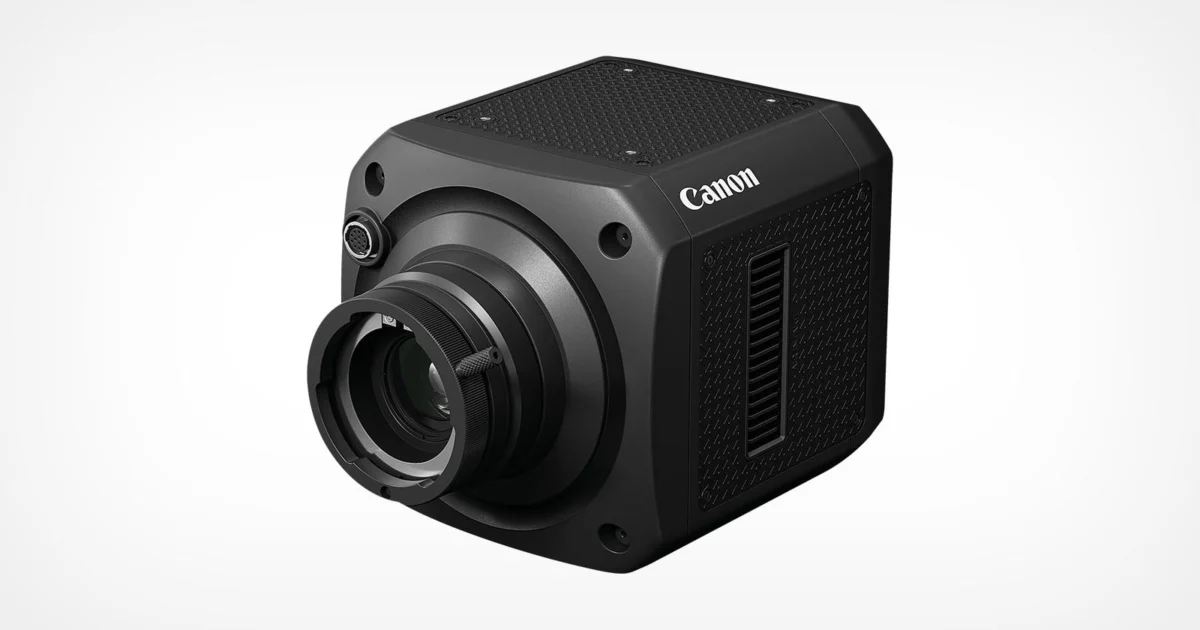
The landscape of ultra-low-light imaging has undergone a significant transformation with Canon’s official announcement of the MS-510 Multi-Purpose Camera at the NAB Show 2026. This specialized imaging solution, unveiled alongside the groundbreaking Cine-Servo 40-1200mm T5.0-10.8 lens, represents a pinnacle of optical engineering designed specifically for high-stakes surveillance, critical infrastructure monitoring, and specialized scientific research. While the consumer market remains dominated by traditional CMOS (Complementary Metal-Oxide-Semiconductor) sensors, the MS-510 leverages a Single Photon Avalanche Diode (SPAD) image sensor, a technology that fundamentally alters how digital devices perceive and record light in near-total darkness.
The Technological Leap: Understanding SPAD vs. CMOS
At the core of the MS-510 is a 3.2-megapixel Type 1 SPAD image sensor. To appreciate the significance of this hardware, one must look at the physics of light capture. In a standard CMOS sensor, which is found in everything from smartphones to professional cinema cameras, each pixel measures the accumulation of light (photons) over a specific exposure period. This accumulated light is converted into an analog electrical charge and then digitized. A major limitation of this process is the introduction of electronic noise. As light levels drop, the signal must be amplified (increasing the ISO), which simultaneously amplifies the noise, resulting in the "grainy" or "mushy" images typical of low-light photography.
The SPAD sensor utilizes a radically different architecture. Rather than measuring the total volume of light, a SPAD sensor counts individual particles of light—photons—as they strike the pixel. When a single photon enters the pixel, it is immediately converted into an electrical charge. This charge is then multiplied through a process known as an "avalanche" of electrons, allowing a single photon to be detected as a distinct electrical signal. Because the sensor counts these particles digitally, it bypasses the analog noise amplification that plagues CMOS sensors. The result is an incredibly clean image even when the environment is almost entirely devoid of visible light.
Unprecedented Sensitivity: Seeing Beyond the Human Eye
The performance metrics of the MS-510 are staggering when compared to natural light levels. Canon reports that the MS-510 achieves a minimum subject illumination of 0.0006 lux. To put this figure into perspective, a clear, starlit night typically measures around 0.02 lux. An overcast, cloudy night sky—often considered "pitch black" to the human eye—is approximately 0.007 lux. The MS-510 is capable of capturing clear, usable imagery in conditions ten times darker than a cloudy night.
This capability represents a significant upgrade over its predecessor, the MS-500, which was released in 2023. The MS-500 was already a class leader with a 0.001 lux rating, but the refinement of the SPAD architecture in the MS-510 has pushed the boundaries of the "detectable" even further. Additionally, Canon has enhanced the near-infrared (NIR) sensitivity of the MS-510. This improvement is crucial for long-range detection and night-mode performance, as it allows the camera to pick up subtle heat signatures and reflected infrared light that fall outside the visible spectrum.
Chronology of Canon’s SPAD Development
The journey to the MS-510 has been a multi-year endeavor for Canon’s Research and Development divisions. The timeline of this technology showcases a steady march toward the commercialization of high-resolution photon counting:
- 2020-2021: Canon first announced the development of a 1-megapixel SPAD sensor, proving the viability of the technology for video applications.
- 2023: The launch of the MS-500 marked the first commercially available SPAD-based camera for the security and monitoring market, utilizing a 2.1-megapixel sensor.
- 2025: Internal refinements focused on increasing pixel count and reducing the "dark count" rate (false signals generated by thermal noise within the sensor).
- 2026: The debut of the MS-510 at NAB 2026, featuring a 3.2-megapixel Type 1 sensor and improved sensitivity of 0.0006 lux.
This progression indicates that while SPAD technology is currently reserved for high-end industrial use, Canon is successfully scaling the resolution and sensitivity, hinting at a future where this technology could potentially influence more mainstream imaging sectors.
Design, Connectivity, and Lens Compatibility
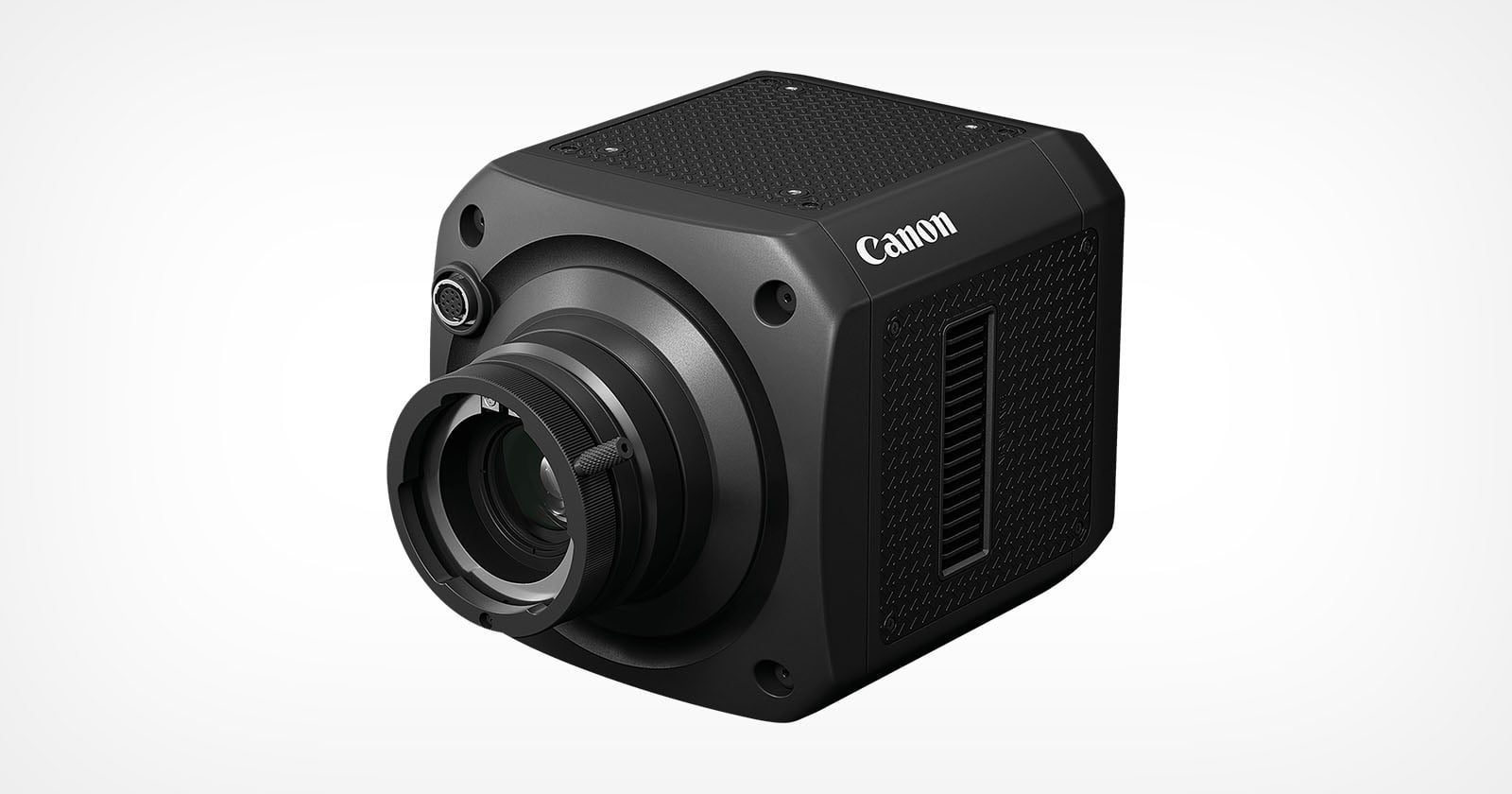
The MS-510 is housed in a compact, rugged, cube-like chassis designed for integration into complex monitoring systems. The rear of the unit features a suite of professional-grade ports, including 3G/HD-SDI outputs for high-quality video transmission, a LAN port for remote networking and control, and dedicated remote terminals. The textured, vented sides are designed for heat dissipation, a critical factor for a sensor performing billions of photon-counting operations per second.
Crucially, the MS-510 utilizes a B4 mount, the industry standard for broadcast lenses. This allows the camera to be paired with 2/3-inch ultra-telephoto zoom lenses. At the NAB 2026 showcase, the synergy between the MS-510 and Canon’s new Cine-Servo 40-1200mm lens was a focal point. When combined, this setup allows security personnel or researchers to observe subjects from several miles away in total darkness with a level of clarity that was previously impossible without active infrared illumination (which can be detected by others).
Strategic Applications and Industry Impact
The MS-510 is not a general-purpose tool; it is a highly specialized instrument with three primary use cases:
- National Security and Critical Infrastructure: The ability to monitor borders, maritime ports, and power plants without the need for visible floodlights is a major tactical advantage. It allows for "passive" surveillance, where the camera sees the intruder, but the intruder has no visual cue that they are being watched.
- Wildlife Research and Observation: Studying nocturnal animals has traditionally required infrared "night vision" or artificial lights, both of which can alter animal behavior or cause distress to sensitive species. The MS-510 allows biologists to observe nocturnal behavior in natural light conditions, preserving the integrity of the research.
- Disaster Response and Search and Rescue: In the aftermath of a disaster where power grids are down, the MS-510 can be mounted on drones or mobile units to search for survivors in conditions where traditional thermal or CMOS cameras might struggle with detail or contrast.
Market Analysis and Availability
The MS-510 is positioned as a premium industrial tool, a fact reflected in its MSRP of $22,800. This price point excludes it from the consumer or even the standard "prosumer" market, but for the sectors it serves—defense, government, and high-level research—the cost is justified by the unique capabilities of the SPAD sensor.
Industry analysts at NAB 2026 have noted that Canon’s continued investment in SPAD technology signals a move to monopolize the "extreme low-light" niche. While competitors like Sony and Samsung continue to push the limits of CMOS sensitivity through back-illuminated designs and larger pixel pitches, Canon has chosen to pivot to an entirely different physical process. This technological "moat" makes the MS-510 nearly peerless in its specific category.
Technical Specifications at a Glance
- Sensor Type: Single Photon Avalanche Diode (SPAD)
- Sensor Size: Type 1
- Effective Pixels: Approx. 3.2 Megapixels
- Minimum Illumination: 0.0006 lux
- Lens Mount: B4 (compatible with 2/3-inch broadcast lenses)
- Video Outputs: 3G-SDI, HD-SDI
- Control Protocols: Serial, LAN
- Price: $22,800
- Release Date: Scheduled for late 2026
Conclusion: The Future of the Invisible
The introduction of the Canon MS-510 at NAB 2026 serves as a reminder that the evolution of digital imaging is far from over. While resolution (8K and beyond) has been the primary focus of the last decade, the MS-510 shifts the focus toward "information density" in low-signal environments. By successfully harnessing the quantum properties of light, Canon has provided a tool that effectively turns night into day.
As shipping begins later this year, the impact of the MS-510 will likely be felt most in the fields of global security and environmental science. It stands as a testament to Canon’s ability to take experimental sensor physics and package it into a reliable, field-ready camera system. For those tasked with watching the world when the lights go out, the MS-510 is poised to become an indispensable asset.

